
 Canada
 USA
USA Japan
Japan



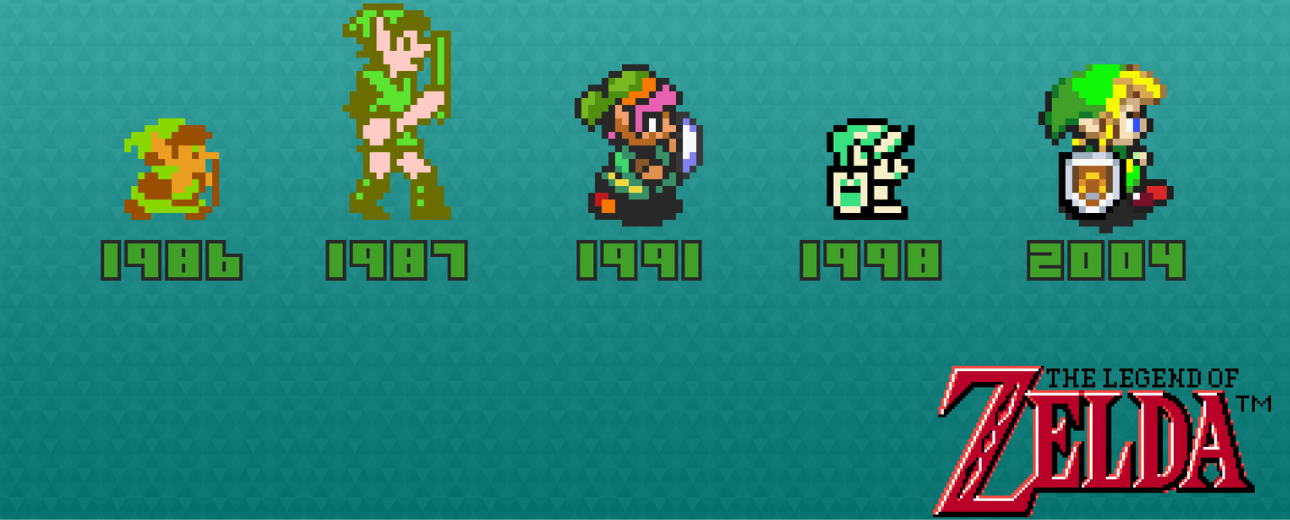
Let’s be honest about something that happens constantly in Zelda fandom discussions. Someone brings up their favorite Zelda game and the responses almost always cluster around the same titles: Ocarina of Time, Breath of the Wild, Majora’s Mask, Twilight Princess, Tears of the Kingdom. The 3D games dominate the conversation so completely that you could be forgiven for thinking the series only really started in 1998. And that is a genuine tragedy — because the 2D Zelda games represent some of the most creative, most inventive, most emotionally resonant game design in the entire history of the medium, and they have been living in the shadow of their three-dimensional successors for far too long.
This article is a defense and a celebration of the 2D Zelda library — from the original Legend of Zelda on the NES to A Link Between Worlds on the 3DS, with everything in between. We are going to make the case, clearly and passionately, that these games are not just historically significant relics or stepping stones on the way to something better. They are masterpieces in their own right, games that innovated boldly in their time and continue to offer experiences that the 3D games simply cannot replicate. If you have been sleeping on the 2D Zelda library, this article is your wake-up call. And if you already love these games, welcome — you are among friends, and we have a lot to celebrate.
The Origins: Why the Original Legend of Zelda Still Matters
It is almost impossible to overstate how revolutionary the original Legend of Zelda was when it launched on the Famicom Disk System in 1986 and the NES in 1987. The gaming landscape of the mid-1980s was dominated by linear platformers and arcade-style games — experiences defined by discrete levels, clear paths forward, and immediate feedback. You went right. You jumped over things. You reached the end. Zelda threw all of that away. It dropped players into a vast open world with no map, no instructions, no hand-holding of any kind, and said: figure it out. Find the dungeons. Discover the items. Determine the order yourself. The world is yours to explore.
This was not just a new game. It was a new idea about what games could be — about the relationship between player and world, about the satisfaction of discovery over instruction, about the possibility of a game that respected the player’s intelligence enough to let them find their own way. Every open world game that has been made since — every sandbox, every exploration-focused experience, every game that trusts its players to discover rather than be told — owes a direct debt to Shigeru Miyamoto and Takashi Tezuka’s 1986 masterpiece. The original Legend of Zelda did not just launch a franchise. It helped define a medium, and dismissing it as a primitive ancestor of the “real” Zelda games is one of the great acts of historical ingratitude in gaming fandom.
The Gold Cartridge and the Culture of Discovery
There is a cultural dimension to the original Zelda’s impact that is easy to forget in the age of internet walkthroughs and YouTube guides: it was a game that people solved together. In 1987, if you were stuck in Zelda — if you could not find the second dungeon, if you could not figure out where to use the candle, if the location of the final dungeon eluded you — your options were limited. You could experiment. You could read Nintendo Power. You could ask a friend at school. You could talk to a stranger at the game store. The game created communities of shared discovery in a way that few games before or since have managed, because it was hard enough and mysterious enough that no single player could reasonably expect to figure out everything alone.
This communal dimension of the original Zelda’s design is something that has been largely lost in modern gaming, and it is worth mourning. The gold cartridge was not just a storage medium — it was a social object, something people gathered around, something that generated conversations and friendships and the particular joy of someone explaining to you a secret you had been searching for for weeks. The 2D Zelda games, particularly the early ones, understood that mystery and difficulty are not just design challenges to be overcome. They are invitations to connect, and they built communities around themselves through the sheer generosity of their unknowability.
Zelda II: The Adventure of Link and the Courage to Be Different
Zelda II: The Adventure of Link is perhaps the most controversial game in the entire Zelda series — a game that took the original’s open world framework and replaced it with something radically different: a side-scrolling action RPG with experience points, towns full of NPCs, and combat that required genuine skill and timing rather than simple button mashing. Fans at the time were divided. Fans today are still divided. And yet Zelda II deserves enormous respect for a reason that transcends whether you personally enjoy its particular flavor of difficulty: it refused to simply repeat itself.
The willingness to take a wildly successful formula and completely reinvent it after just one game is an act of creative courage that very few franchises have ever demonstrated. Nintendo did not know that Zelda II would be controversial. They did not make a safe, incremental sequel. They made something genuinely different, genuinely risky, and genuinely interesting — a game with its own identity, its own strengths, and its own vision of what a Zelda experience could be. The towns of Zelda II, filled with named NPCs who give Link advice and shelter, represent the series’ first real attempt at a lived-in world — a Hyrule populated by people rather than just obstacles and enemies. That contribution to the series’ DNA is real and significant, even if the game’s difficulty curve has aged in ways that not everyone finds enjoyable.
A Link to the Past: The Game That Defined What Zelda Really Is
If the original Legend of Zelda established the framework and Zelda II bravely experimented with alternatives, A Link to the Past is the game that synthesized everything into the definitive template — the game that answered the question “what is a Zelda game?” so comprehensively that the answer has essentially held for thirty years. Released in 1991 on the Super Nintendo, A Link to the Past is not just one of the best 2D Zelda games. It is, by almost any measure, one of the greatest video games ever made — a perfect expression of game design as an art form, a game that teaches through play, rewards exploration, builds a world that feels genuinely alive, and delivers an emotional arc that holds up completely even today.
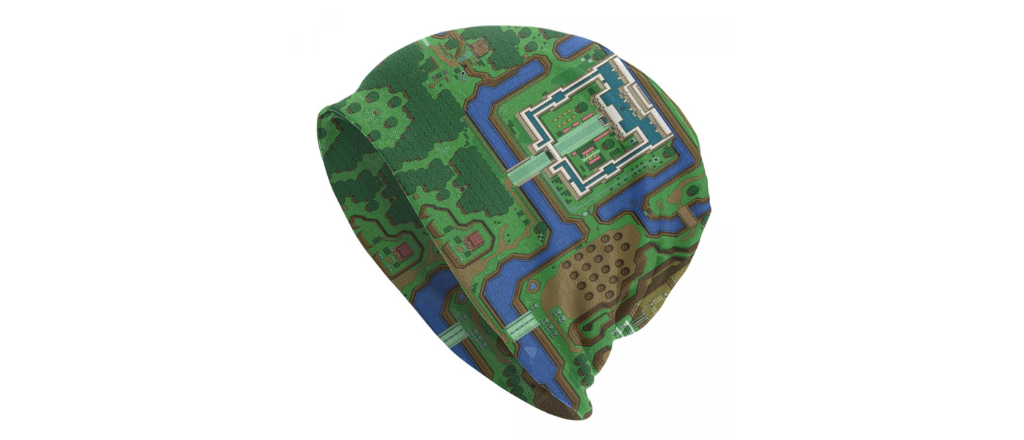
Everything that defines the modern Zelda experience is present in A Link to the Past in its most essential, most pure form. The dual-world structure — the Light World and the Dark World — is one of the most elegant pieces of game design in history, a single mechanic that doubles the size of the world, creates endless opportunities for environmental puzzles, and carries genuine thematic weight about the relationship between hope and corruption, between what a world is and what it has become. The dungeon design is masterful — each dungeon with its own identity, its own central item, its own logic, its own boss that forces you to use everything you have learned. The overworld is dense with secrets, with hidden passages and buried items and moments of discovery that reward curiosity without punishing players who miss them. A Link to the Past is a game in complete command of its craft, and every Zelda game that came after — 2D or 3D — builds on foundations that it laid.
The Dark World as Thematic Masterpiece
The Dark World of A Link to the Past is one of the most brilliantly conceived game design elements in history, and its genius operates on multiple levels simultaneously. On the mechanical level, it is a parallel version of the Light World that shares its geography but transforms its features — forests become graveyards, peaceful villages become monster-infested ruins, the death mountain path becomes a labyrinth of darkness. This transformation creates a world that is familiar enough to navigate but different enough to surprise, a space that constantly asks you to think about the relationship between what you know and what you are seeing.
On the thematic level, the Dark World is Hyrule as it becomes when evil is allowed to run unchecked — a mirror held up to the Light World to show what is at stake. Every beautiful thing in the Light World has a dark counterpart in the Dark World, and the contrast between them is not just visual. It is emotional. It reminds you, constantly, why you are fighting — what you are trying to preserve, what you are trying to prevent the Light World from becoming. The Dark World is not just a second set of dungeons. It is a meditation on what loss looks like when it is total, and it gives A Link to the Past a thematic depth that many games with far more sophisticated narratives never achieve.
The Supporting Cast and the World That Breathes
One of the things that makes A Link to the Past so enduringly wonderful is how alive its world feels despite the technological limitations of the Super Nintendo. The NPCs of Hyrule are not just information dispensers — they are people with personalities, with fears, with small stories that give the world texture and warmth. The woman hiding under the bridge. The elder who remembers the old days. The soldiers who have been turned into monsters and retain just enough humanity to be heartbreaking. Each of these small details contributes to a world that feels inhabited and real in a way that pure technical spectacle cannot manufacture. The 2D Zelda games, A Link to the Past most of all, understood that world-building is not about scale. It is about specificity — the precise, carefully chosen detail that makes a world feel like a place where people actually live.
Link’s Awakening: The Most Emotionally Courageous Zelda Game Ever Made
If A Link to the Past is the definitive expression of what a Zelda game is, Link’s Awakening is the game that dared to ask whether the formula could carry genuine emotional weight — and answered that question with a resounding, heartbreaking yes. Originally released for the Game Boy in 1993 and remade with extraordinary care for the Nintendo Switch in 2019, Link’s Awakening is unlike any other Zelda game before or since. It takes place not in Hyrule but on Koholint Island — a mysterious place that Link washes up on after a shipwreck, surrounded by strange inhabitants and guided by a destiny that is not what it first appears to be.
Link’s Awakening is the only Zelda game where saving the world means destroying it. The twist at the heart of the game — that Koholint Island is a dream, that the Wind Fish sleeping at its center is the dreamer, and that waking the Wind Fish will cause the island and everyone on it to cease to exist — is one of the most audacious narrative choices in the history of the medium. It transforms the entire experience retroactively. Every friend Link has made on the island, every character he has helped, every relationship he has formed — all of it exists only within a dream, and completing his quest means ending that dream forever. The kindness Link extends to the people of Koholint throughout the game becomes, in retrospect, a form of grief — love given to people who will not survive the ending, in full knowledge of what the ending requires.
The Philosophy of Dreams and Impermanence
The emotional and philosophical core of Link’s Awakening is the question of whether something that exists only in a dream is real. The people of Koholint feel real. Their joys and sorrows feel real. Marin — the girl who dreams of seeing the world beyond the island, who teaches Link the ocarina, who looks up at the sky with a longing that is palpable even in eight-bit — feels completely, heartbreakingly real. And the game refuses to give you an easy answer to the question of what her reality means. It does not tell you that the dream people are lesser than real people, or that their non-existence after the dream ends is not a genuine loss. It sits with the ambiguity and asks you to sit with it too, to hold the completion of your quest and the grief of what that completion costs in the same hand.
This is philosophy presented through game design — the kind of thing that only an interactive medium can do, where the player’s agency in bringing about the ending makes the emotional weight of that ending specifically theirs. You chose to wake the Wind Fish. You completed every dungeon, collected every instrument, made every friend, and then you woke the dreamer and watched the dream dissolve. Link’s Awakening trusts its players with genuine sadness, and the trust is repaid in full by anyone who has played the game with their full attention.
Marin: The Most Memorable Character in 2D Zelda History
Marin is, without question, the most fully realized and most emotionally resonant character in the 2D Zelda library, and one of the most memorable in the series overall. She is warm, curious, full of life, possessed of a longing for the world beyond her island that is completely convincing and completely heartbreaking given what the player eventually learns about the nature of that island. Her relationship with Link — built through small moments, shared music, the way she looks at him with a mixture of curiosity and something that might be love — is handled with a delicacy and an emotional intelligence that many games with far more sophisticated technology fail to achieve. And her fate — uncertain, suggested rather than stated, a moment of grace that the game offers without insisting on its meaning — is one of the most quietly devastating endings any character in gaming has ever been given. Marin deserved better. The game knows this. And the fact that it knows this, that it looks its own tragedy clearly in the face, is what makes Link’s Awakening a masterpiece.

The Oracle Games: Collaborative Storytelling Before It Was Cool
Oracle of Ages and Oracle of Seasons — released simultaneously for the Game Boy Color in 2001 — represent one of the most ambitious design experiments in the 2D Zelda library, and they are almost entirely overlooked in mainstream Zelda discourse. Developed by Capcom in collaboration with Nintendo under the supervision of Yoshiki Okamoto, the Oracle games were designed to be played together — two separate games with their own stories, their own worlds, and their own mechanics, but connected by a password system that allows the completion of one game to unlock additional content in the other, and the completion of both to unlock a true ending that neither game can reach alone.
This is collaborative storytelling built into the structure of the games themselves — a design philosophy that treats the player not as a passive recipient of a single narrative but as an active participant in constructing a larger story through the act of playing. Oracle of Ages, set in Labrynna, focuses on time manipulation — Link’s ability to move between the present and the past to solve environmental puzzles and change the course of history. Oracle of Seasons, set in Holodrum, focuses on environmental transformation — the Rod of Seasons allowing Link to change the season of any area, transforming the landscape and opening new paths. The two games’ mechanics are different, their tones are different, their dungeons are different — and yet they are designed to complement each other, two halves of a single larger experience.
The Linked Game System and Its Lasting Legacy
The linked game system of the Oracle games is one of the most creative uses of game design to tell a story that the medium has ever seen. When you complete one Oracle game and transfer your data to the other using the password system, your second playthrough is enriched in specific, meaningful ways: new dialogue, additional items, references to the events of the first game, and ultimately a final arc that only becomes available when both games have been completed. The villain Twinrova, revealed as the architect behind the events of both games, appears only in the linked endgame. The resurrection of Ganon, which is the ultimate goal of the scheme, can only be fully confronted by a hero who has proven themselves across both adventures.
This structure makes a profound statement about the nature of heroism as an ongoing commitment rather than a single spectacular act — a statement that resonates deeply with the larger themes of the Zelda series. One adventure is not enough. One world saved is not enough. The hero soul must prove itself across multiple lives, multiple challenges, multiple worlds — and the Oracle games literalize this thematic truth in their very design. They are also just genuinely excellent games, with clever dungeons, charming characters, and the kind of dense, rewarding overworld exploration that the 2D Zelda games do better than almost anyone.
The Capcom Zelda Games and the Question of Authorship
The Oracle games and The Minish Cap — also developed by Capcom — raise an interesting question about the Zelda series that is worth addressing directly: does the identity of the developer affect the legitimacy of a Zelda game? The answer, emphatically, is no. The Oracle games and The Minish Cap are fully canonical, fully authorized Zelda experiences that were developed in close collaboration with Nintendo and under Miyamoto’s supervision. They carry the DNA of the series completely, they innovate within its frameworks in interesting ways, and they contribute meaningfully to the larger mythology. The fact that they were developed by a third party rather than Nintendo’s internal teams has led some fans to treat them as somehow lesser — a bias that is entirely unwarranted and that has caused two of the most creative entries in the 2D library to be significantly underappreciated.

The Minish Cap: The Most Charming Zelda Game Ever Made
The Minish Cap, released for the Game Boy Advance in 2004, is the 2D Zelda game that gets the least attention of any entry in the series, and it is a genuine shame — because it is also, without any competition, the most purely charming game Nintendo has ever made. The premise is delightful: Link, guided by a magical talking hat named Ezlo who was once a Minish sage before being transformed by the villain Vaati, must shrink down to the size of a thumb in order to interact with the Minish — tiny creatures who live invisibly alongside humans, creating the luck and small magic that people attribute to fortune. The world of The Minish Cap is the same Hyrule we know, but experienced from a perspective that transforms the familiar into the extraordinary. A kitchen table becomes an adventure landscape. A garden becomes a vast wilderness. A simple room becomes a world unto itself.
The mechanic of shrinking and growing — moving between the human-scale world and the Minish-scale world — is one of the most purely inventive design ideas in the 2D Zelda library, and the game uses it with consistent creativity and genuine wit. But what makes The Minish Cap special beyond its mechanical cleverness is its tone — warm, funny, full of personality, with a supporting cast that includes some of the most charming characters in the series. Ezlo himself is a wonderful companion, grumpy and sharp-tongued but genuinely caring, with a backstory that gives the game unexpected emotional depth. The Minish Cap is the Zelda game that smiles the most, and in a series that can sometimes take itself very seriously, that warmth is a genuine and valuable contribution.
One of The Minish Cap’s most creative design elements is the Kinstone fusion system — a mechanic where Link collects half-pieces of broken Kinstones and finds NPCs with matching halves to fuse them together, with each successful fusion causing something wonderful to happen somewhere in the world. A chest appears in a dungeon. A beanstalk grows to a secret area. A figure emerges from a long-sealed door. The fusions are not story-critical — you can complete the game without engaging with the system deeply. But for players who do engage with it, the Kinstone system creates a world that feels responsive and alive, a place where your actions of connection and generosity have visible, joyful consequences.
This is game design as a philosophy of connection — a mechanical expression of the idea that reaching out to others makes the world more abundant. It is a small idea, executed with characteristic Zelda craftsmanship, and it contributes to making The Minish Cap one of the most purely pleasurable games in the library. The Minish Cap does not have the narrative weight of Link’s Awakening or the design density of A Link to the Past. It does not need to. It has its own identity, its own vision, its own particular joy — and that is more than enough.

A Link Between Worlds: The Perfect Love Letter to 2D Zelda
A Link Between Worlds, released for the Nintendo 3DS in 2013, is the most recent major 2D Zelda game and arguably the most accomplished — a game that looks back at the 2D library with complete understanding and genuine love, distilling its greatest strengths into an experience that feels both familiar and completely fresh. Set in the world of A Link to the Past — the Light World and Dark World reimagined as Hyrule and Lorule — A Link Between Worlds introduces one of the most genuinely innovative mechanics in the series’ history: Link’s ability to merge with walls, becoming a two-dimensional painting that can move along flat surfaces. This mechanic, like the greatest Zelda mechanics, is simple to understand and endlessly versatile in application.
But what makes A Link Between Worlds truly special in the context of the 2D library is its design philosophy regarding player freedom. In a break from the series’ traditional structure, A Link Between Worlds allows players to tackle its dungeons in almost any order — renting or buying items from a shop at the beginning of the game rather than finding them locked inside specific dungeons. This is a profound design choice that trusts the player completely, that refuses to dictate the path through the adventure, and that creates an experience of genuine exploration rather than managed discovery. It is, in the context of the 2D library, a return to the spirit of the original Legend of Zelda — the spirit of a world that opens itself to you and asks you to find your own way through it. And it executes that spirit with thirty years of accumulated design wisdom, in a way that feels modern and essential rather than nostalgic.
Lorule and the Mirror Image of Hyrule’s Themes
Lorule — the dark counterpart to Hyrule in A Link Between Worlds — is one of the most thematically interesting settings in the 2D Zelda library. Where the Dark World of A Link to the Past was Hyrule corrupted by Ganon’s evil, Lorule is a kingdom that destroyed its own Triforce to end the wars being fought over it — and has been slowly dying ever since, its power draining away without the divine object that sustained it. Princess Hilda, Lorule’s ruler, is a Zelda counterpart who made a desperate choice to steal Hyrule’s Triforce to save her dying kingdom — a villain whose motivations are completely understandable, whose love for her people is genuine, and whose methods are wrong in ways she knows but cannot bring herself to abandon.
Lorule is a meditation on what happens when you try to solve an impossible problem with the wrong tools — when love and desperation combine to produce choices that cause more harm than the harm they were meant to prevent. It is the most morally complex setting in the 2D library, and it gives A Link Between Worlds a thematic depth that complements its mechanical inventiveness beautifully. The 2D Zelda games have always been willing to ask difficult questions through the design of their worlds, and A Link Between Worlds continues that tradition with intelligence and grace.
Why A Link Between Worlds Deserves to Be in the Conversation
When fans discuss the best Zelda games, A Link Between Worlds is sometimes mentioned but rarely given the prominence it deserves. This is partly a recency bias working against it — it was a 3DS game in an era when handheld gaming was becoming less prestigious, and it has not received the same cultural visibility as the home console entries. But it is also, frankly, a consequence of the general undervaluing of the 2D library that this entire article is arguing against. A Link Between Worlds is a masterclass in game design — tightly constructed, mechanically innovative, thematically rich, and consistently surprising. It deserves to be mentioned alongside Ocarina of Time and Breath of the Wild as one of the series’ genuine peaks, and the fact that it rarely is tells you everything about the bias toward 3D that has distorted the conversation around Zelda for decades.

What the 2D Games Do Better Than the 3D Games
This is perhaps the most important section of this article, because the argument being made here is not just that the 2D games are good — it is that they do specific things better than the 3D games, things that are genuinely valuable and that the shift to three dimensions has made more difficult to achieve. Understanding what those things are is essential to understanding why the 2D library deserves more respect, and why the conversation about Zelda is genuinely impoverished when it ignores these games.
The first and most important area where the 2D games excel is dungeon design. The constraints of two-dimensional space force a kind of spatial creativity and logical elegance that three-dimensional dungeons rarely achieve. A 2D dungeon must be completely legible on a flat map, must communicate its puzzles through environmental design rather than three-dimensional maneuvering, and must create a sense of depth and complexity through the arrangement of rooms rather than through vertical space. The great 2D Zelda dungeons — the Palace of Darkness, the Tower of Hera, the Eagle’s Tower, the Temple of Droplets — are architectural puzzles of extraordinary elegance, places where the solution is always present in the design, waiting to be perceived by a player who is paying attention. The 3D games have great dungeons too, but the 2D dungeons have a precision and a logical beauty that their three-dimensional successors rarely match.
Pacing and Focus: The 2D Games Know What They Are
Another area where the 2D games consistently outperform their 3D successors is pacing and focus. The 3D Zelda games — particularly in the modern open-world era — are vast, sprawling experiences that offer enormous freedom but sometimes struggle with narrative momentum. Breath of the Wild and Tears of the Kingdom are extraordinary games, but they are also games where it is entirely possible to spend forty hours exploring before engaging with the main story at all. The 2D games are tighter. They are more focused. They know what they are trying to do and they do it with economy and precision. A Link to the Past never overstays its welcome. Link’s Awakening is paced so perfectly that its emotional gut-punch landing feels inevitable rather than engineered. The 2D games trust their players to be satisfied by depth rather than breadth, and that trust produces experiences that are complete and satisfying in a way that the sprawling open worlds sometimes are not.
The Handheld Legacy and the Games That Went With You
A significant portion of the 2D Zelda library was released on handheld platforms — the Game Boy, the Game Boy Color, the Game Boy Advance, and the Nintendo DS and 3DS. This is sometimes treated as a mark against these games, as though handheld releases are inherently lesser than home console experiences. But the handheld dimension of the 2D library is actually one of its greatest strengths — a quality that speaks to a different kind of relationship between player and game. The handheld Zelda games went with you. They were played on car journeys and in waiting rooms and in bed before sleep and during lunch breaks at school. They were intimate experiences in a way that television-screen games rarely are — games that felt like they belonged to you specifically, that existed in a private space between you and the adventure rather than in a shared living room. That intimacy is real and it is valuable, and it has shaped the relationship that millions of players have with these games in ways that cannot be reduced to a question of hardware power.

The Critical and Commercial Legacy of the 2D Library
It would be easy to argue that the 2D Zelda games are underappreciated purely on the basis of fan discourse — on the observation that they rarely top “best Zelda game” polls and that they are underrepresented in the conversations that define the franchise’s cultural image. But the critical and commercial legacy of the 2D library actually tells a different story — one that is even more damning of the bias that has accumulated around these games. The 2D Zelda games were, at the time of their release, some of the most critically acclaimed and commercially successful games ever made. A Link to the Past is consistently ranked among the greatest games ever created in retrospective critical assessments. Link’s Awakening was the best-selling Game Boy game of its era. The Oracle games received widespread critical acclaim. A Link Between Worlds was one of the best-reviewed games of 2013.
The reassessment of these games as somehow lesser than the 3D library is a retroactive bias — a rewriting of history in which the arrival of Ocarina of Time in 1998 is treated as a ground zero from which all subsequent Zelda quality is measured, and in which the games that came before are demoted from masterpieces to historical artifacts. This bias is understandable — Ocarina of Time genuinely was a revolutionary experience that changed gaming forever — but it is also genuinely unfair, and it has distorted the way the series is understood and discussed in ways that do real damage to the appreciation of some of its greatest works.

Conclusion: The 2D Library Is Not a Museum — It Is a Living Treasure
The 2D Zelda games are not relics. They are not historical curiosities, stepping stones, or consolation prizes for people who cannot access the 3D entries. They are living, breathing masterpieces — games that offer experiences of genuine depth, creativity, and emotional resonance that no other games quite replicate. A Link to the Past remains one of the most perfectly designed games ever made. Link’s Awakening remains one of the most emotionally courageous. The Oracle games remain one of the most ambitious experiments in collaborative game design. A Link Between Worlds remains a master class in honoring a tradition while genuinely innovating within it.
The next time someone asks you about the best Zelda games and the conversation defaults immediately to Ocarina of Time and Breath of the Wild, push back. Mention A Link to the Past. Talk about Marin and the dream of Koholint Island. Describe the feeling of merging with a wall in A Link Between Worlds, of becoming a shadow that slides around the edges of a dungeon looking for a way through. Remind the room that the 2D library built the foundations on which every 3D masterpiece stands — and that some of those foundations are themselves more beautiful than anything built on top of them.
The 2D Zelda games deserve way more respect than they get. And they always have.
Want to explore the 2D Zelda library and go deeper into its history and design? Here are some essential resources:
- Zelda Dungeon’s 2D Zelda guides — the most comprehensive walkthroughs and analysis for every 2D entry in the series
- Zelda Wiki — full game list and history — every game, every detail, every piece of lore across the entire 2D library
- The official Legend of Zelda site — for official histories, game pages, and Nintendo’s own retrospectives on the series
- A Link to the Past on Nintendo Switch Online — play the SNES classic today as part of the Nintendo Switch Online library
- Did You Know Gaming — Zelda series on YouTube — fascinating behind-the-scenes facts and development history for the 2D Zelda games that will deepen your appreciation of every entry