
 Canada
 USA
USA Japan
Japan



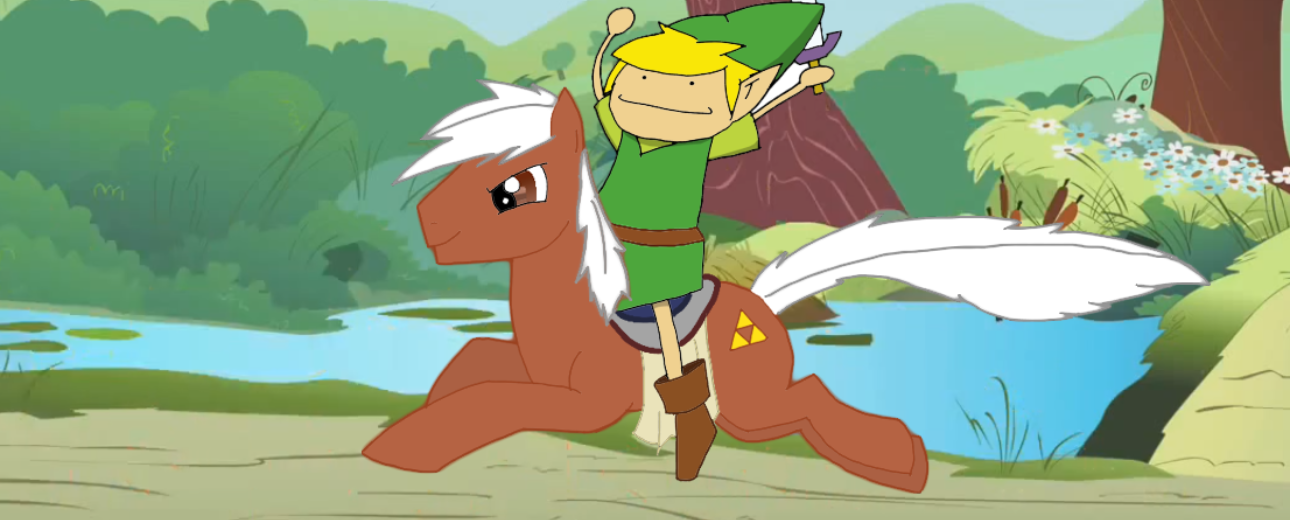
In the vast pantheon of video game companions, few have achieved the iconic status of Epona, Link’s loyal mare in The Legend of Zelda franchise.
The Horse That Became a Legend
More than just a means of transportation across Hyrule’s expansive fields, Epona represents something deeper—the bond between hero and companion, the freedom of exploration, and the timeless connection between human and horse that has defined adventure stories for millennia. Since her debut in The Legend of Zelda: Ocarina of Time in 1998, Epona has galloped her way into the hearts of millions of players worldwide, becoming as recognizable and beloved as Link himself.
What makes Epona extraordinary isn’t flashy abilities or complex characterization—it’s the simplicity and authenticity of what she represents. In a franchise filled with magical artifacts, mystical powers, and fantastical creatures, Epona stands out as something grounded and real. She’s a horse, faithfully rendered with behaviors and movements that feel genuine, creating an emotional connection that transcends the digital barrier between player and game. When you call Epona with the melody of her namesake song and she comes galloping across the field, ears perked and hooves thundering, there’s a genuine rush of joy and companionship that few gaming moments can match.
According to interviews with the development team published in Nintendo Power and various retrospectives, Epona’s creation was driven by the desire to give players a sense of scale and freedom in Ocarina of Time’s then-revolutionary 3D Hyrule Field. The Nintendo 64’s capabilities allowed for larger game worlds than ever before, but traversing these spaces on foot would have been tedious. The solution wasn’t just to create faster transportation—it was to create a companion, a character in her own right who would make traveling Hyrule an experience rather than a chore.
The name “Epona” itself carries deep cultural significance, borrowed from Celtic mythology where Epona was the goddess of horses, fertility, and the protector of riders. This mythological connection elevates the character beyond a simple mount, connecting her to ancient traditions of reverence for horses and their role in human civilization. The Zelda team’s choice to use this name demonstrates their understanding that this horse needed to be special, needed to carry the weight of legend and mythology that defines the franchise.
Epona’s impact on gaming extends far beyond her appearances in Zelda titles. She established a template for how companion animals should be portrayed in games—not as mere tools or vehicles but as characters with personality, presence, and emotional resonance. From Red Dead Redemption’s bonded horses to Shadow of the Colossus’s Agro, from The Witcher’s Roach to Ghost of Tsushima’s various steeds, countless games have attempted to recreate the magic of the player’s relationship with Epona. Some have succeeded admirably, but none have quite captured that original lightning in a bottle that made Epona special.
For players who grew up with Ocarina of Time, Epona represents nostalgia and childhood wonder—the first time they experienced the freedom of galloping across Hyrule Field with the wind in their hair (or at least, Link’s hair) and no particular destination in mind. The pure joy of exploration, the companionship on a lonely quest, the satisfaction of finally earning Epona’s trust and being able to call her wherever you are—these memories have stayed with players for decades, making Epona not just a character but a cherished part of their gaming history.
In this comprehensive exploration, we’ll trace Epona’s evolution across more than two decades of Zelda games, from her first appearance in Ocarina of Time through her various incarnations in Majora’s Mask, Twilight Princess, and beyond, to her presence in Breath of the Wild through amiibo functionality. We’ll examine how she’s portrayed, what she represents thematically, how developers have refined and reimagined her across different games and technological platforms, and why this seemingly simple character has achieved such enduring cultural significance. We’ll explore her role in gameplay, her symbolic importance to Link’s journey, and the technical achievements that brought her to life across multiple console generations.
Whether you’re a veteran player who remembers the first time you raced Ingo at Lon Lon Ranch, a newer fan who summoned Epona via amiibo in Breath of the Wild, or simply someone curious about why a video game horse has maintained relevance for over a quarter century, this article will provide a complete understanding of Link’s faithful mare. Prepare to gallop through gaming history and discover why Epona isn’t just the best horse in Zelda—she’s one of gaming’s most beloved companions, period.
Early Life and Origins: From Concept to Cultural Icon
The story of Epona begins not in the rolling fields of Hyrule but in the development studios of Nintendo EAD in the mid-1990s, where a team of visionaries was wrestling with how to translate The Legend of Zelda’s beloved formula into three dimensions for the first time.
The Development Challenge and Creative Solution
When Nintendo began developing what would become The Legend of Zelda: Ocarina of Time for the Nintendo 64, the team faced unprecedented challenges. The shift from 2D to 3D gaming wasn’t just a technical hurdle—it fundamentally changed how players would experience Hyrule. The game world needed to be larger and more immersive than anything previously possible, but this created a problem: how do you make traversing vast open spaces feel exciting rather than tedious?
According to Shigeru Miyamoto in interviews collected in the book “The Legend of Zelda: Hyrule Historia,” the team drew inspiration from real-world horseback riding and the freedom it represented. Miyamoto, who had childhood memories of exploring the countryside, understood the visceral thrill of covering ground quickly while still feeling connected to the environment. The solution wasn’t just to make Link run faster—it was to give him a companion for the journey, a living creature that would make travel an experience in itself.
The decision to include a rideable horse came relatively early in Ocarina of Time’s development, but creating this character presented enormous technical challenges. The Nintendo 64’s hardware had limitations that made animating a realistic horse incredibly difficult. The team needed to create smooth, natural-looking galloping animations, develop controls that felt intuitive and responsive, implement collision detection that worked with a character larger than Link, and ensure the horse could navigate the game world without constantly getting stuck or behaving erratically.
Lead programmer Toru Osawa and his team spent months perfecting Epona’s movement system, according to development retrospectives published in Edge Magazine and other gaming publications. They studied real horses, analyzing their gaits, behaviors, and movements to create something that felt authentic. The result was a technical achievement that still impresses decades later—Epona moves with a fluidity and naturalness that was revolutionary for 1998 and remains satisfying today.
The Mythological Foundation
The name “Epona” connects this video game character to ancient Celtic mythology, specifically the Gallo-Roman goddess who protected horses and riders. In Celtic tradition, Epona was revered across Europe, from Britain to the Balkans, worshipped by cavalry soldiers, stable workers, and anyone whose livelihood depended on horses. She was depicted riding a horse or surrounded by horses, often carrying fruit or grain symbolizing fertility and abundance.
This mythological connection wasn’t accidental or superficial. The Zelda series has always drawn deeply from world mythology—the Triforce echoes various trinities in religious traditions, character names reference gods and heroes from multiple cultures, and the overarching narrative follows the archetypal hero’s journey. Naming Link’s horse after a goddess of horses elevates her from a mere gameplay mechanic to something mythologically significant, something worthy of reverence and legend.
The choice also reflects Japanese developers’ sophisticated understanding of Western mythology and their ability to incorporate it meaningfully into their games. Rather than simply picking a random mythological name that sounded cool, they chose one that carried thematic weight—protection, loyalty, companionship—that perfectly embodied what they wanted this character to represent.
Epona’s In-Universe Origins at Lon Lon Ranch
Within Ocarina of Time’s narrative, Epona’s backstory is simple but effective, grounding her in Hyrule’s world through Lon Lon Ranch and its inhabitants. As a young horse at the ranch owned by Talon and managed by his daughter Malon, Epona represents the pastoral, peaceful side of Hyrule that exists before Ganondorf’s rise to power corrupts the land. The ranch serves as a haven of normalcy and simplicity in a world that will soon be consumed by darkness.
Malon’s relationship with Epona establishes the horse as special from the beginning. According to Malon’s dialogue, Epona was skittish and difficult, not responding well to most people. Malon, with her gentle nature and genuine love for horses, was the only one Epona truly trusted—until Link comes along. This setup creates an emotional foundation: Epona isn’t just any horse Link can claim. She’s a character who must be earned, whose trust must be won through kindness and music rather than force or commerce.
The use of “Epona’s Song” as the method for calling and bonding with her adds another layer of significance. Music is a central mechanic throughout Ocarina of Time, with Link’s ocarina serving as a tool for solving puzzles, manipulating time, and communicating with various characters. That Epona responds to a specific melody reinforces the personal, emotional connection between horse and rider. This isn’t just whistling for transportation—it’s a song that Malon created and shared, a piece of affection and trust made audible.
The timeline of Link’s relationship with Epona in Ocarina of Time follows a meaningful progression. As a child, Link meets Epona and learns her song from Malon, but he cannot yet ride her—she’s too large, he’s too young, and circumstances don’t permit it. This creates longing and anticipation. Seven years later, when Link returns as an adult to find Lon Lon Ranch under the cruel management of Ingo (after Ganondorf’s rise allowed corruption to spread even to this peaceful place), Epona serves as both a goal to achieve and a symbol of reclaiming what was lost.
The race against Ingo to win Epona represents one of Ocarina of Time’s most memorable sequences, combining mechanical challenge with narrative payoff. Link must prove himself worthy of Epona not through combat or puzzles but through riding skill, demonstrating that the bond between them has strengthened to the point where they can work as one. The subsequent escape from the ranch, jumping the fence while Ingo rages behind them, marks the beginning of Link and Epona’s partnership—they’re free, together, ready to face whatever Hyrule’s corrupted landscape throws at them.
Design Philosophy and Visual Identity
Epona’s visual design reflects careful consideration of how to make a horse character iconic and recognizable while maintaining some degree of realism. Her coloring—reddish-brown coat with white mane and tail—was chosen to stand out against Hyrule Field’s green grass and create strong visual contrast. This color scheme makes her immediately identifiable even from a distance, important for a character players would frequently need to locate in open environments.
The design team, led by art director Yoichi Kotabe and character designer Yoshiaki Koizumi, studied real horse breeds to inform Epona’s appearance. While not modeled after any specific breed, she shows characteristics common to riding horses—medium build, strong legs, an intelligent eye, and proportions suited for carrying a rider across long distances. This blend of realism and stylization makes her believable as a creature of Hyrule’s world while still fitting the game’s aesthetic.
According to concept art preserved in Hyrule Historia and various art books, early Epona designs experimented with different colors, markings, and even armor or decorative elements. The final design stripped away most ornamentation, presenting Epona as she would naturally appear—a working ranch horse, not a war steed or royal mount. This simplicity makes her more relatable and reinforces her role as a companion rather than a status symbol or weapon.
The technical implementation of Epona’s design required significant optimization to run smoothly on the Nintendo 64’s hardware. The team used clever texture work to create the impression of fur and muscle definition without excessive polygons. Her animations were carefully crafted to loop smoothly, creating the illusion of continuous natural movement without requiring massive amounts of animation data. These technical achievements, invisible to players experiencing the final game, were crucial to making Epona feel alive and real.
The Cultural Context of Horses in Gaming
When Epona debuted in 1998, horses in video games were relatively rare, and those that existed were typically simplistic or served purely functional roles. Epona represented a significant evolution in how games portrayed animal companions, setting standards that would influence the industry for decades. Previous games with rideable horses generally treated them as vehicles—you got on, you moved faster, you got off. Epona was different because she felt like a character, a living presence rather than an animated vehicle.
This evolution reflected broader changes in gaming during the late 1990s as technology advanced and developers gained the ability to create more nuanced, emotionally resonant experiences. The industry was moving beyond simple mechanics toward creating worlds and characters that players could form genuine emotional connections with. Epona became a flagship example of this shift—she wasn’t just technically impressive, she was emotionally effective.
Personality and Traits: The Soul Behind the Horse
Understanding Epona as a character rather than merely a gameplay mechanic requires examining the personality traits and behaviors that make her feel alive and distinct. While she never speaks (being a horse) and isn’t anthropomorphized, Epona exhibits consistent characteristics across her appearances that create a clear sense of who she is.
Loyalty and Trust
The defining characteristic of Epona’s personality is her unwavering loyalty once trust is established. In Ocarina of Time, the process of earning this loyalty is built into the narrative—she initially only trusts Malon, then gradually comes to trust Link through his kindness and the sharing of her song. Once that bond is formed, it’s unbreakable. Epona comes when called, regardless of circumstances or danger, demonstrating a loyalty that goes beyond simple animal training.
This loyalty is most powerfully demonstrated when Link calls Epona in the middle of a dangerous situation—perhaps with enemies nearby or in unfamiliar territory—and she still comes galloping without hesitation. She trusts Link’s judgment and will follow him anywhere, a level of devotion that creates genuine emotional resonance for players. You’re not just using a mount; you’re partnering with a creature who has chosen to be with you despite any risks.
The trust element works both ways. Link trusts Epona to carry him safely, to respond to his commands, to navigate difficult terrain, and to not panic in dangerous situations. This mutual trust creates a partnership rather than a master-pet relationship. Epona is never portrayed as subservient or broken to Link’s will—she’s a willing companion who has chosen to work with him because of their bond.
Intelligence and Awareness
Epona consistently demonstrates intelligence beyond what we’d expect from a simple game animal. She responds to music specifically—not just any sound or whistle, but the particular melody of Epona’s Song. This suggests musical memory and the ability to associate specific melodies with meanings or emotions. She navigates complex terrain without constant direction, suggesting spatial awareness and problem-solving ability. She can be directed with relatively simple inputs from the player, implying she understands intent and can anticipate what’s needed.
In Twilight Princess, Epona’s intelligence is further demonstrated through her interactions with wolf-form Link. Initially, she doesn’t recognize him and reacts with fear, as any horse would toward a wolf. However, once Link transforms back and re-establishes their connection, she understands on some level that the wolf and the human are the same being. This suggests a level of recognition and understanding that goes beyond simple visual identification.
Her behavior in various situations shows appropriate emotional responses—nervousness around enemies, calm contentment in safe areas, excitement when running at full gallop. These contextually appropriate reactions make her feel like a creature with genuine awareness of her surroundings rather than a simple AI following basic programming rules.
Spirit and Independence
While loyal, Epona is never portrayed as broken or spiritless. In Ocarina of Time, Ingo mentions that he can’t properly manage her, that she’s stubborn and difficult. This isn’t a flaw—it’s a feature that makes her special. She has her own will and only cooperates with those she respects. This independence makes earning her loyalty more meaningful; you haven’t dominated her spirit, you’ve earned her respect and partnership.
This spirited nature comes through in her animations and behaviors. She tosses her head, her ears constantly move to track sounds, she shifts weight and stamps hooves when standing still—all behaviors that suggest an active mind and personality rather than passive acceptance. Even when standing idle, Epona seems alive and present, not simply waiting to be activated like a vehicle.
The fact that she specifically bonds with Link and Malon, both depicted as kind and gentle individuals, while rejecting harsh treatment from characters like Ingo, suggests she’s a judge of character. Epona responds to kindness and rejects cruelty, showing values and preferences that align her with the heroic characters in the narrative. This moral dimension adds depth to her character and reinforces themes central to the Zelda franchise.
The Bond of Companionship
Perhaps Epona’s most important trait is her role as Link’s companion on what is often a lonely journey. Link in most Zelda games is a solitary figure, bearing the burden of heroism without much companionship. Epona provides a constant presence, someone (or something) Link can rely on no matter what. This companionship is conveyed through animation details—the way Link pats her neck, the comfortable way he sits in the saddle, the implied trust in how he handles the reins.
For players, Epona serves a similar function. Long journeys across Hyrule Field or other expansive areas could feel lonely and tedious, but with Epona beneath you, there’s a sense of companionship and shared adventure. The sound of her hooves, the rhythm of her gallop, her presence on screen—all of these create a feeling that you’re not alone in this quest. This emotional function, while subtle, significantly impacts how players experience these games.
The bond is reinforced through mechanical design as well. In Ocarina of Time and other games, Epona cannot be permanently lost or killed. If you dismount far from her, you can simply play her song and she reappears. This design choice serves gameplay purposes (preventing frustration) but also thematic ones—Epona is always there for Link, always ready to return when called. The bond between them transcends normal limitations of space and circumstance.
Evolution Across Appearances
Epona’s personality remains remarkably consistent across her various appearances, creating a sense of continuity even across different Links and timelines. Whether in Ocarina of Time, Majora’s Mask, Twilight Princess, or other games, the core traits—loyalty, intelligence, spirit—remain constant. This consistency has helped cement her identity as a distinct character rather than just a generic horse that happens to share a name across titles.
However, subtle differences do emerge in how she’s portrayed in different games, reflecting both technological improvements and specific narrative contexts. Twilight Princess’s Epona shows more complex behaviors and interactions due to the GameCube/Wii’s superior hardware. Breath of the Wild’s Epona (accessed via amiibo) has the refined movement and behavior systems of that game’s advanced horse mechanics while maintaining her distinct visual identity.
These variations while maintaining core consistency mirror how real horses have individual personalities within breed or type characteristics. Each Epona is recognizably Epona while still being appropriate to her specific game’s context and technological platform.
Abilities, Powers, and Skills: More Than Just Transportation
While Epona’s primary gameplay function is as Link’s mount for traveling quickly across large distances, examining her specific abilities and characteristics reveals a carefully designed character with distinct traits that set her apart from other horses in the games where she appears.
Physical Attributes and Performance
Epona consistently ranks as one of the fastest, most capable horses in the games where she appears. In Ocarina of Time, she’s explicitly the finest horse at Lon Lon Ranch, which is why Ingo becomes obsessed with keeping her and why the race against him serves as such a significant challenge. Her speed allows players to traverse Hyrule Field efficiently, turning what could be a tedious journey into an exhilarating ride.
Beyond raw speed, Epona demonstrates exceptional stamina. In games with stamina systems for horses, Epona typically has enhanced endurance compared to standard horses, allowing her to maintain top speed for longer periods. This mechanical advantage also serves thematic purposes—she’s capable of keeping up with Link’s demanding quest, able to maintain the pace required of a hero’s companion.
Her agility and responsiveness exceed normal horses as well. Epona can make sharp turns, jump obstacles, and navigate complex terrain with grace that other horses cannot match. The famous fence jump that allows Link and Epona to escape Lon Lon Ranch demonstrates her jumping ability, a skill that proves useful in various situations across different games. Her responsiveness to player inputs creates tight, satisfying control that makes riding feel precise rather than clumsy or frustrating.
The bond between Link and Epona also manifests in mechanical advantages. In combat situations, Epona remains relatively calm compared to how a normal horse might react to battle conditions. While she’s not a trained war horse and can be affected by certain enemies, she’s far more reliable under pressure than standard mounts. This allows for mounted combat in some games, with Link able to fight from horseback while Epona continues moving steadily beneath him.
The Power of the Song
Epona’s Song serves as both a narrative device and a gameplay mechanic, representing the unique bond between Link and Epona while also providing a practical method for summoning her. The fact that she responds to this specific musical sequence from any distance demonstrates an almost magical connection between horse and rider that transcends normal animal training.
From a lore perspective, this musical bond connects to broader themes in the Zelda franchise about the power of music and its ability to bridge distances and connect hearts. The ocarina serves as Link’s primary tool for accessing various magical effects throughout Ocarina of Time, and Epona’s Song fits into this framework—it’s Link using music to call out to a friend, and that friend responding because the bond between them allows her to hear and understand.
Mechanically, the song solves numerous potential gameplay problems. Without it, players might leave Epona somewhere and have no way to retrieve her without backtracking. The song ensures that Epona is always accessible when needed, maintaining gameplay flow while also reinforcing the emotional connection—you don’t whistle for a generic horse, you play a specific song that means something to both Link and Epona.
The melody itself is memorable and distinctive, composed by Koji Kondo to be simple enough for players to easily remember (important since they’ll play it frequently) while also having a warm, gentle quality that suits its purpose. Many players can still hum Epona’s Song years after playing these games, a testament to effective musical design that serves both functional and emotional purposes.
Combat Capabilities and Limitations
In games that feature mounted combat, Epona becomes an extension of Link’s combat abilities, allowing for horseback archery, sword strikes while riding, and the ability to chase down enemies or escape dangerous situations. Twilight Princess particularly emphasizes mounted combat, with several sequences specifically designed around fighting while riding Epona, including mounted duels and chase sequences.
However, Epona also has clear limitations that keep her balanced as a gameplay element and maintain realism. She cannot traverse all terrain—certain areas are inaccessible on horseback, requiring Link to dismount and proceed on foot. This creates natural gameplay variation, preventing horses from trivializing exploration challenges. She’s also vulnerable in some situations, with certain powerful enemies able to harm or dismount Link, creating stakes even when mounted.
These limitations serve important purposes beyond just game balance. They maintain Epona’s identity as a horse rather than a magical creature or vehicle. Real horses have limitations—they can’t climb cliffs, can’t navigate extremely narrow spaces, and can be frightened or injured. By preserving some of these realistic limitations, the games keep Epona grounded and believable, maintaining the emotional connection that would be lost if she were simply an all-terrain invincible vehicle.
The combat partnership between Link and Epona showcases both of their abilities. Link’s riding skill allows him to stay mounted even during intense combat, to aim accurately while moving at high speed, and to direct Epona effectively in dangerous situations. Epona’s calm under pressure, her speed and agility, and her willingness to charge toward danger rather than away from it all contribute to making them an effective team. Neither could accomplish these mounted combat feats alone—it requires both working in perfect sync.
Special Characteristics and Unique Traits
Across different games, Epona sometimes exhibits characteristics that edge into the supernatural or at least the exceptional, suggesting she may be more than just an unusually good horse. Her ability to hear and respond to Epona’s Song from vast distances implies sensory capabilities beyond normal horses. Her apparent understanding of Link’s intentions with minimal direction suggests a level of intelligence or connection that might be slightly magical.
In Twilight Princess, the ability to eventually summon Epona using the Horse Grass (which plays a melody similar to Epona’s Song) demonstrates that the musical connection remains strong even when Link hasn’t seen her for extended periods. The fact that she recognizes him immediately upon reunion, despite his having been absent from her life, suggests memory and emotional capacity that, while present in real horses to some degree, is portrayed here with almost magical constancy.
Some fan theories suggest that Epona, like other elements connected to Link across timelines, might be touched by divine power or destiny—that each incarnation of Epona is somehow special in ways beyond normal breeding or training. While the games never explicitly confirm this, the consistency of Epona across different eras and timelines, always appearing as a special horse connected to Link’s destiny, gives these theories some circumstantial support.
The practical skills Epona demonstrates are also noteworthy. She navigates complex terrain without stumbling, maintains footing on slippery or unstable surfaces better than normal horses, recovers quickly from impacts or falls, and seems to inherently understand routes and destinations without detailed guidance. These practical capabilities, while serving gameplay purposes, also establish her as exceptionally skilled even by horse standards.
Comparison to Other Horses
In games where multiple horses exist, Epona consistently stands out as superior. Twilight Princess features various horses Link can attempt to ride before reuniting with Epona, and none match her speed, responsiveness, or bond with Link. Breath of the Wild has an extensive horse system with many available mounts, and while some horses have excellent stats, the Epona obtained through amiibo functionality has perfectly balanced stats and the distinctive appearance that sets her apart.
This consistent superior quality across games reinforces Epona’s special status. She’s not just “a horse”—she’s THE horse, the one worthy of a hero, the one capable of keeping pace with legendary adventures. Other horses might suffice for normal travel or basic needs, but Epona is the companion who can handle everything Link’s quest demands.
The comparison also extends to horses in other games and media. When developers create horse companions in their games, they’re often measured against Epona—does the horse feel as responsive, as alive, as connected to the player? Many games have created excellent horse companions, but Epona remains the standard by which others are judged, the original that established what a video game horse companion should be.
Relationships and Allies: The Bonds That Define Her
While Epona is a horse and thus limited in her ability to form complex relationships like human or humanoid characters, the connections she does form are central to her character and significance within the Zelda franchise.
Link: The Primary Bond
The relationship between Link and Epona is the foundational connection that defines her character across all appearances. This bond is established carefully in Ocarina of Time—not instantaneous, but earned through kindness, patience, and music. Young Link’s interactions with Epona at Lon Lon Ranch plant seeds of friendship that bear fruit when he returns as an adult. This progression makes the eventual partnership feel earned and meaningful.
The nature of their bond transcends typical rider-mount relationships. There’s mutual trust, respect, and affection evident in how they interact. Link treats Epona gently, never cruelly, and she responds with loyal service that goes beyond mere training. When Link pats her neck or speaks to her (in games with voice acting), there’s genuine affection in the gestures. When Epona comes galloping at his call, there’s joy in the reunion that feels authentic.
This relationship serves important narrative and thematic purposes. Link is often a solitary hero, bearing immense responsibilities alone. Epona provides companionship on this lonely journey, a constant presence that makes the quest less isolated. She’s someone Link can rely on absolutely, who will never betray or abandon him, who shares his adventures without expecting anything beyond care and respect in return. This uncomplicated loyalty contrasts with the complex, sometimes troubled relationships Link has with other characters.
For players, the Link-Epona bond creates emotional investment in both characters. You care about Epona because Link clearly cares about her, and her loyalty to Link makes you appreciate her as more than just a gameplay tool. This emotional resonance is one of Epona’s greatest strengths as a character—she makes you feel something genuine, creating memorable moments through simple interactions.
Malon: The Original Friend
Malon’s relationship with Epona in Ocarina of Time establishes crucial backstory and context for Epona’s character. Malon is portrayed as gentle, kind, and genuinely passionate about horses. She sings to them, cares for them tenderly, and treats them as friends rather than just livestock or tools. Epona specifically trusts Malon, responding to her in ways she doesn’t respond to others at the ranch.
The fact that Malon teaches Epona’s Song to Link serves as a symbolic passing of trust. By sharing this special song, Malon is essentially introducing Link to Epona in the most meaningful way possible, creating a bridge that allows them to form their own bond. This demonstrates Malon’s good judgment—she recognizes Link’s kind nature and trusts him to treat Epona well, and her trust proves justified.
Malon’s presence also provides context for what Epona’s life was like before Link. She wasn’t always a hero’s companion—she was a ranch horse, living a simple pastoral life, cared for by someone who loved horses. This background makes Epona feel more real and grounded. She had a life before adventure, relationships before Link, and the transition from ranch horse to hero’s mount represents a significant change in her existence.
In some interpretations and fan discussions, there’s a poignant element to this relationship—Malon loses her friend when Link wins Epona from Ingo and escapes the ranch. While this is necessary for the story and ultimately better for Epona (rescuing her from Ingo’s cruelty), there’s an implicit sacrifice on Malon’s part. She gives up her friend so that both Epona and Link can be free and fulfill their respective destinies. This bittersweet element adds emotional depth to both characters.
Ingo: The Antagonistic Force
Ingo serves as Epona’s antagonist in Ocarina of Time, representing everything wrong about how horses can be treated when seen as mere property rather than living beings deserving respect. Under Ganondorf’s influence, Ingo takes control of Lon Lon Ranch and his treatment of both Talon and the horses becomes cruel and mercenary. His obsession with Epona specifically—wanting to keep the finest horse for himself—demonstrates his greed and lack of genuine appreciation for what makes her special.
The race against Ingo for ownership of Epona creates stakes and tension in what might otherwise be a simple acquisition of a mount. This isn’t just Link buying or finding a horse—he’s rescuing her from someone who doesn’t deserve her, who treats her as a prize rather than a companion. Victory over Ingo feels satisfying not just as a gameplay achievement but as a moral victory, freeing Epona from mistreatment and exploitation.
Ingo’s failure to properly manage or control Epona also reinforces her characterization. She’s described as stubborn and difficult with Ingo specifically because she doesn’t respect him. Epona isn’t uncooperative by nature—she cooperates beautifully with Malon and Link—but she refuses to submit to cruelty or selfishness. This discernment makes her seem more intelligent and principled, a character who can judge people’s worthiness.
The escape from Lon Lon Ranch, with Ingo shouting curses as Link and Epona jump the fence to freedom, symbolically represents liberation from oppression. It’s one of Ocarina of Time’s most triumphant moments, and Epona’s active participation in this escape—her willingness to make that dangerous jump, trusting Link completely—cements their bond and demonstrates her courageous spirit.
The Relationship with Wolf Link
Twilight Princess introduces a unique dynamic where Link can transform into a wolf, creating an interesting complication for his relationship with Epona. When first encountering wolf-form Link, Epona reacts with understandable fear—horses and wolves are natural enemies, and she has no way of knowing that this wolf is actually her friend. This realistic reaction reinforces Epona’s portrayal as a genuine horse rather than a magical creature who would somehow instinctively recognize Link regardless of form.
The process of re-establishing their connection after Link transforms back to human form is handled with touching simplicity. Epona recognizes him, overcomes her fear, and accepts that the wolf and the human are somehow connected. This demonstrates remarkable trust and understanding—Epona essentially has to accept something that makes no logical sense from a horse’s perspective, yet she does so because her bond with Link transcends normal understanding.
This dynamic creates interesting gameplay moments where Link must choose his form based on whether he needs Epona. The wolf form has certain advantages—enhanced senses, different combat abilities—but he cannot ride Epona while transformed. This mechanical limitation has narrative weight, representing how Link’s curse (the involuntary transformation into a wolf) complicates even his most reliable relationship. Even Epona, his most faithful companion, cannot accompany him when he’s in wolf form.
The eventual resolution, where Epona accepts both forms of Link and their partnership continues despite this complication, represents growth in their relationship. Epona’s capacity to adapt to this bizarre situation and continue trusting Link demonstrates remarkable psychological flexibility and deep emotional connection. It’s not just blind animal loyalty but something deeper—understanding and acceptance that goes beyond surface appearances.
Connection to the Goddesses and Destiny
While never explicitly confirmed, there are implications throughout the franchise that Epona might be connected to Link’s destiny in ways beyond simple companionship. She appears across different timelines, always as a special horse who bonds with that era’s Link, always maintaining similar characteristics and appearance. This consistency suggests something beyond random chance—perhaps each Epona is specially chosen or prepared by fate to accompany her era’s hero.
The name connection to the Celtic goddess of horses reinforces this possible divine connection. In a franchise where goddesses play active roles in shaping history and destiny, where sacred swords, mystical triangles, and prophesied heroes define reality, it’s not unreasonable to think that horses—or at least certain horses—might also be touched by divine providence. Epona’s exceptional nature, her seemingly magical bond with Link across distances, and her appearance at crucial moments in multiple timelines all hint at something more than ordinary horse.
This potential connection to greater forces doesn’t diminish Epona’s character but enriches it. Even if she is somehow chosen by destiny or touched by divine power, she’s still a horse with personality, preferences, and genuine emotions. The divine connection would simply explain why this particular horse is capable of being everything Link needs—why she’s always there when needed, always exceptional among horses, always the perfect companion for the hero’s journey.
Other Minor Relationships
Throughout various games, Epona has brief interactions with other characters beyond the major relationships discussed above. Various NPCs comment on her beauty, speed, or the obvious bond between her and Link. In Twilight Princess, the children of Ordon Village are familiar with Epona, and she’s comfortable in their presence, suggesting she’s well-integrated into Link’s community life rather than being solely a adventuring mount.
These minor interactions help establish Epona as part of the world rather than just a tool for Link’s use. She has a life beyond accompanying Link on his quest—she exists in communities, is recognized and appreciated by people who aren’t part of the main story, and has a presence in the peaceful moments between adventures. This integration into the broader world makes her feel more real and grounded.
Appearances in Media: Galloping Through Gaming History
Epona’s journey through the Legend of Zelda franchise spans decades and multiple console generations, with each appearance bringing new technological capabilities, design refinements, and gameplay innovations while maintaining the core character that fans love.
The Legend of Zelda: Ocarina of Time (1998)
Epona’s debut appearance in Ocarina of Time for the Nintendo 64 set the template for everything that followed. Players first encounter her at Lon Lon Ranch as young Link, where Malon introduces them and teaches Link Epona’s Song. This early meeting establishes Epona as important—she’s given attention and characterization beyond what a simple mount would receive, signaling to players that this horse matters.
The seven-year time skip creates separation and longing. Players remember the friendly brown horse from childhood, remember learning her song, and when Link returns as an adult to find Lon Lon Ranch under Ingo’s control, there’s genuine emotional investment in rescuing Epona. The race against Ingo to win her, followed by the dramatic fence jump to escape the ranch, creates one of the game’s most memorable sequences.
Mechanically, Ocarina of Time established the core controls and behaviors that would define Epona in future games: the ability to control her speed, make her jump, attack while mounted, and call her using the song. The controls felt intuitive and responsive, making riding Epona a joy rather than a frustration. The sense of speed and freedom galloping across Hyrule Field was exhilarating, especially for players in 1998 experiencing this kind of open-world traversal in a Zelda game for the first time.
The game also established Epona’s visual design—the reddish-brown coat, white mane and tail, and distinctive appearance that would become iconic. Even with the Nintendo 64’s graphical limitations, Epona was recognizable and beautifully animated, with galloping movements that looked natural and convincing. The technical achievement of creating a rideable horse that controlled well and looked good on Nintendo 64 hardware cannot be overstated.
The Legend of Zelda: Majora’s Mask (2000)
Majora’s Mask, the direct sequel to Ocarina of Time, brings Epona back in a dramatically changed context. The game begins with Epona and Link together, riding through the woods, when they’re ambushed by the Skull Kid wearing Majora’s Mask. The Skull Kid steals Epona (and the Ocarina of Time), and Link’s transformation into a Deku Scrub leaves him unable to effectively chase them. This opening immediately raises the stakes—Link has lost his companion, his most reliable ally taken from him.
The separation from Epona for most of Majora’s Mask creates a sense of loss that permeates the early game. Players who loved riding Epona in Ocarina of Time feel her absence acutely. Termina’s geography doesn’t feature the vast fields of Hyrule that made Epona essential, but knowing she’s out there, needing to be found and rescued, creates motivation beyond just the immediate plot.
Reuniting with Epona at Romani Ranch (Majora’s Mask’s equivalent to Lon Lon Ranch) provides genuine emotional payoff. The parallel to Lon Lon Ranch, with Romani and Cremia standing in for Malon and Talon, creates comfortable familiarity while establishing that this is a different world. Helping defend the ranch against alien abductions to earn the right to ride Epona again creates a meaningful quest that reinforces Link’s heroic nature—he doesn’t just take the horse, he earns the privilege through protecting those who care for her.
Once reunited, Epona functions similarly to her Ocarina of Time incarnation, allowing faster traversal of Termina’s regions. The controls and behaviors are refined from Ocarina of Time, benefiting from lessons learned during that game’s development. The technical improvements, while subtle, make riding feel even smoother and more responsive.
The Legend of Zelda: Twilight Princess (2006)
Twilight Princess represents Epona’s most significant evolution, featuring her most prominently in gameplay and narrative while showcasing what the GameCube and Wii hardware could achieve. From the game’s opening in Ordon Village, Epona is established as Link’s horse, a relationship that already exists rather than something to be earned. This different approach reflects Link’s status in this game—he’s a ranch hand, someone who works with horses, making his bond with Epona a natural part of his life.
The game emphasizes horseback activities from the beginning, with Link herding goats on Epona and demonstrating his riding skills. This establishes both Link’s competence as a rider and Epona’s responsiveness, setting up for the mounted combat and chase sequences that will feature throughout the adventure. The goat-herding minigame, while simple, effectively demonstrates the precision control players have over Epona.
The wolf transformation adds a new dynamic to Link’s relationship with Epona, as discussed earlier. The realistic portrayal of Epona’s fear when confronted by wolf-Link, followed by her gradual acceptance, adds emotional depth to their relationship. The scene where Link regains his human form and reunites with Epona is genuinely touching, with expressive animations conveying their mutual relief and affection.
Twilight Princess features the most extensive mounted combat in any Zelda game. Several major sequences are built around fighting while riding Epona, including mounted duels against enemies, chase sequences where Link must defend the carriage Princess Zelda travels in, and the climactic horseback fight against Ganondorf. These sequences are thrilling and showcase both Link’s and Epona’s abilities working in perfect sync.
The game also introduces horse grass, special plants throughout Hyrule that Link can use to play a melody that summons Epona. This serves the same function as Epona’s Song in previous games but is integrated more naturally into the world—the grass exists as a resource Link can use when separated from his mount. This refinement shows how developers continued thinking about how to make the Epona mechanic work smoothly within gameplay.
Graphically, Twilight Princess’s Epona benefited from the superior hardware, featuring more detailed textures, more natural animations, and more expressive behaviors. She looks more realistic than in previous games while still maintaining the distinctive design that makes her recognizable as Epona specifically rather than just a generic brown horse.
The Legend of Zelda: Breath of the Wild (2017)
Breath of the Wild revolutionized many Zelda conventions, including how horses work, featuring an extensive horse system with taming, bonding, and customization mechanics applied to numerous horses found throughout Hyrule. Within this context, Epona’s appearance is unique and special—she’s not found in the world naturally but is unlocked through the use of specific amiibo figures (the Super Smash Bros. Link, Twilight Princess Link, or Breath of the Wild Link amiibo).
When summoned via amiibo, Epona appears with her classic coloring and maximum bond level, immediately trustworthy and rideable without the taming process required for wild horses. Her stats are perfectly balanced—4 strength, 4 speed, 4 stamina—making her a solid choice for any situation even though some other horses in the game can have higher individual stats in specific areas. This balance reflects Epona’s characterization as the all-around perfect companion rather than specialized for one purpose.
The decision to make Epona amiibo-exclusive generated some controversy, as it meant players without specific amiibo couldn’t access this iconic character. However, it also made obtaining Epona feel special—she’s not just another horse you can find anywhere, but something unique that requires a specific method to obtain. For players who do unlock her, Epona stands out among the game’s many horses as the one with the storied legacy, the one carrying over twenty years of history.
Breath of the Wild’s advanced horse mechanics—the soothing system, the bonding process, the individual horse temperaments—work beautifully with Epona, making her feel more alive than in any previous game. She responds to Link’s calls, nuzzles him affectionately, and moves with fluid, natural animations that showcase just how far gaming technology has advanced since 1998. Riding Epona across Breath of the Wild’s massive open world creates moments of pure joy, combining nostalgia with cutting-edge gameplay.
The Legend of Zelda: Tears of the Kingdom (2023)
The sequel to Breath of the Wild continues the horse mechanics from its predecessor, and Epona remains available through the same amiibo functionality. In Tears of the Kingdom’s expanded and vertically-oriented Hyrule, with new sky islands and extensive underground regions, horses play a somewhat different role than in the previous game, but Epona maintains her status as a special, memorable mount for overland travel.
The game’s advanced physics and interaction systems allow for even more natural horse behaviors and movements. Epona benefits from these refinements, moving more realistically than ever before while maintaining responsive controls. The bond between Link and Epona is expressed through subtle animation details and behavioral responses that make her feel like a genuine character rather than a vehicle.
For players continuing their journey from Breath of the Wild, Epona can be transferred to the new game, maintaining continuity. For new players, the same amiibo unlock method applies. This consistency ensures that Epona remains accessible to those who value this connection to Zelda history, even in games that fundamentally reimagine many franchise conventions.
Other Appearances and Spin-offs
Epona has appeared in various Zelda spin-off games and media beyond the main series. In Hyrule Warriors and its various versions, Epona appears as Link’s mount, usable during certain missions and featured in some character animations. While not as central as in main series games, these appearances maintain her presence in players’ minds and reinforce her status as Link’s iconic companion.
In Super Smash Bros. games, Epona features in some of Link’s animations and attacks, particularly as part of his Final Smash in certain iterations. While not playable herself, these appearances keep her in the gaming consciousness and remind Smash players of her importance to the Zelda franchise.
The Legend of Zelda manga adaptations by Akira Himekawa and others have featured Epona, often expanding on her relationship with Link and providing additional characterization through the manga medium’s ability to show internal thoughts and emotions. While not official Nintendo canon, these adaptations demonstrate Epona’s importance to the Zelda narrative and provide interesting interpretations of her character.
Various Zelda merchandise, from figures and plushies to art prints and collectibles, frequently feature Epona alongside Link. This consistent commercial presence reflects her popularity and recognizability. Companies producing licensed Zelda products understand that fans want Epona represented, that she’s valuable intellectual property in her own right rather than just an accessory to Link.
Evolution of Portrayal
Tracing Epona through these appearances reveals consistent core characterization alongside evolutionary improvements in graphics, animation, and gameplay integration. The fundamental elements—her appearance, her loyalty, her bond with Link—remain constant across decades, creating continuity that allows players to immediately recognize her regardless of which game they’re playing. Yet each appearance also brings refinements that reflect advancing technology and evolving game design philosophies.
The progression from Nintendo 64’s polygonal Epona to the extraordinarily detailed and fluidly animated version in Tears of the Kingdom showcases video gaming’s technological evolution. Yet remarkably, the emotional core remains unchanged. Players in 2023 feel the same joy calling Epona and watching her gallop toward them that players felt in 1998. The specifics of how she looks and moves have improved dramatically, but what she represents—freedom, companionship, adventure—has remained constant.
Cultural Impact and Legacy: Beyond the Game
Epona’s influence extends far beyond her appearances in Zelda games, touching gaming culture broadly, influencing how other developers approach companion characters, and becoming a touchstone in discussions about emotional game design and the player-character bond.
Setting the Standard for Video Game Horses
Before Epona, horses in video games were typically primitive, functioning more as vehicles than characters. They appeared in racing games as sprites following pre-determined tracks, in some adventure games as occasional mounts with basic functionality, but rarely with the attention to animation, behavior, and emotional resonance that Epona received. Ocarina of Time changed this paradigm, demonstrating that a horse could be both mechanically satisfying and emotionally engaging.
The impact on subsequent games is undeniable. Shadow of the Colossus’s Agro (2005) built upon Epona’s foundation, creating another beloved horse companion with its own personality and crucial role in gameplay. The developers explicitly cited Epona as inspiration, acknowledging that Ocarina of Time proved players would form emotional bonds with well-realized horse characters. Agro’s death fake-out near the game’s end has become legendary for its emotional impact, a direct descendant of the care Epona taught developers to invest in animal companions.
Red Dead Redemption (2010) and its sequel (2018) feature perhaps gaming’s most sophisticated horse systems, with extensive bonding mechanics, realistic behaviors, and the potential for players to develop genuine attachment to specific horses. While more complex than Epona’s portrayal, the fundamental design philosophy—that horses should be companions rather than vehicles, characters rather than tools—echoes the groundwork laid in Ocarina of Time. Many Red Dead players experience genuine grief when their bonded horse dies, an emotional response enabled by foundations Epona helped establish.
The Witcher 3’s Roach, Ghost of Tsushima’s various mounts, Horizon Zero Dawn’s mechanical “horses,” and countless other games featuring rideable companions all owe debts to Epona’s legacy. She demonstrated that investing development resources in making a mount feel alive and creating meaningful player connection was worthwhile, that these details enhanced rather than distracted from core gameplay. Every game since that has created a memorable horse companion is walking (or galloping) a path Epona blazed.
Fan Reception and Community Love
The Zelda fan community has embraced Epona with extraordinary enthusiasm, creating countless pieces of fan art, fiction, and other creative works featuring her. Art sharing sites like DeviantArt, Pixiv, and Twitter are filled with Epona artwork ranging from faithful game-style recreations to imaginative reinterpretations, from realistic paintings to stylized cartoons. The sheer volume of Epona fan art demonstrates her popularity and the emotional connection fans feel.
Cosplayers occasionally incorporate Epona into their Link cosplays, sometimes through props like hobby horses or puppet representations, sometimes through elaborate mechanical or puppet creations that simulate riding. These ambitious projects demonstrate the dedication of fans who want to fully represent Link’s iconic partnership rather than just the hero himself. Some cosplayers have even brought actual horses to conventions and photoshoots, coloring them to match Epona’s distinctive appearance and recreating iconic scenes.
Fan fiction exploring Link and Epona’s relationship, expanding on her backstory, or imagining scenarios from her perspective exists in substantial quantities across platforms like Archive of Our Own and FanFiction.net. While the Zelda franchise features many characters and relationships to explore in fan works, Epona’s consistent presence in fan fiction demonstrates that even a non-speaking horse character can inspire creative storytelling when she’s well-conceived and meaningful to the source material.
The Zelda community frequently cites “getting Epona” as one of their favorite gaming memories. Discussions in forums, Reddit threads, and social media about most memorable Zelda moments inevitably include people sharing their experiences of first earning Epona in Ocarina of Time, the race against Ingo, the fence jump, or the feeling of freedom galloping across Hyrule Field. These shared memories create common touchstones that bond the community together across generations of players.
Academic and Critical Analysis
Game studies scholars and critics have analyzed Epona as an example of effective game design that creates emotional resonance through relatively simple means. Papers examining player-character relationships, companion design in games, and the role of animals in interactive media have cited Epona as a noteworthy case study. What makes a non-speaking, relatively simple character so memorable and beloved? The answer involves careful design, thematic integration, and understanding what players need emotionally from their gaming experiences.
Critical analyses have noted how Epona serves multiple functions simultaneously—mechanical (fast travel), narrative (Link’s companion on a lonely journey), thematic (freedom, exploration, the natural world), and emotional (something to care for and bond with). This multi-layered functionality makes her efficient from a design perspective while also creating depth that prevents her from feeling one-dimensional despite her simplicity.
Some academic work has examined Epona through the lens of human-animal relationships, analyzing how the game creates a believable bond despite technological and interactive limitations. The use of music as the bonding mechanism, the gradual development of trust, the realistic behaviors mixed with slight romanticization—all of these elements combine to create something that feels emotionally true even if not entirely realistic. This balance between authenticity and idealization makes Epona appealing without being saccharine or unbelievable.
Game designers have discussed Epona in talks and presentations about companion character design, using her as an example of how to create memorable companions who enhance rather than frustrate gameplay. The key lessons include: make summoning or accessing the companion easy so they’re available when needed, give them personality through animation and behavior rather than just dialogue, integrate them meaningfully into gameplay rather than making them purely cosmetic, and ensure their presence feels rewarding rather than obligatory.
Merchandise and Commercial Success
Epona’s marketability is evident in the steady stream of merchandise featuring her, either alongside Link or occasionally as the primary focus. Nintendo-licensed figure manufacturers like Figma, Nendoroid, and First4Figures have produced Link figures that include Epona, recognizing that fans want the complete set, not just the hero alone. Some of these are elaborate, expensive collectibles targeting adult collectors, demonstrating that Epona’s appeal isn’t limited to children.
Plushies, statues, and other collectibles featuring Epona sell consistently well, according to sales data from various retailers and Nintendo’s own merchandise divisions. Limited edition Epona-themed items often sell out quickly, creating secondary markets where collectors pay premium prices for rare pieces. This commercial success validates Nintendo’s investment in making Epona a memorable character—she generates revenue beyond just driving game sales, contributing to the Zelda franchise’s overall profitability.
The amiibo line has featured Epona indirectly through Link figures that unlock her in compatible games, and standalone Epona amiibo have been rumored though not yet released as of 2023. The fact that specific amiibo functionality centers on Epona demonstrates Nintendo’s recognition of her value and popularity. Players purchased certain Link amiibo specifically to unlock Epona in Breath of the Wild, with retailers noting increased sales of particular figures once their Epona-unlocking functionality became widely known.
Art books, guide books, and reference materials about Zelda games typically include substantial coverage of Epona, with concept art, development notes, and analysis of her role in the games. Publishers understand that fans want this content, that Epona is significant enough to warrant detailed coverage rather than just a brief mention. The Hyrule Historia and other official Zelda encyclopedias give Epona prominent placement, recognizing her importance to franchise history.
Influence on Game Design Philosophy
Beyond just inspiring other horse characters, Epona’s success influenced broader design philosophies about companion characters generally. She demonstrated that companions don’t need to be humanoid or capable of complex dialogue to form emotional bonds with players. Well-designed behaviors, meaningful integration into gameplay, and thematic resonance can create powerful connections even with relatively simple characters.
This lesson has been applied to various companion types in games since—robotic companions, animal companions, even vehicle companions have benefited from design philosophies that Epona exemplified. The idea that companions should enhance the experience emotionally and mechanically, that they should feel alive rather than like tools, has become standard in game design partially because examples like Epona proved this approach works.
The musical summoning mechanic has been echoed in various games, with other developers creating similar systems where players use specific sounds, songs, or calls to summon companions or mounts. While not all directly copy Epona’s Song, the underlying idea—that a special, personalized call creates stronger emotional connection than a generic whistle or button press—has spread throughout gaming. This specific design element has become part of the shared language of game design, a tool developers know they can use to strengthen player-companion bonds.
Epona in Popular Culture References
References to Epona appear in various media beyond gaming, from mentions in articles about gaming history to appearances in discussions about iconic video game characters. She’s recognized even by people who haven’t played Zelda games, achieving a level of cultural penetration reserved for truly iconic game elements. When mainstream media discusses The Legend of Zelda, they often mention Link, Zelda, the Triforce, and increasingly, Epona—recognition of her importance to the franchise’s identity.
Internet memes and humor frequently feature Epona, from jokes about the bond between player and horse to references to her specific appearances in various games. The meme format “link and his horse” has spawned countless variations, demonstrating that even in humorous contexts, people recognize and remember this specific character. This memetic presence indicates cultural staying power beyond just gaming enthusiasts—Epona has entered the broader internet consciousness.
Musicians have created covers, remixes, and arrangements of Epona’s Song, with some becoming popular enough to stand as independent musical works appreciated even by people unfamiliar with their source. The melody’s simplicity and warmth make it appealing as a piece of music independent of its game function, and its association with the beloved character adds emotional weight that musicians and listeners appreciate.
Trivia and Fun Facts: Hidden Hoofprints in Gaming History
The depths of Epona’s history contain fascinating details that even longtime fans might not know, revealing the care developers invested in creating this iconic character and the various ways she’s influenced gaming culture.
- Epona’s design went through numerous iterations during Ocarina of Time’s development, with early concept art showing different color schemes including pure white, black, and various brown shades before settling on the distinctive reddish-brown with white mane and tail that became iconic.
- The animation team studied real horses extensively, visiting ranches and filming horses moving at various gaits to ensure Epona’s movements would look natural. This research paid off—even by modern standards, Ocarina of Time’s Epona moves convincingly.
- In early Ocarina of Time builds, Epona could be ridden in more locations, including Kokiri Forest and certain dungeons. These features were cut because horses in confined spaces created camera and navigation problems, but some remnant code exists in the final game files.
- Koji Kondo composed Epona’s Song to be simple enough for players to easily remember since they’d play it frequently, while also having a warm, pastoral quality that fit the character. The melody uses only six notes, contributing to its memorability.
- The name “Epona” almost wasn’t used internationally—some localization teams worried players wouldn’t understand or properly pronounce the mythological reference. Ultimately, Nintendo decided to use it worldwide, trusting players to accept the name even if unfamiliar with Celtic mythology.
- Epona is one of the only recurring named characters in Zelda games besides Link, Zelda, and Ganon/Ganondorf to appear across multiple timelines, suggesting special significance in the franchise’s cosmology.
- In Majora’s Mask’s files, there exists unused dialogue from Skull Kid mentioning Epona specifically, suggesting a cut scene or interaction that would have provided more context for why he stole her.
- The fence-jumping animation in Ocarina of Time required special programming because the game’s physics engine wasn’t designed for characters to leave the ground except in specific circumstances. The programmers created a unique routine just for Epona’s jump.
- Twilight Princess’s Epona was originally going to have customization options, allowing players to change her saddle and bridle appearance, but this feature was cut during development to focus resources on other aspects of the game.
- The sound effects for Epona’s hooves in Ocarina of Time were created by Foley artists recording actual horses on different surfaces, then digitally modified to fit the game’s audio quality limitations while maintaining realism.
- Epona appears in the background of some scenes in Ocarina of Time’s cutscenes even before Link officially obtains her, a subtle detail that rewards observant players and reinforces her presence at Lon Lon Ranch.
- In Japan, Epona has inspired real-world horse names, with several horses at riding schools and ranches named after her, demonstrating her cultural penetration beyond gaming.
- The maximum speed Epona can achieve in different games varies, with calculations by fans determining that Twilight Princess Epona is technically fastest, followed by Ocarina of Time, then Majora’s Mask versions when measured by distance covered per second.
- Early marketing materials for Ocarina of Time featured Epona prominently, with Nintendo recognizing even before release that the horse would be a major selling point and memorable feature.
- Some speedrunners skip obtaining Epona entirely in Ocarina of Time, using various glitches and techniques to complete the game faster without her—but many speedrun categories specifically include Epona sections because they’re considered definitive parts of the Ocarina of Time experience.
- The AI programming for Epona includes subtle head movements that track enemies and points of interest, a detail most players never consciously notice but which contributes to making her feel alive and aware.
- In Breath of the Wild, Epona is the only horse immune to being startled by Guardians, a hidden stat that reflects her experience and courage beyond normal horses.
- Artists at Nintendo created detailed drawings of Epona from multiple angles to ensure consistency across cutscenes, gameplay, and promotional materials—a level of documentation usually reserved for main characters.
- The amiibo unlock for Epona in Breath of the Wild wasn’t originally planned—it was added during development when the team realized fans would expect and want this iconic character in the new game.
- Epona holds an unofficial record for most detailed horse character in N64 era games, using more polygons and having more complex animation routines than any other horse in games of that generation, demonstrating Nintendo’s commitment to making her special.

The Enduring Gallop of a Gaming Icon!
As we’ve journeyed through over two decades of Epona’s presence in the Legend of Zelda franchise and gaming culture, one truth becomes undeniable: this seemingly simple character—a horse, without dialogue or complex narrative arc—has achieved something remarkable. She’s become beloved, iconic, and influential in ways that many far more complex characters never achieve. Understanding why requires appreciating what Epona represents beyond just her function as Link’s mount.
Epona embodies the themes that make Zelda games resonate so deeply—companionship in the face of lonely quests, freedom to explore vast worlds at your own pace, the bond between hero and the world he’s sworn to protect. She’s a grounding presence in games filled with magic and fantasy, something relatable and real that provides emotional anchor. When everything else in Hyrule seems strange and dangerous, Epona is there—familiar, reliable, faithful.
The relationship between Link and Epona also represents something fundamental about gaming itself: the bond between player and the tools or companions that help them navigate game worlds. Epona transcends being a mere mechanic or vehicle because the games invest her with personality and emotional weight. She’s not transportation—she’s a friend, a partner, someone you care about. This emotional investment transforms gameplay from completing objectives to sharing adventures with someone who matters.
From a game design perspective, Epona’s enduring success teaches crucial lessons. Mechanical functionality and emotional resonance aren’t opposed—they enhance each other when properly integrated. Simple doesn’t mean shallow; carefully crafted details and behaviors can create depth without complexity. Players respond powerfully to well-designed companions who enhance rather than obstruct gameplay. These lessons, demonstrated through Epona, have influenced countless games and will continue shaping game design philosophy for years to come.
The technological journey from Nintendo 64’s polygonal Epona to the breathtakingly realistic version in Tears of the Kingdom showcases gaming’s evolution, yet the core of the character remains unchanged. Graphics, animations, and systems have improved dramatically, but what makes Epona special—her loyalty, her spirit, her role as Link’s companion—has stayed constant. This consistency across revolutionary technological change demonstrates that Epona’s appeal isn’t rooted in technical impressiveness but in something deeper and more timeless.
For the millions of players who’ve experienced Zelda games across generations, Epona represents cherished memories. The first time calling her and watching her gallop across Hyrule Field. Racing Ingo and feeling genuine triumph when victory was secured. Mounting up and setting off to explore, destination unknown, with faithful Epona beneath you. These moments have become part of personal gaming histories, memories associated with specific times and places in players’ lives. Epona isn’t just a game character—she’s interwoven with nostalgia, growth, and the joy of discovery that defines why we play games.
Looking forward, while we cannot predict Epona’s exact role in future Zelda titles, her established importance makes it likely she’ll continue appearing in some form. The franchise has demonstrated willingness to reinvent and reimagine core elements while respecting what fans love. Epona has earned her place in the franchise’s pantheon, standing alongside the Master Sword, the Triforce, and other iconic elements that define what Zelda is. Future games may present her differently—perhaps through new mechanics, new visual styles, new narrative contexts—but the essence of what makes her Epona will likely remain.
For players new to the franchise, discovering Epona awaits. Whether experiencing Ocarina of Time for the first time through modern ports and emulation, playing through Twilight Princess’s HD remaster, or summoning her via amiibo in Breath of the Wild or Tears of the Kingdom, that first moment of connection—calling her, mounting up, and galloping into adventure—remains as powerful today as it was in 1998. The joy of having this faithful companion transcends the era in which you encounter her.
As a longtime fan, what makes Epona stand out is the purity of what she represents. In games filled with complex plots, moral ambiguity, and challenging gameplay, Epona offers something uncomplicated: loyalty, freedom, companionship. She asks for nothing beyond basic care and respect, and gives everything in return. This simplicity isn’t a weakness—it’s her greatest strength. In a medium that often feels the need to complicate and add layers, Epona reminds us that sometimes the most powerful emotional experiences come from the simplest connections.
The legacy Epona leaves on gaming is one of demonstrating that any character, regardless of complexity or species, can achieve iconic status through thoughtful design and meaningful integration into the player’s experience. She’s inspired countless developers to create memorable companions, influenced how games portray horses and animals generally, and proved that players will form genuine emotional bonds with well-realized characters of any type. Her hoofprints mark a path through gaming history that countless games have followed, will continue to follow, and that has enriched gaming culture immeasurably.
For those who’ve never played a Zelda game, consider letting your first adventure include meeting Epona. Experience firsthand why this character has endured for over a quarter century, why she’s beloved by millions, why she represents something essential about what makes gaming special. Call her with music, mount up, and gallop across Hyrule’s fields. Feel the wind in your hair (or Link’s hair, rather), experience the freedom of exploration with a faithful companion, and understand why some video game characters transcend their medium to become genuine cultural icons.
The fields of Hyrule await, vast and full of adventure. Somewhere in those fields, a reddish-brown mare with a white mane waits to hear her song, ready to gallop to the side of whoever calls, ready to carry them on whatever adventures await. That’s Epona—loyal, spirited, free—gaming’s most faithful mare and one of its most enduring characters. Her story isn’t just the history of one character across many games, but the story of how thoughtful design, emotional resonance, and genuine care in creation can transform a simple concept into something legendary.
So grab your ocarina, play those six notes, and wait for the thunder of hooves. Adventure awaits, and the best companion you could ask for is ready to carry you into it.
References
- Nintendo EAD. (1998). The Legend of Zelda: Ocarina of Time [Video game]. Nintendo.
- Nintendo EAD. (2000). The Legend of Zelda: Majora’s Mask [Video game]. Nintendo.
- Nintendo EAD. (2006). The Legend of Zelda: Twilight Princess [Video game]. Nintendo.
- Nintendo EPD. (2017). The Legend of Zelda: Breath of the Wild [Video game]. Nintendo.
- Nintendo EPD. (2023). The Legend of Zelda: Tears of the Kingdom [Video game]. Nintendo.
- Aonuma, E., & Nintendo. (2011). The Legend of Zelda: Hyrule Historia. Dark Horse Books.
- Miyamoto, S. (1998). “Creating Ocarina of Time: Developer Interview.” Nintendo Power Magazine, Issue 114.
- Nintendo Power. (1998). The Legend of Zelda: Ocarina of Time Official Strategy Guide. Nintendo of America.
- Edge Magazine. (2006). “The Making of Twilight Princess: Developer Retrospective.” Edge Magazine, Issue 162.
- Kondo, K. (2011). “Music of The Legend of Zelda: Composer Commentary.” In The Legend of Zelda 25th Anniversary Symphony CD liner notes. Nintendo.
- Nintendo. (2013). The Legend of Zelda Encyclopedia. Dark Horse Books.
- GDC Vault. (2017). “Open-World Design in Breath of the Wild.” Game Developers Conference Presentation. Nintendo EPD.
- Osawa, T. (1999). “Programming Epona: Technical Challenges in Ocarina of Time.” Nintendo Dream Magazine Developer Interview.
- Nintendo Life. (2018). “Feature: The Evolution of Horses in Zelda.” Nintendo Life Publishing.
- IGN Entertainment. (2021). “The Legend of Zelda: Ranking Every Version of Epona.” IGN.com retrospective.
- Kotabe, Y., & Koizumi, Y. (1998). The Legend of Zelda: Ocarina of Time Official Art & Character Guide. Nintendo/Shogakukan.
- Digital Foundry. (2017). “Breath of the Wild: Horse Animation and AI Systems Analysis.” Eurogamer/Digital Foundry technical breakdown.
- The Legend of Zelda official website (www.zelda.com). Character Database and Historical Archives.
- Himekawa, A. (2008). The Legend of Zelda: Ocarina of Time Manga Series. VIZ Media.
- Parish, J. (2018). “Why Epona Remains Gaming’s Most Beloved Horse.” Polygon/Vox Media feature article.