
 Canada
 USA
USA Japan
Japan



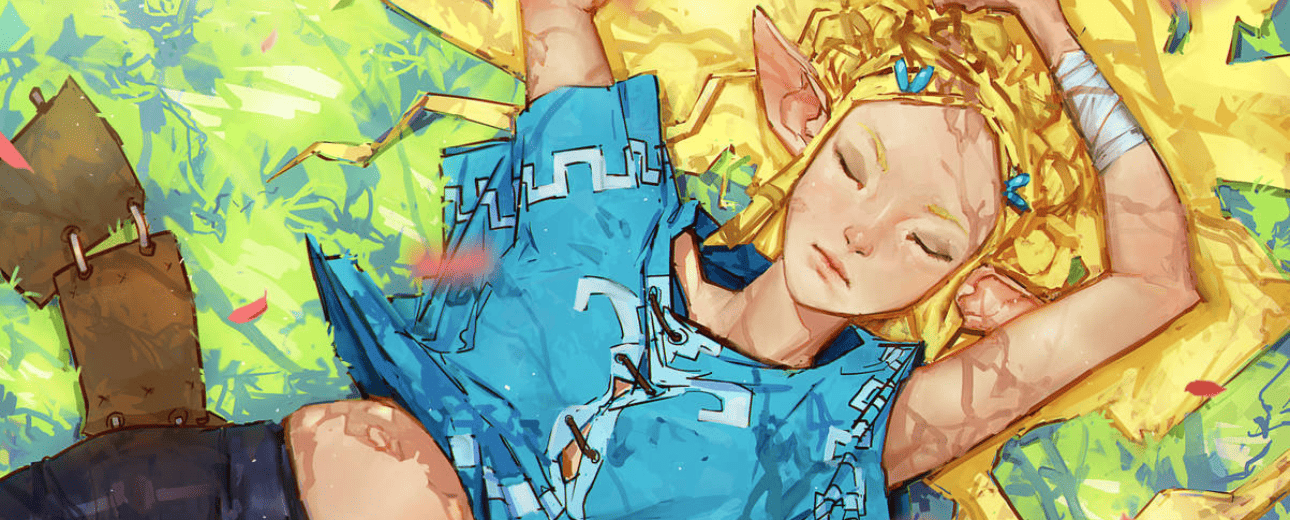
There are video game franchises that sell well. There are franchises that are beloved. There are franchises that endure. And then there is The Legend of Zelda — a series that doesn’t just tick all three of those boxes but has, over the course of nearly four decades, fundamentally shaped what video games are, what they can be, and what we expect from them as an art form and a medium. No other franchise has reinvented itself as many times, influenced as many developers, or consistently pushed the boundaries of game design with the same combination of ambition and quality.
This is not a casual claim. The history of video games is full of important franchises — Mario, Metroid, Final Fantasy, Doom, Half-Life, Pokemon — and making the case for any one of them as the single most important is always going to invite argument. We welcome the argument. But we’re going to make the case for Zelda, and we’re going to make it thoroughly, because when you look at the full picture — the innovations, the influence, the cultural weight, the consistency across time — the argument is stronger than you might initially think.
This is the complete case for The Legend of Zelda as the most important video game franchise in history. Let’s get into it.
What Makes a Video Game Franchise “Important”?
Before we make the case for Zelda specifically, it’s worth establishing what we actually mean when we call a franchise “important.” This isn’t just about sales figures, though Zelda’s sales are impressive. It’s not just about critical acclaim, though the series has more perfect review scores than almost any other franchise in existence. Importance, in this context, means something more specific and more interesting than either of those metrics.
A franchise is important to the history of video games when it changes what other developers think is possible. When it introduces ideas, mechanics, or design philosophies that ripple outward through the industry and show up in the games that follow it for years and decades. When it consistently operates at the frontier of what the medium can do — not just making great games in a genre, but expanding what genres can contain. And when it does all of this not once, or twice, but repeatedly across its entire history, reinventing itself in ways that keep it relevant across multiple generations of hardware and culture.
By every one of those measures, The Legend of Zelda stands at the top of the list. The series has reinvented video game design at least five times across its history — in 1986, in 1991, in 1998, in 2017, and arguably again in 2023 — and each of those reinventions sent shockwaves through the industry that are still being felt today. No other franchise has managed this kind of sustained, repeated innovation across such a long span of time.
Defining Importance Beyond Sales Numbers
Sales matter, and it’s worth noting that Zelda has sold extraordinarily well across its entire history. Breath of the Wild has sold over thirty million copies. Tears of the Kingdom sold ten million copies in its first three days. Ocarina of Time was the fastest-selling game in history at the time of its release. The franchise is commercially successful by any reasonable standard.
But the case for importance doesn’t rest on sales. It rests on influence, and the distinction between the two is crucial. A game can sell well without influencing anything — think of the dozens of technically successful franchises that left no lasting mark on how games are designed. And a game can be enormously influential without being a massive commercial hit at the time of release — though in Zelda’s case, both things are usually true simultaneously.
The influence metric is what separates Zelda from other commercially successful franchises. Talk to any game developer and ask them which games shaped their design philosophy. Talk to any game journalist and ask them which series defined the benchmarks against which other games are measured. Talk to any serious gaming historian and ask them which franchise appears most consistently in the story of how the medium evolved. The answer, more often than not, circles back to Zelda.
The Consistency Standard
One more element of importance worth establishing before we go further: consistency. It’s relatively easy to make one great, influential game. It’s much harder to make great, influential games across four decades, through multiple hardware generations, across a constantly shifting cultural landscape, while also consistently pushing the design frontier forward rather than coasting on what worked before.
Zelda has done this. Not perfectly — there are weaker entries in the series, and we’ll acknowledge them — but with a consistency of quality and ambition that is simply unmatched by any other franchise in the medium’s history. The ratio of genuinely great, design-forward games to total entries is extraordinary. And the fact that the series has never found a formula and stuck to it, has instead reinvented itself repeatedly at the risk of alienating existing fans in pursuit of something new and better — that is perhaps the most impressive thing about it.
The Original Legend of Zelda: Inventing Open World Design in 1986
When The Legend of Zelda was released on the Nintendo Famicom Disk System in 1986 — and subsequently on cartridge in 1987 for Western markets — it arrived in a gaming landscape that looked almost nothing like the one we inhabit today. Video games were primarily linear experiences: you moved from left to right, or you faced waves of increasingly difficult enemies, or you navigated fixed mazes. The idea that a game could give you a vast world to explore, with genuine freedom to choose where you went and what you did, was radical.
Shigeru Miyamoto and Takashi Tezuka built the original Zelda around a concept that seems almost shockingly simple in retrospect: what if you gave players a world and let them explore it? What if the game didn’t tell you where to go? What if discovery itself was the primary pleasure — the experience of wandering into an unknown corner of the map and finding something that surprised you? The original Zelda was built around the feeling of exploration as an intrinsic reward, and it was unlike anything that had existed before it.
The Open World Before Open World Was a Genre
The original Legend of Zelda is, in the most meaningful sense, the founding document of open world game design. Thirty-five years before Elden Ring, thirty years before The Witcher 3, twenty years before Grand Theft Auto III, the original Zelda established the foundational grammar of what open world games are: a large, interconnected space where the player has genuine freedom of movement, where secrets reward curiosity, and where the pleasure of the experience comes from the act of exploration itself rather than from being guided through a predetermined sequence of events.
This is not a retroactive claim. Developers working in the open world genre have consistently cited the original Zelda as a foundational influence. The specific design decisions that Miyamoto and Tezuka made in 1986 — the non-linear dungeon structure, the hidden passages, the items that unlock new areas of the world, the sense that every screen edge conceals something worth finding — became the template for an entire genre that now generates billions of dollars in annual revenue and includes some of the most beloved games ever made.
The Design Philosophy That Started Everything
What made the original Zelda’s design approach so revolutionary wasn’t just the freedom it gave players — it was the specific way it used that freedom to create a particular kind of emotional experience. The game is designed to make you feel like an adventurer, not like a player following instructions. When you push a boulder and find a staircase leading to a secret cave, the game doesn’t congratulate you or announce your achievement. It just shows you the staircase, and the discovery is its own reward. That design philosophy — trust the player, reward curiosity, make the world feel like it has secrets worth finding — is the core of everything the Zelda series has done for nearly four decades.
It is also the core of what the best open world games do today. When you climb a mountain in Elden Ring and find an unexpected dungeon on the other side, you are experiencing a direct descendant of the design philosophy that Miyamoto articulated in 1986. When you push through fog in Dark Souls and discover a shortcut that connects two areas you’d thought were separate, you’re experiencing the same fundamental pleasure that Zelda invented. The lineage is direct, acknowledged, and profound.

A Link to the Past: Defining the Action-Adventure Genre
If the original Zelda invented the open world concept, A Link to the Past — released in 1991 for the Super Nintendo — perfected the action-adventure genre and established the template that would define it for decades. This is the game that took everything the original Zelda had introduced and refined it into a form so close to perfect that developers are still drawing from it thirty years later.
A Link to the Past introduced several design concepts that became so fundamental to gaming that we now take them for granted. The light world and dark world mechanic — the idea of two parallel versions of the same world, with actions in one affecting the other — was so elegant and so well-executed that it has been borrowed, referenced, and reimagined in hundreds of games since. The three-heart health system became a standard across action games for decades. The puzzle dungeon structure — where each dungeon introduces a new item that is then used to solve the dungeon’s puzzles and defeat its boss — became the foundational design of action-adventure games from the 1990s through the 2010s.
The Dungeon Design Template
The dungeons in A Link to the Past are, quite simply, some of the best-designed spaces in video game history. Each one is a self-contained puzzle that teaches you the new mechanic at its center, challenges you to apply it in increasingly creative ways, and climaxes in a boss fight that requires you to use everything you’ve learned. This structure — introduce, develop, test, climax — is now so ubiquitous in game design that it appears in virtually every major action game, puzzle game, and adventure game released in the past thirty years.
The degree to which this structure has been adopted by other developers is staggering. From Dark Souls’ interconnected level design to Metroid Prime’s ability-gated exploration to Batman: Arkham Asylum’s gadget-based puzzle rooms to virtually every dungeon ever designed in any game, ever — the shadow of A Link to the Past’s dungeon design philosophy falls across the entire medium. Developers who have never played Zelda are working within a design tradition that Zelda created, because it was adopted by the games that influenced them.
Setting the Standard for Action-Adventure Quality
A Link to the Past also set a standard of quality for the action-adventure genre that has served as the benchmark ever since. When critics evaluate an action-adventure game, the questions they ask — Is the world interesting to explore? Are the dungeons well-designed? Does the combat feel satisfying? Is the pacing well-managed? — are questions that were largely defined by what A Link to the Past established as the gold standard of the genre.
This is what it means to define a genre: not just to be good at it, but to articulate what being good at it looks like so clearly that everyone else who works in the genre is implicitly responding to your example. A Link to the Past did this for action-adventure games in the same way that Super Mario Bros. did it for platformers and Doom did it for first-person shooters. It drew the map of what the genre could be, and everyone who came after has been navigating by that map.
Ocarina of Time: Inventing the Grammar of 3D Games
The Legend of Zelda: Ocarina of Time was released in 1998 for the Nintendo 64, and it is, without any serious challenge, the most influential individual video game ever made. This is not hyperbole. This is not fan enthusiasm distorting judgment. This is the considered verdict of game designers, game journalists, game historians, and anyone who has seriously examined the question of which single game had the most lasting impact on how video games are designed and played.
Ocarina of Time arrived at a moment of genuine crisis in game design. The transition from 2D to 3D was underway, but nobody had fully figured out how to translate the pleasures of 2D game design into three-dimensional space. 3D games existed — Super Mario 64 had shown that 3D platforming could work brilliantly — but the specific challenges of 3D action-adventure design were unresolved. How do you control combat when the enemy can be anywhere in three-dimensional space? How do you navigate a dungeon when you can look in any direction? How do you design puzzles for a player who has complete freedom of perspective?
Z-Targeting: Solving the Problem of 3D Combat
The answer that Ocarina of Time gave to the problem of 3D combat was Z-targeting — a lock-on system that allowed players to focus on a specific enemy, keeping them in frame and allowing the character to circle, dodge, and attack in relation to a fixed point. This was not just a clever solution to a technical problem. It was a fundamental redefinition of how action combat works in three-dimensional space, and it became the standard that virtually every action game has used ever since.
Look at any 3D action game released in the past twenty-five years — Dark Souls, God of War, Bayonetta, The Witcher 3, Sekiro, Monster Hunter, Assassin’s Creed — and you will find some version of the lock-on mechanic that Ocarina of Time invented. Sometimes it’s implemented differently, sometimes it’s evolved significantly, but the core concept — give the player a way to anchor their attention and orient their combat in relation to a specific target — traces directly back to what Nintendo’s team built for Ocarina of Time in 1998. This single innovation changed how action games are played at a fundamental level, and it did so permanently.
Context-Sensitive Controls and Environmental Storytelling
Z-targeting was the most visible of Ocarina of Time’s innovations, but it was far from the only one. The game also pioneered context-sensitive button inputs — where the same button performs different actions depending on what you’re standing next to or what situation you’re in — a design approach that eliminated the need for complex control schemes and made 3D games dramatically more accessible and intuitive. This approach is now so standard that we don’t even notice it anymore, but someone had to invent it.
The game also made enormous advances in environmental storytelling — using the design of spaces, the placement of objects, the behavior of NPCs, and the visual language of the world itself to communicate narrative information without explicit exposition. The way Hyrule Field feels different at different times of day, the way the Temple of Time communicates its sacred weight through architecture and sound before a single word of dialogue is spoken, the way the Water Temple’s oppressive atmosphere creates genuine dread through environmental design rather than jump scares — these were approaches to storytelling through space that influenced narrative game design profoundly.
The Perfect Score That Became a Benchmark
Ocarina of Time received a perfect score of 10/10 from virtually every major gaming publication at the time of its release, and it held the top position on Metacritic’s all-time best games list for years. These scores matter not just as validation but as an indication of how completely the game had achieved what it set out to do. It wasn’t just good — it was definitionally excellent, the game against which other games would be measured for a generation.
The phrase “it’s no Ocarina of Time” became a genuine critical shorthand for falling short of the highest standard in the action-adventure genre. No other game — not even other Zelda games — has achieved quite that level of definitional status. For a period of roughly fifteen years, Ocarina of Time was simply the answer to the question “what does a perfect action-adventure game look like?” That kind of benchmark status is extraordinarily rare in any art form, and it’s one of the clearest measures of genuine importance.

The Wind Waker and the Courage to Be Different
After Ocarina of Time and its direct sequel Majora’s Mask — itself an extraordinarily experimental game that we’ll discuss in more detail shortly — Nintendo could have settled into a comfortable formula. They had the template. They knew what a great Zelda game looked like. They could have made Ocarina of Time again, in a new world, with new puzzles, and it would have sold millions of copies and received excellent reviews.
They didn’t do that. Instead, they made The Wind Waker.
Released in 2002 for the GameCube, The Wind Waker arrived with a cel-shaded art style that divided the fanbase immediately and dramatically. Fans who had seen a tech demo featuring realistic, high-definition Hyrule at a Nintendo conference were expecting something that looked like a grown-up Ocarina of Time. What they got instead was a game that looked like a living cartoon — big eyes, exaggerated proportions, bold colors, a visual language borrowed from animation rather than from photorealism.
The Art Direction That Changed Games
The initial reaction from a section of the fanbase was negative, sometimes intensely so. “Celda” became a dismissive nickname for the game before it was even released. And then the game came out, and people played it, and the conversation shifted almost entirely.
The Wind Waker is one of the most beautiful games ever made — not despite its art direction but because of it. The decision to go with cel-shading rather than realism was not a compromise or a limitation; it was a deliberate artistic choice that gave the game a visual identity more distinct and more timeless than any realistic aesthetic could have provided. A realistic Zelda from 2002 would look outdated today. The Wind Waker looks as fresh and alive as it did the day it was released.
The game’s influence on art direction in the industry was enormous. It demonstrated that abstraction and stylization were not concessions to technical limitation but genuine artistic tools that could produce results that realism never could. In the years following Wind Waker, the number of games that chose bold, stylized visual identities over photorealistic ones increased significantly. Games like Okami, Borderlands, Cuphead, Hades — all of them owe something to the Wind Waker’s demonstration that stylized art is a legitimate artistic choice rather than a fallback position.
Wind Waker’s Emotional Depth
Beyond its art direction, The Wind Waker pushed the narrative and emotional depth of Zelda games further than they had gone before. The relationship between Link and his sister Aryll, the melancholy of Ganondorf’s final monologue, the bittersweet conclusion of the entire game — these were moments of genuine emotional sophistication that demonstrated the medium’s capacity for affecting storytelling in ways that many critics still hadn’t fully accepted. The Wind Waker was not just a great game. It was an argument that games could have the emotional register of genuinely good fiction.

Majora’s Mask: The Game That Proved Zelda Could Do Anything
Majora’s Mask deserves its own extended discussion because it represents something genuinely extraordinary in gaming history: a major franchise installment that is more experimental, more thematically dark, more structurally unconventional, and more emotionally challenging than virtually anything else the series produced before or since. It’s the Zelda game that shouldn’t exist, by any conventional measure of franchise logic, and its existence is one of the most powerful arguments for the series’ importance.
Released in 2000 — just two years after Ocarina of Time — Majora’s Mask was built by a small team under extreme time pressure, using reused assets from Ocarina of Time. Those constraints, rather than limiting the game, seem to have liberated its designers to take risks that a larger, more carefully managed production might not have taken. The result is a game about grief, anxiety, the passage of time, and the impossibility of saving everyone — themes that no major video game had engaged with seriously before, and that most major games still approach only obliquely.
The Three-Day Structure and What It Means
The central mechanic of Majora’s Mask — you have three days before the moon falls and destroys the world, and you must relive those three days repeatedly using a time-reset mechanic — is one of the most conceptually elegant designs in video game history. It creates a specific kind of emotional experience that is completely unique to the game: the knowledge that you cannot save everyone, that every cycle of three days will see some people suffer while you attend to others, that the world is ending and your best is never quite enough.
This is not a comfortable experience. It’s designed not to be. And the fact that a major Nintendo franchise title was designed to produce genuine existential discomfort rather than triumphant satisfaction tells you something important about what the Zelda series is and what it’s willing to do. Majora’s Mask is, by any serious analysis, a game about the experience of grief and powerlessness — about the impossibility of being everywhere and the weight of every choice not to be in a place where you’re needed. That’s serious territory for a medium that was still largely dismissed as entertainment for children.
The Influence on Narrative Game Design
Majora’s Mask’s influence on narrative game design has been enormous, even if it’s less immediately visible than the structural innovations of Ocarina or the art direction of Wind Waker. The game demonstrated that video games could engage with genuinely heavy emotional and thematic material without abandoning the pleasures of exploration and puzzle-solving. It showed that a game could have a sad story to tell and tell it through mechanics rather than through cutscenes alone.
Games like Undertale, Disco Elysium, What Remains of Edith Finch, Hades, and Outer Wilds — the vanguard of what critics sometimes call “games as art” — all work in a tradition of emotionally serious, thematically ambitious game design that Majora’s Mask helped establish. The idea that a game’s mechanics and its emotional content should be in dialogue with each other, that what you do should reflect and deepen what the game is about, is a design principle that Majora’s Mask articulated more clearly and more effectively than almost any game before it.

Breath of the Wild: Reinventing Open World Design for the Modern Era
In 2017, Nintendo did something extraordinary: they looked at everything the Zelda series had built over thirty years, recognized that the formula had become too rigid and too predictable, and tore it down to rebuild it from scratch. Breath of the Wild was the result, and it was not just the best game of its year — it was one of the most significant game design events of the entire decade.
Breath of the Wild arrived at a moment when open world game design had itself become formulaic. The genre that the original Zelda had helped invent had calcified into a set of tired conventions: map markers everywhere, question marks on every corner of the world, waypoints directing you toward the next objective, experience points and level gates determining where you could go and what you could do. Open world games had become paradoxically restrictive — huge worlds with very little actual freedom.
The Physics-Based Sandbox Revolution
Breath of the Wild’s answer to this problem was to build an open world around emergent physics and genuine player freedom rather than around content delivery systems. Instead of filling the world with markers and objectives, Nintendo built a world with consistent physical rules — temperature systems, wind, fire propagation, electrical conductivity, magnetism — and then let players interact with those rules however they chose. The result was a game where the most interesting things that happened were not the things the designers had scripted but the things that emerged from the collision of player creativity and consistent physics.
The climbing mechanic — the ability to climb virtually any surface in the world — eliminated the invisible walls and restricted movement that had been a staple of open world design for decades. The cooking system, the weapon degradation, the environmental puzzle design — all of these were built around the idea of giving players genuine agencyin how they engaged with the world, rather than directing them toward predetermined solutions.
This approach has been enormously influential. Games like Elden Ring, Immortals Fenyx Rising, Genshin Impact, and dozens of others have explicitly acknowledged Breath of the Wild’s influence on their design. The “BotW-like” has become its own subgenre. Once again, a Zelda game had not just succeeded within an existing genre but had redefined what that genre was and what it was capable of.
Rewriting the Rules of the Franchise Itself
What makes Breath of the Wild additionally significant is that it was willing to abandon almost every convention that the Zelda series had established over thirty years. Traditional dungeons were replaced by Shrines. The fixed narrative structure was replaced by a non-linear approach where you could technically fight the final boss at any point in the game. The familiar item-acquisition loop was replaced by a physics toolbox you received early and used throughout. Even the visual style, the musical approach, and the narrative tone were substantially different from what had come before.
This willingness to destroy the formula it had spent decades building is one of the most remarkable things about the Zelda series. Most franchises, when they reach Zelda’s level of commercial and critical success, become conservative — they find what works and protect it. Nintendo repeatedly makes the opposite choice, risking the franchise’s existing audience in pursuit of something genuinely new. That this gamble has paid off so consistently is a testament to the quality of thinking behind the series.

Tears of the Kingdom: Building on the Foundation
Tears of the Kingdom, released in 2023, continued where Breath of the Wild left off and expanded the formula in ways that demonstrated Nintendo’s continued commitment to genuine innovation rather than iteration. The Ultrahand, Fuse, Ascend, and Recall abilities gave players a new creative toolbox that produced emergent gameplay possibilities far beyond what any single designer could have scripted.
The game’s most impressive achievement is the way it manages to feel both familiar — same world, same basic structure, same physics foundation — and genuinely new. The sky islands, the underground Depths, the dramatically expanded building system, the improved dungeon design — all of these additions addressed the specific criticisms that had been leveled at Breath of the Wild while also pushing the creative possibilities of the formula further than they had gone before.
Ultrahand and the Creative Sandbox
The Ultrahand ability — which allows players to pick up, move, rotate, and combine almost any object in the world — transformed Tears of the Kingdom into what many players described as the most creative and open-ended game they had ever played. The YouTube videos of extraordinary player-created contraptions — flying machines, tanks, elaborate puzzle-solving devices — were not just entertaining; they were evidence of a game design so robust and so trusting of player creativity that it could accommodate solutions its creators had never imagined.
This is the ultimate expression of the design philosophy that the original Zelda articulated in 1986: trust the player, build a world with consistent rules, and let the interesting things emerge from the collision of player creativity and those rules. Thirty-seven years of refinement had produced something that the 1986 version could only gesture toward — a game world so physically coherent and so genuinely open that the player’s imagination is the primary limiting factor on what can be done within it.
The Critical Reception and Commercial Success
Tears of the Kingdom received universal critical acclaim and sold at a pace that set records for Nintendo. It demonstrated that the Breath of the Wild formula was not a one-time success but a sustainable design direction — one that players were hungry to return to and that could support genuine expansion and evolution. More importantly, it demonstrated that the Zelda series was still capable of generating genuine excitement and conversation about game design in a way that few other franchises can match.

The Cultural Legacy of Zelda: Music, Art, and Beyond
The importance of The Legend of Zelda extends well beyond game design into the broader cultural conversation about what video games are and what they mean. The series has produced some of the most recognizable and beloved music in the history of the medium, has inspired an extraordinary volume of fan art, fan fiction, and fan creativity, and has been the subject of serious academic analysis in ways that few game franchises have been.
Koji Kondo’s compositions for the Zelda series — the overworld theme, Saria’s Song, Zelda’s Lullaby, the Song of Storms, the Great Fairy Fountain theme — are among the most instantly recognizable pieces of music in popular culture, not just in gaming. These themes have been performed by symphony orchestras around the world, recorded by professional musicians across every conceivable genre, and recognized by people who have never played a video game in their lives. The Legend of Zelda: Symphony of the Goddesses concerts have toured the world to sold-out venues, treating game music with the same seriousness and reverence traditionally reserved for classical compositions.
Zelda as Art and Academic Subject
The Zelda series has also been taken seriously as a subject of academic inquiry in ways that reflect its cultural weight. Scholars have written about Zelda’s relationship to Joseph Campbell’s Hero’s Journey, its engagement with Jungian archetypes, its use of music as a narrative device, its representation of gender and heroism, its relationship to Japanese cultural traditions, and its engagement with themes of time, memory, and loss. This is not typical territory for video game scholarship, and the fact that Zelda has generated it says something important about the depth and richness of what the series has created.
The Community That Zelda Built
The Zelda fan community is one of the largest, most passionate, and most creative in all of gaming. The amount of fan art, fan music, fan fiction, speedrunning, game analysis, and collaborative world-building that the series has inspired is staggering. The speedrunning community around Ocarina of Time in particular is legendary — the game has been analyzed and dissected more thoroughly than almost any other game in existence, its every pixel examined for new tricks, exploits, and optimizations that the developers never imagined.
This level of community engagement is itself a measure of cultural importance. When a game generates not just fans but active creators — people who are inspired to make things by what they’ve played, who build communities around shared passion, who push the limits of the game’s design in ways that reveal new dimensions of what it contains — that’s a sign of something genuinely important happening. The Zelda community is, by that measure, one of the most vivid demonstrations in gaming of what a truly important franchise looks like.

The Competition: Making the Case Against Other Franchises
We said at the beginning that this argument invites counterargument, and we meant it. Let’s be honest about the alternatives and make the case against them, because doing so will clarify what makes Zelda’s claim to the top position strongest.
Super Mario is the obvious alternative, and it’s a powerful one. Mario invented the modern platformer, defined the grammar of 2D and 3D platform game design, and has been Nintendo’s primary commercial engine for four decades. The case for Mario’s importance is genuinely strong. But Mario’s design innovations, while profound, are largely concentrated in two moments: the original Super Mario Bros. in 1985 and Super Mario 64 in 1996. Between and after those peaks, the series has been more iterative than innovative, more commercial than experimental. Zelda has reinvented itself more times, taken more risks, and pushed the frontier of game design more consistently across its history.
Pokemon, Final Fantasy, and the Others
Pokemon is enormously important as a cultural phenomenon and as a commercial juggernaut, but its game design innovations are relatively limited and largely concentrated in the original games. The core loop of Pokemon — catch, train, battle, trade — has changed surprisingly little across nearly thirty years. The franchise’s importance is cultural rather than design-forward, which is a different kind of importance. It has shaped childhoods and created one of the largest media empires in history, but it has not repeatedly redefined what games can be the way Zelda has.
Final Fantasy has an extraordinary history and has produced some of the most beloved RPGs ever made, but the series’ consistency is much more uneven than Zelda’s. For every Final Fantasy VI or VII, there are entries that fail to push the medium forward in any meaningful way. And the innovations Final Fantasy introduced are more genre-specific — affecting the JRPG in particular — whereas Zelda’s innovations have rippled across the entire medium regardless of genre. Half-Life, Doom, and Minecraft each have powerful claims to importance based on specific innovations that reshaped parts of the industry. But none of them has sustained Zelda’s record of repeated, franchise-wide innovation across multiple decades. Zelda’s claim isn’t that any single Zelda game is more important than any single game in another franchise — though Ocarina of Time would certainly compete for that title. It’s that the franchise as a whole has a record of sustained, repeated, diversely impactful innovation that no other series can match.
Why Zelda Wins the Sustained Innovation Argument
The key phrase in Zelda’s case for importance is sustained innovation. Single-game innovation is relatively common in gaming history — many franchises have produced one or two games that changed what developers thought was possible. What is vanishingly rare is a franchise that has done this five, six, seven times across four decades, never settling, never coasting, never deciding that what worked before was good enough to keep doing indefinitely.
Nintendo has protected the Zelda series from the commercial pressures that turn other franchises conservative. The series is not released on a fixed annual or biannual schedule. Games take as long as they take. Eiji Aonuma and his team are given the creative space to pursue genuinely new ideas rather than being required to deliver a predictable product on a predictable timeline. The result is a franchise where each major entry is a genuine event — not just a new installment in a familiar experience, but a reconsideration of what the experience can be. That protection, and the creative culture it reflects, is as important to Zelda’s legacy as any specific design innovation. No other publisher gives any other franchise this level of creative latitude while also expecting this level of commercial success, and the fact that Nintendo does it with Zelda — and that Zelda consistently delivers — is one of the most remarkable things about the series’ history.

Why Zelda Will Keep Mattering: The Future of the Franchise
Looking forward, the signs are overwhelmingly positive that The Legend of Zelda will continue to be important to gaming’s future, not just its past. The commercial success of Breath of the Wild and Tears of the Kingdom has demonstrated that the franchise can reach a new generation of players with the same force it reached previous generations. The creative ambition of those games — and the willingness to continue taking risks — suggests that whatever comes next will be genuinely worth paying attention to.
The announced Legend of Zelda live-action film, currently in development at Nintendo Pictures with Shigeru Miyamoto producing, represents the franchise’s expansion into a new medium — one that carries both enormous potential and significant risk. The history of video game adaptations is not entirely encouraging, but the specific qualities of Zelda’s world, characters, and themes translate readily to cinematic storytelling in ways that many game franchises do not. A well-made Zelda film could do for the franchise what the Marvel Cinematic Universe did for superhero comics — bring it to an entirely new audience while deepening the engagement of those who already love it.
The Next Zelda Game and What It Could Be
The question of what the next mainline Zelda game will look like is one of the most exciting open questions in gaming. Following the Breath of the Wild formula seems likely in some form — the commercial success has been too extraordinary to abandon entirely. But Nintendo’s history of radical reinvention suggests that the next major Zelda game will not simply be a more sophisticated version of what came before. It will find something new to say, some new design possibility to explore, some new way to push the medium forward.
That expectation — that a new Zelda game will genuinely advance what games can do — is itself a measure of the franchise’s importance. Very few franchises carry that kind of expectation. When a new Call of Duty is announced, people don’t wonder what new possibilities it will open up for game design. When a new Zelda is announced, that is precisely what serious game designers and enthusiasts think about. The franchise has earned that expectation through decades of delivering on it, and that earning is the most fundamental measure of genuine importance. It speaks to a creative trust between Nintendo and the gaming public that has been built over nearly forty years and that neither side seems willing to squander.
The Zelda Film and What It Means for the Franchise
The announced Legend of Zelda live-action film, currently in development with Shigeru Miyamoto producing, represents the franchise’s most ambitious expansion into new territory since Breath of the Wild redefined what a Zelda game could be. A film adaptation of Zelda is both an exciting opportunity and a significant creative risk — the history of video game adaptations is uneven, and the specific qualities that make Zelda extraordinary as an interactive experience do not automatically translate into a passive viewing one.
What gives reason for optimism is the level of creative control Nintendo has insisted on maintaining over the project, and the specific qualities of Zelda’s world and characters that lend themselves to cinematic storytelling. The mythology of Hyrule — the cycle of Ganondorf’s evil, Link’s heroism, Zelda’s wisdom — is rich enough to support multiple films. The visual world of Zelda, particularly in its more stylized incarnations, is inherently cinematic. And the emotional core of the series — the hero’s journey, the bonds between characters, the weight of destiny and choice — translates readily to the language of film. If the adaptation is handled with the same creative ambition and willingness to take risks that has defined the best Zelda games, it could become one of the defining fantasy films of its era. The franchise has earned the right to take that swing, and the entire gaming world will be watching when it does.
Frequently Asked Questions About Zelda’s Legacy
If you’ve read this far, you already know more about Zelda’s legacy than most people will ever think to ask. But these are the questions that come up most often — the ones debated in forums, argued between friends, and typed into search bars at midnight before a gaming session. We’ve got the answers, and we’ll keep them sharp.
What Was the First Legend of Zelda Game?
The first Legend of Zelda game was simply titled The Legend of Zelda and was released in Japan in February 1986 for the Famicom Disk System. It was released in North America in August 1987 for the Nintendo Entertainment System. Created by Shigeru Miyamoto and Takashi Tezuka, it established the foundational concepts of open-world exploration and adventure game design that the series has built on ever since.
Which Zelda Game Has the Most Perfect Review Scores?
Ocarina of Time holds the record for the highest aggregate review score in gaming history on Metacritic, with a score of 99 out of 100. It received perfect scores from virtually every major gaming publication at the time of its release in 1998 and held the top position on Metacritic’s all-time list for many years. Breath of the Wild and Tears of the Kingdom have also received near-universal critical acclaim.
How Has Zelda Influenced Other Game Franchises?
The Zelda series has influenced virtually every major action-adventure franchise in gaming history. The dungeon design template from A Link to the Past influenced countless games across multiple genres. The Z-targeting system from Ocarina of Time became the standard for 3D action combat. The open-world design philosophy of the original Zelda influenced the entire open-world genre. And Breath of the Wild’s physics-based sandbox approach has influenced a generation of open-world games released since 2017.
How Many Legend of Zelda Games Are There?
As of 2024, there are nineteen mainline Legend of Zelda games, plus several spin-offs and related titles. The mainline series runs from the original Legend of Zelda in 1986 through Tears of the Kingdom in 2023, with major entries including A Link to the Past, Ocarina of Time, Majora’s Mask, The Wind Waker, Twilight Princess, Skyward Sword, A Link Between Worlds, Breath of the Wild, and Tears of the Kingdom.
Who Created The Legend of Zelda?
The Legend of Zelda was created by Shigeru Miyamoto and Takashi Tezuka at Nintendo, with the original game released in 1986. The series has been overseen by Eiji Aonuma as producer since Ocarina of Time, and he has been the primary creative steward of the franchise through its most innovative and commercially successful period. The music of the series has been composed primarily by Koji Kondo, whose themes have become some of the most recognizable compositions in all of video game history. Together, this creative team has built one of the most enduring and beloved franchises in entertainment.
Conclusion: The Case Is Made
We set out at the beginning of this article to make the case that The Legend of Zelda is the most important video game franchise in history, and we’ve made it. The evidence is substantial, consistent, and spans nearly four decades. No other franchise has invented as many design concepts that became industry standards. No other franchise has reinvented itself as many times, as successfully, with as little compromise of quality. No other franchise has operated at the absolute frontier of what game design can do across as many different hardware generations and cultural contexts.
The original Zelda invented open world design. A Link to the Past defined the action-adventure genre. Ocarina of Time invented the grammar of 3D games that every developer since has used. Majora’s Mask demonstrated that games could engage with genuinely serious emotional and thematic content. The Wind Waker proved that stylized art direction is a legitimate artistic choice. Breath of the Wild reinvented what open world design could mean for the modern era. Tears of the Kingdom pushed creative player agency further than it had ever gone. Each of these achievements, individually, would be enough to establish a franchise’s importance. Together, they make a case that is essentially unanswerable.
The Sum of Four Decades
The Legend of Zelda is not just the most important video game franchise in history. It is one of the most important creative franchises in the history of any medium — a body of work that has consistently pushed the boundaries of what its form can contain, inspired generations of creators, and brought genuine joy and meaning to hundreds of millions of people around the world. The games have not just entertained people; they have changed how those people think about what games can be and what they deserve to demand from them. That kind of impact — on both creators and audience — is the definition of cultural importance, and Zelda has earned it many times over.
For anyone who has grown up with this series, who remembers the first time they pushed into a corner of Hyrule and found something unexpected, who felt the weight of the moon descending over Termina, who stood at the edge of the Great Plateau and looked out at a world that seemed genuinely limitless — none of this is abstract. It is the lived experience of a franchise that has, at its best, done something that very few creative works in any medium manage: made you feel like the world is larger and more wondrous than you knew. If that’s not importance, nothing is.
Further Reading and Resources
For fans who want to explore the history and design philosophy of The Legend of Zelda in more depth, here are some excellent starting points:
- Zelda Wiki — the most comprehensive fan-maintained database covering every game, character, and piece of lore in the series.
- Nintendo’s Official Zelda Website — official news, game information, and media from Nintendo.
- Game Maker’s Toolkit on YouTube — Mark Brown’s channel includes several excellent video essays on Zelda’s design philosophy, particularly on Breath of the Wild and dungeon design.
- The Legend of Zelda: Encyclopedia — Dark Horse’s official encyclopedia of the Zelda universe, covering the complete lore and history of the franchise.