
 Canada
 USA
USA Japan
Japan



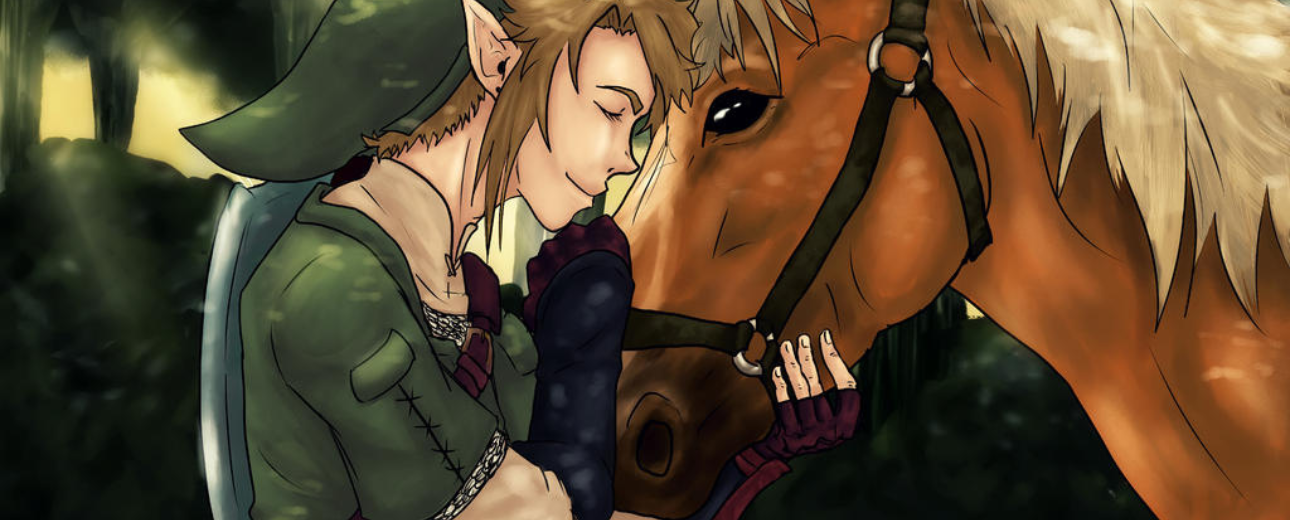
Ask any group of Zelda fans which companion they love the most, and you’ll get an argument that could genuinely last hours. Ask them which companion annoyed them the most, and you’ll get an even louder one. The companions of the Legend of Zelda series are, in many ways, the emotional heart of each game they appear in — the characters who give Link’s silent heroism a voice, who make the world feel inhabited and alive, who deliver the story beats that stick with you long after you’ve put down the controller.
But not all companions are created equal. Some are beloved. Some are legendary. Some are tolerated. And yes, one of them became so famous for being irritating that its catchphrase entered the cultural vocabulary as a shorthand for annoying video game design. We’re going to rank all of them — from the weakest to the absolute best — with full respect for what each one tried to do, honest acknowledgment of where they fell short, and genuine enthusiasm for the ones who got it exactly right.
Before we dive in, a quick note on scope: we’re ranking the major companions — the characters who travel with Link throughout a significant portion of their game, who have a meaningful narrative relationship with him, and who are present in the HUD or in some recurring interactive capacity. This means we’re not covering every helpful NPC or one-scene ally, but focusing on the companions who are genuinely integral to their game’s experience. There are more of these than you might initially think, and ranking them means engaging seriously with what each one contributes to its game.
Let’s get into it.
What Makes a Great Zelda Companion?
Before we start handing out rankings, it’s worth establishing what we’re actually measuring. A Zelda companion can be evaluated on several different dimensions, and the best ones tend to score well on all of them while the weakest ones tend to fail on one or more in ways that drag the overall experience down.
The first dimension is narrative function: does the companion serve the story in a meaningful way? Do they have their own arc, their own personality, their own relationship with Link that develops across the game? The best companions are not just exposition delivery systems — they are characters with genuine emotional depth whose presence in the story makes the narrative richer and more affecting.
The second dimension is gameplay integration: does the companion enhance the gameplay experience in a way that feels natural and useful rather than intrusive or redundant? The worst companions interrupt your play constantly with information you already have, while the best ones give you tools, hints, and interactions that make the game feel more dynamic without ever making you wish they would shut up.
The third dimension is personality and memorability: when you finish the game and think back on it years later, does this companion come to mind? Are they someone you genuinely remember, genuinely care about, with specific moments and lines of dialogue that stay with you? The companions at the top of this ranking all pass this test with flying colors. The ones at the bottom often don’t.
The Criteria We Used for This Ranking
To be specific about how we weighted these dimensions: narrative depth and memorability carry the most weight, because Zelda games are remembered primarily as emotional experiences, and the companion is one of the primary emotional conduits through which that experience is delivered. Gameplay integration is important but secondary — a companion who is slightly annoying to interact with can still be ranked highly if their narrative contribution is extraordinary, while a companion who is perfectly smooth in gameplay but has zero personality lands near the bottom.
We’ve also factored in originality — companions who broke new ground for what a Zelda companion could be, who took risks, who tried to do something that hadn’t been done before in the series — get some additional credit for ambition even if the execution wasn’t perfect. And we’ve been honest about the cultural context: some companions that were groundbreaking at the time they were released might feel less impressive now that the series has raised its own standards so significantly. Ranking is always about the full picture, and the full picture includes both what a companion meant at the time and what it means when you return to it today.
Why This Ranking Will Absolutely Start Arguments
We want to be clear up front: this ranking reflects considered, passionate, informed opinion. It is not objective fact. The Zelda companion debates are among the most spirited in all of gaming fandom, and they are spirited precisely because every companion generates genuine feelings in the people who played their game. If your favorite is ranked lower than you’d like, we want you to argue with us. That’s the point. These rankings are meant to generate conversation, not to settle it.
The Lower Tier: Companions That Didn’t Quite Land
Every franchise has its missteps, and the Zelda companion roster is no exception. The companions in this tier are not bad games or bad characters in any absolute sense — they exist in games that range from good to excellent — but they represent missed opportunities, designs that didn’t fully come together, or approaches to the companion concept that felt more like obligations than genuine creative achievements.
Linebeck — Phantom Hourglass
Linebeck is a tricky case. He’s the companion of Phantom Hourglass — the Nintendo DS Zelda released in 2007 — and he is, on paper, exactly the kind of companion the series should be making. He’s a fully characterized human being with his own motivations, his own arc, his own complicated relationship with heroism and cowardice. He’s funny. He has genuine moments of depth. By the end of the game, he’s done something meaningful that pays off his character development in a way that is genuinely affecting.
So why does he land in the lower tier? Because for most of the game, before that payoff arrives, he is primarily an obstacle to enjoyment. His repeated declarations of cowardice, his tendency to retreat at exactly the wrong moments, his constant negotiation of what he will and won’t do — these are character traits that work thematically but wear thin experientially across the length of a full game. He feels like a companion designed for a shorter game, where his arc would land faster and his irritating qualities would have less time to grate.
The final moments of Phantom Hourglass redeem him significantly, and the emotional note the game ends on is more affecting than the series often manages. But getting there requires patience with a character who tests that patience repeatedly, and the test feels a little too long. Linebeck has fans, and they’re not wrong to love him — the seeds of a truly great companion are visible throughout. But the full package doesn’t quite cohere.
Ezlo — The Minish Cap
Ezlo is the companion of The Minish Cap, the 2004 Game Boy Advance Zelda, and he occupies a peculiar position in the companion hierarchy. He’s a talking hat — literally, a Minish wizard who has been transformed into a hat and who Link wears on his head throughout the adventure. This concept is charming, and Ezlo’s grumpy, sarcastic personality gives him a distinctive voice that sets him apart from many other companions.
The problem with Ezlo is that The Minish Cap, as a game, doesn’t give him enough to do. His narrative function is largely expositional — he explains the Minish world, translates Minish language, and occasionally comments on the situation — and while his commentary has personality, it rarely rises to the level of genuine emotional investment. His backstory, when revealed, has real potential for pathos, but the game doesn’t spend enough time with it to make it land fully.
He is also, in the context of the series at large, somewhat forgettable. Ask a Zelda fan to list the companions from memory, and Ezlo often comes up late or not at all. That’s not a damning verdict — The Minish Cap itself is a somewhat overlooked game, and Ezlo suffers from the relative obscurity of his platform — but it is a measure of how fully his character registered with the broader fandom. He’s likable, he’s original, and he deserved a game that gave him more to work with.
King of Red Lions — The Wind Waker
Before you close this tab in outrage, hear us out. The King of Red Lions — the talking boat who serves as Link’s companion and primary means of transportation across the Great Sea in The Wind Waker — is not a bad companion. He’s dignified, he’s wise, he’s voiced (in the most limited sense of the word, given the game’s audio design) with genuine gravitas, and his reveal as the King of Hyrule is one of the more emotionally weighty moments in the series.
But he ranks in the lower tier for a specific reason: he withholds. For most of The Wind Waker, the King of Red Lions is deliberately keeping important information from Link and from the player, guiding the adventure while concealing his own identity and his own agenda. This is a narratively justifiable choice, and it pays off when the truth is revealed. But it means that for most of the game, the companion relationship feels one-sided in a way that limits emotional engagement. You can’t fully invest in a companion who won’t invest in you, and the King of Red Lions, for all his dignity, keeps Link and the player at a distance for too long.
His ranking would be higher if the game gave him more moments of genuine connection before the reveal. As it stands, he’s a well-executed version of a slightly limited conception of what a Zelda companion can be.
The Middle Tier: Solid Companions With Real Strengths
The companions in this tier are genuinely good. They contribute meaningfully to their games, they have real personalities, and they leave a mark. They don’t quite reach the heights of the top tier for reasons we’ll explain, but they are absolutely worth celebrating — and in some cases, they represent specific achievements that the lower tier doesn’t.
Proxi — Hyrule Warriors
Proxi is the fairy companion in Hyrule Warriors, the Dynasty Warriors crossover released in 2014, and she deserves acknowledgment here even though Hyrule Warriors occupies a somewhat peripheral position in the Zelda canon. She functions as Link’s fairy companion in the Warriors gameplay context, providing hints and commentary in a game that otherwise doesn’t have much time for the character-development work that traditional Zelda games invest in.
Proxi is charming and functional within the constraints of what she’s asked to do. She’s not a deeply characterized companion in the way that the best Zelda companions are, but she’s also not a bad version of her type. In a game that is primarily about large-scale combat rather than exploration and puzzle-solving, a lighter companion touch is appropriate. She does her job cleanly and without being intrusive, which in the context of Warriors-style gameplay is the most you can realistically ask for.
Her ranking here is partly a recognition that Hyrule Warriors operates under different constraints than mainline Zelda games, and that evaluating Proxi by the standards of Midna or Tatl would be unfair. Within her context, she’s a solid companion who serves her game well.
Ciela — Phantom Hourglass
Ciela is the fairy companion in Phantom Hourglass, separate from Linebeck, and she deserves her own entry because she represents a specific attempt to recapture the fairy companion tradition that Navi and Tatl established — and does so with moderate success. She has genuine emotional depth, particularly in the revelation of her connection to the Ocean King’s mythology, and her relationship with Link is warm and believable in a way that fairy companions sometimes fail to achieve.
Her weakness is that she is slightly overshadowed by Linebeck as a narrative presence — he’s a stronger personality and gets more dramatic moments, which means Ciela sometimes feels like she’s operating in the background of her own game. She’s also, in certain moments, a little too straightforwardly helpful in a way that can feel like hand-holding. The best fairy companions have a distinctive edge or personality quirk that makes them memorable; Ciela is warm and genuine but doesn’t have quite the distinct identity that pushes her into the upper tier.
Still, she handles some of the game’s more emotional moments with genuine grace, and fans who played Phantom Hourglass as their first Zelda game often have real affection for her. She deserves credit for a solid execution of a familiar companion type.
Ravio — A Link Between Worlds
Ravio is one of the most interesting and original companion concepts in the Zelda series, and he ranks in the middle tier partly because of the genuine ambition of his design and partly because that ambition is never quite fully realized. He appears to be a cheerful, masked merchant who sets up shop in Link’s house and rents items to him across the adventure — a mechanic that was itself revolutionary for the series, completely reinventing how item acquisition works in a Zelda game.
The twist at the end of A Link Between Worlds, which reveals Ravio’s true identity and the reason for his presence in Hyrule, is genuinely affecting and recontextualizes everything about their relationship. Ravio, it turns out, is a deeply tragic figure — someone whose response to the darkness spreading through his own world was not courage but flight, and whose relationship with Link represents both his guilt and his hope that someone braver than him can succeed where he could not.
This is rich material. The problem is that the game holds it too close for too long, and by the time the revelation lands, you’ve spent most of the game interacting with a cheerful shopkeeper rather than a complex character. The emotional payoff is real, but it arrives late and is somewhat rushed. A version of A Link Between Worlds that invested more time in developing Ravio’s character across the full game — rather than saving almost everything for the end — could have produced a top-tier companion. What we got instead is a memorable but underdeveloped one.
Fi — Skyward Sword
Fi is the spirit of the Goddess Sword — the blade that eventually becomes the Master Sword — in Skyward Sword, and she is the most controversial companion in the Zelda series after Navi. Some players find her cold logic and systematic precision genuinely fascinating as a character concept. Many more players find her constant interruptions, her tendency to state the obvious in elaborate pseudo-scientific language, and her habit of pointing out that your batteries are low to be among the most irritating companion experiences in gaming.
Here’s the thing: Fi, as a character concept, is actually brilliant. A spirit who processes the world through pure logic, who has no emotional register at the beginning of the game but who gradually, almost imperceptibly, develops something that functions like feeling — that’s a genuinely interesting idea. And her farewell sequence at the end of Skyward Sword, where she reflects on the journey they’ve shared and articulates the closest thing to an emotional response her nature allows, is one of the most genuinely moving moments in the entire series. If you didn’t feel something during Fi’s farewell, we politely suggest you check your own emotional hardware.
The problem is the forty hours of gameplay before that moment. Fi interrupts constantly. She tells you things you already know. She calculates probabilities in ways that add nothing to the experience. She asks if you want hints with a frequency that suggests she genuinely doesn’t trust you to manage your own adventure. These are design problems rather than character problems — a different implementation of Fi’s logical nature could have preserved everything interesting about her while eliminating the intrusiveness — but the design problems are real and they significantly affect the experience of having her as a companion.
Fi ranks in the middle rather than the lower tier because the character underneath the design problems is genuinely interesting, and because her farewell is extraordinary. But we fully understand every player who ranks her lower.
The Upper Tier: Great Companions That Defined Their Games
The companions in this tier are genuinely excellent. They have strong personalities, meaningful arcs, real emotional depth, and they enhance rather than diminish the games they’re part of. Each of them represents a high point in Zelda companion design, and each of them is remembered with genuine affection by the fans who experienced them.
Tatl — Majora’s Mask
Tatl is, in many ways, the anti-Navi. Where Navi is earnest and helpful and occasionally over-eager, Tatl is prickly, self-interested, and initially makes no secret of the fact that she’s traveling with Link because she has no other option. She needs him to help her find her brother Tael, and that need — not loyalty or heroism or any of the noble motivations that typically drive companion characters — is what creates their partnership.
This makes Tatl genuinely interesting in a way that distinguishes her from most of her peers. She doesn’t start the game as Link’s friend. She starts the game as someone who would rather be doing anything else but is stuck with him, and her gradual development of genuine affection and respect for him — never fully articulated, always slightly grudging, but unmistakably present by the game’s end — is one of the more believably rendered character arcs in the series.
Majora’s Mask is a game about grief, time, and the impossibility of saving everyone, and Tatl is the perfect companion for that experience. Her prickliness matches the game’s dark tone. Her own loss — her separation from Tael, her guilt about how that separation happened — mirrors the losses of the Skull Kid and the various characters in the game’s emotional sidequests. She’s a character who is going through something real, in a game full of characters going through something real, and that coherence between companion and game makes her one of the most thematically appropriate companions in the series.
Zelda — Breath of the Wild and Tears of the Kingdom
Princess Zelda has always been present in the series that bears her name, but in Breath of the Wild and Tears of the Kingdom she finally functions as a genuine companion in the fullest sense — a character whose relationship with Link is the emotional center of the entire narrative, whose arc is the beating heart of both games, and whose presence is felt throughout even in the long stretches where she’s physically absent.
In Breath of the Wild, Zelda is a companion in the most unconventional possible sense: she’s not present in the gameplay, she communicates through memory fragments that Link recovers across the world, and the primary emotional experience of the game is the gradual reconstruction of a relationship that the player never directly witnesses. This is a bold narrative approach, and it works beautifully. The memories of Zelda — her intellectual curiosity, her frustration with her inability to awaken her powers, her eventual sacrifice to seal Ganon — build a portrait of a person so vivid and so affecting that the drive to find her and restore what was lost becomes genuinely emotional rather than merely mechanical.
Tears of the Kingdom deepens this relationship further, giving Zelda her own dramatic arc that unfolds in parallel with Link’s present-day adventure. Her courage in a moment of genuine crisis, and the consequences of that courage, represent some of the most emotionally substantial storytelling the series has ever attempted. She is the most fully realized version of the character the series is named for, and the games that treat her as a genuine companion rather than a narrative objective are enormously richer for it.
Groose — Skyward Sword
Before you question the legitimacy of Groose as a companion, consider: Groose travels with Link across multiple phases of Skyward Sword’s story, has a larger and more dramatically satisfying character arc than almost any other supporting character in the series, and contributes to the climactic sequence in a way that is both mechanically significant and emotionally resonant. He is absolutely a companion by any definition that matters, and he is one of the best the series has produced.
Groose begins the game as a bully — Link’s rival at Skyloft Academy, the overconfident, pompadour-sporting antagonist who makes the early sections of the game slightly tedious with his posturing. This is deliberate. The point of Groose is his transformation, and you can only appreciate how far he travels if you understand where he starts.
By the middle of the game, Groose has descended to the Surface and found himself completely out of his depth — his skills, his confidence, his entire self-image built on a context that no longer exists. And instead of collapsing, he adapts. He builds the Groosenator, he protects the old woman at the Sealed Temple, he throws himself into a supporting role with a generosity of spirit that is genuinely moving precisely because you know how much that generosity costs someone with his ego. His relationship with Link transforms from rivalry to genuine partnership, and the moment near the end of the game where he launches Link into the final battle using his catapult is one of the most satisfying payoffs in the series — funny and heroic simultaneously, exactly the right note for a character whose journey has been about learning to be both.
Impa — Multiple Games
Impa appears across multiple Zelda games in different incarnations, but her most compelling companion appearances are in Skyward Sword and Hyrule Warriors. In Skyward Sword, she functions as a guardian and guide whose relationship with Link spans the entire game, and whose final revelation — her true nature and the sacrifice it implies — is one of the game’s most emotionally striking moments.
What makes Impa compelling across her various appearances is her consistency of character: she is always capable, always dignified, always carrying a weight of knowledge and responsibility that others don’t share. She knows things she can’t say. She makes sacrifices she can’t fully explain. And she does all of this with a self-possession that makes her one of the most compelling presences in any game she appears in.
Her ranking here reflects the sum of her appearances rather than any single one, and the sum is impressive. She is one of the few recurring characters in the Zelda series who has been consistently handled with intelligence and emotional depth across different games and different creative teams. That consistency is itself an achievement, and it makes her one of the companions whose appearances are reliably excellent.
The Top Tier: The Greatest Zelda Companions of All Time
The companions in this tier are not just good or great — they are genuinely extraordinary. Each of them represents a peak achievement in what Zelda companion design can produce, and each of them has left a mark on gaming culture that extends far beyond the series itself. These are the characters people think of when they think about why the Zelda series matters.
Navi — Ocarina of Time
Yes, Navi. We’re putting Navi high, and we’re going to explain exactly why, and if you disagree we ask that you hear the full argument before returning to your “HEY! LISTEN!” memes.
Navi is the most culturally famous Zelda companion in history, and her fame cuts both ways: she’s beloved by those who played Ocarina of Time at the right age in the right way, and she’s a punchline for those who experienced her instruction-heavy guidance as intrusive and condescending. Both reactions are understandable. But the cultural discussion around Navi has so thoroughly collapsed into the “HEY! LISTEN!” meme that the genuine achievement she represents has been somewhat obscured.
Navi was the first major Zelda companion. She appeared in the game that invented the grammar of 3D action-adventure design, and she was herself one of the solutions to the genuine design challenges that 3D space presented. In a 3D world where enemies can approach from any direction and where players needed a way to focus their attention on specific threats, Navi’s targeting function was not just a character quirk but a core gameplay mechanic. She was the human face of the Z-targeting system, the reason you could lock on to enemies in three-dimensional space and engage in the kind of focused combat that the game required.
Her narrative function is also more substantial than the meme culture suggests. She is genuinely caring, genuinely invested in Link’s success, and the moment at the end of Ocarina of Time where she leaves — simply flies away, without explanation, without farewell — is one of the quieter emotional gut-punches in the series. You don’t realize how much she meant until she’s gone. That landing is not an accident. It’s the result of a carefully constructed companion relationship, and it earns its emotional response.
Navi deserves her high ranking not because she was perfect — she wasn’t, and the interruption frequency was genuinely too high — but because she was first, because she mattered to the design of the game in ways that go beyond her personality, and because her emotional contribution to Ocarina of Time is real and lasting.
Sidon — Breath of the Wild and Tears of the Kingdom
Prince Sidon of the Zora is not a traditional companion in the sense of traveling continuously with Link, but the depth of his relationship with Link, the vividness of his personality, and the emotional significance of his role in both Breath of the Wild and Tears of the Kingdom place him firmly in the top tier by any reasonable standard.
Sidon is, in the most straightforward possible terms, an absolute delight. He is enthusiastic, generous, supportive, and possessed of an almost aggressive positivity that functions not as naivety but as genuine courage — the courage to believe in people, to encourage them, to throw himself into dangerous situations with complete commitment because he trusts that the effort is worth making. His relationship with Link is one of the most genuinely warm in the series, and the moments they share — particularly in the Divine Beast Vah Ruta sequence of Breath of the Wild — are among the most emotionally resonant in either game.
In Tears of the Kingdom, Sidon returns older, more burdened by responsibility, but no less fundamentally himself — still capable of that infectious enthusiasm, still committed to Link and to his people, still someone whose presence in a scene immediately makes you feel better about everything. His arc in that game, dealing with the specific challenges of leadership and the complexity of loyalty, adds genuine depth to a character who might have remained a beloved fan favorite without it but is now something more.
Sidon has become one of the most popular characters in the Zelda fandom for good reason. He represents what a companion character can be when it’s written with genuine warmth and specificity — not an archetype or a function, but a person.
Urbosa, Daruk, Revali, and Mipha — Breath of the Wild
The four Champions of Breath of the Wild — Urbosa of the Gerudo, Daruk of the Gorons, Revali of the Rito, and Mipha of the Zora — represent one of the most ambitious companion concepts in the series: a group of heroes who are already dead when the game begins, whose stories you reconstruct through memory and through the testimony of those who survived them, and whose personalities are communicated through a combination of flashback sequences, environmental storytelling, and the testimony of the people who loved them.
This is a genuinely difficult design challenge. Making you care about characters you can never truly meet, whose relationship with Link exists only in fragments, requires an extraordinary level of characterization compression — every line of dialogue, every memory fragment, every piece of environmental detail has to do significant emotional work. And Breath of the Wild, remarkably, pulls it off.
Mipha is perhaps the most directly affecting — her quiet love for Link, her gift of Mipha’s Grace, the way the Zora speak of her with a reverence that communicates the size of the loss — but each Champion has a distinct personality and a specific emotional resonance. Urbosa’s protectiveness of Zelda. Daruk’s lumbering good humor. Revali’s complicated mix of arrogance and genuine talent and, beneath both, a competitiveness that speaks to someone who has always had to fight to be taken seriously. These are fully realized characters, communicating across the barrier of death through the memories they left behind.
The Champions rank at the top of the tier because they represent the most emotionally sophisticated companion design in the series — companions whose absence is the point, whose death is what gives their presence in the game its weight, and whose personalities are vivid enough to make that weight genuinely felt.
Midna — Twilight Princess
Midna is, without any serious argument, the greatest companion in the history of the Legend of Zelda series. She is also, we would argue, one of the greatest companion characters in the history of video games. She is the gold standard against which every other Zelda companion is measured, and she sets that standard so high that no companion since has fully reached it — though some have come admirably close.
Twilight Princess was released in 2006 for the GameCube and Wii, and Midna appears in it as the Twilight Princess of the title — a small, imp-like figure who initially treats Link with the same contempt that a powerful ruler might direct at a useful tool. She needs him. She doesn’t particularly want to need him. And the relationship that develops from that starting point of mutual utility and mutual suspicion into something that is, by the end, among the most emotionally resonant in the series is one of the most beautifully executed character arcs in gaming.
What Makes Midna the Best
Let us count the reasons. First, the arc. Midna’s journey from imperious, self-interested schemer to someone willing to sacrifice herself for the people she has come to care about is the most dramatically satisfying character arc in the series. It earns every step of its development. The changes in her relationship with Link happen gradually, believably, through shared experience and mutual demonstration of character, rather than through narrative declaration. You don’t need to be told that she has come to care about him — you can see it in the way she talks to him, in the things she’s willing to do, in the small moments that accumulate across forty-plus hours of shared adventure.
Second, the personality. Midna is funny, sharp, occasionally cruel, occasionally tender, consistently surprising. She has opinions. She expresses them. She is never passive, never merely reactive — she is always actively engaging with her situation, always thinking, always pursuing her own agenda even as that agenda evolves in response to what she experiences. This active, opinionated presence makes her a genuine protagonist of Twilight Princess rather than a supporting character, and the game is wise enough to treat her as such.
Third, the ending. When Midna shatters the Mirror of Twilight — sealing herself in the Twilight Realm and making her reunion with Link forever impossible — it is the single most emotionally devastating moment in Zelda history. The game earns that devastation through everything that came before it, and it delivers it without softening, without retreat. The Twilight Princess farewell is the companion moment that the entire series has been building toward, and it remains, years later, the benchmark against which all other emotional moments in the franchise are measured.
Midna’s Cultural Legacy
Midna’s impact on the Zelda fandom has been extraordinary and lasting. She is consistently the top-ranked character in fan polls, the subject of the most fan art, the most discussed companion in any serious conversation about the series’ history. This is not simply nostalgia or the weight of numbers — it’s the recognition that Twilight Princess gave players something genuinely exceptional, a companion character who operated at a level of sophistication and emotional depth that the series had never achieved before and has not fully matched since.
Her ranking at the top of this list is not a close call. It is the consensus of the Zelda fan community, the verdict of gaming history, and the considered opinion of anyone who has sat with Twilight Princess and given it the attention it deserves. Midna is the best. By a significant margin.
Honorable Mentions: Companions Worth Acknowledging
Before we wrap up, a few quick acknowledgments for companions who narrowly missed the main tiers or who deserve recognition for specific qualities even if they don’t rank among the highest. The Zelda series is rich enough that even its supporting bench contains characters worth talking about at length, and doing them justice means giving them their own space rather than folding them quietly into a broader ranking they don’t quite fit.
Hestu, Kaepora Gaebora, and the Supporting Bench
Hestu of Breath of the Wild and Tears of the Kingdom is not a traditional companion, but his recurring presence and his specific personality — the Korok who loves his maracas more than anything in the world and rewards Link’s efforts with a reward so famously absurd that it became a meme — make him one of the most beloved supporting characters in recent Zelda history. He is joy made flesh, and the world of Hyrule is better for containing him. Every time you find him in a new location, slightly lost, always enthusiastic, the game gets a little warmer. That’s not nothing. That’s actually a significant achievement for a character who exists primarily to facilitate an upgrade mechanic.
Kaepora Gaebora, the owl from Ocarina of Time, deserves acknowledgment as one of the more infuriating companion-adjacent characters in the series — not for being poorly conceived, but for the specific design quirk of asking “Shall I repeat what I said?” and defaulting to “Yes” in a way that trapped players in repeated exposition loops. He is a cautionary tale about companion design as much as he is a character, and cautionary tales are also part of the history. He also, in his own way, represents something important: the game’s attempt to use a recurring character to provide narrative continuity and a sense of being watched over, which is a genuine companion function even if the implementation was maddening. The lesson Kaepora teaches — that a well-intentioned companion who doesn’t respect the player’s intelligence will be remembered primarily for its annoyance — has been internalized by every designer who came after.
The Great Deku Tree and the Mentor Figures
The Great Deku Tree and the various sage and mentor figures who appear across the series occupy a companion-adjacent role that deserves acknowledgment separately. They are not companions in the traveling sense, but they serve a companion function — providing narrative context, emotional grounding, and a sense of the larger stakes of Link’s adventure at key moments. The Great Deku Tree’s opening in Ocarina of Time remains one of the most effective pieces of world-building in the series: an ancient, dying entity communicating the weight of the threat and the importance of the hero through a combination of grand environment, deliberate pacing, and genuine gravitas.
Dampé and the various recurring characters who serve as mentors and guides across the series all contribute to the companion tradition in ways that are harder to measure but real nonetheless. The Zelda series has always been generous with its supporting characters, and the ones who recur or whose presence accumulates emotional weight over time are part of what makes the world of Hyrule feel so alive. A great companion isn’t just the character who travels with you — it’s the character who makes the world feel inhabited, who makes the adventure feel like it matters, who gives the hero a context for their heroism. By that definition, the Zelda series has been creating companions since its very first entry, and the richness of that tradition is one of the things that makes it the most important franchise in gaming history.
Frequently Asked Questions About Zelda Companions
The questions in this section come up constantly in Zelda fan communities, in forum threads, and in the kind of late-night gaming conversations that are the best possible use of everyone’s time. We’ve got the answers, and we’ll keep them direct.
Who Is Considered the Best Zelda Companion Overall?
Midna from Twilight Princess is almost universally considered the best companion in the Legend of Zelda series. She consistently tops fan polls, generates the most discussion, and is the most cited example of excellent companion design in the series by both fans and game designers. Her combination of distinctive personality, complex emotional arc, and devastating farewell make her the gold standard of Zelda companion design. This consensus is not simply the result of nostalgia or the weight of numbers — it reflects a genuine recognition that Twilight Princess achieved something with Midna that the series had never achieved before and has not fully matched since. She is funny, she is complex, she is surprising, she is heartbreaking, and she is the character that the words ‘Zelda companion’ should call to mind first. That is not a small legacy.
Why Is Navi So Famous for Being Annoying?
Navi’s reputation for annoyance stems primarily from her “HEY! LISTEN!” prompts, which interrupt gameplay to flag new content or provide hints at a frequency that many players found excessive. As the first major Zelda companion, she was also the first to implement the interruption-based hint system that would be refined in later games. With the benefit of hindsight, the interruption frequency is clearly too high, but the cultural emphasis on this flaw has somewhat overshadowed her genuine achievements as a design innovation. It’s worth remembering that Ocarina of Time was the first major 3D Zelda game, and the design team was genuinely uncertain about how much guidance players would need in a three-dimensional environment. Navi’s hint frequency was a response to that uncertainty — an overcompensation that made sense in context even if it doesn’t hold up as well today. The meme culture around her has made her famous in ways that the designers couldn’t have anticipated, and in a strange way, even that fame is a measure of how thoroughly she embedded herself in the experience of the game.
Does Zelda Herself Count as a Companion?
In most Zelda games, Princess Zelda functions as a narrative goal rather than a companion — someone Link is trying to find or rescue rather than someone traveling with him. However, in Breath of the Wild and Tears of the Kingdom, she functions as a genuine companion in the sense of having a deep, developing relationship with Link that drives the emotional core of the narrative. Her role in those games represents the most fully realized version of the character in the series’ history. It is one of the more remarkable evolutions in game design history: a character who spent thirty years as a narrative objective gradually becoming the most emotionally central figure in the franchise. The fact that the series found a way to do this without abandoning what made the original games work — without simply making Zelda a standard action companion — speaks to the creative intelligence that has always characterized the series’ best work. She is not just a companion in those games; she is the reason the player cares about what happens.
Which Zelda Game Has the Best Companion?
Twilight Princess has the best companion in Midna, by most fans’ assessments. However, Breath of the Wild makes a strong case for the best overall companion system, with the Champions, Sidon, and Zelda herself all contributing to a rich emotional landscape. The answer depends somewhat on whether you’re looking for a single outstanding companion or the best ensemble.
Will Future Zelda Games Continue to Develop the Companion System?
Based on the trajectory of the series, absolutely. The evolution from Navi’s hint-focused design to Midna’s full character arc to the Champions’ posthumous emotional depth to Zelda’s central narrative role in the most recent games represents a consistent progression toward richer, more emotionally sophisticated companion design. Whatever the next major Zelda title brings, it is safe to assume that the companion experience will be a significant part of its creative ambition. Nintendo has demonstrated across four decades that the companion is one of the primary tools through which the Zelda series communicates its emotional content, and there is no reason to expect that they will step back from that investment. If anything, the success of Tears of the Kingdom’s approach — where virtually every major supporting character has genuine depth and presence — suggests that the next game will push even further in this direction, building companions who are not just emotionally engaging but fully essential to understanding what the game is about and why it matters.
Conclusion: The Companions Are the Heart of Zelda
Link is a silent protagonist. He speaks through action, through the choices the player makes, through the way he moves through the world. And in a game built around a hero who cannot speak for himself, the companion is the emotional voice — the character who gives the adventure its feeling, its humor, its heart, its tragedy.
The greatest Zelda companions are not accessories to the adventure. They are co-protagonists, characters whose own journeys matter as much as the one the player is nominally undertaking. Midna’s transformation, Zelda’s courage, the Champions’ sacrifice, Tatl’s grudging growth into friendship — these are the things that make the Zelda series more than an excellent sequence of puzzles and dungeons. They are what make it an emotional experience that stays with you.
Why the Companion Is the Soul of Every Zelda Game
The companions make Hyrule feel like a place worth saving. Not because the world is beautiful — it is — and not because the dungeons are brilliantly designed — they are — but because the people in it matter to you. Because Midna made you laugh and then broke your heart. Because Sidon believed in you with a fervor that felt like a gift. Because even Navi, infuriating as she sometimes was, cared about whether you made it through. The emotional architecture of a Zelda game rests on the companion more than almost any other single element, and the history of the series is, in large part, the history of Nintendo learning to build that architecture better and better with each generation.
What the best Zelda companions have in common is a quality that is easy to name and difficult to achieve: they feel like real relationships. Not scripted interactions, not hint-delivery systems, not narrative devices — but genuine connections that develop across the length of a game in response to shared experience and mutual revelation of character. Midna needed Link before she cared about him, and the movement from need to care is one of the most convincing emotional arcs in the medium. Tatl started with contempt and ended somewhere she never intended to be. Zelda was always more than the princess in the tower, and the games that treated her as such produced the richest experiences in the series. These are the things that great companion design makes possible, and the Zelda series has been making them possible longer than any other franchise.
The Future of Zelda Companions
Whatever comes next in the series, the companion tradition will be central to it. The trajectory of the last decade — from the Champions’ posthumous emotional depth to Zelda’s full narrative presence to Sidon’s vivid warmth — points toward companions who are more fully realized, more emotionally complex, and more narratively central with each new entry. The bar that Midna set in 2006 has pushed every subsequent companion to be better than it might otherwise have been, and the bar keeps rising.
That’s what the best Zelda companions do. That’s why we remember them. And that’s why, decades from now, people will still be arguing about this ranking — not because the ranking is wrong, but because the characters are good enough to argue about forever.
Further Reading and Resources
For fans who want to explore the history of Zelda companions, discuss rankings with other fans, or dive deeper into the lore of specific characters, here are some excellent resources:
- Zelda Wiki — Companions — the most comprehensive fan database covering every companion, their backstory, and their role in their respective games.
- Zelda Dungeon — one of the best Zelda fan sites on the internet, with guides, lore analysis, and community discussion covering the entire series.
- Nintendo’s Official Zelda Site — official character profiles and media for the most recent games.
- Game Maker’s Toolkit — YouTube — includes excellent video essays on Zelda game design, including companion mechanics and their role in the experience.
- Zelda Universe — another excellent community site with deep lore analysis, fan discussion, and coverage of every game in the series.