
 Canada
 USA
USA Japan
Japan



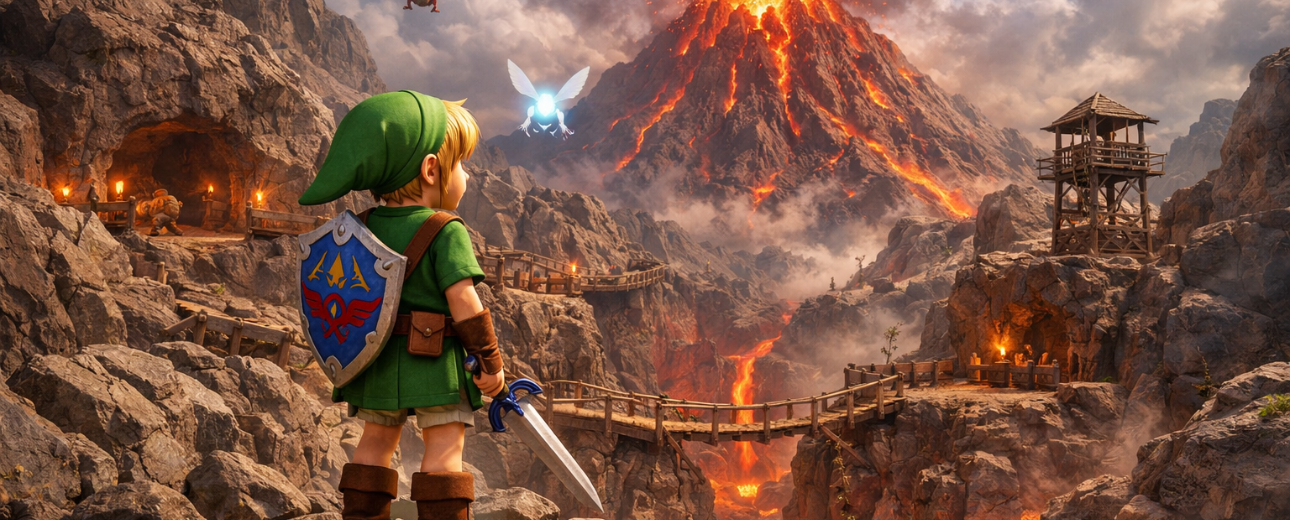
Death Mountain stands as one of the most iconic and challenging regions in The Legend of Zelda: Breath of the Wild, a volcanic wasteland where the very air can set you ablaze and the terrain tests even the most experienced adventurers. From the moment you catch your first glimpse of this massive volcano dominating the northeastern skyline of Hyrule, you know you’re looking at a place that demands respect, preparation, and courage. The combination of environmental hazards, fierce monsters, ancient Sheikah technology, and the proud Goron civilization creates a region that’s simultaneously dangerous and deeply rewarding to explore. Whether you’re climbing the volcano for the first time as part of the Divine Beast Vah Rudania quest or returning as a seasoned explorer hunting down every last shrine and Korok seed, Death Mountain offers experiences that will stick with you long after you’ve conquered its peaks.
What makes Death Mountain so special among Breath of the Wild’s regions is how completely it commits to its volcanic theme and how thoroughly it integrates that theme into every aspect of gameplay. You can’t just walk into this region unprepared—the heat will literally kill you within seconds if you don’t have the proper protection. This creates a genuine barrier to entry that makes finally ascending the mountain feel like a real achievement, a rite of passage that transforms you from a novice adventurer into a true hero capable of surviving Hyrule’s harshest environments. The rewards for overcoming these challenges are substantial: powerful weapons, valuable resources, memorable characters, and some of the game’s most creative shrine puzzles.
For completionists and treasure hunters, Death Mountain is an absolute goldmine of secrets waiting to be discovered. The region contains nine shrines ranging from straightforward combat trials to mind-bending physics puzzles, dozens of Korok seeds hidden in increasingly creative locations, rare ore deposits that make mining expeditions incredibly profitable, and environmental storytelling that reveals the tragic history of the Goron people and their struggle against Divine Beast Vah Rudania. This comprehensive walkthrough will guide you through every shrine, every Korok seed, and every secret the mountain holds, ensuring you don’t miss a single discovery in this magnificent volcanic region.
Preparing for Death Mountain: Essential Gear and Strategies
Before you even think about setting foot on Death Mountain proper, you need to understand the environmental challenges you’ll face and prepare accordingly. The extreme heat of the volcanic region isn’t just a cosmetic effect—it’s a legitimate threat that will drain your hearts rapidly if you’re not properly equipped. Understanding how to protect yourself and what resources you’ll need can mean the difference between a successful expedition and a frustrating series of deaths that send you back to your last save.
Heat Resistance: Your First Priority
The most fundamental requirement for surviving Death Mountain is heat resistance, and there are several ways to acquire it. The most accessible method for first-time visitors is to purchase the Flamebreaker Armor set from the armor shop in Goron City. This requires rupees, but if you’ve been exploring Hyrule and breaking ore deposits, you should have enough to at least afford the Flamebreaker Armor chest piece, which provides one level of heat resistance. Each piece of the Flamebreaker set you wear adds one level of heat resistance, and you need two levels total to survive the hottest areas of Death Mountain, including Goron City itself and the path leading to Divine Beast Vah Rudania.
However, there’s actually a way to get your first piece of Flamebreaker Armor without spending any rupees at all. When you first arrive in the Southern Mine on the road to Goron City, you’ll meet a character named Kima who explains the heat problem and directs you to the armor shop. If you speak to another NPC near the mine entrance, they’ll offer you a side quest called “Fireproof Lizard Roundup” where you need to catch fireproof lizards in exchange for the Flamebreaker Armor chest piece. This is actually the intended introduction to the region for players who arrive without sufficient rupees, and it’s a great option if you want to save money for other purchases. The fireproof lizards can be found scurrying around the rocky areas near the Southern Mine, and you need to catch them carefully by crouching and moving slowly so you don’t scare them away.
Alternative Heat Protection Methods
While the Flamebreaker Armor is the most reliable and convenient form of heat protection, there are alternative methods worth knowing about. Elixirs made with fireproof lizards or smotherwing butterflies combined with monster parts provide temporary heat resistance that can save you in a pinch. These elixirs are particularly useful if you want to explore the lower slopes of Death Mountain before you can afford the full armor set, or if you’re on a challenge run where you’re restricting your armor options. The duration and potency of the elixir depend on what monster parts you use—higher-quality parts like Lynel guts or Hinox guts create more potent and longer-lasting elixirs.
Food can also provide heat resistance if you cook the right ingredients. Fireproof elixirs are the most effective edible heat protection, but they require relatively rare ingredients that you might want to save for other purposes.However, it’s worth knowing that this option exists, especially for challenge runs or if you’re roleplaying a character who relies on cooking rather than armor. In practical terms, though, most players will find that investing in the Flamebreaker Armor set is the most efficient approach since it provides permanent, reliable protection without requiring you to constantly monitor buff timers or worry about running out of ingredients.
Additional Recommended Gear
Beyond heat resistance, there are several other pieces of gear and items that will make your Death Mountain expedition significantly easier and more enjoyable. A good supply of healing items is essential, particularly since the region is home to some of the game’s toughest enemies including Black Moblins, Fire Lizalfos, and eventually Igneo Taluses.Stock up on hearty meals that provide temporary heart increases, as these give you a buffer against unexpected attacks and environmental hazards. Dishes made with hearty durians, hearty radishes, or big hearty radishes are particularly effective since even a single ingredient creates a meal that fully restores your health and adds bonus hearts.
Stamina-restoring food is also valuable since Death Mountain involves a lot of climbing, both to reach shrines on cliff faces and to navigate the mountain’s steep terrain. Endura carrots are the gold standard for stamina restoration since they fully restore your stamina wheel and add temporary bonus stamina, but any stamina-restoring ingredients will help. If you haven’t upgraded your stamina wheel much, bringing stamina elixirs or food can prevent frustrating situations where you run out of stamina mid-climb and fall to your death.
Weapons and Combat Preparation
Death Mountain is home to some powerful enemies, so you’ll want to bring appropriate weapons and have a combat strategy in mind. The enemies here hit hard and have substantial health pools, so bringing your better weapons rather than saving them for later is actually a smart move—you’ll find plenty of weapon replacements in the region anyway. The Gorons are master craftspeople, and you’ll discover numerous powerful two-handed weapons throughout the area, including crusher weapons that are perfect for breaking ore deposits and fighting rock-based enemies like Taluses.
One specific weapon type to consider is ice-based weapons or weapons that shoot ice arrows. Many of Death Mountain’s enemies are fire-based, including Fire Lizalfos, Fire Keese, and the Fire Taluses, and ice weapons deal bonus damage to them while potentially freezing them in place. If you have any ice-elemental weapons from previous regions, bringing them to Death Mountain makes combat significantly easier. Ice arrows are particularly useful since they let you deal with flying Fire Keese from a distance without wasting melee weapon durability. That said, you absolutely don’t need ice weapons to succeed—they’re just a nice advantage if you have them available.
Understanding the Region’s Layout
Before diving into specific shrines and Koroks, it’s helpful to understand Death Mountain’s overall geography and how the region is organized. The mountain is essentially a massive volcano with Goron City built into its northwestern slope, and the region radiates outward from there in concentric zones of increasing heat and danger. The Southern Mine serves as the main entrance for most players, providing a relatively safe staging area where you can buy armor, pick up side quests, and prepare for the climb ahead. From there, the path winds upward through increasingly hot terrain until you reach Goron City proper, which sits in a natural amphitheater carved into the mountain’s side.
Above Goron City, the terrain becomes even more treacherous, with active lava flows, dangerous enemies, and the Divine Beast Vah Rudania patrolling the mountain’s upper slopes until you complete the main quest to free it. The peak of Death Mountain is home to some of the region’s most challenging content, including combat shrines and hidden Korok seeds that require creative problem-solving to discover. Understanding this vertical organization helps you plan your exploration efficiently—you might choose to tackle lower-elevation shrines first while you’re still getting comfortable with the heat and the enemy types, then gradually work your way upward as your confidence and gear improve.

The Shrines of Death Mountain: Locations and Solutions
Death Mountain contains nine shrines, each offering unique challenges that test different aspects of your skills and knowledge. These shrines range from straightforward combat trials to complex physics puzzles, and some are hidden behind side quests that require you to interact with the Goron NPCs and help solve their problems. Let’s explore each shrine in detail, covering how to find them, what challenges they present, and strategies for completing them efficiently.
Daqa Koh Shrine: The Whole Picture
Daqa Koh Shrine is located on the western side of Death Mountain, specifically on a plateau called Gut Check Rock that’s west of Goron City. This shrine is unique because it’s not immediately visible or accessible—it’s actually hidden behind a shrine quest called “A Brother’s Roast,” which you can pick up from an NPC in Goron City. The quest involves helping a Goron named Bladon who’s trying to prove himself by roasting a rock roast at the peak of Gut Check Rock, a tall spire west of the city that’s quite the climb.
The climb to Gut Check Rock is one of the more challenging ascents in the game, requiring good stamina management and careful route planning. You’ll need at least one full stamina wheel plus some extra to make it to the top comfortably, or you’ll need to bring stamina-restoring food to consume mid-climb. The rock face has relatively few flat surfaces where you can rest, so plan your route carefully and look for small ledges where you can recover stamina. Once you reach the top, you’ll find Bladon waiting with his rock roast. After a brief conversation, the shrine will appear, granting you access to its challenge.
Inside Daqa Koh Shrine, you’ll face a puzzle called “The Whole Picture” that revolves around perspective and understanding how the shrine’s architecture creates specific shapes when viewed from the right angle. The central challenge involves moving a large metal cube using Magnesis and positioning it so that it completes a pattern painted on the walls. This puzzle is actually quite clever because the solution isn’t immediately obvious—you need to look at the patterns from different angles, understand that they’re meant to overlap with the cube’s shadow or position, and then work out the correct placement. The shrine also contains treasure chests hidden in alcoves, so explore thoroughly before claiming your Spirit Orb.
Kayra Mah Shrine: Greedy Hill
Kayra Mah Shrine sits on the southern slopes of Death Mountain, specifically on a hill called Cephla Lake’s southern shore area, though the area is actually quite dry and rocky rather than lake-like. This shrine is visible from the main road leading up to Goron City, making it one of the more accessible shrines in the region for players making their first ascent. You can spot the shrine’s orange glow from quite a distance, and reaching it requires a straightforward climb up the hillside, though you’ll need to watch out for enemies in the area including Moblins and Fire Lizalfos.
The shrine’s interior presents a puzzle called “Greedy Hill” that tests your understanding of motion and momentum in Breath of the Wild’s physics system. The main challenge involves a large metal ball that you need to guide into a receptacle to open the gate to the Spirit Orb. The twist is that the ball is positioned on a tilting platform, and you need to use a combination of the motion controls (or the right analog stick if you’re playing with motion controls disabled) and careful timing to roll the ball across gaps and obstacles without letting it fall into the abyss below. This shrine can be frustrating if you’re not used to the motion control mechanics, but once you understand the rhythm and the right amount of tilt to apply, it becomes much more manageable.
Gorae Torr Shrine: Gorae Torr’s Blessing
Gorae Torr Shrine is another shrine tied to a shrine quest, this time called “The Gut Check Challenge.” This quest is one of the most physically demanding in the game, requiring you to climb an incredibly tall rock formation called Gut Check Rock (yes, the same rock involved in the previous shrine quest, but a different part of it) within a strict time limit. You pick up this quest from a Goron named Bayge who’s stationed at the Gut Check Rock area, and he challenges you to reach the top before the timer expires to prove your worthiness.
The climb itself is intense and requires both good stamina management and route optimization. You need to identify the fastest path up the rock face, which isn’t necessarily the most obvious route, and you need to climb efficiently without wasting stamina on unnecessary movements. Bringing stamina-restoring food is highly recommended, as you can pause the game mid-climb to eat and refill your stamina wheel without losing time on the challenge timer. The good news is that once you complete this challenging climb, the shrine that appears is a “blessing” shrine, meaning there’s no internal puzzle or combat—you simply walk in and claim your Spirit Orb as your reward for completing the difficult climb.
Shae Katha Shrine: Shae Katha’s Blessing
Shae Katha Shrine is located near the Eldin Tower, the region’s Sheikah Tower that you’ll likely activate early in your Death Mountain exploration since it provides visibility over the entire region and reveals shrine locations on your map. This shrine is also a blessing shrine, but it’s tied to a different shrine quest called “The Spring of Power,” which involves bringing a specific item to the Spring of Power located near the shrine’s final position. The quest requires you to obtain a scale from the dragon Dinraal, one of the three elemental dragons that patrol specific routes around Hyrule.
Dinraal flies around Death Mountain on a regular schedule, making this quest relatively straightforward once you understand where and when to find the dragon. The dragon typically appears from the Tanagar Canyon to the north in the early morning hours, flies south through the Deplian Badlands, and then makes its way toward Death Mountain. To get a scale, you need to shoot Dinraal with an arrow—anywhere on the body works, and a glowing scale will drop that you can collect. Bring this scale to the Spring of Power, drop it in the water, and the shrine will appear. Like other blessing shrines, there’s no puzzle inside; you simply claim your Spirit Orb.
Tah Muhl Shrine: Passing the Flame
Tah Muhl Shrine is located on the northeastern slopes of Death Mountain, and it’s another shrine that’s visible from a distance and accessible without any shrine quest requirements. The shrine sits on a rocky outcropping overlooking the eastern part of the region, and you can reach it by climbing from the main paths or by gliding down from higher elevations if you’re approaching from above. The area around the shrine contains some valuable ore deposits, so it’s worth exploring the vicinity before entering if you’re interested in mining for resources.
Inside Tah Muhl Shrine, you’ll encounter a puzzle called “Passing the Flame” that revolves around using blue flame to activate ancient technology. The shrine contains several unlit braziers and one lit blue flame torch, and your goal is to transfer the flame from torch to torch to activate various mechanisms and ultimately reach the Spirit Orb. The challenge lies in the fact that blue flame is vulnerable to wind and water (or in this case, waterfalls created by the shrine’s mechanisms), so you need to carefully plan your route and timing to ensure the flame reaches all the necessary braziers. You can use arrows to transfer flame across distances—shoot an arrow through a lit torch and it becomes a flame arrow that can light distant braziers—which is the key to solving some of the shrine’s trickier sections.
Sah Dahaj Shrine: Power of Fire
Sah Dahaj Shrine is positioned in the northern part of the Death Mountain region, accessible from paths near Goron City. This shrine is visible from the main routes through the area and doesn’t require any special quest to access, making it a natural target for players exploring the region systematically. The approach to the shrine is relatively safe compared to some of the more exposed shrine locations, though you’ll still want to watch out for roaming enemies and environmental hazards.
The shrine’s challenge, “Power of Fire,” is a combat trial that pits you against a Guardian Scout armed with various weapons and abilities. Combat trial shrines like this one are essentially boss fights in miniature, testing your combat skills and your ability to manage resources during extended battles. The Guardian Scout in this shrine uses fire-based attacks that complement the volcanic theme of the region, and it will cycle through different weapons as the fight progresses, changing its attack patterns and forcing you to adapt your strategy. The key to these combat trials is learning to read the Guardian Scout’s tells, dodging or blocking at the right moments to trigger flurry rushes or perfect parries, and being aggressive enough to prevent it from overwhelming you with ranged attacks.
Stolock Bridge: Mo’a Keet Shrine
Mo’a Keet Shrine sits near a location called Stolock Bridge in the southern part of the Death Mountain region, specifically in an area where the volcanic rock gives way to slightly more temperate terrain. This shrine is another blessing shrine tied to a shrine quest, this time called “A Landscape of a Stable,” which involves taking a picture of a specific location for an NPC. The quest giver can be found at the Woodland Stable, and they describe a location featuring Death Mountain prominently in the background along with other landmarks. Your task is to identify this location, travel there, and take a picture that matches the description.
The location in question is actually visible from near the Woodland Stable itself if you know where to look, and once you’ve taken the correct picture and shown it to the quest giver, they’ll mark the shrine’s location on your map. The shrine appears near Stolock Bridge, and since it’s a blessing shrine, you simply need to reach it and enter to claim your Spirit Orb. This quest is a nice change of pace from the more physically demanding shrine quests in the region, rewarding observation and photography skills rather than combat or climbing prowess.
Daruk’s Trial: Shora Hah Shrine
Shora Hah Shrine is located in a very special position—inside the Divine Beast Vah Rudania itself. This shrine only becomes accessible after you’ve completed the Divine Beast dungeon and freed Vah Rudania from Ganon’s control, at which point the shrine appears in the Divine Beast’s now-pacified interior. The shrine’s challenge is called “Blue Flame,” and it presents a puzzle that incorporates elements specific to the Divine Beast’s architecture and mechanisms.
Inside Shora Hah Shrine, you’ll need to manipulate the Divine Beast’s tilting segments to create paths for blue flame to travel along, lighting braziers that activate doors and platforms. This puzzle is actually quite elegant because it ties together the Divine Beast’s unique mechanics with traditional shrine puzzle elements, creating a challenge that feels cohesive with both the dungeon you just completed and the broader shrine experience throughout the game.The solutions require you to think about how tilting different parts of the Divine Beast affects flame paths, and you’ll need to coordinate multiple elements to reach the Spirit Orb chamber.
Qua Raym Shrine: A Balanced Approach
Qua Raym Shrine is found on Death Mountain’s upper slopes, positioned in an area that requires you to navigate around active lava flows and dangerous enemies. This shrine tests your understanding of balance, weight, and the physics system through a puzzle called “A Balanced Approach.” The shrine’s interior features large scales and platforms that tilt based on the weight placed on them, and your goal is to manipulate these weights to create paths to treasure chests and ultimately to the Spirit Orb.
The puzzle involves using Magnesis to place metal blocks on scales, understanding that certain platforms will rise or fall based on the relative weights on either side. Some sections require you to think several steps ahead, moving weights to create a specific configuration that opens a particular path, then reconfiguring those same weights to access different areas. The shrine also contains hidden treasure that requires especially clever weight manipulation to access, rewarding players who take the time to experiment with different configurations rather than just rushing to the Spirit Orb. This is one of the more intellectually satisfying shrines in the region, offering multiple solutions to most challenges and allowing creative players to find their own paths through the puzzle.

Korok Seeds: The Complete Death Mountain Collection
Death Mountain is home to numerous Korok seeds hidden throughout its volcanic landscape, and finding them all requires keen observation, creative problem-solving, and sometimes a willingness to explore dangerous areas. The Koroks in this region have hidden their seeds in locations that take advantage of the volcanic theme, incorporating lava flows, rock formations, and the region’s unique geography into their puzzles. Let’s explore the most notable Korok seed locations and the types of puzzles you’ll encounter while hunting for these collectibles.
Rock Circle Koroks
One of the most common Korok puzzle types throughout Hyrule, rock circles are also present on Death Mountain, though they take on a distinctive volcanic character. These puzzles consist of a circle of rocks with one rock conspicuously missing, and your task is to find the missing rock nearby and place it in the gap to complete the circle and reveal the Korok. On Death Mountain, these rock circles are often positioned on cliff edges or near lava flows, making the missing rocks sometimes quite obvious if you scan the immediate area carefully.
Several rock circle Koroks can be found on the lower slopes of Death Mountain, particularly in areas between the Southern Mine and Goron City where the terrain is rocky but not yet dangerously hot. One particularly notable rock circle is positioned on a plateau with a commanding view of the surrounding area—the missing rock is actually on a lower ledge, requiring you to either climb down to get it or use Stasis to launch it up to the circle. Another rock circle near the path to Goron City has its missing rock partially buried in loose rubble, requiring you to look carefully at the ground rather than scanning distant outcroppings. These puzzles reward systematic searching and attention to environmental details.
Balloon Shooting Koroks
Another common Korok puzzle type involves shooting targets, and on Death Mountain, these often take the form of balloons that you need to pop with arrows. The volcanic setting allows for some creative variations on this theme, with balloons sometimes suspended over lava flows or positioned on distant rock spires that require precise aim to hit. Some balloon targets are moving, swaying in the thermal updrafts created by the volcano’s heat, which adds an extra layer of difficulty since you need to lead your shots to account for the movement.
One memorable balloon Korok is located near the peak of Death Mountain, where a series of balloons is arranged in a line descending down the mountain’s slope. You need to shoot all the balloons in quick succession before they reset, which requires both accuracy and speed. The best approach is to position yourself at an elevated point where you can see all the balloons, then work quickly from one to the next. Another balloon Korok near Goron City requires you to shoot a balloon that’s suspended over a lava pool, and if you fall while attempting to get a good angle, the heat will damage you before you can climb back to safety—making this one of the more dangerous Korok puzzles in the region.
Boulder Koroks and Rolling Challenges
Death Mountain’s sloped terrain makes it perfect for boulder-based Korok puzzles, where you need to guide a boulder from a starting point to a target area. These puzzles usually involve a conspicuous boulder sitting in a slightly unnatural position, often at the top of a slope, with a circle of rocks or a hole visible downhill that serves as the target. The challenge is to position yourself correctly and give the boulder just the right push to send it rolling into the target. Too much force and it overshoots; too little and it stops short.
One particularly challenging boulder Korok is located on the northern slopes of Death Mountain, where you need to guide a boulder down a winding path that curves around outcroppings and over small jumps. The boulder needs just the right initial trajectory to navigate the entire course and land in the target hole, and it often takes several attempts to figure out the correct angle and force. Another boulder puzzle near the Divine Beast’s patrol route requires you to time your push so that the boulder avoids hitting enemy patrols on its way down the slope—if the boulder hits an enemy, it will bounce off course and miss the target, forcing you to respawn the boulder and try again.
Offering Plate Koroks
Offering plate Koroks are a distinctive puzzle type where you find a small plate or altar with offerings on it, and somewhere nearby is a matching plate with different offerings. Your task is to match the offerings on both plates, usually by taking items from one plate and placing them on the other using your inventory or by finding the missing items in the environment. On Death Mountain, these puzzles often involve rocks, gemstones, or apples, and the volcanic setting sometimes makes the matching plates quite far apart, requiring you to travel across dangerous terrain while carrying the offerings.
One offering plate Korok near Goron City features two plates separated by a lava flow, requiring you to find a safe path around the lava while carrying the offerings. The items are heavy rocks, and you can’t swim or climb while carrying them in your hands, so you need to carefully navigate the terrain without falling or dropping the rocks into the lava. Another offering plate puzzle on Death Mountain’s upper slopes has the matching plates positioned on opposite sides of a cliff face, and you need to drop the offerings from the upper plate down to the lower plate, timing your drop so the items land on the plate rather than bouncing off into the lava below.
Flower Trail Koroks
Flower trail Koroks involve following a trail of flowers that appears when you examine or step on an initial flower, and you need to follow the trail to its conclusion before time runs out. These puzzles test your agility and your ability to quickly identify the trail’s path, as the flowers appear in sequence and you need to reach each one before the previous one disappears. On Death Mountain, flower trails often wind around rock formations, cross narrow ledges, and sometimes lead you dangerously close to lava pools or enemy camps.
One flower trail Korok near the path to Goron City starts innocuously on flat ground but quickly becomes challenging as it leads you up a steep cliff face, requiring you to climb rapidly while also tracking where the next flower will appear. The trail curves around outcroppings and ledges, and if you lose sight of the flowers or choose the wrong climbing route, you’ll fail the challenge and need to start over. Another flower trail on Death Mountain’s eastern slopes includes a section where you need to glide between rock spires, making the trail especially challenging since you need to manage both your gliding trajectory and your stamina while keeping the flower trail in sight.
Metal Block Koroks
Some Korok puzzles involve conspicuous metal cubes or blocks that clearly don’t belong in their current location, and you need to use Magnesis to move them to their correct position to reveal the Korok. On Death Mountain, these puzzles often involve moving metal blocks into depressions in the rock, onto pressure plates, or into positions that complete a pattern of other blocks. The volcanic setting adds challenge because some metal blocks are positioned near lava flows, and if you accidentally drop the block into the lava while manipulating it, you’ll need to fish it out before you can complete the puzzle.
One metal block Korok near the Divine Beast’s former patrol route involves a large metal cube that you need to move into a square depression carved into the rock. The cube is positioned precariously on a ledge, and when you first grab it with Magnesis, it’s easy to accidentally swing it off the ledge entirely, sending it tumbling down the mountain where it’s much harder to retrieve. The solution is to carefully lift the cube straight up, then slowly maneuver it into position over the depression before lowering it into place. Another metal block puzzle features multiple blocks that need to be arranged in a specific pattern, and you need to study the surrounding area to figure out what that pattern should be—usually by looking at similar patterns carved into nearby rock faces or painted on walls.
Pinwheel and Target Koroks
Pinwheel Koroks are among the more distinctive puzzle types, marked by a pinwheel that appears when you approach a specific location. The pinwheel signals that targets will appear, and you need to shoot all the targets before they disappear to reveal the Korok. On Death Mountain, these pinwheel locations are often positioned on high points with commanding views, and the targets appear at various distances and elevations, testing your archery skills and your ability to quickly acquire and engage multiple targets.
One particularly challenging pinwheel Korok is located near Death Mountain’s peak, where the targets appear at extreme distances and you need to account for arrow drop and travel time to hit them. The targets are positioned on distant rock spires and platforms, and some are partially obscured by rock formations, requiring you to find just the right angle to see and hit them. Another pinwheel Korok near the lava flows spawns targets that move in arcing patterns over the lava, and you need to lead your shots significantly to hit the moving targets before they disappear. These challenges are excellent practice for archery and help you develop the skills needed for more difficult combat encounters later in the game.
Hidden Sparkle Koroks
Some of the trickiest Koroks to find are the sparkle Koroks, which appear as small sparkles of light that move around in circles or patterns until you catch them. These sparkles are easy to miss if you’re not paying attention, as they blend in with the general glow and particle effects of the volcanic environment. The sparkles usually appear near distinctive landmarks or in areas where you wouldn’t normally look, like on cliff faces, under overhangs, or in small alcoves that aren’t on the main path.
One sparkle Korok on Death Mountain appears on a ledge halfway up a cliff face that you would normally climb past without investigating, and you need to deliberately stop your climb and search the ledge to spot the sparkle. Once you do spot it, you need to quickly move close enough to examine it before it disappears, which can be challenging if you’re in the middle of a climb with limited stamina. Another sparkle Korok appears in a small cave entrance that’s barely visible from the main path, hidden behind rock formations that you would only discover if you were exploring thoroughly or if you happened to glance at just the right angle to spot the cave opening.
Racing Koroks
Racing Koroks present you with a time challenge where you need to reach a specific destination before a timer expires. These puzzles usually start when you examine a small ring of flowers or talk to a ghostly Korok racer, at which point a destination marker appears in the distance and a countdown begins. On Death Mountain, racing challenges often involve climbing steep rock faces, navigating around lava obstacles, or gliding between elevated positions, making stamina management and route optimization critical to success.
One racing Korok near Goron City requires you to climb a tall rock spire in under a minute, which sounds simple but becomes challenging when you factor in the limited stamina wheel and the need to choose an efficient climbing route. The fastest path isn’t always obvious, and you may need to attempt the race several times to identify shortcuts and optimal hand-hold patterns that minimize stamina expenditure. Another racing Korok on Death Mountain’s northern slopes requires you to glide from a high point to a target platform while avoiding thermal updrafts that would blow you off course—you need to carefully manage your gliding angle and momentum to stay on target while still reaching the destination before time runs out.

Hidden Treasures and Rare Resources
Beyond shrines and Korok seeds, Death Mountain is home to numerous hidden treasures, rare resource deposits, and valuable items that reward thorough exploration. The volcanic environment creates unique opportunities for resource gathering, particularly when it comes to mining valuable ores and gems that are more abundant here than in most other regions of Hyrule. Understanding where to look and what’s worth collecting can significantly enhance your Death Mountain experience.
Ore Deposits and Mining Locations
Death Mountain is arguably the best region in the entire game for mining valuable ores and gems. The volcanic rock is rich in mineral deposits, and you’ll find ore nodes scattered throughout the region, from the lower slopes all the way to the mountain’s peak. These ore deposits come in two varieties: common deposits that yield flint, amber, and occasional gems, and rare deposits that glow with a distinctive golden aura and guarantee at least one valuable gem or rare material. The rare deposits respawn on a cycle tied to the Blood Moon, making Death Mountain an excellent farming location for players who need rupees or gemstones for upgrading armor.
The area around the Southern Mine is particularly rich in ore deposits, which makes sense given that it’s literally a mining operation. You’ll find dozens of ore nodes in the mine itself and on the surrounding slopes, and breaking them all in a single mining expedition can net you hundreds of rupees worth of gems and minerals. The best approach is to bring a weapon with high damage and good durability—two-handed weapons like Stone Smashers are ideal since they break ore deposits in a single hit and are found commonly in Goron areas. You can also use bombs to break ore deposits, which saves weapon durability but yields fewer materials from each node.
Rare Gem Locations
While common ore deposits can yield gems randomly, certain locations on Death Mountain feature guaranteed rare gems or have significantly higher spawn rates for valuable stones. One such location is a small cave system on the eastern slopes of the mountain, where multiple rare ore deposits spawn close together, making it possible to collect several diamonds, rubies, or sapphires in a single visit. These locations are worth marking on your map and revisiting regularly after Blood Moons to farm gems for selling or for upgrading certain armor sets that require large quantities of specific gemstones.
Rubies are particularly common on Death Mountain compared to other regions, which makes thematic sense given the volcanic, fire-associated nature of the area. If you’re specifically farming rubies for upgrading the Flamebreaker Armor or for selling, Death Mountain should be your primary destination. The rare ore deposits near the peak of the mountain and around the areas where the Divine Beast used to patrol have especially good ruby drop rates, making the dangerous trek to these locations worthwhile if you’re willing to brave the hazards.
Ancient Materials and Guardian Parts
While Death Mountain isn’t the primary region for farming Guardian parts, there are a few deceased Guardians and Guardian-related locations scattered throughout the area that can yield valuable ancient materials. These rusted Guardian corpses can be searched for ancient screws, springs, shafts, and occasionally cores, which are essential for upgrading certain armor sets and for purchasing items from the Akkala Ancient Tech Lab. The parts respawn with each Blood Moon, making them renewable resources worth collecting if you’re passing through the area anyway.
One particularly valuable Guardian corpse is located near the Eldin Tower, partially buried in volcanic rock but still containing searchable components. This Guardian is in a relatively safe location compared to active Guardian Stalkers in other regions, making it an easy source of ancient parts for players who aren’t yet comfortable fighting active Guardians. Another Guardian wreck can be found on the road leading toward Goron City, positioned near a cliff edge where it apparently fell or was pushed during some ancient battle. These peaceful Guardian harvesting opportunities are worth taking advantage of, as ancient materials are valuable throughout the game.
Weapon and Shield Spawns
Death Mountain features numerous guaranteed weapon spawns, particularly two-handed crushing weapons that fit the Goron aesthetic and culture. Boulder Breakers, Stone Smashers, and various heavy hammers spawn in fixed locations throughout the region, often in Goron City itself or near important landmarks. These weapons are particularly useful for the region’s combat encounters and for breaking ore deposits, and knowing where to find replacements when your current weapons break is valuable information for extended exploration sessions.
One notable weapon spawn is a Stone Smasher that appears in Goron City near the armor shop, providing a reliable source of a high-damage crushing weapon whenever you need one. This weapon respawns with Blood Moons, so you can return to this location regularly to maintain a stock of Stone Smashers for mining or combat. Other weapon spawns include various two-handed swords and axes positioned near enemy camps and outposts, which can be collected either by defeating the enemies or by sneaking in during the night when they’re asleep and stealing the weapons directly from their stands.
Fire-Resistant Elixir Ingredients
For players who prefer using elixirs for heat resistance rather than wearing the Flamebreaker Armor, Death Mountain is home to the creatures you need to craft these protective potions. Fireproof lizards can be found scurrying around the rocky areas on the lower slopes of the mountain, particularly near the Southern Mine and along the road to Goron City. These lizards are skittish and will run away if you approach too quickly, so the best hunting method is to crouch and move slowly, catching them when they pause their movement. Each captured fireproof lizard can be combined with monster parts to create a fireproof elixir, with the duration and potency depending on the quality of monster parts used.
Smotherwing butterflies are another ingredient that can create heat resistance when cooked with monster parts, and these butterflies are found fluttering around the volcanic regions, particularly near lava flows and hot springs. They’re most active during the daytime and can be caught by simply running up to them and grabbing them, making them easier to collect than fireproof lizards but slightly less common. Stockpiling these ingredients allows you to create elixirs on demand, which is useful if you’re doing challenge runs where armor is restricted or if you want to free up armor slots for other sets while still maintaining heat protection.
Food Ingredients and Cooking Materials
While Death Mountain isn’t known for its agricultural abundance, there are some unique food ingredients found in the region that can’t be easily obtained elsewhere. Certain mushrooms and plants that thrive in hot environments spawn near the edges of the volcanic region, particularly in areas where the volcanic rock transitions to more temperate terrain. These ingredients can be used in cooking recipes, and some of them provide heat resistance or other useful effects when prepared correctly.
One particularly valuable ingredient is the Goron Spice, which isn’t technically found in the wild but can be purchased from Goron merchants and is used in several cooking recipes that provide heat resistance or boost attack power. While you can’t harvest Goron Spice yourself, knowing where to buy it and stockpiling it for future cooking projects is worthwhile, especially if you’re trying to create meals that combine heat resistance with other beneficial effects.The ability to cook meals that provide both heat protection and attack boosts, for example, can be valuable for challenging combat encounters in the region where you want to maximize your effectiveness without constantly switching between different food buffs.

Side Quests and NPC Interactions
Death Mountain and Goron City are home to numerous side quests that provide context, character development, and valuable rewards. These quests range from simple fetch quests to complex multi-part storylines that reveal the history and culture of the Goron people. Completing these side quests not only provides material rewards but also enriches your understanding of the region and creates memorable interactions with the Gorons, who are among the most distinctive and likable NPCs in the game.
The Goron City Quest Chain
The main quest that brings most players to Death Mountain involves freeing Divine Beast Vah Rudania and helping the Gorons deal with the monster threat that’s been plaguing their city. This quest chain introduces you to Boss Bludo, the Goron boss who’s dealing with back pain and needs painkillers that can only be obtained by defeating Igneo Taluses. The quest teaches you how to fight these rock-based bosses effectively using the bomb arrows and tactics the Gorons favor, and it serves as excellent preparation for the Divine Beast dungeon that follows.
Yunobo, a young Goron who becomes your companion during the Divine Beast quest, is one of the more memorable NPC partners in the game. His ability to be launched as a living cannonball adds a unique gameplay element to the Divine Beast approach sequence, and his nervous but determined personality makes him endearing despite his combat anxieties. The quest chain involving Yunobo showcases the Gorons’ values of strength, brotherhood, and determination, and completing it provides not just access to the Divine Beast but also a deeper appreciation for Goron culture.
Mining and Trading Quests
Several side quests in the Death Mountain region involve mining, trading, and the economic activities that sustain Goron City. One quest involves helping a Goron merchant who’s having trouble with his business, requiring you to gather specific ores or gems to help him complete important orders. These quests are relatively straightforward but provide good rewards and give you insight into how the Goron economy functions and why mining is so central to their way of life.
Another trading quest involves delivering specific items between Goron City and other settlements, creating trade routes that benefit both parties. These delivery quests can be tedious if you’re not using fast travel, but they provide decent rewards and sometimes unlock new dialogue or services from the NPCs involved. The quests also encourage you to explore routes between Death Mountain and other regions, potentially leading you to discover shrines, Korok seeds, or other secrets you might have missed otherwise.
Fireproof Lizard Roundup
As mentioned earlier in the preparation section, the Fireproof Lizard Roundup quest is one of the first side quests many players encounter when arriving at Death Mountain. This quest serves as the game’s way of teaching you about heat resistance and providing access to the Flamebreaker Armor without requiring you to grind for rupees. The quest involves catching fireproof lizards in the area around the Southern Mine and bringing them to the quest giver, who rewards you with the Flamebreaker Armor chest piece after you’ve caught enough lizards.
The quest is designed to be accessible even for players who arrive at Death Mountain relatively early in their adventure, and it teaches important skills like stealth movement and creature catching that will be useful throughout the game. Even if you already have heat protection from other sources, completing this quest is worthwhile for the armor reward and for the satisfaction of helping an NPC in need. The Flamebreaker Armor is valuable throughout your Death Mountain exploration and beyond, making this quest one of the most practical and immediately rewarding side quests in the region.
The Goron Hot Springs Quests
Several quests involve the hot springs scattered around the Death Mountain region, where Gorons relax and recover from their labors. These quests often involve gathering specific ingredients for spa treatments, helping Gorons who’ve gotten into trouble while bathing, or solving problems related to the hot springs’ maintenance and upkeep. While these quests are generally lighter in tone than the main Divine Beast storyline, they provide nice character moments and show a more domestic, everyday side of Goron life beyond the mining and fighting that dominates most of the region’s narrative.
One hot springs quest involves helping a Goron who’s lost a valuable item in the spring water and needs you to dive in and retrieve it. The challenge is that the water is extremely hot even by Goron standards, requiring you to time your dives carefully and manage your heat resistance to avoid taking damage while searching for the lost item. Another quest involves gathering specific ingredients to create a special bath that will help a elderly Goron with his aches and pains, teaching you about the medicinal properties of certain plants and minerals found in the region.
Combat Strategies for Death Mountain Enemies
Death Mountain is home to some of the toughest regular enemies in Breath of the Wild, and understanding how to fight them effectively is crucial for successful exploration. The region’s enemy roster includes powerful Moblins, agile Lizalfos, deadly Taluses, and other threats that can quickly overwhelm unprepared players. Let’s examine the major enemy types you’ll encounter and strategies for defeating them efficiently.
Fire Lizalfos: Speed and Flames
Fire Lizalfos are among the most common enemies on Death Mountain’s slopes, and they’re significantly more dangerous than their counterparts in other regions. These quick, agile enemies dodge attacks effectively, breathe fire at medium range, and can quickly close distance to engage in melee combat. Their fire breath can be devastating if you’re caught in it, often dealing multiple hearts of damage and potentially setting you ablaze, which causes ongoing damage until you’re extinguished.
The key to fighting Fire Lizalfos is understanding their movement patterns and attack tells. They have a distinctive animation when preparing to breathe fire—rearing back slightly and opening their mouths—and this is your cue to either dodge to the side or raise your shield. Most shields will block the fire breath effectively, though wooden shields will catch fire and be destroyed after blocking too many flames. Ice-based weapons are extremely effective against Fire Lizalfos, dealing bonus damage and sometimes freezing them in place, which allows you to land several free hits before they recover. If you don’t have ice weapons, high-damage melee weapons combined with perfect dodges to trigger flurry rushes work well, as do headshots with arrows to stun them before closing for melee combat.
Black Moblins: Power and Intimidation
The Moblins on Death Mountain are typically black or silver variants, representing some of the strongest regular Moblin enemies in the game. These massive enemies wield powerful two-handed weapons, have large health pools, and can kill careless players in just a few hits. Their attack patterns include wide horizontal swings, overhead slams, and a charging attack where they run toward you with their weapon raised. All of these attacks deal massive damage and have significant range, making Black Moblins dangerous opponents even for well-equipped players.
The safest approach to fighting Black Moblins is to maintain distance and use ranged attacks, particularly headshots that deal critical damage and can stun the Moblin, creating openings for follow-up attacks. If you prefer melee combat, learning to perfect dodge their attacks is essential—their swings are telegraphed but fast, requiring good timing and reaction speed. When you successfully trigger a flurry rush, focus your attacks on dealing as much damage as possible during the opening, as you may not get many opportunities to safely engage these powerful enemies. Black Moblins often drop valuable weapons and monster parts when defeated, making them worthwhile targets despite the danger they pose.
Igneo Taluses: The Rocky Bosses
Igneo Taluses are mini-boss enemies unique to volcanic regions, essentially rock monsters with lava flowing through their bodies. These enemies are slow but incredibly powerful, capable of destroying you with their massive fists if you get caught by their attacks. The key to fighting Taluses is understanding their weak point—the ore deposit on top of their bodies that serves as their vulnerable spot. You need to climb onto the Talus, reach the ore deposit, and attack it with your strongest weapons to deal significant damage.
The challenge with Igneo Taluses specifically is that they’re covered in flames, making climbing them dangerous without proper fire resistance. The Flamebreaker Armor set makes this fight much more manageable, as you can climb onto the Talus and attack its weak point without worrying about burning damage. The Talus will try to shake you off, throwing you into the air, but if you time your attacks during the periods when it’s stationary, you can deal substantial damage before being thrown. An alternative strategy for players who don’t want to climb involves using bomb arrows to hit the ore deposit from a distance, though this method is less efficient and consumes valuable arrows. When an Igneo Talus is defeated, it crumbles and usually drops valuable gems and rare ores, making these fights financially rewarding despite their difficulty.
Fire Keese: Aerial Annoyances
Fire Keese are bat-like enemies that fly around volcanic areas, and while individually they’re not terribly dangerous, they can become problematic in groups or when they swarm you during other fights. These flying enemies attack by swooping down and attempting to ignite you with their flaming bodies, and if they succeed, you’ll take ongoing burn damage until the flames are extinguished. Fire Keese have very little health and can be killed with a single arrow or melee hit, but their erratic flight patterns make them annoying to target.
The best tools for dealing with Fire Keese are arrows, particularly ice arrows if you have them, as a single ice arrow will instantly freeze and shatter a Fire Keese regardless of your bow’s power. If you’re conserving arrows, two-handed weapons with spinning attacks can clear out entire swarms of Keese at once, as the wide swing radius makes it easy to hit multiple flying enemies. Some players prefer to simply ignore Fire Keese unless they’re actively being attacked, as chasing down every Keese in an area can waste time and resources. However, if you’re fighting a larger enemy like a Moblin or Talus and Fire Keese are harassing you, taking a moment to clear them out can prevent frustrating interruptions during crucial moments of the main fight.
Guardian Skywatchers: Aerial Threats
Certain areas around Death Mountain feature Guardian Skywatchers, the flying Guardian variants that patrol the skies looking for targets to blast with their laser beams. These Guardians are particularly dangerous in the Death Mountain region because the terrain provides limited cover, and you’re often on exposed slopes or cliff faces where there’s nowhere to hide when the Guardian locks onto you. The laser targeting system is the same as other Guardians—you’ll hear the targeting music intensify as the Guardian acquires you as a target, see the laser beam narrow from a wide cone to a focused point, and then have a brief moment to either deflect the beam with a perfect parry or get behind cover before it fires.
Perfect parrying Guardian laser beams is one of the most satisfying skills to master in Breath of the Wild, and Guardian Skywatchers provide good practice opportunities since they’re often found in areas where you can control the engagement. The timing for the parry is to raise your shield and press the parry button (A on most controllers) right when the laser beam becomes extremely bright and you hear a specific audio cue. Successfully deflecting the beam sends it right back at the Guardian, dealing massive damage and potentially destroying it in just a few hits. If you’re not comfortable with parrying, ancient arrows instantly destroy any Guardian in a single hit, though these arrows are expensive and limited. Regular arrows to the Guardian’s eye can stun it and interrupt the laser charge, giving you time to reposition or flee.
Environmental Hazards and Navigation Tips
Beyond enemies, Death Mountain itself poses significant environmental challenges that you need to understand and overcome to explore effectively. The volcanic nature of the region creates unique hazards that don’t exist in other parts of Hyrule, and learning to navigate these dangers is essential for successful exploration.
Lava Flows and Heat Zones
The most obvious environmental hazard on Death Mountain is the lava itself, which flows in rivers and pools throughout the region and will instantly kill you if you fall into it. Unlike water, which allows you to swim and potentially recover if you fall in, lava is immediately fatal with no chance for recovery. This makes navigation near lava flows extremely dangerous, and you need to be cautious when climbing, fighting, or exploring near these hazardous areas. The heat rising from lava also creates updrafts that can be used for gliding, allowing you to gain altitude and reach otherwise inaccessible areas, but using these updrafts requires you to get close to the lava itself, creating risk-reward situations.
Even in areas without visible lava flows, the ambient heat can be deadly if you’re not wearing proper protection. The Flamebreaker Armor provides complete heat protection in all but the most extreme areas, and wearing at least two pieces of the set ensures you can explore safely throughout most of Death Mountain. There are a few locations, particularly near the peak and around active vents, where even full heat protection from armor isn’t quite enough and you’ll need to supplement with elixirs or food, but these areas are rare and usually contain important shrines or treasures that justify the extra preparation required to reach them.
Climbing Challenges and Stamina Management
Death Mountain’s steep slopes and cliff faces create significant climbing challenges, and running out of stamina mid-climb can be fatal if you fall into lava or onto sharp rocks below. Understanding how to manage your stamina wheel effectively is crucial for successful navigation, and knowing when to use stamina-restoring food versus when to find alternate routes can save you from frustrating deaths. When planning climbs, always scan the cliff face for ledges where you can rest and recover stamina, and try to have at least one or two stamina-restoring food items in your quick menu for emergencies.
The climbing gear set, if you’ve obtained it from other shrines, makes Death Mountain navigation significantly easier by reducing stamina consumption during climbing. However, the climbing gear doesn’t provide heat resistance, so wearing it on Death Mountain creates a trade-off—do you prioritize climbing efficiency or heat protection? For most players, the Flamebreaker Armor is the safer choice, and managing stamina through food and careful route selection is preferable to risking heat damage. That said, for specific challenges like the Gut Check Rock climb where speed is essential, temporarily switching to climbing gear and using fireproof elixirs for heat protection might be the optimal strategy.
Weather and Time-of-Day Effects
While Death Mountain’s volcanic activity creates a relatively stable environment compared to regions with dramatic weather changes, there are still time-of-day and atmospheric variations that affect gameplay. Nighttime on Death Mountain is particularly atmospheric, with the lava flows glowing brightly in the darkness and creating dramatic lighting that makes navigation both beautiful and slightly more challenging. Some enemies are more active at night, while others sleep, creating opportunities for stealth approaches that aren’t available during the day.
The heat level also varies slightly depending on time of day, with midday being the hottest period and early morning or late evening being marginally cooler. While this variation isn’t dramatic enough to change your armor requirements, it does affect how quickly you take heat damage in borderline areas where your heat resistance is barely adequate.If you’re attempting to reach an area where you’re taking chip damage despite wearing heat protection, trying the same approach during early morning or evening might give you the extra margin you need to survive the journey.

Secrets, Easter Eggs, and Hidden Details
Death Mountain is packed with hidden details, references, and secrets that reward observant players and add depth to the region’s lore and atmosphere. These elements range from environmental storytelling that reveals the history of the Gorons to gameplay secrets that provide advantages or unlock hidden content. Let’s explore some of the most interesting hidden aspects of Death Mountain that many players miss during casual exploration.
The Ancient Goron History
Scattered throughout Death Mountain are ancient Goron structures, monuments, and artwork that tell the story of the Goron civilization’s long history. These elements reveal that the Gorons have inhabited this region for thousands of years, far longer than most other races have maintained their settlements. The architecture in Goron City shows multiple building styles and techniques from different eras, suggesting that the city has been continuously inhabited and expanded over many generations. Some of the oldest structures feature carved reliefs depicting ancient Goron heroes and important events from their history.
One particularly interesting historical detail is the presence of ancient Goron hot springs that have been maintained and used for countless generations. The Gorons clearly place significant cultural importance on these bathing areas, and dialogue with various NPCs reveals that specific springs have traditional associations with healing, relaxation, or social bonding. The fact that these springs have been preserved and maintained despite the dangers posed by Ganon’s forces and the Divine Beast shows the Gorons’ commitment to their cultural heritage and their determination to maintain their way of life even in the face of catastrophic threats.
References to Previous Zelda Games
Death Mountain has appeared in numerous Zelda games throughout the series, and Breath of the Wild includes subtle references and callbacks to these previous incarnations. The overall layout and atmosphere of the region echo Death Mountain’s appearance in games like Ocarina of Time and Twilight Princess, with familiar locations like Goron City maintaining their essential character while being reimagined for the new game’s open-world format. Long-time Zelda fans will recognize thematic elements, architectural styles, and even specific locations that pay homage to the series’ history.
One notable reference is the presence of characters whose names echo important Gorons from previous games. While Breath of the Wild’s Gorons are new characters rather than direct continuations of previous incarnations, the naming conventions and character archetypes deliberately evoke memories of beloved characters from earlier titles. This creates a sense of continuity and familiarity that helps longtime fans feel connected to the franchise’s history while still experiencing a fresh take on the Goron civilization.
Hidden Treasure Caches
Beyond the obvious treasure chests found in shrines and marked locations, Death Mountain contains numerous hidden treasure caches that require careful exploration to discover. Some of these treasures are hidden in caves that aren’t marked on the map, requiring you to notice small cave entrances in cliff faces or behind waterfalls of lava. Inside these caves, you might find ore deposits, treasure chests containing valuable items or rare weapons, or even additional Korok seeds that aren’t visible from outside.
One particularly valuable hidden cache is located in a cave system on Death Mountain’s northern slopes, accessible only by gliding down from a higher elevation or by taking a difficult climbing route from below. Inside this cave, you’ll find multiple rare ore deposits and treasure chests containing gems, ancient materials, and occasionally rare armor pieces or weapons. The cave is easy to miss if you’re following the main paths through the region, but players who explore systematically and investigate promising-looking cliff faces will be rewarded for their curiosity.
The Divine Beast’s Environmental Impact
Even after Divine Beast Vah Rudania is freed and no longer poses a threat, you can see evidence of its presence and the impact it had on the region. Scorch marks on rock faces show where the Divine Beast’s attacks struck the mountain, damaged structures in Goron City reveal the destruction it caused before being stopped, and Goron NPCs will discuss the relief they feel now that the mechanical beast is no longer terrorizing their home. This environmental storytelling adds weight to the Divine Beast quest and makes the region feel like a living place with a history rather than just a collection of gameplay challenges.
The patrol route that Vah Rudania followed before being freed remains identifiable even after the beast is gone, marked by areas of particularly intense heat and damage to the terrain. Following this route can lead you to discover shrines, treasures, and other secrets that were designed to be found in conjunction with the Divine Beast quest. The fact that the environment remembers and shows evidence of the Divine Beast’s presence demonstrates the attention to detail in Breath of the Wild’s world design.

Conclusion
Death Mountain stands as one of Breath of the Wild’s most memorable and challenging regions, a volcanic wasteland that tests your preparation, skill, and determination while rewarding thorough exploration with incredible treasures and unforgettable experiences. From the moment you first approach the mountain’s lower slopes and feel the heat beginning to affect Link, to the triumphant moment when you claim the final shrine’s Spirit Orb and know you’ve conquered every challenge the region offers, Death Mountain provides a perfectly paced adventure that showcases everything that makes Breath of the Wild special.
The nine shrines scattered across the mountain’s slopes offer a perfect variety of challenges—combat trials that test your fighting skills, physics puzzles that require creative thinking, blessing shrines that reward exploration and perseverance, and hidden shrines that demand you engage with the Goron NPCs and complete their quests. Each shrine teaches you something new about the game’s mechanics or challenges you to apply familiar skills in novel contexts, ensuring that even veteran players will find fresh challenges and satisfying solutions.
The Korok seeds hidden throughout Death Mountain showcase the incredible creativity and attention to detail that went into Breath of the Wild’s world design. From boulder puzzles that take advantage of the mountain’s slopes to balloon targets suspended over lava flows, from offering plates separated by dangerous terrain to flower trails that wind around cliff faces, every Korok puzzle feels purposefully designed and thoughtfully placed. Finding all these seeds requires patience, observation, and sometimes creative problem-solving, but the satisfaction of completion and the gradual accumulation of inventory slots make the effort worthwhile.
Beyond the mechanical challenges of shrines and Koroks, Death Mountain offers rich environmental storytelling, memorable characters, and opportunities for resource gathering that benefit you throughout your entire Hyrule adventure. The Goron civilization’s warmth and hospitality, the tragic history of the Divine Beast’s rampage, the ancient structures that hint at thousands of years of continuous habitation—all of these elements combine to create a region that feels alive and meaningful rather than just a collection of gameplay challenges.
Whether you’re visiting Death Mountain for the first time with barely enough heat protection to survive or returning as a fully equipped veteran hunting down the last few hidden secrets, the volcanic region offers experiences that will stay with you long after you’ve moved on to other parts of Hyrule. The combination of environmental hazards that demand respect and preparation, enemies that test your combat skills, puzzles that reward creative thinking, and treasures that make exploration worthwhile creates one of the most satisfying regional experiences in gaming.
As you stand at the peak of Death Mountain, having claimed every shrine, found every Korok, and overcome every challenge the region presented, take a moment to appreciate the view. The volcanic wasteland that once seemed impossibly hostile and dangerous has become familiar territory, a conquered frontier that you’ve mastered through skill, persistence, and courage. That’s the magic of Death Mountain—it transforms you from a visitor struggling to survive the heat into a confident explorer who’s proven worthy of claiming every secret the mountain holds.
Ready to explore more of Hyrule’s incredible regions? Check out Zelda Dungeon’s comprehensive Breath of the Wild interactive map to plan your next adventure, or visit IGN’s complete Breath of the Wild shrine guide for detailed solutions to every shrine puzzle in the game. For Korok seed hunters, Polygon’s Korok seed location guide offers invaluable assistance in tracking down those elusive collectibles across all of Hyrule’s regions.