
 Canada
 USA
USA Japan
Japan



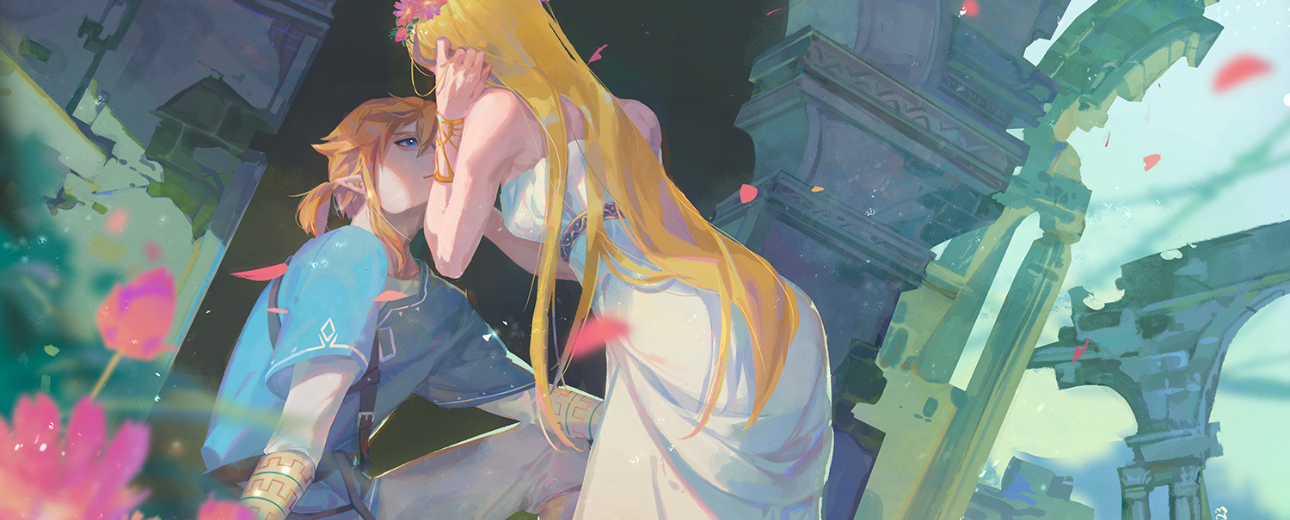
Let’s start with something that might seem obvious but is actually worth saying explicitly: the Legend of Zelda series is named after a woman. Not after the hero who wields the sword, not after the villain who threatens the world, but after the princess whose wisdom, courage, and sacrifice drive the entire mythological engine of the franchise. Zelda is not a backdrop. She is not a reward. She is, in the most literal sense, the legend itself. And yet for a long time — and sometimes still — the franchise’s relationship with its female characters has been more complicated, more uneven, and more interesting than that foundational naming choice might suggest.
This article is about that complexity. It is about the extraordinary women of the Zelda series: the ones who defined the franchise from its earliest days, the ones who pushed against the limitations of their narrative roles, the ones who were genuinely ahead of their time in what they represented, and the ones who in recent years have become some of the finest female characters in all of gaming. It is about what the series gets right, what it has sometimes gotten wrong, and the remarkable trajectory of growth that has taken us from the original princess in a tower to Urbosa’s lightning-wreathed authority and Riju’s hard-won maturity.
This is not a simple celebration and it is not a simple critique. It is an honest, passionate, fan-driven examination of what feminism in the Zelda series actually looks like across forty years of games, and why it matters that we pay attention to it carefully. Because the Zelda series, at its best, has shown what video game female characters can be when the people making them take that question seriously. And at its best, that answer has been genuinely extraordinary.
Princess Zelda: The Evolution of the Name Behind the Legend
There is perhaps no character in video game history whose journey across multiple iterations tells a more complete story about how an industry has changed than Princess Zelda. She began, in the original 1986 game, as the most traditional of video game archetypes: the captured princess, the goal, the reward. She was not a character in any meaningful sense but a function — the person Link needed to rescue, the justification for the adventure. And from that deeply unpromising starting point, through a series of careful, sometimes awkward, sometimes brilliant evolutionary steps, she became one of the most complex and most fully realized female characters in gaming history.
The journey is not linear and it is not without setbacks. There are iterations of Zelda that represent genuine progress and there are iterations that feel like retreats to comfort zones that the series should have grown beyond. But the overall trajectory, when you look at it across four decades, is one of consistent growth toward a character of genuine substance, and understanding that trajectory is essential to understanding what the series’ feminism actually is and where it came from.
From Captured Princess to Hidden Warrior: Zelda in the NES Era
The original “Legend of Zelda” (1986) gives us almost nothing of Zelda as a person. She is imprisoned, she needs rescuing, and the manual’s backstory gives her some backstory about fragmenting the Triforce to prevent Ganon from obtaining it — an act of agency that is arguably the first feminist moment in the series, even if it happens entirely off-screen. This act of deliberate self-sacrifice to protect something important is worth noting because it establishes, from the very beginning, that Zelda is not simply passive. Even when she is narratively absent, the implication is that her absence is a choice rather than a condition.
“Zelda II: The Adventure of Link” (1987) retreats even from this modest characterization, presenting a comatose Zelda as literally just a body Link needs to save. This is the series’ low point in terms of Zelda’s narrative agency, and it is worth acknowledging honestly because the contrast with where the series eventually goes is instructive. The game seems almost aware of its own limitations here — as if the designers knew they hadn’t given Zelda anything to do and were hoping the sleeping body would be enough. It wasn’t, which is presumably part of why subsequent games began working harder to give her actual presence and agency.
“A Link to the Past” (1991) makes the first serious effort to give Zelda a genuine personality and genuine stakes, with the Maidens storyline and Zelda’s active role in the game’s climax suggesting a character whose intelligence and courage matter to the outcome. The game still keeps her largely off-screen, but the moments where she does act have a purposefulness that the earlier games lacked, and her status as the holder of the Triforce of Wisdom begins to be taken seriously as something that reflects actual qualities rather than just narrative function.
Sheik and the Brilliant Subversion of “Ocarina of Time”
“Ocarina of Time” (1998) is the game that changed everything for Zelda as a character, and it did so through one of the most elegant and most discussed creative decisions in the franchise’s history: the creation of Sheik. By having Zelda disguise herself as a mysterious Sheikah warrior for the seven years of Link’s absence, the game essentially gave the series’ titular character something genuinely new: an active, capable, agentive role in the story’s events during exactly the period when, as princess, she would have had the least power.
Sheik is everything that the passive princess version of Zelda is not: physically capable, knowledgeable, mysterious, a figure of genuine power and presence who operates independently throughout the game’s second half. The reveal that Sheik is Zelda is the game’s most emotionally loaded narrative moment, and it works precisely because the player has spent half the game respecting Sheik as an independent agent. The revelation doesn’t diminish Sheik — it elevates Zelda, transferring the respect you’ve developed for the warrior onto the princess who wore the warrior’s armor.
This is genuinely sophisticated feminist storytelling. The game is saying: the qualities you admire in Sheik — competence, independence, the ability to operate in dangerous situations without needing rescue — are Zelda’s qualities. They were always Zelda’s qualities. The princess and the warrior are the same person, and the difference was never capability but circumstance. It’s a lesson the series would take varying amounts of time to fully apply to Zelda’s non-Sheik appearances, but the seed was planted here, and it was a genuinely revolutionary one.
The Sages and Supporting Women: Characters Who Carried the Weight
One of the things that makes the Zelda series’ feminist legacy so interesting and so worth examining carefully is that the quality of its female characterization has never been limited to Zelda herself. The franchise has consistently created significant, memorable female supporting characters whose contributions to the series’ mythology and emotional impact are sometimes greater than the protagonist’s own. These characters — the Sages, the companions, the friends, the mentors — form a collective portrait of female experience in Hyrule that is richer and more diverse than any single character could convey.
The Sages of “Ocarina of Time” are a particularly significant example because they represent the game’s explicit statement about what kinds of qualities the world’s most important spiritual defenders possess. Of the seven Sages revealed across the game, five are women: Saria, Ruto, Impa, Nabooru, and Zelda herself. The two male Sages — Darunia and Rauru — are certainly present, but the gender distribution of this sacred group is a quietly radical statement: women don’t just participate in the defense of Hyrule’s spiritual order. They constitute the majority of it.
Saria: The Friend Whose Love Becomes Legend
Saria is the first significant female supporting character most players encounter in “Ocarina of Time,” and she accomplishes something that the series had not previously managed: she creates an emotional relationship between the player and a female character that is based entirely on genuine affection and connection rather than on narrative obligation. You care about Saria not because you’re supposed to but because she is warm, loyal, and genuinely present in a way that the game’s female characters before her had not been.
Her role as the Sage of the Forest — the spiritual guardian of the Kokiri realm and the Lost Woods — gives her a significance that goes beyond her individual relationship with Link. She is literally the living protector of an entire domain of existence, a responsibility she accepts with the quiet grace and genuine sacrifice that the Sage role demands. The tragedy of her situation — that accepting her destiny as a Sage means giving up her friendship with Link in the most permanent way imaginable — is handled with a restraint that makes it more rather than less affecting. She doesn’t rage against her fate. She simply loves Link enough to want his happiness more than her own.
What Saria established for the series was the possibility of a female character whose emotional significance is rooted in genuine relationship rather than in plot function. She matters to the story not because rescuing her is a mission objective but because Link loves her and the player, through Link, loves her too. This distinction between narrative function and emotional presence is one that the best Zelda female characters consistently navigate well, and Saria was the first to show how it could be done.
Nabooru: The Rebel Sage and What She Represents
Nabooru is one of the most underappreciated feminist characters in the entire Zelda franchise, and she deserves considerably more recognition than she typically receives in discussions of the series’ female characters. She is the Sage of Spirit, the guardian of the Desert Colossus and the most spiritually significant Gerudo woman of her generation, but what makes her remarkable is not her spiritual role but the moral reasoning that leads her to it.
Nabooru’s defining characteristic is her principled refusal to serve evil even when that evil comes from her own king. In a cultural context where loyalty to leadership is a significant value, her rejection of Ganondorf’s agenda is not merely bravery. It is a demonstration of moral independence: the willingness to apply your own ethical standards even when doing so puts you in conflict with authority. She doesn’t follow Ganondorf not because she has been told not to but because she has evaluated his goals and found them incompatible with her own values. This is genuine moral agency, and it is rare in video game female characters even today.
Her backstory interaction with young Link — where she is doing something she describes as “a bit of naughty work” that she acknowledges she shouldn’t be doing but which is categorically different from Ganondorf’s genuine evil — adds a delicious moral complexity to her character that makes her feel like a real adult person rather than a simplified moral exemplar. She is not purely good. She is a person with her own complicated ethics who has nonetheless identified a line she will not cross. This kind of moral nuance is what great character writing looks like, and Nabooru demonstrates it perfectly.
Impa: The Most Consistent Female Presence in Zelda History
If Zelda is the most famous woman in Hyrule and Urbosa is the most beloved contemporary female character, then Impais arguably the most important: the character whose presence across the most games in the most varied roles has done the most consistent work of demonstrating what female characters in the franchise can be. She appears in more Zelda games than any other character except Link, Zelda, and Ganon himself, and her characterization across those appearances is a fascinating record of both the series’ evolving approach to female characters and the specific qualities that make Impa perennially significant.
Impa began, in the original “Legend of Zelda,” as a name in a manual — barely a character at all, simply the sage who gave Zelda’s message to Link. By “Ocarina of Time” she had become the leader of the Sheikah, the trainer of warriors, and Zelda’s most trusted protector. By “Skyward Sword” she was revealed as a divine agent whose role in the larger Zelda mythology was far more significant than any single game had previously suggested. And by “Age of Calamity” and the more recent canonical appearances, she had become a fully rounded person whose specific combination of fierce protectiveness and warm humanity makes her one of the franchise’s most complete female characters.
Impa Across the Games: A Character Study
The remarkable thing about tracking Impa’s evolution across multiple games is watching a character who was initially defined entirely by her function — protect Zelda, provide guidance — gradually accumulate the kind of individual personality and specific backstory that transforms a function into a person. “Ocarina of Time’s” Impa is already significantly more developed than her original appearance: she is the last surviving member of her people’s warrior tradition, the keeper of secrets, the person who trained Zelda in the arts of disguise and survival. These details don’t just add background. They add dignity: this is someone with a history, with skills, with a reason for being the person she is.
“Skyward Sword’s” Impa is perhaps the most dramatically significant single appearance of the character in any game, revealing her role as a divine agent sent forward through time specifically to guide Link and Zelda toward their destined confrontation with Demise. The emotional weight of the scene where the elderly Impa finally allows herself to rest after completing her age-spanning mission is one of the most genuinely moving moments in the franchise, and it works precisely because the game has given us enough of Impa as a person — stern but caring, demanding but devoted — that her release from duty feels earned and genuinely sad.
The Sheikah Legacy and Female Power
The Sheikah as a people and as a concept represent one of the Zelda series’ most sustained explorations of female power, because the Sheikah tradition as depicted across the games is substantially a female tradition. Impa, the recurring Sheikah leader, is always a woman. The Sheikah training in disguise, in intelligence, in the specific arts of protection that don’t require direct confrontation is presented as knowledge that passes primarily through female lineages. And the relationship between the Sheikah and the royal family of Hyrule — a relationship of service and protection that has endured across centuries — is fundamentally a relationship between women: between successive Impas and successive Zeldas.
This female-coded nature of the Sheikah tradition is significant because it represents an entire domain of power and significance in Hyrule that is presented as naturally female rather than as exceptional. It is not that some women happen to be Sheikah warriors. It is that the Sheikah warrior tradition, as depicted in the games, is fundamentally an expression of female capability and female knowledge. This naturalization of female power — its presentation as the default rather than the exception — is one of the franchise’s most quietly radical feminist choices.
Midna: Subverting the Companion Role Completely
Midna from “Twilight Princess” represents the single most significant evolution in how the Zelda series conceptualizes the female companion character, and her achievement is significant enough to deserve sustained examination. The companion role in Zelda games has historically been one of the most problematic from a feminist perspective: Navi, while useful, is defined primarily by her service to Link; the Fairy companions of various games exist almost entirely to provide assistance and emotional support. Midna fundamentally reimagines what a Zelda companion can be by giving the companion character a richer, more complex, and more independent interiority than the hero she is nominally helping.
When we first meet Midna, she is actively antagonistic toward Link. She is not helping him because she cares about him or because her role is to support him. She is using him as a means to an end, manipulating his actions for her own purposes, and making no pretense of the fact that her primary motivation is her own agenda rather than his needs. This is a genuinely revolutionary starting point for a female companion character in a series where female companions had previously been defined by their helpfulness and their devotion to the protagonist.
Midna’s Arc: From User to Partner to Something More
The arc of Midna’s relationship with Link across “Twilight Princess” is one of the most carefully constructed character journeys in the franchise, a slow transformation from mutual utility to genuine partnership to something deeper that the game is too elegant to name directly but that every player understands completely. The transformation works because it is earned through specific, concrete narrative events rather than assumed as a given, because Midna’s growing care for Link and for Hyrule is shown through changed behavior rather than declared through dialogue.
The moment that most clearly marks the turning point is Midna’s sacrifice and recovery midway through the game, when she uses her power in a way that leaves her near death and requires Link to carry her to Zelda for help. The vulnerability of this moment — the powerful, independent, deliberately mysterious Midna reduced to helplessness and dependence on Link’s care — creates a shift in their dynamic that neither character can pretend away afterward. She has been seen in weakness, and he has responded with genuine care rather than judgment or exploitation. The foundation for real mutual respect is laid here.
Her final act — shattering the Mirror of Twilight to permanently separate the Light World and the Twilight Realm — is the most significant ending to a female character’s story in the franchise’s history up to that point. It is an act of agency, of sacrifice, and of love that is entirely her own choice, made from her own values rather than imposed by plot necessity. The fact that it is an act of loss as well as liberation, that the player experiences it as genuinely heartbreaking, is the mark of a character who has been given enough reality that her choices have real emotional weight.
Why Midna Changed What Zelda Female Characters Could Be
Midna’s impact on the franchise extended beyond her own game in ways that are visible in retrospect. She demonstrated that the companion character slot — previously occupied by helpful but limited figures — could accommodate a character of genuine complexity and genuine narrative significance. She showed that a female character in a supporting role could have an agenda, a backstory, and an emotional journey that was genuinely as important as the protagonist’s own. And she proved that players would not just tolerate but actively love a female character who was not immediately warm, not obviously helpful, and not defined by her relationship to the protagonist.
These are lessons that the series has absorbed to varying degrees in subsequent games, but their impact is clearest in “Breath of the Wild” and “Tears of the Kingdom,” where female supporting characters consistently have the kind of individual substance and narrative independence that Midna pioneered. The Champions of “Breath of the Wild” — Urbosa, Mipha — and the allies of “Tears of the Kingdom” — Riju, Sonia — are in important ways Midna’s children: characters who exist as full people rather than as functions, whose stories matter independently of their relationship to the protagonist.

Mipha: Tenderness as a Form of Strength
Mipha is perhaps the Zelda female character who generates the most interesting feminist discussion because she represents a quality — emotional openness, nurturing warmth, the willingness to express love without armor — that is sometimes dismissed as weakness but that the game presents, carefully and consistently, as a form of genuine strength. Understanding Mipha properly requires resisting the impulse to measure her against a model of female power that values only the qualities typically coded as masculine: physical capability, emotional restraint, aggressive agency.
Mipha is the Zora Champion, an exceptional warrior and healer whose combat capability is never in question in the game’s narrative. She is one of the four finest fighters of her generation, selected as Champion on the basis of her specific excellence rather than as a representative of her people. Her fighting style, centered on her trident and her innate Zora agility in water, is genuinely impressive, and the game is careful to establish her as a warrior before it establishes her as a person who loves.
Mipha’s Love and What the Game Does With It
The fact that Mipha loves Link — that she has crafted the Zora Armor for him with the specific intention that they would eventually be together — is one of “Breath of the Wild’s” most touching pieces of backstory, and the way the game handles it is worth examining carefully because it would have been very easy to handle it badly. The obvious trap was to make Mipha’s love for Link the central and defining fact of her character, reducing her to a romantic interest whose other qualities exist merely to make the romance more affecting.
The game avoids this trap by establishing Mipha as a full person before establishing her as a person who loves Link. Her relationship with her brother Sidon, her role as a healer whose gift for the healing arts is presented as an expression of her fundamental care for others, her status as a warrior whose combat excellence reflects genuine dedicated training — these are all established as significant aspects of who she is, independent of her feelings for Link. When her love for Link is revealed, it enriches rather than replaces the portrait of her that the game has been building.
Why Mipha’s Gentleness Is a Feminist Statement
The feminist significance of Mipha’s characterization lies in the game’s refusal to apologize for or complicate her gentleness. She is not secretly fierce underneath the warmth. She is not revealed to have been hiding strength behind a soft exterior. She is genuinely gentle, genuinely nurturing, genuinely oriented toward care and healing rather than combat and conquest — and the game presents these qualities as fully compatible with being an exceptional warrior and a worthy Champion.
This is a feminist statement because it challenges the implicit hierarchy in which “strong” female characters are those who exhibit traditionally masculine qualities and “weak” female characters are those who exhibit traditionally feminine ones. Mipha is both tender and formidable, and the game never suggests that these qualities are in tension. Her healing abilities are treated as seriously as her combat skills. Her love for her brother is treated as seriously as her love for Link. Her gentleness is treated as a quality that makes her more rather than less worthy of respect. This refusal to rank qualities by their gender coding is, quietly and consistently, one of the most feminist things the game does.
The Champions as a Feminist Ensemble: Reading BotW’s Supporting Cast
“Breath of the Wild’s” full ensemble of female characters represents the most sustained and most sophisticated feminist statement in the franchise’s history, and it works not just because of the individual quality of any single character but because of the specific diversity of female experience and female power that the ensemble collectively represents. The game gives us women who are different from each other in fundamental ways — in their emotional registers, in their relationships to power, in their specific strengths and vulnerabilities — and treats all of these differences as equally valid expressions of female personhood.
Urbosa is authority, lightning, the embodiment of mature female power exercised without apology or qualification. Mipha is tenderness, healing, the embodiment of care as a form of strength that does not require aggression to be real. Zelda in the memory sequences is intelligence, doubt, the struggle of someone trying to access power that she has been told she should have but cannot seem to find. These three women together create a picture of female experience that is richer than any single one of them could convey alone, and the game’s care in developing all three with equal thoroughness is a measure of its feminist ambition.
Zelda in BotW: Finally the Protagonist of Her Own Story
The Zelda of “Breath of the Wild’s” memory sequences is, in many ways, the most fully realized version of the character in the franchise’s history, and what makes her so effective is the specific nature of the story the game tells about her. This is not a story about Zelda’s power saving the day or Zelda’s wisdom guiding the hero. This is a story about Zelda’s failure and what she does with it: the failure to access her sealing power despite years of effort, the failure to prevent the Calamity despite knowing it was coming, and the extraordinary thing she does in the aftermath of those failures.
What Zelda does in response to her apparent failure is one of the most genuinely heroic acts in the franchise’s history: she seals Calamity Ganon inside Hyrule Castle, alone, for one hundred years, maintaining a magical effort of extraordinary duration and difficulty without any of the recognition, support, or companionship that made the Champions’ sacrifices slightly less lonely. She does this not because she has finally accessed the great destiny power she was supposed to have but because she makes a decision to use whatever power she has, however imperfect, however insufficient it might seem, to do what she can.
Princess Zelda in Tears of the Kingdom: The Fullest Expression
“Tears of the Kingdom” takes Zelda’s feminist evolution to its logical conclusion by making her, for the first time in the franchise’s history, the character whose choices and sacrifices are most central to the game’s entire narrative. Without spoiling the full arc for readers who haven’t experienced it, the game’s treatment of Zelda involves her making an autonomous decision of extraordinary consequence, acting on her own judgment and her own values in a way that shapes everything that follows, and accepting the consequences of that decision with a grace and a courage that is genuinely moving.
The Zelda of “Tears of the Kingdom” is the answer to the question the franchise has been working toward for forty years: what does Zelda look like when she is truly the protagonist of her own story? And the answer is: extraordinary. Wise, courageous, scientifically curious, emotionally perceptive, capable of love and sacrifice and the specific kind of heroism that doesn’t require a sword. She is, in this game, finally and fully the legend that bears her name.

Riju: The Next Generation of Gerudo Leadership
Riju is one of the most interesting female characters in the recent Zelda games because her significance lies not in a single spectacular moment but in the arc of her development across two games, a sustained portrait of a young woman growing into authority that is handled with a specificity and a care that is genuinely unusual in video game storytelling. She appears in “Breath of the Wild” as a young chief dealing with a crisis she didn’t cause and doesn’t fully know how to handle, and she returns in “Tears of the Kingdom” as a more assured leader who has clearly done significant internal work in the intervening period.
Her “Breath of the Wild” appearance is particularly interesting because the game resists the temptation to make her immediately impressive. Riju is young, she is uncertain, she is clearly doing her best in a situation that would challenge leaders many times her experience level, and the game acknowledges all of this honestly. She is not performing confidence she doesn’t have. She is doing the actual work of leadership — making decisions, seeking counsel, accepting help — with the genuine humility of someone who knows she has a lot to learn.
What Riju’s Leadership Style Represents
The specific qualities of Riju’s leadership style — the combination of genuine humility about her own limitations and absolute commitment to her responsibilities toward her people — represent a feminist model of leadership that is distinct from both the authoritative power of Urbosa and the diplomatic wisdom of Zelda. She leads not from a position of established authority or demonstrated excellence but from a position of necessity and genuine care, and the game treats this kind of provisional, learning-based leadership with exactly the same respect it gives to the more established leadership of the older Champions.
This respect for developing, imperfect leadership is a significant feminist statement because it resists the implicit demand that female characters demonstrate complete competence before they are allowed to hold positions of authority. Riju is allowed to be a work in progress. She is allowed to need help, to make mistakes, to visibly grow across the course of not one but two games. The permission the franchise gives her to be imperfect while still being taken seriously as a leader is one of its most mature feminist gestures.
Riju in Tears of the Kingdom: Growth Made Visible
The Riju of “Tears of the Kingdom” is one of the most satisfying character developments in the franchise precisely because the growth is visible and specific rather than simply asserted. She doesn’t just seem more confident — she makes decisions differently, handles uncertainty differently, relates to her people differently. The specific ways in which her leadership has matured are drawn with enough precision that players who remember her “Breath of the Wild” appearance will feel the difference as something earned rather than assumed.
Her role as a Champion in “Tears of the Kingdom,” wielding lightning in the tradition of Urbosa, creates a meaningful thematic continuity between the two games that honors Urbosa’s legacy while establishing Riju’s own. She is not replacing Urbosa or mimicking her — she is continuing a tradition of Gerudo female power in her own specific way, making it her own while acknowledging its origin. This kind of intergenerational female inheritance — the passing of power and wisdom from one generation of women to the next — is one of the most quietly feminist recurring themes in the recent Zelda games, and Riju is its clearest expression.
What Zelda’s Feminism Gets Right and Where It Can Still Grow
Having celebrated what the Zelda series does well, it would be dishonest not to acknowledge the places where it has fallen short and the ways in which its feminist achievement remains incomplete. Honest engagement with the series’ feminist legacy requires acknowledging both the genuine progress and the genuine limitations, because that acknowledgment is what makes the celebration of the progress meaningful rather than complacent.
The series has consistently struggled with Zelda’s own agency in the main game narratives as opposed to the supplementary backstory materials. The memory sequences of “Breath of the Wild” and the backstory revelations of “Tears of the Kingdom” give Zelda extraordinary agency and depth, but these are materials the player has to seek out rather than content that is central to the main gameplay experience. The question of how much agency Zelda has in the moment-to-moment experience of a Zelda game — as opposed to in the narrative materials that surround the gameplay — remains a live tension in the franchise.
The Representation Gap and Future Possibilities
The representation gap between the treatment of female characters in “Breath of the Wild” and “Tears of the Kingdom” and the earlier games in the franchise is significant enough to suggest that the recent improvements are not simply the result of changing times but of specific creative decisions made by specific people within Nintendo’s development teams. Understanding this helps calibrate expectations for future games: the improvements are real and they are the result of intentional choices, which means they can be continued and extended rather than being dependent on lucky accident.
The specific areas where future Zelda games could build on the current foundation include more female Hylian characters with substantive roles — the non-Gerudo, non-Zora, non-special-case female characters who represent the majority of Hyrule’s population remain relatively underrepresented in terms of individual characterization — and a more sustained engagement with female relationships as a central rather than peripheral element of the narrative. The Urbosa-Zelda relationship in “Breath of the Wild” is the finest example in the series of what a female friendship at the center of a Zelda narrative can do, and it points toward possibilities that the series has not yet fully explored.
The Legacy and the Promise
The feminist legacy of the Zelda series is, in the end, one of the most interesting and most evolving stories in the history of gaming. From the original princess in the tower to the lightning-wielding chief of the Gerudo, from the passive object of rescue to the person who seals Calamity Ganon alone for a century, from the functional companion to the multidimensional individual whose story matters as much as the hero’s — the series has traveled an extraordinary distance, and it has done so in ways that have enriched rather than diminished the stories it tells.
The women of Zelda — Saria and Nabooru, Impa and Midna, Mipha and Urbosa, Zelda herself and Riju — constitute one of the finest ensembles of female characters in the history of the medium. They are diverse in their qualities, honest in their limitations, extraordinary in their strengths, and above all real in the sense that matters most: they feel like people rather than archetypes, individuals rather than functions, characters whose presence in the world of Hyrule makes that world genuinely richer than it would be without them.
That is what good feminist storytelling looks like in any medium. And the Zelda series, at its best, has been doing it for a long time.
For readers who want to explore further, the Zelda Wiki at zeldawiki.wiki provides comprehensive documentation of all the female characters discussed in this article. The Nintendo official site at nintendo.com has historical materials about the franchise’s development. For deeper reading on the representation of women in video games more broadly, the Feminist Frequency project at feministfrequency.com — which has covered Zelda specifically in its “Tropes vs Women in Video Games” series — provides essential critical context. And all the games discussed are available in various forms through Nintendo’s platforms, with “Breath of the Wild” and “Tears of the Kingdom” on Nintendo Switch representing the franchise’s current feminist high-water mark.
From Saria to Riju: the legend keeps growing, and it keeps getting better.