
 Canada
 USA
USA Japan
Japan



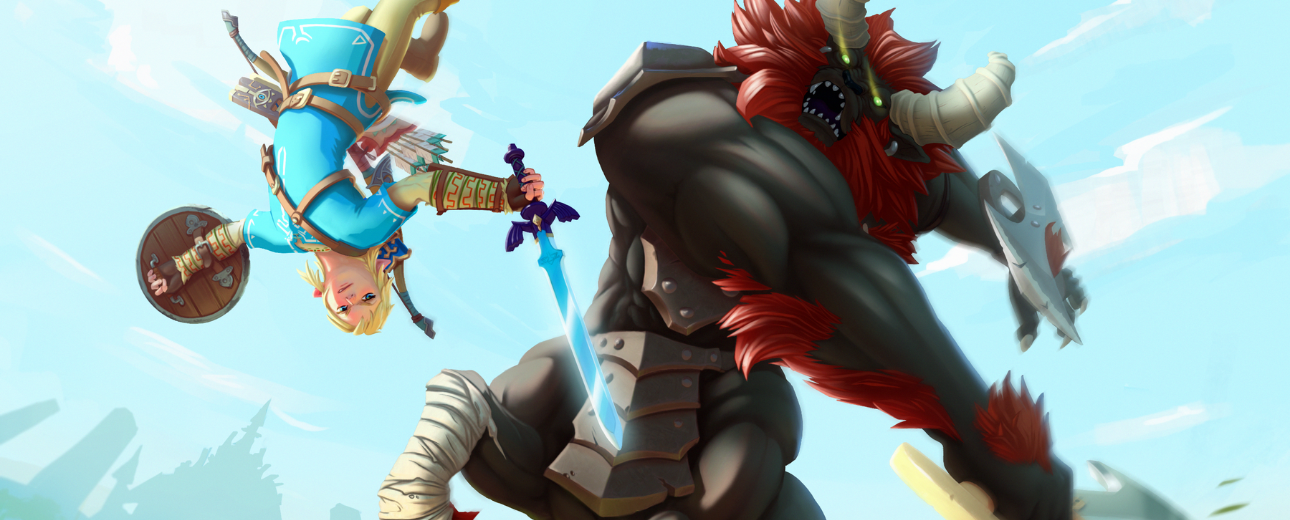
Few enemies in gaming history have achieved the iconic status of the Lynel. These fearsome centaur-like warriors have haunted the landscapes of Hyrule since the very first Legend of Zelda game, evolving from simple pixelated sprites into some of the most challenging and respected adversaries in modern gaming. For veteran Zelda players, the mere mention of a Lynel evokes a visceral reaction—a mixture of dread, respect, and for those who’ve mastered the dance of combat against them, perhaps even a hint of excitement. Their journey through over three decades of Zelda games mirrors the franchise’s own evolution, from 8-bit beginnings to the breathtaking open-world masterpiece of Breath of the Wild and beyond.
The Original Terror: Lynels in Classic Zelda (1986-1998)
The Lynel’s legacy begins at the very foundation of The Legend of Zelda franchise, appearing in the original 1986 NES game that started it all. Understanding where these legendary foes came from helps us appreciate just how far they’ve evolved and why they’ve maintained such a powerful presence in the series for over thirty-five years.
Birth of a Legend: The First Legend of Zelda (1986)
The original Lynel debuted as one of the most formidable enemies Link could encounter in the first Legend of Zelda, immediately establishing a reputation for difficulty that would define the species across decades. These early Lynels appeared as blue or red centaur creatures wielding swords, patrolling specific areas of Hyrule with an aggression that caught many players off guard. Unlike the simple Octoroks or Tektites that populated much of the overworld, Lynels represented a significant step up in threat level.
What made these original Lynels so memorable wasn’t just their strength but their behavior. They moved with purpose and speed that exceeded most other enemies, closing distance rapidly and swinging their swords in patterns that were difficult for inexperienced players to avoid. Their high health pools meant that even when Link landed hits, defeating a Lynel required sustained effort and skill. Many players simply avoided them when possible, routing their exploration around known Lynel territories rather than engaging in combat that could quickly deplete precious hearts and potions.
The placement of Lynels in the original game showed careful design consideration by Shigeru Miyamoto and his team. They weren’t randomly scattered but strategically positioned in areas that tested player skill and courage—often guarding valuable items or blocking convenient paths between destinations. This created meaningful choices: take the dangerous route past the Lynel for a shortcut, or play it safe with a longer detour? These early design decisions established Lynels as gatekeepers of sorts, enemies whose presence signaled danger and whose defeat represented a rite of passage.
Visually, even within the limitations of 8-bit graphics, Lynels were distinctive. The centaur design—human torso and equine body—set them apart from Hyrule’s other monsters. While we couldn’t see the detail that later games would provide, the silhouette and animation were clear enough to communicate “this is different, this is dangerous.” The color variations between blue and red Lynels also introduced the concept that would persist through many Zelda games: different colored variants indicating different difficulty levels.
Zelda II: The Adventure of Link – A Notable Absence
Interestingly, Lynels did not appear in Zelda II: The Adventure of Link (1987), the black sheep of the early Zelda series with its side-scrolling gameplay and dramatic departure from the formula established by the first game. This absence is noteworthy because it demonstrates that even from the earliest days, Lynels were associated with specific gameplay styles and weren’t just generic monsters to be inserted into any Zelda title.
The side-scrolling, more action-RPG oriented design of Zelda II didn’t accommodate enemies like Lynels well. The game featured different enemy types suited to its unique gameplay—Iron Knuckles, Moblins, and various other foes—but the centaur warriors who had been so iconic in the first game simply didn’t fit. This early absence established a pattern that would continue: Lynels appear in Zelda games where their particular brand of challenge and combat style makes sense, not as obligatory inclusions.
A Link to the Past: The Legendary Return (1991)
After missing Zelda II entirely, Lynels made a triumphant return in A Link to the Past for the Super Nintendo, and the jump from 8-bit to 16-bit allowed for significant visual and mechanical improvements that made them even more formidable. These SNES Lynels maintained the centaur design but with far more detail and animation frames, making their movements smoother and their attacks more telegraphed yet somehow even more threatening.
In A Link to the Past, Lynels appeared primarily in the Dark World, the corrupted mirror dimension that served as the game’s second half. Their placement in this twisted realm reinforced their status as elite enemies—these weren’t creatures you’d encounter in the gentler Light World but rather denizens of a corrupted, dangerous land where survival required skill and preparation. The Dark World Lynels came in blue and red variants, with red Lynels being significantly more powerful and aggressive than their blue counterparts.
What made A Link to the Past Lynels particularly memorable was their combination of melee and ranged attacks. They would charge at Link with their swords while also periodically breathing fireballs, creating a dual-threat scenario that forced players to manage both close-range and long-range danger simultaneously. This attack pattern required spatial awareness and timing that was sophisticated for its era. You couldn’t simply circle-strafe them like some enemies; you had to read their patterns, recognize when they’d charge versus when they’d shoot fire, and respond accordingly.
The sound design also contributed to the Lynel’s fearsome reputation. The roar they emitted when detecting Link, the heavy footfalls as they charged, the whoosh of their sword swings—all of these audio cues combined to create an enemy that felt alive and threatening in ways many other foes didn’t. Even today, longtime fans can probably recall the distinctive sounds of encountering a Lynel in A Link to the Past, a testament to how effectively the game created memorable enemy encounters.
Defeating a Lynel in A Link to the Past felt like a genuine achievement, especially for players early in their adventure who might not yet have the Master Sword or upgraded armor. The risk-reward calculation was always present: engaging a Lynel could cost hearts, potions, and fairies, but avoiding them might mean missing out on exploration or taking longer routes to destinations. This tension created emergent gameplay moments where players had to assess their current resources and skill level before deciding whether to fight or flee.
Oracle Games and Other Appearances (1999-2001)
Lynels continued their presence in the Oracle of Seasons and Oracle of Ages (2001), the dual Capcom-developed Game Boy Color titles that expanded the Zelda universe in new directions. These appearances maintained the established Lynel design philosophy while adapting to the handheld platform’s limitations, creating versions that were challenging yet appropriate for on-the-go gaming.
In these games, Lynels appeared as strong enemies in later dungeons and challenging overworld areas, continuing their role as skill-check gatekeepers. The Game Boy Color’s limited palette meant these Lynels weren’t as visually impressive as their SNES counterparts, but their behavior and threat level remained consistent with what fans expected. Blue and red variants returned, with red Lynels being notably more dangerous—a pattern that by this point had become a Zelda tradition.
What’s interesting about the Oracle games’ Lynels is how they demonstrated the character’s adaptability to different Zelda formulas. The Oracle games had their own unique mechanics and gameplay quirks, yet Lynels fit naturally into this framework, proving they weren’t dependent on any one specific Zelda game design to function effectively. They’d become a flexible template that could be adjusted to fit various contexts while maintaining core identity: centaur warriors, highly aggressive, dangerous in both melee and ranged combat, and worthy of respect from players.

The Long Absence: Lynels Vanish from Modern Zelda (2002-2016)
For over a decade and a half, Lynels seemingly disappeared from the Zelda franchise entirely, absent from some of the series’ most beloved and influential titles. This extended absence makes their eventual return in Breath of the Wild all the more impactful and helps explain why that return resonated so strongly with longtime fans.
The 3D Transition and Design Challenges
The transition to 3D with Ocarina of Time (1998) and subsequent 3D Zelda titles presented design challenges that may explain Lynel’s absence. The carefully crafted combat encounters of 3D Zelda games—with their Z-targeting system, more deliberate pacing, and camera considerations—required enemies designed specifically for three-dimensional space. Many classic Zelda enemies didn’t make the transition, at least not immediately.
Ocarina of Time introduced new enemy types that worked well in 3D: Stalfos knights with their deliberate swordplay, Lizalfos with their quick strikes and jumps, and the dreaded Redeads with their paralyzing screams. These enemies were designed from the ground up for 3D combat, their movesets and behaviors crafted to work with the Z-targeting system and 3D camera. Lynels, with their established pattern of charging attacks and projectiles, might have seemed difficult to translate effectively into this new paradigm without completely reimagining them.
Majora’s Mask, Wind Waker, Twilight Princess, and Skyward Sword all continued this trend, each introducing their own memorable foes but none bringing back the Lynel. Wind Waker had Darknuts as elite warrior enemies. Twilight Princess had various powerful foes including its own version of Darknuts. Skyward Sword introduced Stalfos variants and other challenging opponents. In each case, these games had enemies filling the niche that Lynels had occupied in classic games—strong, aggressive, combat-oriented foes—but the Lynel itself remained absent.
What We Lost During the Absence
This extended absence meant that an entire generation of Zelda fans grew up without experiencing Lynels firsthand, knowing them only through references, wikis, or retro gaming. Players whose first Zelda was Ocarina of Time, Wind Waker, or Twilight Princess had no personal history with these enemies. They might have heard older fans mention Lynels in passing, but without direct experience, the name carried no weight, no emotional resonance.
This generational gap is important because it means Breath of the Wild’s Lynels had to work on two levels simultaneously. For older fans, they were nostalgic returns that had to live up to decades-old memories while justifying the long absence through impressive evolution. For newer fans, they were entirely fresh enemies that had to prove themselves worthy of their legendary reputation among series veterans. The fact that Breath of the Wild’s Lynels succeeded on both fronts speaks to how brilliantly they were designed.
The Return Rumors and Fan Speculation
Throughout the 3D Zelda era, dedicated fans occasionally speculated about Lynel returns. Every new Zelda announcement brought hopes that this would be the game that brought them back. Forum posts analyzed trailers frame-by-frame looking for centaur-like silhouettes. Fan art imagined what Lynels might look like with modern graphics. This sustained community interest despite the long absence demonstrated that Lynels had achieved a special status in Zelda lore, becoming more than just another enemy type but rather a symbol of classic Zelda’s challenging combat.
Some fans theorized about in-universe explanations for the absence. Had Lynels gone extinct in certain timelines? Were they regional creatures that simply didn’t inhabit the areas where 3D games took place? These lore-based attempts to reconcile the absence show how deeply fans engage with Zelda’s world-building, treating even enemy presence or absence as something requiring narrative explanation rather than just design choice.
The Glorious Return: Breath of the Wild Reinvents the Lynel (2017)
When The Legend of Zelda: Breath of the Wild launched in March 2017, longtime fans exploring Hyrule soon encountered a familiar yet transformed foe. The return of Lynels in Breath of the Wild wasn’t just a nostalgic callback—it was a complete reinvention that elevated them to legendary status, creating what many consider some of the finest enemy encounters in gaming history.
First Contact: The Zora’s Domain Quest
For most players, their first Lynel encounter occurs during the “Divine Beast Vah Ruta” questline, when Prince Sidon asks Link to collect shock arrows from the Lynel atop Ploymus Mountain. This introduction is masterfully designed, creating a Lynel experience that accommodates different player skill levels while establishing the creature’s fearsome reputation.
The quest doesn’t actually require fighting the Lynel—players can sneak around, stealing shock arrows it’s already shot into trees. This stealth approach allows underprepared players to complete the objective while still experiencing the terror of being near a Lynel, watching it patrol, seeing its size and power from a safe distance. The game essentially says: “Here’s a Lynel. You don’t have to fight it… but you could try if you’re brave (or foolish) enough.”
Many players attempting their first Lynel fight at this point in the game experienced swift, humbling defeat. A few hits from the Ploymus Mountain Lynel could kill an unprepared Link in seconds. Its attacks were fast, powerful, and relentless. Players who’d been getting comfortable with the game’s combat suddenly found themselves completely outclassed. This early encounter taught an important lesson: Lynels are different, special, worthy of respect and preparation.
Anatomy of a Modern Lynel: Design and Behavior
Breath of the Wild’s Lynels are masterpieces of enemy design, combining threatening visual presentation with sophisticated combat AI that creates dynamic, challenging encounters. Standing significantly taller than Link, these centaur warriors cut imposing figures whether wielding massive crushers, spears, or swords. Their animations are fluid and powerful, every movement communicating strength and danger.
The visual design draws clear inspiration from classical centaurs while adding distinctly monstrous elements—the fierce lion-like facial features, the wild mane, the powerful build suggesting incredible physical strength. Different Lynel variants have different colorations (red, blue, white, silver, gold) that not only look visually distinct but also communicate threat level at a glance. The moment you see a silver-maned Lynel, you know you’re in for a serious fight.
Behaviorally, Breath of the Wild Lynels exhibit intelligence and aggression that surpasses almost every other enemy in the game. They track Link relentlessly once combat begins, giving very little opportunity for rest or healing. Their attack patterns are varied and devastating: rushing charges that can knock Link across the battlefield, overhead sword slams that create shockwaves, sweeping strikes that punish players who stay too close, and perhaps most terrifyingly, the fire or shock or ice breath attacks that can catch players off guard.
What makes these attack patterns particularly challenging is their unpredictability within structure. A Lynel doesn’t follow a rigidly scripted pattern that you can memorize and exploit—instead, it reads and responds to player positioning and actions, choosing from its arsenal of attacks in ways that feel almost intelligent. This creates emergent combat encounters where each fight feels slightly different, preventing the pattern-memorization that trivializes many other enemies.
The Weapon Arsenal: Variety and Lethality
Each Lynel in Breath of the Wild wields a specific weapon type that dramatically alters its combat behavior and the strategies required to defeat it. Crusher-wielding Lynels swing massive two-handed clubs that deal devastating damage but with slower, more telegraphed attacks. Spear Lynels attack with rapid thrusting combinations that can quickly shred through Link’s health if he doesn’t evade or block properly. Sword-wielding Lynels balance speed and power, creating well-rounded threats.
This weapon variety means that mastering Lynels isn’t just about learning one enemy’s patterns—it’s about adapting to different combat styles depending on which Lynel you’re fighting. A strategy that works perfectly against a Crusher Lynel might get you killed against a Spear Lynel. This variety prevents Lynel combat from becoming stale even after dozens of encounters, always requiring engagement and adaptation rather than rote repetition.
The weapons Lynels carry are also among the most powerful in the game. Defeating a Lynel rewards players with high-damage weapons, powerful bows, and valuable materials. This risk-reward balance is perfectly calibrated—Lynels are among the most dangerous enemies in Hyrule, but defeating them provides some of the best equipment available. This creates a progression loop where players might initially avoid Lynels, then cautiously engage them for rewards once stronger, and eventually seek them out specifically to restock powerful weapons.
Combat Mechanics: The Perfect Dance
Fighting a Lynel in Breath of the Wild at a high level is less like typical Zelda combat and more like a fighting game duel. The mechanics allow for incredibly skillful play through perfect dodges (flurry rushes), perfect parries, headshots that stun, and mount attacks when the Lynel is dazed. Mastering these mechanics transforms Lynel encounters from desperate survival struggles into elegant dances of death.
The perfect dodge window is tight but learnable. When a Lynel winds up for a big attack, dodging at precisely the right moment triggers slow-motion flurry rush, allowing Link to unleash a devastating combo. Timing these dodges requires studying Lynel attack animations, learning the telltale signs of each assault, and executing the dodge with frame-perfect precision. It’s challenging but fair—the information is all there for observant players to read and react to.
Headshots are similarly skill-based. Lynels have relatively small head hitboxes, especially when they’re moving aggressively during combat. Landing a headshot with a bow requires prediction, timing, and precision, but the reward is significant—a stunned Lynel staggers, allowing Link to mount its back and deliver five free attacks (that don’t consume weapon durability). Skilled players can chain stuns, mounts, and attacks into efficient killing sequences that minimize resource expenditure.
The parry mechanic works against many Lynel attacks, allowing players with shields to deflect incoming strikes with perfect timing. While more difficult to execute consistently than dodges (due to narrower timing windows and the risk of shield damage from mistimed attempts), successful parries feel incredibly satisfying and open up additional attack opportunities. Combining parries, dodges, headshots, and mounts creates a combat system with an extremely high skill ceiling, where the difference between a novice and expert Lynel fighter is dramatic.
Variant Progression: Color-Coded Challenge
Breath of the Wild introduces a sophisticated variant system where Lynel difficulty scales with player progression through the game. Red Lynels are the “basic” version encountered earliest, already formidable but manageable with proper preparation. Blue Lynels represent a step up in health and damage output. White-Maned Lynels are genuinely deadly, with massive health pools and attacks that can easily kill Link in one or two hits.
Silver Lynels, which appear after extensive gameplay and completing significant challenges, represent the peak of non-boss combat difficulty in the game. These silver-maned warriors have health pools exceeding many actual bosses, deal catastrophic damage, and possess all the aggressive intelligence of their lesser variants. Fighting a Silver Lynel is a genuine test of mastery over Breath of the Wild’s combat system, requiring excellent resource management, perfect execution of advanced techniques, and the composure to stay focused during extended, intense encounters.
The game’s Master Mode adds one final tier: Golden Lynels, which regenerate health if not damaged frequently enough. These represent the absolute pinnacle of Breath of the Wild’s combat challenges, enemies that demand not just perfection but sustained aggression and efficiency. Only the most dedicated and skilled players will comfortably farm Golden Lynels, and even they must respect these enemies’ ability to punish any mistake instantly.
This progression system creates a beautiful arc for players. Early encounters with red Lynels are terrifying and often result in death or retreat. As players improve and acquire better equipment, those same red Lynels become manageable challenges. Eventually, red Lynels become farming targets, easily defeated for resources. But just as mastery over one tier is achieved, the next tier emerges to humble players again, ensuring that Lynels remain challenging throughout the entire playthrough rather than becoming trivial once “solved.”
Strategic Placement: Guarding the Best Rewards
Lynels in Breath of the Wild aren’t randomly scattered but strategically placed in locations that make thematic and gameplay sense. They guard the Coliseums scattered across Hyrule, appropriately positioned as arena champions. They patrol certain wilderness areas, establishing territories that players must respect or prepare to challenge. They’re found in the Gerudo Highlands, near Zora’s Domain, in the Akkala region—always in places that feel appropriate for such apex predators.
This placement creates interesting exploration dynamics. Seeing a Lynel from a distance becomes a navigational consideration—do you skirt around that territory, or do you prepare for combat? Finding a Lynel guarding an area often signals that something valuable is nearby, whether powerful weapons, rare materials, or important locations. The mere presence of a Lynel transforms an area from “safe to explore casually” to “proceed with caution and preparation.”
Some of the most memorable Lynel locations have become legendary among players. The Coliseum ruins near the Great Plateau, where a Lynel patrols the underground arena. The floating Coliseum in the Akkala region where multiple Lynels can be found at different tiers. The guardian of Ploymus Mountain from the Zora’s Domain quest. These specific encounters are referenced in player discussions, guides, and community content because they represent meaningful milestones in player progression and skill development.

Community Response and Cultural Impact
The return of Lynels in Breath of the Wild created waves through the gaming community that extended far beyond just Zelda fans. These enemies became cultural touchstones, symbols of challenging but fair game design, and subjects of countless player stories, videos, and discussions.
Viral Moments and Shared Experiences
YouTube and Twitch exploded with Lynel content shortly after Breath of the Wild’s release. Players shared their first terrifying encounters, their eventual mastery of Lynel combat, and increasingly impressive displays of skill. Videos of players perfectly dodging every Lynel attack, never taking damage, defeating Silver Lynels with minimal equipment became popular showcases of game mastery, inspiring other players to improve their own skills.
The shared experience of the “first Lynel encounter” became a bonding moment for the Breath of the Wild community. Almost everyone remembers where they encountered their first Lynel, whether they fought or fled, and how that experience shaped their perception of the game’s difficulty. This universality of experience—everyone has a Lynel story—helped create community cohesion, giving players common ground for discussions and shared understanding of achievement milestones.
Memes emerged celebrating and satirizing Lynel encounters. Images of players running away from Lynels, jokes about how many weapons break during a single fight, humorous complaints about Lynel damage output—these memes reflected genuine player experiences while creating community humor. The fact that Lynels specifically inspired this level of memetic attention (rather than any number of other enemies) speaks to their cultural impact.
Speedrunning and Challenge Runs
The speedrunning community quickly identified Lynels as key elements in various Breath of the Wild speedrun categories. In any% runs, skilled players might engage specific Lynels to obtain powerful weapons quickly, shortening the time needed to complete later objectives. In 100% or All Shrines runs, Lynels become unavoidable challenges that must be overcome efficiently.
Challenge runners created incredible self-imposed restrictions that often centered on Lynel combat. “No damage” runs where players complete the game without taking any hits make Lynel encounters nerve-wracking high-stakes duels. “Three hearts” runs, where Link’s health is never increased, transform every Lynel into a potential one-shot threat requiring absolute perfection. These challenge runs elevated Lynel combat to an art form, with runners developing increasingly refined strategies and techniques.
The creation and sharing of advanced Lynel combat techniques—specific parry timings, optimal headshot angles, weapon-switching combos to maximize damage—created a knowledge base that helped the entire community improve. Tutorials and guides teaching Lynel combat became some of the most viewed Breath of the Wild content, demonstrating that players didn’t just want to avoid these enemies but actively wanted to master fighting them.
The Discourse on Difficulty and Design
Lynels sparked broader discussions about difficulty in modern games and what constitutes good enemy design. Game designers, critics, and players pointed to Lynels as examples of “difficult done right”—enemies that are genuinely challenging but never feel cheap or unfair. The tools to defeat them exist from early game (dodging, parrying, headshots), but mastery requires practice, observation, and skill development.
This contrasts with “artificial difficulty” where enemies are hard simply because they have inflated health/damage or because they exploit mechanical limitations to create frustration. Lynels are hard because they’re well-designed, with clear attack telegraphs that reward observation, varied patterns that prevent simple memorization, and high but fair damage that punishes mistakes without feeling random. The fact that skilled players can defeat Lynels without taking damage proves the encounters are based on skill rather than unfairness.
Articles and video essays analyzing Breath of the Wild’s enemy design frequently highlighted Lynels as exemplary implementations of challenging combat encounters. The enemies became case studies in game design courses and discussions, examples shown to aspiring designers of how to create memorable, challenging, but ultimately satisfying combat experiences. This elevation from “just a video game enemy” to “example of design excellence” represents the peak of Lynel’s cultural impact.
Merchandise and Fan Creations
The popularity of Lynels led to their inclusion in official Breath of the Wild merchandise. Figurines, art books, and collectibles featuring Lynels became available, acknowledging their status as fan-favorite enemies. The amiibo line, while not featuring a standalone Lynel amiibo, included Lynels in promotional materials and artwork for various Zelda-themed releases.
Fan artists created incredible Lynel artwork, from realistic paintings capturing their fearsome visage to cute chibi interpretations, and everything in between. Cosplayers attempted the challenging task of creating Lynel costumes, impressive feats of craftsmanship given the centaur body structure. Fan fiction occasionally featured Lynels as characters or plot elements, exploring their potential intelligence or origins. This creative output across multiple mediums demonstrates how thoroughly Lynels captured player imagination.

Tears of the Kingdom: Evolution Continues (2023)
When Tears of the Kingdom released in May 2023 as the direct sequel to Breath of the Wild, Lynels returned once again, building upon their Breath of the Wild incarnation while introducing new mechanics and challenges that kept them fresh and intimidating even for players who’d mastered them in the previous game.
Returning Champions with New Tricks
Tears of the Kingdom’s Lynels maintain the core design and behavior that made them legendary in Breath of the Wild, but with subtle enhancements and new contexts that prevent them from feeling like mere repeats. The basic combat loop remains familiar—dodge, parry, headshot, mount—but new game mechanics add layers of complexity and opportunity.
The Fuse system allows Link to combine weapons and materials in creative ways, opening new strategic possibilities for Lynel combat. Fusing powerful materials to weapons can create tools specifically optimized for Lynel hunting, or experimental combinations that offer unique advantages. Similarly, Fusing materials to arrows creates diverse ammunition types with different utility in Lynel encounters. This creative freedom lets players approach Lynel combat with more variety and personalization than Breath of the Wild allowed.
Ultrahand, Tears of the Kingdom’s signature new ability, doesn’t directly impact Lynel combat (you can’t Ultrahand a Lynel itself during battle), but creative players have found ways to use it for battlefield preparation. Building advantageous structures or positioning objects strategically before engaging a Lynel can create combat situations favoring Link. While these tactics aren’t necessary, they exemplify how the sequel’s expanded mechanics let players tackle familiar challenges in new ways.
The Depths and Sky Islands: Lynels in New Environments
Tears of the Kingdom’s massive expansion of Hyrule to include the sky islands above and the Depths below provides new environments for Lynel encounters. Depths Lynels, lurking in the darkness beneath Hyrule, create particularly atmospheric and tense combat scenarios. The limited visibility and eerie ambience of the Depths make spotting Lynels harder while making their attacks more startling when they come from the darkness.
Sky Island Lynels, while less common, represent high-altitude challenges where the consequences of being knocked off platforms add extra stakes to combat. Environmental awareness becomes even more critical when fighting on floating islands with limited space and dangerous falls. These new contexts for familiar enemies demonstrate how environment dramatically alters combat dynamics even when the enemy itself remains mechanically similar.
The Depths particularly changes Lynel psychology for players. The darkness, the unfamiliar terrain, the constant threat of other dangers emerging from shadows—all combine to make Depths Lynel encounters feel genuinely dangerous again even for players who’ve farmed dozens of Lynels on the surface. It’s a masterful use of environmental storytelling and atmosphere to refresh a familiar enemy type.
Gloom-Afflicted Lynels: The Ultimate Test
Among Tears of the Kingdom’s most challenging additions are Gloom-Afflicted Lynels, corrupted variants with red-black coloring and significantly enhanced danger. These Lynels possess all the combat prowess of their normal counterparts but with the added threat of Gloom damage—hits that temporarily reduce Link’s maximum heart containers, making each mistake progressively more punishing.
Gloom-Afflicted Lynels represent the peak of Lynel difficulty in Tears of the Kingdom, surpassing even Silver and Golden Lynels in threat level due to the Gloom mechanic. Fighting one requires not just perfect combat execution but also careful resource management of healing items that can restore gloom-damaged hearts. A prolonged battle against a Gloom Lynel becomes a war of attrition where mistakes compound, each hit making subsequent defense more critical.
These encounters test everything players have learned about Lynel combat while adding new layers of risk. The visual design of Gloom Lynels—wreathed in malevolent red-black energy, eyes glowing with malice—communicates their enhanced threat before combat even begins. They’re positioned as endgame challenges for the most skilled and prepared players, optional super-bosses that offer bragging rights and valuable resources to those brave enough to face them.
Armored Lynels and Other Variants
Tears of the Kingdom introduces Lynels wearing armor pieces, adding another strategic layer to combat. Armored Lynels have protected zones that reduce damage until the armor is broken, requiring players to either target vulnerable areas or systematically destroy armor plating before dealing full damage. This mechanic prevents simple brute-force approaches, demanding more thoughtful targeting and tactical awareness.
Breaking Lynel armor is satisfying in its own right, providing visual and mechanical feedback of progress during difficult encounters. The sound and animation of armor shattering, revealing the vulnerable Lynel beneath, creates a tangible sense of achievement mid-battle. It transforms what could be frustrating (damage reduction) into an engaging sub-goal (break the armor first) that adds structure to combat without feeling artificially limiting.
The combination of Gloom corruption and armor on some late-game Lynels creates some of Tears of the Kingdom’s most demanding combat encounters. These multi-layered threats require players to manage Gloom damage while working through armor protection, all while executing the precise dodges and parries necessary for basic Lynel combat survival. Only the most dedicated and skilled players will take on these challenges, but for those who do, the satisfaction is immense.

Lynel Biology, Lore, and Ecology
Beyond their gameplay function as challenging enemies, Lynels possess an implied biology and ecological niche within Hyrule’s world that makes them feel like legitimate inhabitants rather than just obstacles placed for players to overcome. While the games provide limited explicit lore, careful observation and contextual clues paint an interesting picture.
Physical Characteristics and Adaptations
Lynels clearly represent apex predators in Hyrule’s ecosystem. Their centaur form combines human intelligence and tool use with equine strength and speed, creating a creature optimally designed for hunting and combat. The powerful equine lower body provides speed and endurance for pursuing prey or patrolling vast territories. The humanoid upper body allows for sophisticated weapon use and ranged attacks.
The varied colorations—red, blue, white, silver, gold—might represent different subspecies, age variations, or regional adaptations. Red Lynels could be younger or less experienced individuals, while silver and gold coloration might indicate age, status, or environmental adaptation. This interpretation gives coherence to the power scaling, making stronger Lynels feel like genuinely superior specimens rather than just arbitrary difficulty increases.
The elemental breath weapons some Lynels wield—fire, ice, shock—suggest biological adaptations for hunting or defense that go beyond learned behavior. These aren’t tools they pick up but seemingly innate abilities, implying evolutionary development or magical origin. The fact that different Lynels have different elemental affinities suggests specialization, possibly regional adaptation to Hyrule’s diverse climates and environments.
Territorial Behavior and Intelligence
Observation of Lynel behavior reveals sophisticated territorial instincts and what appears to be genuine intelligence. Lynels don’t wander randomly but patrol defined territories, often circling specific areas in consistent patterns. This territorial behavior suggests they’ve claimed hunting grounds and defend them against interlopers, which includes Link once he enters their domain.
Their use of weapons and tools indicates intelligence far beyond simple animal cunning. Lynels don’t just swing weapons—they employ varied attack patterns, adjust tactics based on player behavior, and use their arsenal with what appears to be strategic thinking. This intelligence makes them more dangerous but also more interesting as creatures, suggesting they might possess culture, communication, or even society beyond what we observe.
Some Lynels appear near what might be camps or gathering points, with multiple Lynels in relative proximity. While they don’t seem to work together tactically during combat (attacking one Lynel doesn’t typically alert others nearby), their geographical clustering suggests potential social structure. Perhaps Lynels are solitary hunters but maintain loose community connections, or maybe dominant individuals claim prime territories while subordinates occupy less desirable hunting grounds.
The Question of Origins
Where do Lynels come from? The games never explicitly explain their origins, leaving room for speculation and theory-crafting among fans. Several possibilities exist within Zelda lore’s framework: they could be magical creatures created by Ganon or other dark forces specifically as warriors; they might be cursed or transformed beings, once human or Hylian but changed into centaur form; they could be natural creatures that evolved on Hyrule or migrated from other lands; or they might be ancient beings from previous eras, survivors from civilizations long fallen.
The fact that Lynels appear across different Zelda timelines (original timeline in classic games, downfall timeline implied by their absence in some games, and their prominence in the Breath of the Wild/Tears of the Kingdom timeline) suggests they’re not just temporary creations but have deep roots in Hyrule’s history. Their persistence across time periods implies they’re either very successful as a species or repeatedly created/summoned by forces that need powerful warriors.
Some fan theories propose that Lynels might be related to other centaur-like creatures in mythology or even other Zelda enemies. Could they share distant ancestry with Moblins or other monster races? Are they related to horses in Zelda’s world, representing a divergent evolutionary branch? While the games don’t answer these questions definitively, the speculation itself demonstrates how effectively Lynels have captured player imagination as more than just enemies.
Lynel Drops and Resource Ecology
The materials Lynels drop when defeated—horns, hooves, guts—create an interesting resource ecology within Breath of the Wild and Tears of the Kingdom’s crafting systems. These materials are used for armor upgrades, elixir creation, and (in Tears of the Kingdom) weapon fusion, making Lynel hunting a practical necessity for players pursuing certain upgrades.
This creates a player-driven economy around Lynel materials. Communities share information about which armor requires Lynel parts, how many are needed, and the most efficient ways to farm them. Lynel hunting shifts from “optional challenge” to “necessary activity” for completionists, transforming player relationship with these enemies from fear and avoidance to calculated hunting. The fact that even endgame players actively seek out Lynel encounters speaks to how successfully the games balanced risk and reward.
The specific materials—horns, hooves, guts—while practical gameplay items, also reinforce Lynel physicality. These aren’t abstract drops but body parts that make sense given the creature’s anatomy. The attention to this detail helps maintain immersion, making material gathering feel like actually harvesting from defeated creatures rather than arbitrary loot generation. It’s a small touch that contributes to the overall believability of Hyrule’s ecosystem.
Mastering Lynel Combat: Advanced Strategies and Techniques
For players ready to move beyond simple survival to true Lynel mastery, understanding advanced tactics and developing specific skills elevates these encounters from stressful struggles to exhilarating displays of player skill. The path from novice to expert Lynel hunter is rewarding and filled with tangible skill progression.
Reading Attack Patterns and Telegraphs
The foundation of Lynel mastery is learning to read their attack animations and predict which assault is coming. Each Lynel attack type has distinct startup animations—the way they hold their weapon, their body posture, preliminary movements—that telegraph the incoming attack. Observant players learn these tells and react appropriately before the attack even fully begins.
For example, when a Lynel rears back on its hind legs briefly, a charging rush attack is imminent. When it raises its weapon high overhead with both hands, a devastating downward slam is coming. When it begins drawing its bow while moving laterally, expect a barrage of arrows that will track Link’s position. These visual cues, once learned, transform Lynel combat from reactive panic to proactive strategy, allowing players to position themselves optimally before attacks land.
Advanced players don’t just react to current attacks but read sequences and patterns. Lynels often chain specific attacks together or follow certain patterns based on distance and player positioning. Learning these tendencies allows prediction two or three moves ahead, positioning Link for optimal counterattacks after dodges and creating continuous damage output opportunities. This level of pattern recognition separates good Lynel fighters from exceptional ones.
Optimal Equipment and Preparation
While skilled players can defeat Lynels with minimal equipment, smart preparation dramatically improves success rates and efficiency. Certain armor sets provide valuable bonuses for Lynel hunting: Barbarian Armor increases attack power, shortening fights and reducing opportunities for mistakes; Soldier’s Armor provides defense, allowing players more margin for error; Stealth Armor, while less useful during combat, helps players get close before engaging or escape if necessary.
Food preparation is crucial. High-level defense or attack buff meals can temporarily provide significant advantages. Three-tier defense meals essentially add extra hearts by reducing damage taken. Three-tier attack buffs increase damage output substantially, especially noticeable with powerful weapons. Preparing a variety of healing items—full recovery meals, hearty dishes that overheal, fairies for automatic revival—creates safety nets that reduce the cost of mistakes.
Weapon selection matters more than players might initially think. High-damage two-handed weapons can be effective during mounted attacks (where durability isn’t consumed) and for capitalizing on stun windows. Shields with high durability and defense are valuable for players incorporating parries into their strategy. Bows with high zoom allow safer headshot attempts from distance, while multi-shot bows increase the odds of landing head hits during chaotic close-range combat.
The Flurry Rush Technique
Perfect dodge timing to trigger flurry rush is the cornerstone of advanced Lynel combat, turning their aggressive attack patterns into vulnerabilities. The timing window is tight but consistent—dodging at the exact moment an attack would connect grants the slow-motion assault opportunity. Mastering this timing against each Lynel attack type transforms combat dynamics entirely.
The key is committing to dodge timing without hesitation. Tentative, early dodges fail to trigger the flurry rush. Late dodges result in taking damage. Only perfectly timed dodges—requiring confidence and precise timing—activate the mechanic. This creates a psychological challenge alongside the mechanical one: overcoming the instinct to dodge early out of fear and instead trusting your timing and the game’s systems.
Different Lynel weapons require different dodge timing adjustments. Crusher attacks are slower and more telegraphed, offering larger windows but requiring patience to wait for the right moment. Spear combinations come faster, demanding quicker reactions and sometimes multiple consecutive dodges. Sword attacks fall in the middle, requiring balanced timing. Adapting dodge timing to each weapon type is essential for consistent flurry rush success.
Advanced players incorporate directional dodges based on attack type. Side-stepping dodges work best against horizontal sweeps. Backward dodges suit overhead slams. This precision in dodge direction, combined with perfect timing, represents the highest level of flurry rush mastery, where players aren’t just dodging successfully but dodging optimally for positioning and counterattack setup.
The Headshot-Mount-Attack Loop
For maximum efficiency with minimal resource expenditure, the headshot-mount-attack loop represents optimal Lynel combat strategy. Land a headshot to stun the Lynel, mount its back while stunned, land five attacks (which don’t consume weapon durability), dismount as it recovers, immediately land another headshot, and repeat. Perfecting this loop can kill even powerful Lynels while breaking zero weapons.
The challenge lies in consistency. Headshots require precision, especially on moving Lynels during active combat. The hitbox is relatively small and moving unpredictably. Missing a headshot attempt wastes time and arrows while leaving Link vulnerable. Developing the aim, prediction, and timing to land headshots consistently under combat pressure separates casual Lynel hunters from efficient farmers.
Mounting must be done quickly after the stun—the window is generous but not infinite. Once mounted, weapons with high single-hit damage are optimal since you get exactly five attacks regardless of weapon speed. Two-handed weapons deal massive damage during these five hits, while one-handed weapons waste the opportunity through lower damage per strike. Switching to optimal mounted weapons becomes second nature for experienced hunters.
Dismounting safely and creating space for the next headshot requires awareness. Simply dropping off the Lynel as it begins to recover can leave Link in danger. Advanced players dismount with directional input to create immediate distance, ideally while drawing their bow mid-air for the next headshot attempt, maintaining the loop with minimal downtime and maximum safety.
Resource Management and Sustainability
Lynel hunting, especially farming multiple Lynels for materials or weapons, requires sustainable approaches that don’t deplete resources faster than the rewards justify. Using the headshot-mount loop preserves weapon durability. Relying on flurry rushes more than trading blows conserves healing items. These efficient methods allow extended Lynel hunting sessions without returning to restock constantly.
Understanding which resources to spend and which to conserve is key. Ancient Arrows, while capable of instantly defeating Lynels, provide no material drops and are expensive to craft—wasteful for farming purposes. Regular arrows are abundant and renewable, making them appropriate for headshot attempts. High-durability weapons should be saved for Lynels while lower-durability weapons handle weaker enemies, ensuring the best tools are available for the hardest fights.
Knowing when to disengage is a skill in itself. If a fight is going poorly—too many resources spent, too much damage taken, bad positioning or circumstances—retreating to heal, prepare, and re-engage is often wiser than stubbornly continuing. Pride can cost resources unnecessarily; wisdom means recognizing when to reset and approach fresh. The best Lynel hunters know their limits and don’t let ego override practical decision-making.

The Legacy and Future of Lynels in Zelda
Looking at Lynels’ journey from 8-bit sprites to Breath of the Wild legends, and considering their cultural impact and design excellence, what does the future hold for these iconic enemies, and what lessons can game designers draw from their evolution?
Design Lessons: What Makes Lynels Work
Lynels succeed as enemies because they embody several crucial design principles that any challenging opponent should aspire to. They’re difficult but fair—challenging through good design rather than cheap tricks or arbitrary advantages. All the information needed to defeat them is available through observation and experimentation. Their attacks are telegraphed, their patterns are consistent (if varied), and the tools to counter them are available from early game.
They scale beautifully across player skill levels. New players find red Lynels nearly insurmountable challenges. Intermediate players develop strategies that make them manageable. Advanced players can defeat them flawlessly. The same enemy type serves as gate, challenge, and eventually farm target as players progress in skill and game completion. This scalability through variant tiers (red, blue, white, silver, gold) ensures Lynels remain relevant throughout the entire game.
The risk-reward balance is perfectly tuned. Lynels are optional—players can complete Breath of the Wild without fighting a single Lynel if they choose. But engaging them provides some of the game’s best equipment and materials. This optional-but-rewarding design respects player choice while incentivizing brave players to tackle challenges they might initially avoid. There’s no artificial gating forcing Lynel fights, just compelling rewards for those who dare.
Visual and audio design reinforce their threat level before combat begins. The imposing size, distinctive appearance, aggressive animations, and intimidating sound design all communicate “dangerous” immediately. Players don’t need tutorials or text warnings to know Lynels are threats—the presentation makes it obvious. This environmental storytelling through enemy design is peak game development craft.
Community-Driven Evolution
The relationship between Lynels and the player community has been symbiotic. Players pushed the boundaries of what was possible in Lynel combat, discovering techniques, optimizations, and strategies that possibly exceeded developer expectations. This community innovation then influenced how future players approached these encounters, creating an evolving meta-game around optimal Lynel fighting.
Content creators played a huge role in this evolution. YouTube tutorials taught millions of players how to fight Lynels effectively, dramatically reducing the intimidation factor and empowering players to tackle challenges they might have avoided. Speedrunners demonstrated the absolute height of what’s mechanically possible, showing that with sufficient skill, Lynels become almost trivial obstacles despite their fearsome reputation.
This community knowledge-sharing created a positive feedback loop. As more players mastered Lynel combat, discussions shifted from “how to survive” to “how to optimize,” from “I beat my first Lynel” to “I farm Silver Lynels for fun.” The collective skill ceiling of the community rose dramatically through shared knowledge, transforming the community relationship with these enemies from fear to respect to mastery.
The Probable Future in Upcoming Zelda Games
Given Lynels’ success in Breath of the Wild and Tears of the Kingdom, their appearance in future Zelda titles seems virtually guaranteed, at least in games following similar design philosophies. They’ve proven too popular, too well-designed, and too iconic to abandon. The question isn’t whether Lynels will return but rather how they’ll evolve and adapt to new gameplay contexts.
Future Zelda games might experiment with cooperative Lynel encounters in multiplayer contexts, creating fights requiring coordination between multiple players. The established Lynel combat language provides a foundation to build upon, potentially introducing pack Lynel behaviors, mounted combat where Link fights Lynels while on horseback, or environmental interaction elements that change Lynel fight dynamics.
New variant types beyond color swaps seem likely. Tears of the Kingdom’s armored and gloom-infected Lynels hint at possibilities for further specialization. Elemental variants with different resistances and attack patterns, tactical variants that use different combat strategies, or boss-tier unique Lynels with special mechanics could provide fresh challenges while building on the established Lynel framework.
The core design—challenging centaur warriors with varied attacks, multiple weapon types, and skill-based combat—will likely persist because it works so well. But each new game provides opportunities for iteration and innovation. What new abilities will Link have that change Lynel combat dynamics? What new mechanics can Lynels utilize? How can the formula stay fresh while preserving what makes Lynels special? These questions will drive Lynel design in future titles.
Lynels in Other Media and Crossovers
Beyond mainline Zelda games, Lynels have potential for appearances in spin-offs, crossovers, and other media. Hyrule Warriors and its various versions have featured Lynels, adapting them to the Warriors series’ gameplay. Future Warriors games or other Zelda spin-offs will likely continue including them given their popularity.
Crossover fighting games or other non-Zelda titles featuring Zelda characters might include Lynels as boss encounters or even playable fighters. Their distinctive design and established moveset make them suitable for adaptation to various game genres. Seeing Lynel appear in Super Smash Bros. as a boss or assist trophy, or in other Nintendo crossover contexts, wouldn’t be surprising.
Zelda animated series, manga, or other storytelling media could explore Lynels beyond their gameplay function. Are they intelligent enough for dialogue? Do they have culture and society? What role do they play in Hyrule’s broader ecosystem beyond being dangerous enemies? Narrative media could explore these questions, adding depth to Lynel lore that games, focused on combat encounters, don’t have time to develop.

Conclusion: The Centaur That Conquered Gaming
From 8-bit sprites in 1986 to Breath of the Wild’s apex predators in 2017 and beyond, Lynels have achieved something rare in gaming: evolution that enhanced rather than diluted their essential nature. They’ve grown more complex, more challenging, more visually impressive, but they’ve never lost the core identity that made them memorable in the first place—dangerous centaur warriors that demand respect and skill to overcome.
The Lynel’s journey mirrors Zelda’s own evolution. Both started in simple 8-bit forms and grew alongside gaming technology, maintaining core identity while embracing innovation. Both have occasionally stumbled or taken unexpected paths, yet both ultimately found ways to stay relevant and beloved across generations of players. In many ways, the Lynel represents Zelda at its best: challenging but fair, intimidating but conquerable, complex but understandable.
What makes the Lynel story particularly compelling is how the long absence made the return so impactful. Fifteen years without Lynels created anticipation and pent-up nostalgia that Breath of the Wild’s implementation satisfied beyond expectations. Rather than a cheap nostalgia grab or lazy reuse of a classic enemy, the modern Lynel reimagining demonstrated how to honor legacy while creating something genuinely new and challenging for contemporary audiences.
For new players, Lynels serve as skill checks and memorable challenges that create lasting gaming moments. That first terrifying encounter on Ploymus Mountain. The sense of accomplishment from a first successful Lynel defeat. The eventual mastery that turns terror into excitement. These milestone moments structure the Breath of the Wild experience, providing natural progression markers beyond simple story beats or map completion.
For veteran players, Lynels represent the satisfying return of an old nemesis who’s more dangerous than ever. The recognition that “oh, THAT’S what happened to Lynels—they got scary” adds extra layers of appreciation. The care Nintendo took in modernizing these enemies while preserving their essential nature shows respect for the franchise’s history and for longtime fans who remember the original Lynels.
Looking forward, Lynels seem poised to remain Zelda staples, at least in games following the open-world, challenge-focused design philosophy established by Breath of the Wild. They’ve proven that classic elements can be successfully updated for modern audiences without compromising what made them special originally. This success provides a roadmap for how other classic Zelda elements might be reimagined in future titles.
The community’s embrace of Lynels—turning them into subjects of guides, speedrun strategies, challenge runs, memes, and countless player stories—demonstrates that challenging game design resonates when it’s fair and rewarding. Players don’t want easy games; they want games that respect their intelligence and reward skill development. Lynels embody this principle perfectly, creating optional challenges that players voluntarily engage with precisely because they’re difficult yet conquerable.
As we look at gaming’s landscape broadly, filled with enemies that are either trivially easy or unfairly difficult, Lynels stand as examples of the sweet spot—enemies that are genuinely challenging for their intended audience while providing all the tools necessary for success. They don’t coddle players with artificial assistance or patronizing design, nor do they frustrate through cheap deaths or unclear mechanics. They simply present a challenge and say “prove you can overcome this,” which is exactly what great game design should do.
The Lynel’s evolution from simple enemy to legendary challenge is complete, yet still ongoing. Each new Zelda game provides opportunities to further refine and iterate on what works, to introduce new wrinkles and challenges, to keep Lynels fresh and threatening even for players who’ve fought hundreds of them. As long as Zelda games continue valuing skill-based combat and meaningful challenges, Lynels will have a place—and based on their success, that place seems secure for the foreseeable future.
For those who’ve mastered Lynel combat, who can flawlessly parry every attack and land headshots with confidence, the Lynel represents a conquered mountain. For those still learning, still dying, still running away in terror, the Lynel represents a future goal, a skill ceiling to aspire to. For all of us, regardless of skill level, the Lynel represents what makes Zelda special: challenges that push us to improve, to learn, to overcome, and to feel genuine accomplishment when we succeed.
The next time you see that distinctive centaur silhouette on the horizon, whether you charge forward with confidence or retreat to prepare and strengthen, remember: you’re encountering over 35 years of gaming history, a legendary enemy that’s earned its reputation through decades of challenging players across generations. Respect the Lynel, learn from the Lynel, and ultimately, conquer the Lynel—because that victory, hard-earned through skill and perseverance, is what makes the journey through Hyrule truly legendary.
External Resources:
- Zelda Dungeon Wiki – Lynel: https://www.zeldadungeon.net/wiki/Lynel
- Breath of the Wild Lynel Guide: https://www.ign.com/wikis/the-legend-of-zelda-breath-of-the-wild/Lynel
- Speedrun.com Zelda Categories: https://www.speedrun.com/botw
- r/Breath_of_the_Wild Community: https://www.reddit.com/r/Breath_of_the_Wild/