
 Canada
 USA
USA Japan
Japan



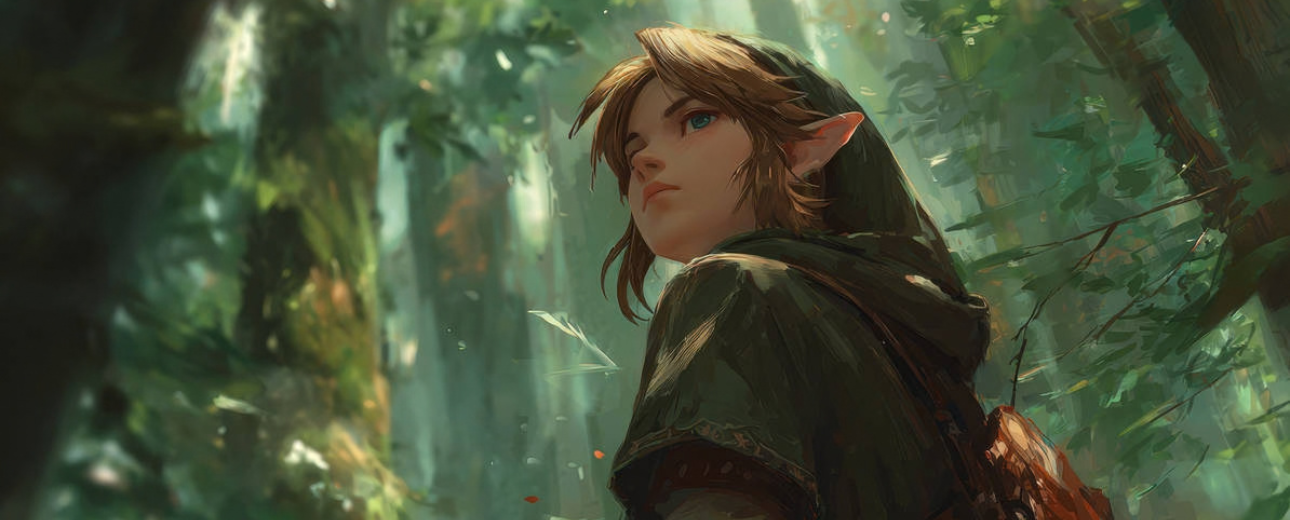
There is a specific kind of courage that belongs only to the first — to the work that has no precedent, no established audience, no proven formula to follow, no safety net of existing success to fall back on if the gamble does not pay off. This is the courage of “The Legend of Zelda” on the Nintendo Entertainment System — the 1986 game that started everything, that invented a genre, that made decisions so radical and so unconventional that they would have seemed commercially suicidal by any reasonable standard of the time, and that turned out to be among the most prescient and most influential design choices in the history of interactive entertainment.
When we talk about courageous Zelda games, the conversation usually gravitates toward “Majora’s Mask” — the game that followed the most successful Zelda ever made and deliberately chose to be strange, dark, and emotionally demanding. It gravitates toward “Breath of the Wild” — the game that abandoned forty years of franchise conventions and rebuilt the series from first principles. These are genuinely courageous games, and their courage is real and important. But they are courageous in a specific way: they are courageous departures from an established and successful formula, made by a team with the security of knowing that the franchise they were subverting was beloved and commercially robust.
The original “Legend of Zelda” had none of that security. It was not departing from an established formula — it was creating one. It was not subverting audience expectations — it was forming them. It was made in a moment when nobody knew what this kind of game was, when the conventions it established did not yet exist, when the choices its designers made were not bold interpretations of established wisdom but genuine leaps into the unknown. That is a different and in many ways more fundamental kind of courage — and it is why, forty years later, the original game on the NES remains the franchise’s most courageous entry.
What Nintendo Was Risking in 1986
To understand the courage of the original “Legend of Zelda”, you need to understand what Nintendo was risking when they made it — and the risks were substantial, specific, and clearly visible to anyone who understood the game market of 1986. The game industry of the mid-1980s operated according to fairly well-understood conventions: games were short, games were immediately comprehensible, games rewarded quick reflexes rather than extended thinking, and games could be completed in a single sitting by a player of reasonable skill. These conventions existed for good reasons — they reflected what arcade games had taught the industry about what players wanted and what hardware limitations made possible.
“The Legend of Zelda” violated virtually every one of these conventions simultaneously. It was long — genuinely, substantially long in a way that no mainstream game had been before it, requiring many hours of play across multiple sessions to complete. It was not immediately comprehensible — its world, its systems, and its secrets required exploration, experimentation, and genuine thought to understand and master. It did not reward quick reflexes primarily — it rewarded patience, curiosity, spatial memory, and the willingness to try things without knowing whether they would work. And it absolutely could not be completed in a single sitting — it required a battery-backed save system that was itself a significant technological and commercial gamble.
The Battery Save System and Its Commercial Risk
The battery-backed save system of the original Zelda — the gold cartridge’s built-in memory that allowed players to save their progress and return to it across multiple sessions — was one of the most significant commercial gambles in the game’s development, and it is worth dwelling on because it illustrates perfectly the specific nature of the courage the game required. In 1986, save systems in home video games were essentially nonexistent — games were designed to be experienced in single sittings, and the industry had no established model for how players would relate to a game that required them to return to it multiple times over days or weeks.
The business risk of the battery save was substantial and multi-dimensional. The battery-backed cartridge was significantly more expensive to produce than a standard cartridge, increasing the manufacturing cost and therefore the retail price of the game. There was no guarantee that players would understand or accept the concept of a game that required multiple sessions to complete — the entire cultural framework for that kind of gaming experience did not yet exist in the mainstream. And there was the specific risk that the battery would fail — that players would lose their save data — creating customer service problems and reputation damage that could be severe.
The Open World Decision and Its Design Implications
The open world design of the original Zelda — the decision to create a world that players could explore freely in almost any direction from the very beginning, rather than presenting them with a linear sequence of levels or areas to complete in order — was the most radical design decision in the game’s development and the one with the most far-reaching implications for what the game would become and what it would require of its players.
In 1986, the concept of an open world game did not exist as an established genre or design philosophy — there was no vocabulary for what Nintendo was building, no precedent to point to, no existing audience that had been trained to navigate this kind of space. The decision to give players a large, interconnected world to explore freely was a decision made in genuine ignorance of how players would respond — a genuine experiment whose outcome could not be predicted with confidence. The game could have been a confusing, alienating experience that players abandoned after the first hour of wandering without clear direction. The courage was in making that decision anyway — in trusting that players would rise to the experience rather than retreat from it.

The Design Courage of Withholding Information
One of the most distinctive and most courageous design choices of the original “Legend of Zelda” is one that is easy to overlook from the vantage point of forty years of games that have followed its example: the decision to withhold information from the player systematically and deliberately, to create a game whose world was full of secrets that the player had to discover through their own curiosity and experimentation rather than being guided to through explicit instruction or obvious visual cues.
The information economy of the original Zelda is extraordinary by any standard of game design — past or present. The game tells you very little. It does not explain most of its mechanics explicitly. It does not mark its dungeons on the map for you. It does not tell you which items are needed for which dungeons or in which order the dungeons should be approached. It does not explain that you can burn certain bushes, move certain rocks, or bomb certain walls to reveal hidden passages. It presents you with a world full of possibilities and leaves you to discover what those possibilities are through your own initiative.
The Trust in the Player as a Design Philosophy
The trust in the player that this information withholding represents is one of the original Zelda’s most profound design contributions — a philosophy of player respect that stands in sharp contrast to the hand-holding, marker-following, objective-tracking design philosophy that has dominated mainstream game design for the past two decades. The original Zelda trusts players to be curious, to be persistent, to be willing to try things without knowing whether they will work, and to find satisfaction in discovery rather than requiring the satisfaction to be delivered through explicit instruction.
This trust was courageous in 1986 because it ran directly counter to the prevailing wisdom about what players needed and wanted. The arcade game tradition — which was the dominant influence on game design at the time — was built around immediate comprehensibility: players needed to understand what to do within seconds of inserting a coin, because the business model of the arcade depended on rapid player engagement and turnover. Designing a home game that required hours of exploration before its full depth was revealed was a direct rejection of this prevailing wisdom, made in genuine uncertainty about whether players would accept the bargain being offered.
The Secrets That Required Community to Discover
The secrets of the original Zelda — the hidden rooms, the burnable bushes, the bombable walls, the specific item combinations that unlocked new possibilities — were so numerous and so obscure that no individual player could reasonably be expected to discover all of them through solo play. This was not accidental: the game was designed with the expectation that players would share discoveries with each other — in school playgrounds, in letters to gaming magazines, in the conversations between siblings and friends that constituted the informal information networks of pre-internet gaming culture.
This design philosophy — creating a game so full of secrets that community was required to fully explore it — was both courageous and visionary. It was courageous because it meant that many individual players would experience significant portions of the game in a state of productive confusion — not knowing where to go next, not knowing what to try, navigating by incomplete information and imperfect memory. It was visionary because it recognized, before social gaming platforms existed, that the social dimension of gaming — the sharing of discoveries, the collaborative navigation of a complex world — was itself a source of pleasure and engagement that the game could deliberately cultivate.
The Dungeon Design Revolution
The dungeon design of the original “Legend of Zelda” is another dimension of its courage that deserves specific examination, because the nine dungeons of the original game — from the simple introduction of Eagle to the labyrinthine complexity of Death Mountain — established conventions for dungeon design that the franchise has been exploring, refining, and subverting ever since. These dungeons were not created in the context of an established tradition of dungeon design in video games. They were the beginning of that tradition — the first significant examples of what a video game dungeon could be and do.
The courage of the original game’s dungeon design lies in its willingness to be genuinely difficult and genuinely complex. The later dungeons of the original Zelda are hard — not artificially hard through cheap deaths and punishing enemy placement, but genuinely hard through spatial complexity, puzzle design that requires thought rather than simply reflexes, and enemy encounters that demand pattern recognition and resource management. In 1986, this level of complexity and difficulty was a genuine risk: there was no guarantee that players would engage with this difficulty as a satisfying challenge rather than as an alienating frustration.
The Spatial Design of the Original Dungeons
The spatial design of the original Zelda dungeons — the specific way that rooms are arranged in relation to each other, the way locked doors and keys create puzzles of spatial logic, the way the dungeon layout itself becomes a puzzle to be understood and navigated — established the fundamental vocabulary of dungeon design that the franchise has been developing ever since. These spatial designs were created by Shigeru Miyamoto and Takashi Tezuka without the benefit of any established model for what a video game dungeon should be — they were working from first principles, inventing a design language as they went.
What is remarkable about the original dungeons — when you play them today — is how deliberately their spatial design communicates meaning and creates experience. The skull-shaped layout of certain dungeons, visible only on the full dungeon map, is purely aesthetic — it contributes nothing to the gameplay mechanics — but it contributes enormously to the atmosphere and the sense of place. The specific arrangement of rooms, the placement of keys and locked doors, the location of the dungeon item relative to the boss — all of these spatial decisions create experiences that feel intentional and meaningful rather than arbitrary, despite being designed without any established template.
The Boss Design and Its Legacy
The boss design of the original Zelda — the specific enemies that serve as final challenges for each dungeon — established another vocabulary that the franchise has been developing ever since, and the courage of these original designs is visible in their combination of visual distinctiveness, mechanical challenge, and thematic appropriateness. Aquamentus, Dodongo, Manhandla, Gleeok, Digdogger, Gohma, Ganon — these bosses were designed without reference to any established tradition of video game boss design, and they created the tradition rather than inheriting it.
The specific design courage of the original bosses is their variety — each boss requires a different approach, a different item, a different pattern of behavior to defeat — and their commitment to genuine difficulty. The bosses of the original Zelda do not ease you into engagement with tutorial-style introductions. They present their mechanics immediately and require the player to understand and respond to them in real time. This sink-or-swim approach to boss introduction was courageous in 1986 and remains one of the most respected aspects of the game’s design among players who appreciate the specific kind of challenge it offers.
The Second Quest: The Most Courageous Bonus in Game History
The Second Quest of the original “Legend of Zelda” — the completely remixed version of the game that becomes available after completing the first playthrough, featuring entirely redesigned dungeon layouts, different item and secret placements, and significantly increased difficulty — is one of the most extraordinary bonus features in the history of video games, and its existence is itself an act of design courage that deserves specific recognition.
The Second Quest was created by Takashi Tezuka during the original development as a way to provide replay value for players who had completed the game. This sounds straightforward, but the specific form it took — a complete redesign of the dungeon layouts rather than simply a difficulty adjustment — represented an investment of design time and creative energy that could have been avoided without any obvious commercial cost. Nobody expected a bonus mode this substantial. Nobody was demanding it. It was created because the designers believed that players who had invested the time to complete the game deserved an experience that was genuinely new rather than simply harder.
The Second Quest dungeons are, in several cases, genuinely more interesting and more sophisticated than the original dungeons — a remarkable achievement that suggests that the Second Quest was not simply a quick remix but a genuine creative investment. The dungeon layouts are more complex, the puzzles more demanding, the arrangement of keys and locked doors more labyrinthine. In some cases, the dungeon maps form different letter shapes than the originals — a purely aesthetic choice that serves no gameplay purpose but that reflects the designers’ commitment to making the Second Quest a genuinely different experience rather than simply a harder version of the same experience.
The courage of the Second Quest is the courage of abundance — of giving more than was expected or required, of treating player time and player engagement as things that deserved genuine investment rather than simply minimum viable product. In a commercial environment that strongly incentivized minimum viable content — where additional development time cost money without necessarily generating additional revenue — the decision to create a Second Quest of genuine quality and genuine substance was a choice that reflected design values rather than commercial calculation.

The Musical Courage: The Overworld Theme and What It Dared to Be
The music of the original Legend of Zelda — composed by Koji Kondo on the severely limited sound hardware of the NES — is one of the most celebrated achievements in video game music history, and its courage deserves specific examination because the choices Kondo made in composing the original Zelda music were genuinely unconventional and genuinely risky given the norms of the medium at the time.
The Overworld Theme of the original Zelda is one of the most instantly recognizable pieces of music in the history of video games — a melody so perfect in its combination of adventurousness, mystery, and emotional resonance that it has been arranged, covered, and referenced thousands of times across forty years of musical history. But in 1986, the specific qualities that make it so memorable — its modal harmony, its unconventional structure, its emotional complexity — were genuinely unusual choices for a game score.
Koji Kondo’s compositional choices for the original Zelda — particularly his use of modal scales rather than the major and minor scales that dominated Western popular music and most video game music of the era — were musically sophisticated choices that gave the score an unusual, slightly exotic quality that was unlike anything else in video game music at the time. Modal harmony has a long history in folk music traditions worldwide, but it was not a common choice for commercial entertainment music in the mid-1980s, and its use in the Zelda score gave the music a timeless, slightly ancient quality that was perfectly suited to the game’s fantasy setting but that was genuinely unconventional.
The Dungeon Theme of the original Zelda — the tense, rhythmically driving piece that plays in all nine dungeons — is another compositional achievement whose courage is visible in its emotional specificity. The music creates genuine tension and unease through its rhythmic insistence and its harmonically ambiguous chord progressions — it is music that serves the emotional experience of dungeon exploration with a precision that goes beyond functional background music into something closer to cinematic score composition. This level of emotional precision in video game music was not established practice in 1986 — it was another first, another courageous choice made without a proven model to follow.

The Legacy of Courage: How the Original Zelda’s Bravery Shaped Everything
The legacy of the original Zelda’s courage — the specific ways that its brave choices have shaped the franchise, the game industry, and the cultural understanding of what video games can be — is the final dimension of the argument for its status as the franchise’s most courageous game. Understanding this legacy requires understanding both what the original game made possible and what it made inevitable — the directions it opened for the franchise and the medium that would not have been available without the specific choices it made in 1986.
The most fundamental legacy of the original Zelda’s courage is the action-adventure genre itself — the entire category of games whose defining characteristics are exploration, puzzle-solving, item collection, and narrative progression in an interconnected world. Before the original Zelda, this genre did not exist as a recognizable category. After it, the genre became one of the most important in the medium, producing dozens of landmark games across forty years of game development. Every game in this tradition — from “Metroid” to “Dark Souls”, from “God of War” to “Hollow Knight” — owes something to the original Zelda’s willingness to invent the genre rather than follow one.
What Every Subsequent Zelda Owes to the Original
Every subsequent Zelda game owes specific debts to the original that are worth acknowledging explicitly, because those debts illuminate both the original game’s contributions and the specific ways that the franchise has built upon its foundation. The open world philosophy of “Breath of the Wild” and “Tears of the Kingdom” — the most celebrated aspect of the franchise’s modern reinvention — is not a new idea introduced by those games. It is the rediscovery and the technological amplification of the principle that the original Zelda established in 1986: that giving players a world to explore freely and trusting them to navigate it on their own terms is more rewarding than guiding them through a predetermined sequence of experiences.
The dungeon design tradition that every Zelda game participates in — the tradition of themed, puzzle-filled spatial challenges that culminate in a boss encounter and reward completion with a new item that opens new possibilities — was entirely created by the original game. The item-based progression that structures every Zelda game — the acquisition of specific tools that open specific areas of the world and enable specific puzzle solutions — was the original game’s invention. The sense of world mystery — the feeling that Hyrule contains secrets that reward patient exploration and genuine curiosity — was the original game’s most important gift to the franchise and to the medium.
The Courage That Made Nintendo Nintendo
The courage of the original Zelda was also, in a broader sense, the courage that defined Nintendo’s identity as a game developer — the company’s willingness to make unconventional choices based on design conviction rather than market research, to trust players with genuine complexity and genuine challenge, and to invest in quality and substance beyond what commercial logic strictly required. These values — visible in the original Zelda’s battery save system, its open world design, its information withholding, its Second Quest — are the values that have made Nintendo the most consistently creative and most consistently trusted name in game development across forty years of industry evolution.
For readers who want to experience the original “Legend of Zelda” in its full historical context, the game is available on Nintendo Switch Online as part of the NES library — accessible to all Nintendo Switch Online subscribers at nintendo.com. The Zelda Wiki at zeldawiki.wiki maintains comprehensive documentation of the original game’s design, secrets, and historical context. “Hyrule Historia” published by Dark Horse Books at darkhorse.com provides the official Nintendo perspective on the franchise’s history including the original game’s development. For the game’s musical legacy, Koji Kondo’s original compositions are extensively documented and analyzed at VGMdb at vgmdb.net. The community discussion of the original game’s design and legacy is most actively maintained at the Zelda subreddit on reddit.com. And for the broader historical context of the original Zelda’s place in game design history, “Console Wars”by Blake J. Harris at amazon.com provides essential context for understanding the game industry of the mid-1980s in which the original game was made.
It had no map. It had no tutorial. It had no waypoints, no objective markers, no hand-holding of any kind. It had a gold cartridge, a world full of secrets, and the absolute conviction that players were smart enough, patient enough, and curious enough to find their way through it. That conviction — that trust — was the most courageous design decision Nintendo ever made. And everything that the Legend of Zelda franchise has become in the forty years since was made possible by the courage of the game that started it all.