
 Canada
 USA
USA Japan
Japan



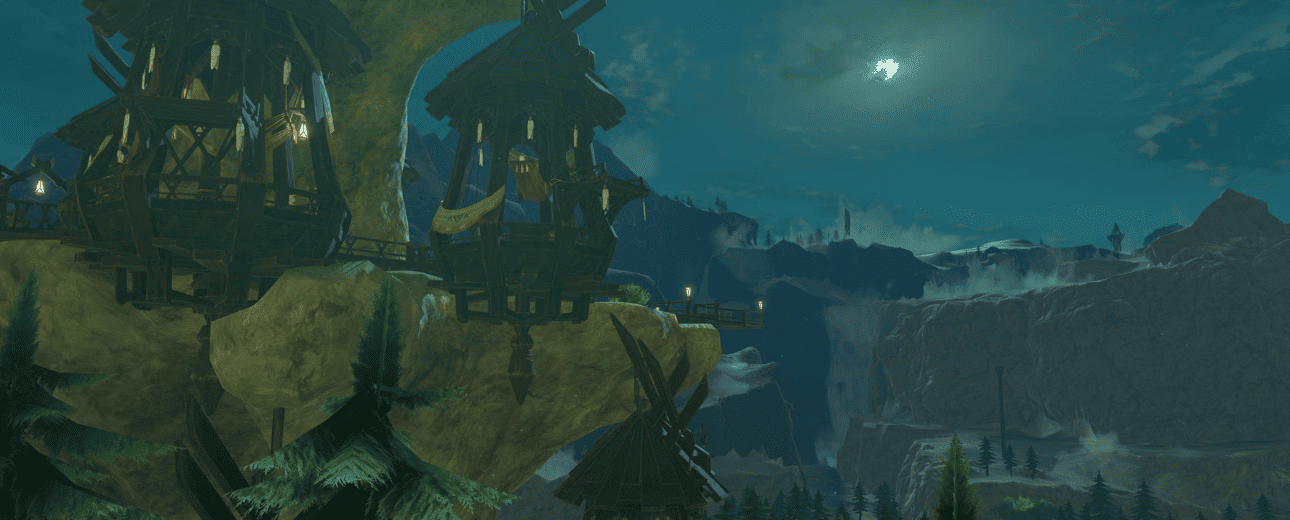
There is something genuinely magical about the first time you see Rito Village from a distance. Whether you’re approaching it across the frozen tundra of the Hebra region in “Breath of the Wild” or descending through snow-laden clouds in “Tears of the Kingdom,” the sight of that spiraling pillar of rock rising from the water, with its warm lights glowing against the grey sky and the sound of music drifting across the cold air, hits differently than almost any other location in either game. It feels like a destination. It feels like somewhere worth going. And once you arrive, it delivers on that promise completely, offering one of the most visually distinctive, narratively rich, and mechanically rewarding locations in the entire Zelda series.
This guide is for everyone who loves Rito Village as much as we do: the players who have visited it dozens of times across both games, the fans who find themselves humming the Rito Village theme at random moments throughout the day, the completionists who want to make sure they haven’t missed a single quest or collectible, and the newcomers who are just discovering what makes this place so special. We’re going to cover everything: the village’s layout and lore, every NPC worth knowing, every quest available in both games, the Divine Beast Vah Medoh dungeon, Tulin’s dungeon in “Tears of the Kingdom,” the music that has become iconic, and why Rito Village has earned its place as one of the Legend of Zelda franchise’s most beloved locations.
This is the complete guide, and we’re going to treat it with the depth and the passion it deserves. Let’s fly.
Rito Village in the Zelda Universe: History and Lore
Before we get into the practical details of quests and mechanics, let’s spend some time with the deeper question of who the Rito are and what Rito Village means within the larger context of the Zelda universe, because the lore here is genuinely fascinating and adds significant depth to your experience of both games.
The Rito are one of the four major non-Hylian peoples of Hyrule in the era depicted by “Breath of the Wild” and “Tears of the Kingdom,” alongside the Zora, the Gorons, and the Gerudo. They are a bird-like people: humanoid in their basic body plan but with wings instead of arms, feathered bodies, beaked faces, and the ability to fly with a grace and speed that makes them invaluable as warriors, messengers, and aerial scouts. Their culture reflects their aerial nature in almost every dimension: their village is built vertically rather than horizontally, their architecture emphasizes height and exposure to the wind, their weapons and combat traditions are oriented around aerial combat, and their mythology and self-understanding are deeply tied to the sky.
The Origins of the Rito: Connections to Wind Waker and the Great Sea
One of the most interesting pieces of Zelda lore surrounding the Rito concerns their possible connection to the Zora, specifically the question of whether the Rito of “Breath of the Wild” are descended from or related to the Rito of “The Wind Waker”, and whether those Wind Waker Rito were in turn evolved from the Zora of earlier eras. In “The Wind Waker,” which is set in a flooded Hyrule thousands of years after the events of “Ocarina of Time,” the Rito are depicted as having evolved from the Zora after the Great Sea covered the land, adapting to an aerial existence in a world where vast oceans made fish-people’s aquatic specialization less useful than the ability to fly.
The Rito of “Breath of the Wild” and “Tears of the Kingdom” exist in a different timeline and a different world-historical context from the Wind Waker Rito, and the canonical relationship between the two peoples is not explicitly established in either game. But the visual and thematic connections are unmistakable: both peoples are bird-like, both live in elevated, architecturally vertical villages, both have a cultural emphasis on flight and aerial capability, and both have a specific relationship to the wind and weather that distinguishes them from Hyrule’s other peoples. Whether you read this as canonical connection or as thematic resonance across different timeline branches, it adds a layer of richness to the Rito’s presence in the era of “Breath of the Wild” and “Tears of the Kingdom.”
Rito Village’s Geographic and Cultural Context
Within the world of “Breath of the Wild” and “Tears of the Kingdom,” Rito Village is located in the Tabantha Frontierregion of northwestern Hyrule, on a pillar of rock rising from Lake Totori in the shadow of the Hebra Mountains. The location is geographically extreme: this is one of the coldest regions of Hyrule, regularly subject to blizzards and freezing temperatures that make it hostile to unprepared travelers. The cold-weather challenge is both a practical obstacle for players approaching the village and a thematic statement about who the Rito are: a people tough enough to make their home in conditions that would drive most Hylians away.
The village itself is built on and around that central rock pillar, with structures connected by rope bridges and wooden walkways that spiral upward toward the peak. This vertical architecture reflects the Rito’s aerial nature in the most direct way possible: for a people who can fly, height is not an obstacle but a feature, and building upward rather than outward makes perfect sense for a culture that experiences the world three-dimensionally rather than on a flat plane. The highest point of the village, where the chieftain’s home and the flight deck are located, is accessible on foot via the long ramp that spirals up the pillar, but the Rito themselves simply fly to wherever they need to go.
The Rito’s Role in Hyrule’s Political Structure
Within the broader political structure of Hyrule as depicted in both games, the Rito occupy a position of significant military and logistical importance. Their aerial capability makes them invaluable as long-range scouts and messengers, able to cover distances in hours that would take Hylian soldiers days on horseback. Their warriors, particularly those trained in the bow and arrow traditions that their aerial lifestyle makes natural, are among the most capable in Hyrule. And their geographic position in the far northwest, controlling the high ground of the Hebra region, gives them a strategic importance that the Hyrulean crown has historically recognized and cultivated.
The relationship between the Rito and the Hyrulean royal family is one of mutual benefit: the Rito provide military capability and geographic coverage in exchange for recognition, trade access, and the political security that comes from being part of a larger political entity. This relationship is expressed in both games through the presence of a Champion — Revali in “Breath of the Wild,” his descendant Tulin effectively filling that role in “Tears of the Kingdom” — who represents the Rito’s commitment to the larger Hylian political and military project while also being the finest expression of what Rito warrior culture can produce.

Rito Village in Breath of the Wild: Complete Location Guide
“Breath of the Wild” introduced most players to Rito Village, and the game’s version of the location remains one of the most lovingly designed areas in the entire game. From the moment you arrive, the village rewards exploration and attention, with details and characters and small stories tucked into every level of the pillar’s spiral structure. Let’s map it out completely.
The village is most practically accessed from the Rito Village Stable to the south, which provides a natural base of operations for your initial exploration of the area. From the stable, a path leads north to the bridge that crosses Lake Totori to the base of the village pillar. The path is straightforward but the crossing can be challenging early in the game if the weather conditions are bad, so make sure you have appropriate cold-weather preparation before making the trip. Spicy Elixirs and cold-resistant armor are your friends in this region.
Key NPCs and Characters of BotW Rito Village
The NPCs of Rito Village are among the most memorable in “Breath of the Wild,” with the game investing real personality and real stories into the community that makes this location feel lived-in and genuine. Getting to know them properly enriches the experience of the village enormously and is essential for completing the area’s quest content.
Kaneli is the elder of Rito Village and your primary quest contact for the Divine Beast Vah Medoh storyline. He is a dignified, somewhat worried old Rito who carries the weight of his community’s current crisis with visible anxiety. His concern for Vah Medoh and for Teba, the warrior who has gone to confront the Divine Beast, drives the initial quest chain and establishes the emotional stakes of the area’s main story. Kaneli is also a repository of local lore, and talking to him thoroughly yields interesting background information about the Rito’s history and culture.
Teba is one of the best supporting characters in “Breath of the Wild,” a warrior Rito who has taken it upon himself to confront Divine Beast Vah Medoh despite the near-impossibility of the task. He is proud, competent, and absolutely committed to protecting his community, and his interactions with Link during the preparation for the Vah Medoh assault are some of the game’s best character moments. His wife Saki and son Tulin — yes, the same Tulin who grows up to be a major character in “Tears of the Kingdom” — are also present in the village, giving Teba’s heroism a personal and domestic dimension that makes it more emotionally resonant.
Kass is a musician Rito who appears at various locations around Hyrule, playing his accordion and sharing ancient songs that contain clues to shrine locations. His connection to Rito Village is personal and poignant: he was the student of a Hylian court poet who served Princess Zelda, and his journey across Hyrule is an act of devotion to his teacher’s memory. Finding all of Kass’s locations and hearing his complete story is one of “Breath of the Wild’s” most rewarding side quest experiences, and it begins in Rito Village where his family lives.
Bedoli, Kotts, Misa, Cecili and other village residents fill out the community with small stories and personality details that reward conversation. The children of the village in particular have delightful interactions that reflect the specific perspective of young Rito who are still learning to fly, and their view of the current crisis involving Vah Medoh is touching in its combination of fear and trust that the adults will somehow fix things.
The Shop, Inn, and Essential Services
Rito Village’s commercial offerings are worth knowing thoroughly because they include some items that are particularly valuable for the Hebra region’s cold-weather challenges. The Slippery Falcon General Store, run by Fyson, stocks a range of items including the Spicy Pepper and other cold-resistance cooking ingredients that are essential for survival in the freezing temperatures of the surrounding region. The store also carries arrows in various types, which is particularly useful given the archery-focused nature of the upcoming Divine Beast encounter.
The Rito Village Inn, run by Cecili, provides the standard overnight rest service but also occasionally offers the Whole Ration meal, which is one of the more efficient early-game food items for quickly restoring health. The inn’s location partway up the pillar gives it a spectacular view of the surrounding lake and mountains that is worth experiencing at different times of day, as the lighting changes dramatically between dawn, midday, and dusk.
The Brazen Beak armor shop, run by Nekk, sells the Snowquill armor set, which is the primary cold-weather armor available in this part of the game and an essential purchase for anyone planning to explore the Hebra Mountains or approach Vah Medoh. The complete set provides sufficient cold resistance for most of the region’s challenges, and upgrading it at Great Fairy Fountains significantly extends its protective value. The Snowquill set is one of the better-looking armor options in the game, with a distinctive feathered aesthetic that fits the Rito cultural context beautifully.
Side Quests in BotW Rito Village
“Breath of the Wild’s” Rito Village offers a solid collection of side quests that reward thorough exploration and conversation with the village’s residents. These quests range from simple fetch missions to more involved tasks that illuminate character relationships and local history, and completing them all gives you a much fuller picture of who these people are and what their community is like under normal circumstances.
“Recital at Warbler’s Nest” is one of the most memorable side quests in the game and one that many players remember long after their first playthrough. The quest involves Kass’s five daughters, who need help completing a musical performance at the nearby Warbler’s Nest location. The puzzle involves using the correct wind direction and the Korok Leaf to direct sound to the correct stone pillars, and the solution is both satisfying to discover and genuinely creative in how it uses the game’s wind mechanics. The emotional payoff of seeing the daughters perform, combined with the connection to the larger Kass questline, makes this one of the standout side quest experiences in the entire game.
“Face the Frost Talus” sends you to defeat a Frost Talus in the Hebra Mountains, a challenging combat encounter that tests your cold-weather preparation and your combat abilities under difficult environmental conditions. The reward is modest in material terms but the fight itself is genuinely satisfying, and the quest is a good introduction to the Talus enemy type if you haven’t encountered one yet.
“The Apple of My Eye” is a simpler quest involving gathering apples for a village resident, but it serves as a good introduction to the foraging mechanics that are important throughout the Hebra region. The rewards are small but the interaction is charming, and it’s the kind of small community-building quest that makes Rito Village feel like a real place rather than just a quest hub.
“Hunt for the Giant Horse” is technically located near Rito Village and often picked up during the same playthrough segment, involving the capture of a specific large horse that appears in the nearby area. It’s a good excuse to explore the Tabantha region more thoroughly while you’re in the area for the main Divine Beast quest.

Divine Beast Vah Medoh: Complete Walkthrough
Divine Beast Vah Medoh is the aerial Divine Beast associated with the Rito region, and it is arguably the most visually spectacular of the four Divine Beasts in “Breath of the Wild.” The approach to Vah Medoh, flying through the air on Revali’s Gale while avoiding the Divine Beast’s anti-air cannons, is one of the game’s most memorable setpiece moments, and the dungeon itself — floating high above Hyrule with panoramic views in every direction — is as distinctive in its aesthetic as it is in its mechanical design.
The dungeon rewards a systematic approach, and understanding its structure before you go in makes the experience significantly more enjoyable. Vah Medoh is a large bird-like Divine Beast that can tilt its wings to change the angle of its internal platforms, which is the core mechanic driving all of its puzzles. Learning to think about the interior space in terms of how tilting the wings changes platform angles and access routes is the key to solving every puzzle in the dungeon efficiently.
Preparation and Approach: What You Need Before Entering
Before you even attempt the approach to Vah Medoh, there are several preparation steps that will make the experience significantly smoother. Revali’s Gale is obviously essential and is obtained after completing the preliminary archery challenge with Teba at Dronoc’s Pass, but beyond that specific prerequisite, your general preparedness for the encounter matters considerably.
Bow and arrow supply is the most critical preparation element for the Vah Medoh approach and for the dungeon itself. You will need to shoot targets while flying, which requires both accurate archery skills and a sufficient supply of arrows. Standard arrows are fine for most of the approach phase, but having some Bomb Arrows in reserve for the dungeon’s interior puzzles and for the boss fight will make those phases easier. Stock up at the Rito Village shop before heading out.
Cold resistance is necessary throughout the approach because the altitude of Vah Medoh’s flight path is extreme enough to trigger the game’s cold weather effects even with standard cold-weather preparation. The complete Snowquill set provides enough cold resistance for the approach phase, but if you haven’t fully upgraded it, bringing cold-resistance elixirs as backup is a sensible precaution. Running out of cold resistance at high altitude while trying to execute precise archery maneuvers is an experience you want to avoid.
Health and stamina preparation matters too. The approach to Vah Medoh involves extended aerial combat that depletes stamina continuously, and while Link won’t die from stamina exhaustion in mid-air (Revali’s Gale will reactivate after a landing), running out of stamina at a critical moment during the approach can cost you significant progress. Cooking stamina-restoring meals before the attempt is worth the investment.
Inside Vah Medoh: Puzzle Solutions
The interior of Vah Medoh contains five terminals that must be activated to unlock the dungeon’s boss fight, plus numerous treasure chests containing useful items. The puzzle design is built around the wing-tilting mechanic and Magnesis, Stasis, and Cryonis rune interactions with the dungeon’s environmental features.
The first terminal is located in the dungeon’s central chamber and is relatively straightforward to reach, requiring you to tilt the wings slightly to change the angle of a water flow that powers a mechanism. This first puzzle serves as the tutorial for the wing-tilting mechanic, establishing the fundamental interaction that will drive everything else in the dungeon.
The second and third terminals are located in the wing sections of the dungeon and require more complex combinations of wing-tilting angles and rune interactions. The second terminal’s chamber uses a large metal ball that needs to be guided to a specific position using Magnesis while the wing angle is set correctly, which requires spatial reasoning about how the tilting will affect the ball’s position relative to the mechanism it needs to activate.
The fourth terminal is hidden behind one of the dungeon’s most cleverly concealed puzzles, involving a chest embedded in the ceiling of a chamber that only becomes accessible when the wings are tilted to a specific extreme angle. Finding this terminal requires exploring the dungeon’s spaces thoroughly and thinking about what areas become accessible at unusual wing angles rather than just at the obvious positions.
The fifth terminal is guarded by the dungeon’s most complex puzzle sequence, requiring you to manipulate multiple environmental elements in a specific sequence while maintaining the correct wing angle. Taking time to observe what each element does at each wing angle before attempting the solution makes this puzzle significantly less frustrating.
Windblight Ganon: Boss Fight Guide
Windblight Ganon is the Blight inhabiting Divine Beast Vah Medoh, and it is one of the more mechanically interesting boss fights in “Breath of the Wild.” The fight takes place in Vah Medoh’s large interior arena and proceeds in two phases, with the boss becoming significantly more aggressive and adding new attack patterns after losing approximately half its health.
In the first phase, Windblight Ganon attacks primarily with a large cannon that fires concentrated wind blasts, and with smaller drones that it deploys to create additional hazards. The strategy here is straightforward but requires good aerial positioning: use Revali’s Gale to get height advantage, aim for the glowing eye that is the boss’s weak point, and dodge the cannon blasts by moving laterally when you see them incoming. Bomb Arrows are particularly effective at dealing significant damage during this phase if you can land them on the eye.
The second phase begins when Windblight Ganon retreats to a corner of the arena and begins deploying a large number of drones that coordinate to fire at Link simultaneously. The key to this phase is destroying the drones first, which eliminates the coordinated attack threat and leaves you to deal with Windblight Ganon itself in a more manageable one-on-one situation. Using Stasis on the drones briefly gives you time to destroy them before they can coordinate their attack.
After defeating Windblight Ganon, you will receive Revali’s Gale, the ability that allows Link to create an upward wind current to gain height. This is one of the most useful abilities in the game and one that many experienced players consider essential for exploration, making the Rito region a high-priority early destination in any playthrough.

Revali: The Champion Who Defined Rito Village’s Story in BotW
Revali is one of the most fascinating and most discussed characters in “Breath of the Wild,” and understanding him fully is essential to understanding what the Rito Divine Beast storyline is actually about. He is the Rito Champion, the greatest archer and aerial combatant of his generation, and the person who developed the Gale technique that bears his name. He is also arrogant, condescending toward Link, and deeply competitive in ways that initially make him difficult to like. He is, in short, one of the most complex supporting characters in any Zelda game, and he deserves more than a surface reading.
The key to understanding Revali is understanding what his arrogance is covering. He is the finest warrior his people have ever produced, someone who achieved through extraordinary dedication and hard work a level of skill that no previous Rito had approached. He worked incredibly hard to get where he is, developing his signature Gale technique through sheer persistence when no natural talent for it existed. And then Link arrived: a Hylian chosen by the legendary Sheikah Slate and the Master Sword, someone whose exceptional status was a product of destiny rather than demonstrated excellence. Revali’s hostility toward Link is not random. It is the specific resentment of someone who earned everything he has watching someone else receive destiny’s endorsement without having to earn it.
Revali’s Memory: The Emotional Core of His Character
The memory sequence involving Revali, which depicts the moment when he agreed to pilot Vah Medoh as its Champion, is one of the most emotionally rich pieces of backstory in “Breath of the Wild.” The memory shows Revali at his most complex: simultaneously proud and insecure, genuinely committed to protecting his people while also clearly driven by the desire to prove himself against Link and against the world’s expectations.
His speech in the memory, delivered while executing an impossibly difficult aerial maneuver, is a masterclass in character writing: he talks about having mastered a technique that no other Rito could accomplish, about his ambition to defeat Calamity Ganon with or without Link’s help, about his confidence in his own exceptional ability. And underneath all of that bravado is someone who has worked desperately hard to be exactly who he is, who is deeply invested in being exceptional because being exceptional is the only identity he has ever allowed himself. Understanding this makes his eventual fate — being possessed and ultimately killed by Windblight Ganon, waiting for a hundred years inside Vah Medoh for the Link he resented to come save him — deeply affecting in a way that his surface personality doesn’t immediately suggest.

The Music of Rito Village: One of Gaming’s Greatest Soundtracks
Any complete guide to Rito Village must spend serious time with the music, because the Rito Village theme is genuinely one of the greatest pieces of video game music ever composed and is central to why the location resonates so deeply with players. The theme, composed by Manaka Kataoka for “Breath of the Wild,” has achieved a kind of cultural immortality within gaming: it is instantly recognizable, widely covered by musicians across every imaginable genre and instrumentation, and capable of triggering powerful nostalgic responses in players who have spent significant time in the village.
The theme’s genius lies in its specific emotional character, which is unlike almost any other piece of video game location music. It is not triumphant or adventurous. It is not ominous or tense. It is something much more specific and much more unusual: it is wistful and hopeful simultaneously, a piece of music that sounds like looking at something beautiful from a safe distance, like the feeling of arriving somewhere you’ve been looking forward to after a long journey, like the specific pleasure of being somewhere warm while the cold wind blows outside. It captures the emotional reality of what Rito Village is in the context of “Breath of the Wild”: a refuge, a place of warmth and community in the middle of a cold and dangerous world.
The Musical Structure and Its Effects
The Rito Village theme is built on a foundation of acoustic guitar playing a gentle, slightly melancholic chord progression, over which a flute melody weaves a line that is simultaneously simple and emotionally complex. The guitar establishes the harmonic warmth and the gentle rhythmic pulse of the piece, while the flute provides the melodic character that players most immediately recognize and remember. The interplay between these two elements creates a texture that feels intimate and personal, like music being played by someone for themselves rather than for an audience.
This intimacy is part of what makes the theme so effective as location music. When you hear it in the village, it doesn’t feel like a grand statement about the location’s importance. It feels like the musical equivalent of the village’s own self-understanding: modest, self-sufficient, finding beauty in small things rather than grand gestures. This quality makes the theme genuinely moving in a way that more bombastic location themes often fail to achieve.
Kass and the Musical Culture of the Rito
The musical dimension of Rito culture, established through the Rito Village theme and extended through the character of Kass, is one of the most charming aspects of the people’s characterization in “Breath of the Wild.” The Rito are presented as a people with a genuine and deep musical tradition, one that serves both aesthetic and functional purposes: music as entertainment, music as cultural memory, music as a way of preserving and transmitting knowledge about the world and about history.
Kass’s accordion playing, which you can hear at various locations around Hyrule, is connected to this tradition in ways that extend beyond simple character decoration. His songs, which contain encoded information about shrine locations and ancient events, represent a specific form of musical knowledge-keeping that is presented as a characteristically Rito approach to cultural memory. The fact that his teacher — a Hylian court poet — chose to encode his final messages in song, in a form that a Rito musician could carry and transmit, suggests a deep respect for the Rito musical tradition’s capacity to preserve and communicate across time and distance.
Rito Village in Tears of the Kingdom: What Changed and What Didn’t
“Tears of the Kingdom” returns to Rito Village and finds it in significantly different circumstances from “Breath of the Wild’s” version, with changes that reflect both the passage of time and the specific crisis that drives the game’s early narrative. The village is colder, more beleaguered, and more anxious than you remember from the previous game, and understanding why requires paying attention to the specific environmental and narrative changes that “Tears of the Kingdom” has introduced.
The most immediately visible change is the perpetual blizzard that has descended on the Rito Village region, a supernatural weather phenomenon that is far more severe than the normal cold of the Hebra region. The village is effectively under siege by this weather, with food supplies running low, the Rito unable to fly properly in the howling winds, and the community’s morale deteriorating as the crisis extends without resolution. This setup creates a very different emotional atmosphere from “Breath of the Wild’s” version of the village: this is not a community under direct physical attack but one being slowly ground down by an environmental crisis that it has no clear way to address.
The New Characters and Returning Faces
“Tears of the Kingdom’s” Rito Village brings back several familiar faces while introducing new characters who carry the game’s central Rito storyline. Teba returns, now clearly established as one of the village’s most senior warriors, carrying the weight of leadership in a crisis that he is doing his best to manage but that is clearly beyond what any single warrior can solve. His son Tulin has grown from the small child we met briefly in “Breath of the Wild” into a young warrior of obvious talent and even more obvious eagerness to prove himself, creating a dynamic that will feel familiar to anyone who remembers Revali’s character arc.
Saki returns as well, now a fully established member of the village community whose concern for both her husband and her son during the crisis adds emotional texture to the situation. Other returning NPCs provide continuity with the previous game’s community, and attentive players will notice character development reflected in changed dialogue and changed situations from the “Breath of the Wild” versions.
New character Harth serves as an important quest contact in the “Tears of the Kingdom” Rito storyline, providing information and assistance that helps Link understand both the nature of the crisis and the possible paths toward resolving it. His knowledge of local conditions and his relationship with Tulin make him an essential NPC for the main questline.
Side Quests Unique to TotK Rito Village
“Tears of the Kingdom” introduces a new set of side quests and side adventures specific to Rito Village and the surrounding Hebra region, and completing them provides both practical rewards and a more complete picture of how the community is coping with the blizzard crisis. Several of these quests are directly linked to the main storyline and must be completed or progressed to unlock access to the Wind Temple, while others are purely optional but significantly enrich the area’s storytelling.
“Tulin of Rito Village” is the main quest that drives the Rito storyline in “Tears of the Kingdom,” beginning with the search for Tulin and culminating in the assault on the Wind Temple. The quest chain is well-structured and emotionally engaging, with Tulin’s development from eager young warrior to genuine partner feeling earned through the specific challenges the quest puts the two characters through together. The dynamic between Link and Tulin mirrors several of the game’s broader themes about mentorship and inherited responsibility, and paying attention to the character beats makes the dungeon experience significantly more resonant.
“The Rito’s Predicament” and related supply quests ask Link to help the village manage the immediate crisis caused by the blizzard, gathering food and other resources that the Rito can no longer acquire through normal means due to the weather conditions. These quests are practical in their immediate rewards and humanizing in their narrative function: they show the real-world consequences of the supernatural crisis on ordinary community members who are not warriors or heroes but who are suffering just as significantly.

The Wind Temple: TotK’s Rito Dungeon Complete Guide
The Wind Temple is the dungeon associated with the Rito region in “Tears of the Kingdom,” and it represents the game’s dungeon design philosophy in its most fully realized form. Unlike “Breath of the Wild’s” Divine Beast design, which created self-contained mechanic puzzles within mobile structures, “Tears of the Kingdom’s” dungeons are more traditional in their spatial design while incorporating the game’s new mechanics in creative and satisfying ways.
The Wind Temple is reached through an extended aerial approach with Tulin, flying upward through increasingly severe wind and weather conditions to reach a massive structure frozen in the sky above the Hebra Mountains. The approach is spectacular in itself, with the scale of the temple becoming apparent gradually as you ascend through the clouds, and the combination of aerial navigation with the puzzle-solving requirements of the approach creates a sense of genuine adventure before you even set foot inside the dungeon proper.
Tulin’s Gust: The Key Mechanic
The central mechanic of the Wind Temple is Tulin’s Gust, the ability that your Rito companion contributes to the puzzle-solving toolkit during this dungeon. Tulin can generate a powerful gust of wind on command, which can move objects, activate wind-powered mechanisms, push Link through the air for additional mobility, and interact with the dungeon’s various wind-based puzzles in ways that the game introduces gradually across the dungeon’s progression.
Learning to use Tulin’s Gust effectively is the key to navigating the Wind Temple efficiently, and the dungeon does a good job of introducing the mechanic’s various applications in a sequence that builds naturally from simple to complex. The early puzzles establish the basics: Gust moves objects, Gust activates pinwheels, Gust gives Link a speed boost through the air. The later puzzles combine these applications in creative ways that require thinking about the wind’s effects on multiple elements simultaneously, which is where the dungeon’s design becomes genuinely satisfying.
Wind Temple: Room by Room Breakdown
The Wind Temple is structured around a central vertical shaft with five locks that must be opened to access the boss chamber, with the puzzle rooms associated with each lock arranged around the shaft at different heights and in different wings of the structure. This structure is similar in concept to the Divine Beast design from “Breath of the Wild” but executed in a more spatially complex and more visually varied way.
The first lock is found in the dungeon’s initial accessible area and serves as the tutorial for Tulin’s Gust, establishing the mechanic through a simple puzzle involving a frozen pinwheel that needs to be cleared of ice and then activated. This first puzzle is deliberately unchallenging, prioritizing mechanic introduction over puzzle difficulty.
The second and third locks are located in the wing sections of the dungeon and introduce more complex applications of the wind mechanic, including a puzzle involving a large suspended platform that needs to be rotated to a specific angle using precisely directed Gust applications, and a sequence involving chains of wind-activated mechanisms that need to be triggered in a specific order.
The fourth lock introduces the dungeon’s most creative mechanic variation: Tulin’s Gust can be used to direct the flight of specific projectiles that appear in this area, creating a puzzle type that requires thinking about wind direction and projectile trajectory simultaneously. The solution requires precise positioning and timing, and getting it right is one of the dungeon’s most satisfying moments.
The fifth lock guards the path to the boss chamber and requires a combination of all the mechanic applications introduced in the previous rooms, creating a culminating puzzle that tests your mastery of everything the dungeon has taught you.
Colgera: The Wind Temple Boss Fight
Colgera is the boss of the Wind Temple, a massive winged creature made of ice and wind that attacks Link from multiple directions simultaneously. It is one of “Tears of the Kingdom’s” most visually spectacular boss encounters, filling the enormous boss chamber with its presence and creating a fight that uses the three-dimensional space of the arena more fully than most encounters in either game.
The fight against Colgera takes place in three phases, with the boss adding new attack patterns and becoming more aggressive as the fight progresses. In the first phase, Colgera primarily attacks by diving through the floor of the arena and re-emerging to slam into Link, a pattern that requires attention to its movement to dodge effectively. The strategy here is to use Tulin’s Gust to gain height when Colgera dives, then aim for the ice crystal weak points on its body when it rises to attack. Arrows work well for this, and having a supply of Ice Arrows actually works counterproductively here — standard arrows are more effective.
The second phase begins when Colgera loses approximately a third of its health and adds a spinning attack that creates expanding rings of ice shards moving outward from the boss. The key to surviving this phase is maintaining height to dodge the ice rings, which travel along the floor of the arena and are easier to avoid when you’re airborne. Continue targeting the ice crystals when opportunities present themselves.
The third phase is the most intense, with Colgera adding a rapid-fire projectile attack to its repertoire while maintaining the dive and spin attacks from the previous phases. The priority in this phase is staying mobile, using Tulin’s Gust consistently to maintain airborne positioning, and taking the damage windows on the crystals that the boss’s attack patterns create rather than trying to force attacks at inopportune moments.
After defeating Colgera, you will receive Tulin’s Vow, unlocking the ability to summon Tulin’s Gust outside the dungeon in a limited form. This ability is one of the most useful traversal tools in “Tears of the Kingdom” and makes exploring the Hebra region significantly more enjoyable.
Collectibles, Korok Seeds, and Completionist Content
No complete guide to Rito Village would be complete without addressing the collectible content in and around the location, because both games have significant completionist content in the Rito Village area that rewards thorough exploration.
In “Breath of the Wild,” the Rito Village area contains numerous Korok Seeds hidden throughout the village structure and the surrounding Tabantha region. The village itself has seeds hidden at various points along the spiraling ramp structure, typically requiring specific interactions like lifting rocks, hitting targets, or completing obstacle courses that use Link’s aerial mobility. The surrounding region has additional seeds hidden in the varied terrain of the Tabantha Frontier, rewarding thorough exploration of the area’s geography.
Shrines in the Rito Village region include several that are directly accessible from the village itself and others that are located in the more remote areas of the Tabantha Frontier and Hebra Mountains. The Akh Va’quot Shrine in the village itself is particularly convenient, providing a fast travel point right at the village that makes returning to the area efficient for subsequent visits. The surrounding region’s shrines are distributed across challenging terrain, and finding them all rewards both exploration and attention to the environmental clues that often indicate shrine proximity.
Photography Log and Memory Locations Near Rito Village
For “Breath of the Wild” completionists pursuing the photography log and the recovered memories side content, the Rito Village region has several relevant locations. The Tabantha Tower in the region is an essential climb for activating the map, and from its summit you can survey the surrounding area for photography log targets and for the distinctive shimmer of memory locations.
One of the game’s most emotionally significant recovered memories is located in the Tabantha region, showing Link and Zelda at a specific location that players who have been paying attention to the game’s environmental storytelling will find deeply resonant. Finding and experiencing this memory is one of the highlights of the game’s optional content, and the Rito Village region visit provides a natural opportunity to seek it out.
Why Rito Village Endures: What Makes It One of Gaming’s Best Locations
We’ve covered the practical details thoroughly, but I want to close with something more personal: why Rito Village endures as one of the most beloved locations in modern gaming, and what it is about this specific place that makes it resonate so deeply with so many players.
Part of the answer is visual: the architecture, the color palette, the way the village sits in its landscape, the warm lights against the grey sky — these are simply beautiful in a way that is immediately and universally appealing. Part of the answer is auditory: the theme music is so perfectly crafted for its emotional purpose that it becomes inseparable from the experience of the location, so that merely hearing it anywhere else immediately transports you back. Part of the answer is narrative: the stories told here, in both games, are genuinely moving and genuinely human in ways that transcend the fantasy context.
But the deepest part of the answer, I think, is what Rito Village represents emotionally in the context of both games. In “Breath of the Wild,” you arrive in Rito Village after crossing some of the most challenging terrain in the game, in cold that threatens your survival, having already seen enough of the ruined Hyrule to understand how much has been lost. And then you turn a corner and see the lights of the village, and hear the music, and feel the specific warmth of arriving somewhere that has maintained its community and its culture and its human (or Rito) richness despite everything the Calamity did to the world. It is hope, made spatial and musical and architectural. It is the feeling that some things survive, and that survival is worth celebrating.
In “Tears of the Kingdom,” Rito Village carries a different but equally powerful emotional charge: the sight of a community under stress, doing its best to maintain itself against a crisis it didn’t choose and can’t fully understand, relying on its young people to find solutions that the older generation no longer can. Watching Tulin grow into his role as the village’s hope is, in miniature, the game’s larger story about inheritance and responsibility and the specific courage required to take on burdens that weren’t originally yours.
Both versions of Rito Village earn their place in players’ memories not just through good design but through genuine emotional intelligence about what a place can mean in a story, and what makes a location worth returning to across two games and countless playthroughs.
For readers who want to explore further, the Zelda Wiki at zeldawiki.wiki maintains comprehensive and consistently updated documentation of all Rito Village content across both games, including NPC dialogue, quest requirements, and collectible locations. The Zelda Dungeon guides at zeldadungeon.net provide excellent interactive maps for Korok Seed and shrine locations in the Rito Village region. For the musical dimension, the official Nintendo YouTube channel at youtube.com has published the complete soundtracks for both games, and the Rito Village themes in both their “Breath of the Wild” and “Tears of the Kingdom” versions are essential listening for anyone who wants to appreciate the musical craft more deeply. And of course, both games themselves — available on Nintendo Switch — remain the definitive experience, and no guide can fully substitute for the specific pleasure of arriving in Rito Village yourself and letting the music do what it does.
Welcome to Rito Village. Stay as long as you like.