
 Canada
 USA
USA Japan
Japan



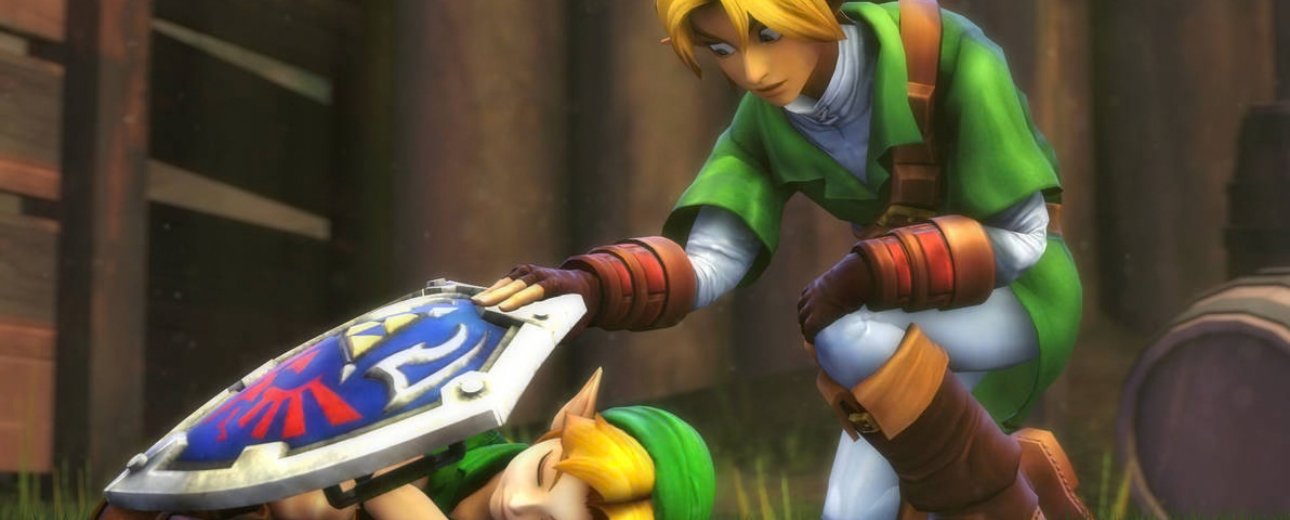
Ask any Zelda fan to name the saddest moment in the series and you will get a predictable set of answers. Midna’s farewell at the end of Twilight Princess. The Ballad of the Wind Fish and the dissolution of Koholint Island. The Hero of Time being sent back to his childhood after saving a world he will never be allowed to keep. The Great Deku Tree’s death in Ocarina of Time. These are real, deeply felt moments of grief that have moved players to tears for decades, and they absolutely deserve the emotional recognition they receive. But here is the thing about a series as rich and as long-running as The Legend of Zelda: the moments that everyone talks about are not always the ones that cut the deepest. Sometimes the most devastating thing a story can do is happen quietly, in a corner, without fanfare or orchestral swells — a moment so understated that many players walk right past it without fully registering what they have just witnessed.
This article is about those moments. The ones that hit differently on a second playthrough, when you know enough to understand what you are looking at. The ones that are built into the architecture of the world rather than announced by a cutscene. The ones that the games trust you to find, to feel, and to carry with you without ever explicitly telling you that you should be sad. We are going to explore the most underappreciated moments of grief, loss, and heartbreak in the Zelda series — moments that do not appear on the standard lists, that do not get the YouTube tribute compilations, but that represent some of the most honest and most affecting emotional storytelling the franchise has ever produced. Fair warning: by the end of this article, you may need to go replay some games. And you may not be entirely okay when you do.
The Moment That Inspired This Article: The Rito Elder’s Letter in Wind Waker
Before we work through the full landscape of overlooked Zelda sadness, let’s start with the specific moment that crystallizes what this article is really about — a moment that almost nobody discusses, that exists in a corner of Wind Waker that many players rush past, and that is, in its quiet way, one of the most devastating things Nintendo has ever put in a video game.
In Wind Waker, there is an optional sidequest involving a series of letters delivered by a Rito postman named Baito. If you engage with this sidequest fully and sort enough mail, you eventually receive a letter from a character named Koboli — the Rito who runs the mail sorting system — thanking you for your work. But if you pay attention to the letters you are sorting, something else emerges. Among the mail passing through your hands is a letter from an elderly Rito to his son— a father writing to a child he has not seen in a long time, telling him that he is proud, that he misses him, that he hopes the boy is well wherever his journey has taken him. The letter is warm. It is specific. It feels completely real. And then you realize, if you have been paying attention to the world of Wind Waker, that the son this letter is addressed to is dead. He died before the letter could reach him. The father does not know yet. He is still writing letters to a child who will never read them, still proud of a boy who is already gone.
Nintendo never tells you this explicitly. There is no cutscene. There is no dramatic music. There is just a letter in a pile of mail, and the weight of understanding what it means if you know enough to understand it. That is the kind of sadness this article is about — the kind that lives in the details, that rewards attention, that treats the player as someone capable of feeling the full weight of a quiet tragedy without being told how to feel it.
Why Wind Waker Hides Its Grief in Plain Sight
Wind Waker is a game that is almost universally described in terms of its joy — its bright colors, its cartoon aesthetic, its sense of adventure and wonder. And all of those things are real and genuine. But Wind Waker is also, underneath its cheerful surface, one of the most melancholic games in the Zelda series — a game set in a world built on the ruins of everything that came before, populated by people who have half-forgotten a history of loss so enormous it had to be literally buried under the ocean. The Rito elder’s letter is not an anomaly. It is a representative sample of what Wind Waker is doing beneath its bright exterior — populating its world with the specific, human-scale grief of ordinary people dealing with loss in ways that feel completely real precisely because they are so understated.
The Great Sea of Wind Waker is not just a beautiful sailing environment. It is a graveyard with sunlight on the surface— a place where the ruins of Hyrule lie beneath every wave, where the people living on islands above the waterline carry the cultural memory of a catastrophe so total that the gods had to flood the world to prevent it from happening again. When you understand Wind Waker in these terms, the Rito elder’s letter stops being a small sidequest detail and becomes a perfect encapsulation of the game’s emotional truth: that the world is full of people carrying grief that the main story never has time to address, and that paying attention to those people is its own form of heroism.
The Fishmen and the World That Remembers What It Lost
If you sail the Great Sea of Wind Waker and feed the Fishmen who are scattered across the ocean, they will tell you things about the world — history, secrets, local knowledge. Some of what they tell you is practical. Some of it is funny. And some of it is quietly devastating in ways that most players register only as background flavor. The Fishmen remember the old Hyrule. They speak of it in terms that carry genuine longing — a world that existed before the flood, that had mountains and forests and a kingdom and a history that the current world has largely lost access to. They are not mourning dramatically. They are just remembering, in the way that old people remember things — with a mixture of warmth and sadness and the specific ache of knowing that the thing you are describing will never come back.
These conversations with the Fishmen are Wind Waker’s most honest engagement with loss — more honest, in some ways, than the game’s main narrative, which is ultimately about hope and renewal rather than grief. The Fishmen are the grief. They carry the memory of what was lost so that the world can move forward without being crushed by it, and their conversations with Link are the moments where that memory surfaces and is acknowledged. Most players talk to a few Fishmen, note the interesting lore, and sail on. But the players who engage with every single one — who hear the full scope of what the Great Sea remembers — come away with a deeper and sadder understanding of Wind Waker’s world than the main story alone can provide.
The Hero’s Shade’s Final Words: A Goodbye Three Games in the Making
We discussed the Hero’s Shade in the context of our article on Link’s reincarnation, but his story deserves more space here because it is, when you sit with it fully, one of the most heartbreaking things in the entire Zelda series — and it is almost never discussed in terms of its emotional weight. The Hero’s Shade in Twilight Princess is the spirit of the Hero of Time — the Ocarina of Time Link — unable to pass on after death because he carries with him skills and wisdom that were never passed to a successor. He appears to the Twilight Princess Link as a skeletal warrior, training him in the hidden skills, guiding him toward the capabilities he will need to save Hyrule.
The emotional reality of the Hero’s Shade is this: the Hero of Time saved the world twice, across two separate timelines, and still could not rest. He gave everything — his childhood, his adult years, his second chance at a normal life — to a destiny he did not choose, and when it was over, he was not allowed peace. He was left in a liminal state between life and death, unable to move on, because the world had taken everything from him and he still had things left to give. His skeleton is not just a visual choice. It is a statement about what it costs to be the eternal hero — about the specific kind of exhaustion that comes from giving more than any person should be asked to give, for longer than any person should be asked to give it.
What He Says When the Last Skill Is Taught
When the Hero’s Shade has taught the Twilight Princess Link all of the hidden skills — when the last technique has been passed on and his purpose in the liminal world is finally complete — he says something that is simple, understated, and completely devastating if you know who he is. He acknowledges the Twilight Princess Link as his blood, his descendant. He tells him that he is satisfied. He tells him to go forward. And then he is gone — finally, after what the timeline suggests may have been centuries of waiting, allowed to rest. The moment is not scored with sadness. It is not dramatized. It is quiet and brief and the game moves on almost immediately. But the players who know who the Hero’s Shade is, who understand what his centuries of waiting have cost him, who have been paying attention to the full scope of his story across three games — those players feel the weight of that farewell in a way that is genuinely difficult to articulate. It is the closing of a wound that has been open since Ocarina of Time, and the closing is not triumphant. It is just quiet. And the quiet is somehow worse.
The Ocarina of Time Link’s Lost Future
There is another dimension of the Hero of Time’s sadness that is almost never discussed: the future he was denied. At the end of Ocarina of Time, Zelda sends Link back to his childhood — back to a time before he pulled the Master Sword, before the seven-year sleep, before the fallen Hyrule he spent his adult life trying to save. She does this to give him back the years that were stolen from him, to allow him to live the childhood he missed. It is presented, in the emotional logic of the game, as a gift. But think about what it actually means. The adult Link — the man who formed real bonds, who grew up in the crucible of a fallen world, who developed into the specific person he became through specific experiences — does not get to continue. He is sent back. The version of himself that saved Hyrule is erased from the timeline, replaced by a child who will not remember the same things in the same way.
The Child Timeline that follows from Zelda’s decision — the branch that leads to Twilight Princess and Majora’s Mask — is a timeline in which the Hero of Time’s adult experiences belong to a version of history that no longer officially exists. He carries memories of things that unhappened. He is a young man haunted by a future he saved but was not allowed to keep. Majora’s Mask is what that haunting looks like — a boy wandering alone in a parallel world, helping strangers process their grief because he has no way to process his own, saving a world he does not belong to because saving worlds is the only thing he knows how to do. That is not a triumphant hero’s journey. That is a portrait of someone trying to find meaning after the life they were supposed to have was taken from them.

Groose’s Arc in Skyward Sword: The Bully Who Became a Hero Nobody Remembers
Skyward Sword is a game that contains several widely discussed emotional moments — Zelda’s near-confession on the edge of Skyloft, Fi’s farewell, the revelation of Hylia’s sacrifice. But there is a character arc in Skyward Sword that is almost never mentioned in discussions of the game’s emotional highlights, and it is one of the most complete and most quietly moving character journeys in the series: the arc of Groose.
Groose begins the game as a bully — the kind of antagonist who exists primarily to make the protagonist’s life difficult, a vain, competitive young man who has convinced himself that he is the hero of this story and that Link is just an obstacle in his path to Zelda’s affections. He is played for comedy, and early in the game he functions primarily as comic relief — his expressions, his hair, his ridiculously oversized ego all designed to get laughs rather than sympathy. Then Zelda falls from the sky. Then Link descends to the surface to find her. And then, after a period of denial and wounded pride, Groose follows. Not because he was asked to. Not because destiny called him. Because he could not stand the idea of being left behind while someone else got to be the hero of the story he had always imagined himself in.
The Moment Groose Becomes More Than Comic Relief
The turning point in Groose’s arc happens gradually and then all at once — the way real character growth usually works. He arrives on the surface with his usual bluster, insisting that he will be the one to find Zelda, that Link has no idea what he is doing, that this whole adventure is rightfully his. And then he meets Impa, and Impa — with the particular efficiency of someone who has no time for ego — makes it absolutely clear that Groose is not the chosen hero. He never will be. The destiny he imagined for himself does not exist. He is a big, loud young man from Skyloft with no particular gifts beyond stubbornness and a talent for building things, and the world does not need him to be anything more than that.
What Groose does with that information is what makes him extraordinary. He does not give up and go home. He does not collapse into bitterness or resentment. He finds a different way to matter. He builds the Groosenator — his catapult contraption that becomes a genuinely critical element of the final battle against Demise. He becomes a guardian of the old woman protecting Zelda, showing up every time she needs help, asking nothing in return. He becomes, in the truest and most unglamorous sense, a supporting hero — someone whose contribution to the story is real and significant even though it will never be celebrated, never be commemorated in legend, never be the thing that the songs are written about. By the end of the game, Groose is one of the most fully realized characters in the Zelda series. And almost nobody talks about him in those terms.
The Sadness of Being the One Who Helps but Is Never Remembered
The specific sadness of Groose’s story is not about loss or death. It is about the grief of being ordinary in an extraordinary story — of discovering that the universe has not assigned you the role you always imagined for yourself, and choosing to be useful anyway. Groose will never be the Chosen Hero. His name will not appear in the legends that future generations tell about the sealing of Demise. When people tell the story of Skyward Sword across the centuries — when it becomes myth, when it is reduced to its essential elements — Groose will not be in it. Only Link, only Zelda, only the sword and the destiny and the goddess’s sacrifice. Groose contributed to that destiny in genuine, meaningful ways. And he will be forgotten for it. That is a form of sadness that the Zelda series almost never acknowledges directly, and the fact that Skyward Sword embeds it so completely in Groose’s arc — without ever making it explicitly tragic, without ever letting Groose himself fully realize it — is a testament to the quiet emotional sophistication that the series is capable of at its best.

The Postman in Majora’s Mask: Duty as Tragedy
Majora’s Mask is the Zelda game most famous for its emotional depth, and it has produced so many widely discussed sad moments — the Skull Kid’s loneliness, the Deku Butler’s grief for his transformed son, the reunion of Anju and Kafei — that it might seem like everything worth discussing has already been discussed. But there is a character in Majora’s Mask whose story is almost never given the weight it deserves, and whose tragedy is more quietly devastating than any of the game’s more celebrated emotional moments: the Postman.
The Postman of Clock Town is a man defined entirely by his duty. He runs his postal route every day, without fail, regardless of what is happening around him. As the moon falls toward Termina, as the citizens flee in panic, as the world prepares to end in three days — the Postman runs his route. He cannot do anything else. His schedule is his identity, his duty is his self, and the idea of abandoning his route — even to save his own life — is genuinely incomprehensible to him. He is not brave. He is not resigned. He is simply incapable of conceiving of himself outside the framework of his obligations.
The Letter That Frees Him and What It Costs
There is a sidequest in Majora’s Mask involving the Postman that is easy to miss and even easier to overlook emotionally. If you obtain the Priority Mail from Madame Aroma and give it to the Postman, he receives official permission to flee Clock Town before the moon falls — a letter from an authority figure explicitly releasing him from his duty, giving him permission to save himself. And the moment he reads it, something remarkable and heartbreaking happens: he breaks down. Not dramatically, not in a way designed to maximize your empathy. He just — stops. He stands there, holding the letter that has freed him, and for a moment the mask of duty slips and you see the person underneath it: a frightened man who has been using his schedule as armor against the terror of the falling moon, who has been running his route not because he is noble but because stopping would mean acknowledging how afraid he is.
He thanks Link. He runs — not his postal route this time, but away, toward safety, toward survival. And the game notes, in the most understated way possible, that when you meet him again after resetting the cycle, he remembers nothing. He is back on his route. The moment of vulnerability is gone. The armor is back in place. The Postman’s brief, frightened freedom is one of the most human moments in the entire series, and it is almost never discussed — perhaps because it requires completing a fairly obscure sidequest, perhaps because it does not involve any of the game’s central characters, perhaps because the emotional register is so quiet that it is easy to miss. But for players who have seen it, it lingers.
Clock Town as a Portrait of Ordinary People Facing the End
The Postman is not alone. Clock Town in Majora’s Mask is full of people dealing with the approaching apocalypse in ways that are devastatingly ordinary — ways that mirror how real people actually respond to overwhelming threat. The man who sits in the bar getting steadily more drunk as the moon grows larger. The astronomer who keeps observing the sky with scientific detachment even as it prepares to kill him, because observation is the only response he has ever had to the unknown. The soldiers who maintain their posts not from courage but from the inability to imagine doing anything else. Each of these characters is carrying the weight of the end of the world in their own private way, and none of them are given dramatic moments of revelation or catharsis. They are just people, being ordinary, in the face of something too large to process. That is Majora’s Mask at its most profound, and it is the dimension of the game that gets talked about least.

The King of Red Lions’ True Grief in Wind Waker
The King of Red Lions — the mysterious talking boat who guides Link across the Great Sea in Wind Waker — is eventually revealed to be the King of Hyrule himself, transformed and waiting through the ages for a hero who could finally end the cycle of Ganon’s evil. This revelation is treated in the game primarily as a plot point, a dramatic twist that recontextualizes everything the King of Red Lions has said and done throughout the adventure. But there is an emotional dimension to this revelation that the game gestures at without fully exploring, and it is genuinely heartbreaking once you sit with it.
The King of Hyrule watched his kingdom fall. He watched the gods flood the world he had ruled and loved. He chose to transform himself into a boat — into an object, a vessel, a thing without a face or a body or the ability to express grief — and wait. For how long? The timeline is vague, but it is clearly a very long time. Long enough for the memory of Hyrule to become legend and then half-legend and then almost nothing. Long enough for his people to become the island-dwelling Hylians of the Great Sea, who know almost nothing of what they lost. Long enough for the specific weight of what happened — the specific faces, the specific places, the specific life that was destroyed by the flood — to exist only in his memory, carried alone through all those years in the form of a red boat sailing an endless ocean.
There is a particular kind of grief that the King of Red Lions embodies — the grief of being the last person who fully remembers something. He is the last living memory of old Hyrule. When he speaks to Link about the kingdom that was lost, he is not reciting history. He is remembering his home — the specific, irreplaceable place where he was born and ruled and where everyone he ever loved lived. And he has been carrying that memory alone, in the form of a boat, unable to grieve properly, unable to share the full weight of his loss with anyone who could truly understand it, because the people who would have understood are gone.
His decision at the end of Wind Waker — to wish for the flooding of the underwater Hyrule, permanently and finally ending any possibility of its return, so that the people of the Great Sea can build something new without being haunted by the past — is presented as wisdom, as a king’s final gift to his people. And it is. But it is also an act of self-erasure. He is not just ending old Hyrule. He is ending his own identity as its king, his own connection to everything he lost, the last physical remnant of the world he has spent centuries grieving. He chooses to let go completely, so that others can be free. And then he turns to sand, and the ocean covers the old kingdom, and the world moves on. That is one of the most profound acts of grief in the Zelda series, and the game lets it happen quietly, without the ceremony it deserves.

Zelda’s 100 Years of Solitude in Breath of the Wild
Everyone knows the broad strokes of Zelda’s sacrifice in Breath of the Wild — that she spent a century holding Calamity Ganon at bay through sheer force of divine will, alone, while Link slept in the Shrine of Resurrection. This sacrifice is widely acknowledged as one of the game’s most powerful emotional elements. But the specific texture of what that century was actually like for Zelda — the loneliness, the doubt, the grief, the specific human experience of being one person holding back an infinite darkness alone for a hundred years — is something that the game conveys primarily through the recovered memories, and the full emotional weight of it is easy to miss if you do not engage with those memories carefully.
The Zelda of the memories is not a saint or a symbol. She is a young woman who struggled for years to awaken her divine power, who felt like a failure while the people around her seemed to achieve their destinies with apparent ease, who had a complicated and difficult relationship with the hero she was supposed to work alongside. She is human in all the ways that matter — uncertain, occasionally petty, full of self-doubt, capable of both extraordinary grace and ordinary smallness. And then she tapped into her power in a moment of desperate love for Link, and it was enough to save him but not enough to save Hyrule, and she has been paying for that insufficient-ness ever since — spending a century in direct contact with a darkness that would destroy the world if she let it go for even a moment, while the man she saved sleeps and the kingdom she failed lies in ruins around her.
Among the recovered memories in Breath of the Wild, the one that is discussed least and felt most deeply by players who notice it is the memory of Zelda at the spring of power, alone, weeping. She has just failed again to awaken her power. She has watched Link train, watched the Champions prepare, watched everyone around her fulfill their roles while she kneels at yet another sacred spring and feels nothing. And she is simply crying — not dramatically, not in a way designed to maximize the player’s empathy, just a young woman sitting alone in a sacred place, exhausted by her own inadequacy, with no one to comfort her and nowhere to put the grief. It is one of the most recognizably human moments in the entire Zelda series, and it sets up the final memory — the awakening — as not just a moment of triumph but a moment of release, a person finally, after years of effort and self-doubt, discovering that they were enough all along. The contrast between those two moments is what makes both of them so moving. And the memory of Zelda crying alone at the spring is the one that does the most emotional work, quietly and without recognition.

Why the Quiet Sadness Matters More Than the Grand Tragedy
Throughout this article, we have been circling a central truth about emotional storytelling in games — a truth that the Zelda series understands better than almost any other franchise: the moments that affect us most deeply are rarely the ones that are designed to. The orchestral swells, the dramatic cutscenes, the explicitly grief-coded moments — these are real and they are valuable. But they also tell you how to feel, and telling someone how to feel is a fundamentally different experience from creating the conditions for them to feel something on their own terms. The moments we have discussed in this article — the Rito elder’s letter, the Hero’s Shade’s farewell, Groose’s quiet heroism, the Postman’s brief freedom, the King of Red Lions’ self-erasure, Zelda weeping alone at the spring — none of these come with instructions. None of them announce themselves as Sad Moments That Will Make You Feel Things. They are just details in a world, waiting for a player who is paying attention.
That is the highest form of emotional storytelling in games — the kind that respects the player’s intelligence enough to create something real and then trust them to find it. The Zelda series has been doing this for nearly forty years, populating its worlds with grief and loss and love that exists whether or not you happen to notice it, building emotional depth into the architecture of its worlds rather than just into its cutscenes. The saddest moments in Zelda history are the ones nobody talks about — not because they are obscure, but because they are quiet, and quiet things require stillness to hear. If this article has done its job, you will go back to these games now and listen a little more carefully. And what you hear will stay with you.
Conclusion: The Zelda Series as an Archive of Human Grief
The Legend of Zelda is, at its core, a series about loss — about the things we cannot keep, the people we cannot save, the worlds that fall no matter how hard we fight to protect them. The grand narrative of the series — the eternal cycle of collapse and renewal, the reincarnated hero, the goddess’s sacrifice — is just the large-scale version of what is happening in every small corner of every game, in every letter that never arrives and every character who is forgotten by legend and every person who keeps running their postal route because stopping would mean acknowledging how afraid they are.
The saddest moments in Zelda history are not the ones with the best music or the most dramatic cinematography. They are the ones that tell the truth about what it means to be alive in a world that keeps taking things away — and that trust you to feel that truth without being told to. Those moments are everywhere in these games, if you know how to look. And now, hopefully, you do.
Want to explore the emotional depths of the Zelda series further? Here are some essential resources:
- Zelda Wiki — full character histories for the backstories and full lore of every character mentioned in this article
- The official Legend of Zelda site for game guides, official histories, and developer commentary
- Zeltik on YouTube — one of the deepest and most thoughtful Zelda lore channels, with videos dedicated to the emotional and narrative depth of the series
- Hyrule Historia on Amazon — the official Nintendo book with developer notes that shed light on the intentions behind many of the series’ most emotionally complex moments
- Zelda Dungeon’s character analysis articles — fan-written deep dives into the characters and stories of the Zelda series that go beyond the standard walkthrough format