
 Canada
 USA
USA Japan
Japan



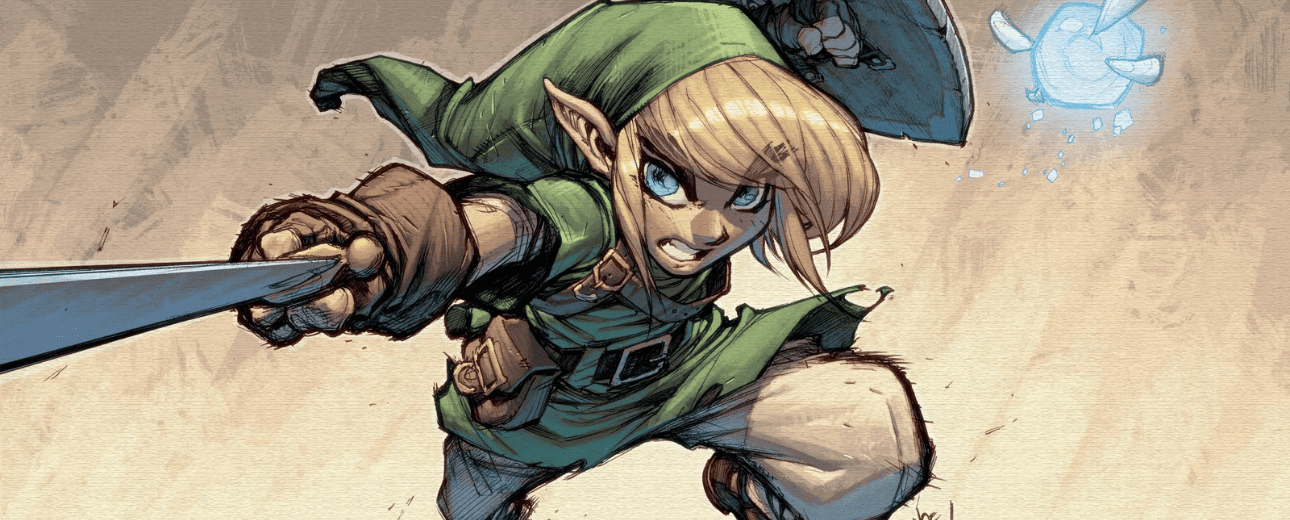
There is a moment in Skyward Sword — one of the most important moments in the entire Legend of Zelda series — where the goddess Hylia explains to Link and Zelda the truth of their existence. They are not simply a hero and a princess. They are souls bound across time, destined to be reborn again and again, carrying the same courage, the same love, and the same burden into every new life. It is a moment of extraordinary weight, and it reframes everything we thought we knew about the boy in green who has been saving Hyrule for forty years. Because Link is not just one person. He is dozens of people — hundreds, potentially, across the full span of the timeline — each one a new life carrying the same essential soul, the same piece of the Triforce, the same cosmic purpose. And the more you think about what that actually means, the more profound and genuinely strange it becomes.
This article is about reincarnation in the Legend of Zelda — not just as a plot device or a convenient way to justify having the same protagonist across twenty-plus games, but as a genuine philosophical and emotional framework that gives the entire series its deepest meaning. We are going to look at what reincarnation means in Zelda’s cosmology, how different Links across different games express the same soul in different ways, what the burden of eternal heroism costs the people who carry it, and why the idea of a soul that keeps coming back to fight the same battle resonates so powerfully with players generation after generation. Whether you are a longtime Zelda scholar or someone who just discovered the series, this is a question worth sitting with: what does it really mean to live the same life over and over again?
The Cosmological Foundation of Reincarnation in Zelda
Before we can understand what reincarnation means for Link specifically, we need to understand the metaphysical framework that makes reincarnation possible — and necessary — in the Zelda universe. This framework is rooted in the creation myth of Hyrule, in the nature of the Triforce, and in the specific decisions made by the goddess Hylia that set the eternal cycle in motion. Reincarnation in Zelda is not a random cosmic phenomenon. It is a deliberate, engineered response to a specific problem — and understanding that problem is essential to understanding everything that follows.
The core problem is this: the Triforce, the crystallized power of the three Golden Goddesses, is the most powerful object in existence, and its power is structured in a way that makes it perpetually vulnerable to misuse. If a person of unbalanced spirit touches it, it fragments — with each piece going to the person whose nature most closely matches it. The piece of Power goes to Ganondorf. The piece of Wisdom goes to Zelda. The piece of Courage goes to Link. This fragmentation is not just a mechanical consequence — it is the physical expression of a cosmic imbalance that can only be resolved when all three pieces are reunited in a spirit of perfect balance. And since Ganondorf — or the force of evil he embodies — will always fight to prevent that reunification, the forces of wisdom and courage must always be present in the world to oppose him. The reincarnation of Link and Zelda is the goddess Hylia’s solution to this eternal problem: ensuring that courage and wisdom are always available, always renewed, always ready when the crisis comes.
Hylia’s Sacrifice and the Origin of the Cycle
Skyward Sword is the game that most directly addresses the origins of the reincarnation cycle, and what it reveals is both beautiful and heartbreaking. Before the events of the game, the goddess Hylia was a divine being — immortal, immensely powerful, one of the lesser goddesses who served the Golden Goddesses and protected the Triforce. When the demon king Demise threatened to destroy the world and claim the Triforce, Hylia made an extraordinary decision: she gave up her divinity. She reincarnated herself as a mortal — the first Zelda — sacrificing her immortality and her goddess nature to become human, because only a mortal could wield the full power of the Triforce, and only a mortal could forge the soul of the hero needed to oppose Demise.
This sacrifice is the origin of everything. Every Zelda who has ever lived — every princess, every sage, every warrior who carried that name — is a reincarnation of a goddess who loved the world enough to give up her divine nature to protect it. And every Link is the reincarnation of the hero soul that Hylia helped create — the mortal vessel of the Triforce of Courage, destined to arise whenever evil threatens to overwhelm wisdom and courage. The cycle of reincarnation is not something that happened to Link and Zelda. It is something that Hylia chose, on their behalf, out of love for a world she was willing to become mortal to save. That context transforms every subsequent reincarnation from a plot convenience into a profound act of ongoing sacrifice.
Demise’s Curse and the Shadow Over the Cycle
There is a darkness at the heart of the reincarnation cycle that is easy to overlook but impossible to ignore once you see it. At the end of Skyward Sword, after his defeat, Demise delivers a curse — one of the most chilling moments in the entire series. He tells Link and Zelda that his hatred is eternal, that it will follow their bloodlines and the bloodlines of those who carry the Triforce, that an incarnation of his malice will appear again and again throughout history to oppose them. Ganondorf is not just a recurring villain. He is the physical embodiment of Demise’s undying curse — a curse that ensures the cycle of destruction and renewal will never fully end, that every generation of heroes and chosen ones will face a version of the same darkness that Hylia first opposed.
This means the reincarnation cycle has two faces. On one side, there is the beauty of it — the love that Hylia embedded in the world, the courage that keeps renewing itself, the wisdom that persists across generations. On the other side, there is the horror of it — the knowledge that the evil will also keep renewing itself, that no victory is ever truly final, that the hero soul will keep being called back because the world will keep needing it. Link and Zelda are reincarnated because they are loved. They are reincarnated because they are needed. And they are reincarnated because the curse that opposes them will never stop. All three of these things are simultaneously true, and the tension between them is what gives the Zelda series its emotional depth.
Each Link Is Different: The Same Soul, Many Expressions
One of the most fascinating things about the reincarnation framework is that while every Link carries the same essential soul — the same piece of the Triforce of Courage, the same fundamental nature — each incarnation is genuinely different. Different backgrounds, different personalities, different relationships, different strengths and weaknesses. The soul of the hero expresses itself differently in each life, shaped by the circumstances of that life, by the world it is born into, by the people it loves and the challenges it faces. Understanding these differences — and what they reveal about the nature of the hero soul — is one of the richest areas of Zelda scholarship.
The most obvious dimension of difference is personality. The Hero of Time in Ocarina of Time is earnest, brave, and deeply emotional — a child thrust into adult responsibilities who never quite loses his fundamental innocence even after seven years of sleeping while the world fell apart. The Link of Majora’s Mask, who is the same person just years later, is more guarded, more haunted, driven by a specific grief — the loss of Navi — that gives his adventure a melancholic undertow absent from his earlier quest. The Wind Waker Link is joyful, expressive, almost cartoonishly energetic — a boy who stumbles into heroism and embraces it with a grin. The Twilight Princess Link is quieter, more solitary, a young man more comfortable with animals and hard work than with the destiny that falls on him. Each of these is recognizably Link, but each is also unmistakably their own person — and that tension between shared identity and individual character is one of the most interesting things the series does.
The Hero of Time: Childhood Stolen by Destiny
The Hero of Time — the Link of Ocarina of Time and Majora’s Mask — is arguably the most psychologically complex incarnation of the hero soul in the series, and certainly the one whose story has been most deeply explored across multiple games. His story begins with an extraordinary injustice: he is a child, living peacefully in Kokiri Forest, when destiny arrives in the form of a fairy and a goddess’s errand that will consume his entire life. He pulls the Master Sword and is immediately sealed in the Sacred Realm for seven years — his childhood simply erased, his body aged to adulthood while his mind and heart remained that of a ten-year-old boy. When he wakes up, he is physically an adult in a world that has fallen apart, but emotionally he is still a child trying to understand what has happened to him. He saves the world. He is then sent back to his childhood by Zelda — robbed of the adult life he briefly had, returned to a time before his adventure, carrying memories of things that have not yet happened and may never happen in this new timeline.
The psychological reality of this — of a child who aged seven years in an instant, saved the world, and was then returned to childhood with all his memories intact — is something the games only gesture at, but it is genuinely staggering. The Hero of Time is arguably the most traumatized incarnation of Link, and his subsequent adventure in Majora’s Mask — where he wanders alone in a parallel world searching for his lost friend — is the series’ most direct engagement with what that trauma looks like. The three-day cycle of Termina, the masks of other people’s grief that he wears, the moon falling endlessly toward a doomed world — all of it is a psychological landscape that mirrors the Hero of Time’s own interior life. He is a soul that has been broken by destiny and is trying, through the act of helping others, to find some reason to keep going. That is the hero soul in one of its most honest and most painful expressions.
The Wind Waker Link: Joy as a Form of Courage
If the Hero of Time represents the hero soul in its most haunted form, the Link of Wind Waker represents it in its most joyful — and the contrast is instructive. The Wind Waker Link lives on Outset Island, a small community on the Great Sea that covers the flooded remains of old Hyrule. He has no knowledge of the legendary hero. He has no particular destiny that he is aware of. He is simply a boy who loves his grandmother, is fond of his sister, and greets the world with an openness and enthusiasm that is immediately endearing. When his sister is kidnapped and he sets off to rescue her, he has no idea that he is the reincarnation of an ancient hero — and in some ways, that ignorance is a gift. He becomes a hero not because he was told he was one, but because he refused to leave his sister behind. His courage is not the product of destiny. It is the product of love.
What Wind Waker does with this Link is quietly revolutionary. It strips away all the trappings of heroic identity — the green tunic, the legendary status, the foreordained destiny — and asks: if you took all of that away, would the courage still be there? And the answer, in the Wind Waker Link’s case, is a resounding yes. The Triforce of Courage doesn’t create the hero. It recognizes what is already there. This is one of the most beautiful things the reincarnation framework allows the series to explore: the idea that the soul of the hero is not an external imposition but an internal truth, something that would express itself regardless of whether destiny had a plan for it. The Wind Waker Link is proof that heroism is not about being chosen. It is about choosing, again and again, to act from love rather than fear.
The Twilight Princess Link: The Weight of an Unwanted Destiny
The Twilight Princess Link occupies a unique position in the series — he is perhaps the incarnation who most clearly did not want to be a hero and had heroism thrust upon him anyway. He is a ranch hand in Ordon Village, a young man who tends goats and teaches children and seems perfectly content with a life of hard work and quiet community. When the Twilight descends and his friends are taken, he doesn’t leap into action with the Wind Waker Link’s enthusiasm or the Hero of Time’s earnest determination. He is dragged into adventure by circumstance, transformed into a wolf by the Twilight, and guided by a creature — Midna — who initially treats him as little more than a useful animal. He becomes a hero not through joy or destiny but through stubbornness and loyalty — a refusal to abandon the people he cares about, even when the situation is incomprehensible and the personal cost is enormous.
What makes Twilight Princess Link so interesting is the way his background shapes his heroism. He is physically the most capable Link in the series — his training montage with the Hero’s Shade, learning the hidden skills, is a masterclass in depicting someone becoming good at something through genuine effort rather than magical ability. He fights with a physicality and a groundedness that reflects his working-class origins. And his relationship with Midna — arguably the best companion relationship in the series — is built on mutual respect earned slowly and painfully rather than instant connection. The Twilight Princess Link is the hero soul expressed as work ethic and stubborn love, and there is something deeply moving about a version of eternal heroism that looks less like destiny and more like someone who simply refused to quit.
What Reincarnation Costs: The Burden of the Hero Soul
We have spent a lot of time on the beauty and the meaning of the reincarnation cycle, and that beauty is real. But there is another dimension to this story that deserves honest engagement: the cost. Being the reincarnation of an eternal hero is not just a gift. It is a burden — a responsibility that comes with no consent, no choice, and no guarantee of survival. Every Link is born into a life that will, sooner or later, be consumed by a destiny he did not ask for. Every Link carries the weight of every previous incarnation — not consciously, in most cases, but in the form of a soul that is somehow always ready to answer the call, always capable of rising to challenges that should be beyond any ordinary person. What does it cost a person to be the vessel of something that large?
The Hero’s Shade and the Regret of the Hero of Time
The most direct and devastating answer to this question appears in Twilight Princess, in the form of the Hero’s Shade — a skeletal warrior who appears to teach the Twilight Princess Link the ancient hidden skills. The Hero’s Shade is eventually revealed to be the spirit of the Hero of Time himself — the Ocarina of Time Link, unable to pass on to the afterlife because he carries with him skills and wisdom that were never passed down to a successor. He is a soul trapped between lives, neither fully at rest nor fully present, haunted by the things he never taught and the legacy he never fully handed on. When he finally passes the last hidden skill to his descendant, he is able to rest — and the moment of his departure is one of the most quietly devastating scenes in the series.
What the Hero’s Shade tells us about reincarnation is uncomfortable but important: it tells us that the hero soul can be damaged. It tells us that a life of heroism, however necessary and however meaningful, can leave wounds that persist beyond death. The Hero of Time gave everything the world asked of him — he saved it twice, in two different timelines — and still he could not rest, because there were things left undone, knowledge left unshared, a legacy left incomplete. His regret is not about having failed. It is the specific, poignant regret of someone who gave their entire life to a purpose larger than themselves and still felt, at the end, that it was not enough. That is the hidden cost of being the eternal hero, and Twilight Princess is brave enough to show it to us.
No Memory, No Continuity: The Loneliness of Each New Life
Another dimension of the cost of reincarnation is one that the games rarely address directly but that becomes apparent when you think about the framework carefully: each incarnation of Link has no memory of his previous lives. He wakes up in each new life as a genuinely new person — with the hero soul intact, with the Triforce of Courage ready to manifest, but with no conscious access to the accumulated experience, the relationships, the grief, and the growth of every previous incarnation. Every Link starts from zero. Every Link loses everyone he has ever loved when the cycle resets. Every Link’s friendships, his bonds with Zelda and with companions like Midna or Navi, are genuine and deep — and then they are gone, dissolved back into the soul’s history, inaccessible to the next incarnation.
This is the loneliness of the eternal hero: not the loneliness of being unloved, but the loneliness of love that cannot be carried forward. Every Link loves Zelda. Every Link forms bonds with the companions of his adventure. And every Link loses those bonds when the life ends — not to death exactly, since the soul continues, but to the reset of consciousness that comes with each new birth. The relationships are real. The love is real. The loss is real. And it happens again, and again, and again, across every incarnation, without any single Link being fully aware of how many times it has happened before. That is a form of loneliness that has no name, and it is built into the very structure of the Zelda series.
The Master Sword: A Weapon That Remembers What Link Cannot
One of the most beautiful and most melancholic elements of the reincarnation framework is the Master Sword — the Blade of Evil’s Bane, the weapon that has accompanied Link across dozens of incarnations and hundreds of years of Hyrule’s history. The Master Sword is not just a powerful weapon. It is a repository of the hero’s memory — a physical object that carries the accumulated history of every Link who has ever wielded it, every battle it has been part of, every sacrifice it has witnessed. In Skyward Sword, we see the Master Sword’s creation — the moment when Fi, the spirit of the sword, is forged together with the blade to serve and guide the chosen hero. In Breath of the Wild and Tears of the Kingdom, we see the sword’s extraordinary capacity for endurance and renewal — its ability to be repaired, to be carried across millennia by a dragon, to be waiting for the hero whenever the hero arrives.
The Master Sword remembers what Link cannot. It carries the continuity that the individual incarnations are denied. And in Tears of the Kingdom, when Zelda herself becomes the dragon that carries the sword across thousands of years to ensure it reaches the Link who needs it, the sword becomes the meeting point of two forms of sacrifice — the goddess’s love, held in the blade, waiting for the hero soul that will always come. There is something extraordinarily moving about an object that has outlasted every individual hero, that has been present for every turning of the cycle, that knows the full story even when no single person can. The Master Sword is the memory of the eternal hero given physical form.

Zelda and Link Across Lifetimes: A Love Beyond Time
It would be impossible to discuss the reincarnation of Link without discussing his relationship with Zelda — because the two souls are bound together as surely as they are bound to their cosmic purpose. Every Link and every Zelda share something that goes beyond friendship, beyond partnership, beyond even the specific emotional dynamics of any individual game. They share a soul-level recognition — a sense, however dimly felt, that this person is someone they have always known, someone they have always trusted, someone whose fate is inseparable from their own.
The relationship between Link and Zelda is one of the most interesting and most consistently moving elements of the series precisely because it is never exactly the same twice. In Ocarina of Time, it is a childhood friendship interrupted by destiny and reunited across seven years of catastrophe. In Skyward Sword, it is a love between childhood friends that the game is remarkably direct about — the scene where Zelda nearly confesses her feelings before ascending to the clouds is one of the most emotionally honest moments in the series. In Twilight Princess, the relationship is more distant, more formal — a hero who barely knows the princess he is trying to save. In Breath of the Wild, it is a complex, difficult relationship between two people who misunderstood each other for years before finally finding their way to genuine connection. Each version of the relationship is shaped by the circumstances of that life, and yet each version carries the same underlying warmth, the same fundamental trust, the same sense of two souls that recognize each other across whatever distance separates them.
Skyward Sword: The Origin of the Soul Bond
Skyward Sword gives us the most direct and most explicit depiction of the Link-Zelda soul bond in the entire series, and it is genuinely extraordinary. The Skyloft Link and the first Zelda are not just hero and princess — they are childhood friends who grew up together, who care for each other openly, who are separated by her divine purpose and reunited through his heroic journey. The game is not subtle about the emotional reality of their connection. When Zelda falls from the sky at the beginning, the player feels the panic and the grief of losing someone beloved, not just someone important. When they are reunited and then separated again, the cost is personal and specific rather than abstract. And the ending of the game — where Zelda wakes from her sleep and they stand together, finally free of the immediate burden of cosmic destiny — is one of the warmest and most genuinely earned endings in the series.
Skyward Sword establishes that the soul bond between Link and Zelda began as a human love — as the love between two specific, individual people who happened to carry divine purpose. The reincarnation that follows is not the source of their connection. It is the continuation of it. Every subsequent Link and Zelda who feel that inexplicable recognition, that sense of knowing someone they have just met, are feeling the echo of a love that began on Skyloft and has never fully ended. That is one of the most romantic ideas in the entire history of video games, and the Zelda series carries it with remarkable grace.
Breath of the Wild: When the Bond Is Complicated
Breath of the Wild does something interesting and brave with the Link-Zelda relationship: it makes it difficult. The Zelda of this game does not immediately recognize or embrace her connection to Link. She resents him, at first — resents the ease with which his destiny manifests, his power awakening naturally while hers stubbornly refuses to emerge despite her years of devoted effort. She keeps him at a distance. She is formal, sometimes cold, occasionally openly frustrated with him. And Link, bound by duty to be her appointed knight and protector, follows her and says nothing — because he sees her more clearly than she sees herself, and what he sees is someone carrying an enormous burden with extraordinary courage and getting very little credit for it.
The relationship in Breath of the Wild is the soul bond at its most human — two people who are cosmically destined for each other, who carry the same ancient connection in their souls, and who still have to actually work through their misunderstandings and their defenses to find each other. The memories that Link recovers across the game chart the gradual, hesitant process of that work — the moments of vulnerability, the slowly growing trust, the confession in the rain that finally breaks through Zelda’s walls. And then the catastrophe arrives and separates them for a century, and the renewal of their bond — Link waking up alone, Zelda’s voice in his ear, the long journey back to each other — is the emotional spine of the entire game. Breath of the Wild proves that even souls bound across lifetimes have to choose each other in every life, and that the choosing is the point.

The Hero Soul Across the Timeline: Patterns and Variations
One of the most rewarding aspects of engaging with the Zelda series as a complete, interconnected mythology is tracing the patterns of the hero soul across the full timeline — noticing what stays consistent across every incarnation and what varies, what the soul carries forward and what it leaves behind, what the eternal hero looks like in different historical periods and different cultural contexts. The official timeline gives us a framework for understanding how the different Links relate to each other chronologically, but the more interesting question is not chronological. It is thematic: across all these lives, what is the hero soul really about?
Courage as the Constant: What Never Changes
The most obvious constant across every incarnation of Link is courage — not in the shallow sense of fearlessness, but in the deeper sense of acting rightly in the face of fear. Every Link is afraid at some point. Every Link faces situations that should, by any reasonable measure, be beyond what one person can handle. The young Link of Ocarina of Time, standing in the dark of the Shadow Temple and hearing sounds that would terrify most adults, is afraid — but he goes forward. The Wind Waker Link, alone on the Great Sea with a map full of monsters and no idea how to fight any of them, is afraid — but he keeps sailing. The Breath of the Wild Link, waking up with no memories in a world that has already fallen and that he failed to save, is afraid — but he climbs the first cliff and keeps going. Courage, in the Zelda series, is not the absence of fear. It is the decision to act anyway, again and again, however many times the cycle requires it.
Silence as Character: What Link’s Wordlessness Reveals
One of the most discussed and most polarizing aspects of Link’s character across the series is his silence — the fact that in most games, Link does not speak. He communicates through actions, through expressions, through the choices the player makes for him, but he rarely or never articulates his feelings in words. This silence has been interpreted in many ways: as a blank-slate design choice that allows players to project themselves onto the character, as a narrative convenience that avoids the complexity of writing dialogue for a protagonist across many games, as an aesthetic choice that keeps the focus on action over exposition. All of these interpretations have merit. But within the reincarnation framework, Link’s silence takes on a deeper meaning.
A soul that has lived dozens of lives knows things that cannot be put into words. The hero soul carries within it the accumulated weight of centuries of heroism, of love and loss and renewal, of fighting the same battle in different bodies across different eras. What would you even say, if you were that soul? How would you articulate the experience of being something that ancient, that tested, that tired and that renewed? Link’s silence is not emptiness. It is the silence of someone who has seen too much and loved too much to reduce any of it to language. It is the silence of a soul that expresses itself through action because action is the only language adequate to what it carries. In this reading, Link’s wordlessness is not a limitation. It is the most honest thing about him.
Why Reincarnation Resonates: The Human Truth Behind the Fantasy
The reason the reincarnation framework resonates so deeply with Zelda fans — and with players who may not even be consciously aware of it as a framework — is that it speaks to something true about human experience. We all carry things we did not choose to carry. We all come into lives shaped by histories we did not make, bearing capacities and tendencies that feel both deeply ours and somehow larger than any single life could explain. We all love people with an intensity that feels like recognition rather than discovery — as though we have always known them, as though the relationship is not new but renewed. We all face challenges that seem too large for us and find, somehow, that we are larger than we thought.
The hero soul of Link is a fantasy version of this universal human experience — the sense that there is something in you that is more than what this one life has made, that your courage is not just your own, that the love you feel for the people in your life is connected to something ancient and permanent. Reincarnation in Zelda is not just a cosmological mechanic. It is a mirror held up to the human experience of being a person — of showing up in a world you did not design, carrying a nature you did not choose, and discovering through the act of living that what you carry is enough.
There is one more dimension of the reincarnation framework that deserves acknowledgment, and it is the most meta of all: the player is also a reincarnation of Link. Every time a new Zelda game launches and a new player picks up the controller and guides a new Link through a new Hyrule, they are participating in the cycle. They carry with them the accumulated experience of every previous playthrough — not in the game’s narrative, but in their own muscle memory, their own understanding of the series’ rhythms, their own emotional responses to familiar symbols and sounds. The player who has completed Ocarina of Time and then plays Breath of the Wild brings the Hero of Time with them. They feel the echo of old adventures in new landscapes. They recognize the Master Sword not just as a powerful weapon but as an object loaded with personal history.
This is the player as reincarnated hero — a soul that keeps coming back, in each new game, with the accumulated love of every previous adventure, ready to begin again. It is the most elegant and most complete expression of what reincarnation means in Zelda: not just the story of a fictional soul cycling through history, but the lived experience of a fan who has grown up alongside a character who keeps being reborn, who keeps needing to be guided through a world that keeps needing to be saved. The Many Lives of Link include your life too — every hour you have spent in Hyrule, every dungeon you have cleared, every moment of wonder the series has given you. That is what reincarnation really means. And it is, in the end, something beautiful.

Conclusion: The Soul That Never Stops Fighting
The Many Lives of Link are, ultimately, one life — one soul, one purpose, one essential truth expressed across dozens of incarnations and centuries of history. That truth is simple and it is ancient: courage is not a single act but an ongoing commitment. It is not something you have or don’t have. It is something you choose, again and again, in every life, in every crisis, every time the call comes and you answer it. Every Link who has ever picked up the Master Sword has made that choice. Every player who has ever started a new Zelda game has made that choice too. And the cycle continues — because the world keeps needing it, because the curse of Demise keeps renewing itself, because the balance of wisdom and courage and power is always fragile and always worth fighting for.
The next time you start a new Zelda game and watch the new Link wake up — on the Great Plateau, on Skyloft, in the Kokiri Forest, on Outset Island — I hope you feel the weight of all the lives that came before. I hope you feel the courage that has been carried across centuries to arrive in this moment, in this body, in this world that needs saving one more time. Because that is what you are playing when you play a Zelda game. You are not playing a game. You are continuing a story that has been going on longer than any individual life, and you are the latest soul chosen to carry it forward. That is the most extraordinary thing any game has ever asked of its players — and the Legend of Zelda has been asking it, with grace and beauty, for forty years.
Want to explore the full depth of Link’s many lives and the Zelda universe? Here are some essential resources:
- Zelda Wiki — Link’s full canon history for every incarnation, every game, and every detail of the hero’s reincarnations across the timeline
- Hyrule Historia on Amazon — the official Nintendo book containing the full timeline, developer notes, and the definitive account of the series’ cosmology
- The official Legend of Zelda site — for official lore, game guides, and behind-the-scenes content
- Zelda Dungeon’s Timeline Analysis — one of the best fan-written breakdowns of how the different incarnations of Link connect across the official timeline
- Zeltik on YouTube — one of the most thoughtful and well-researched Zelda lore channels on the internet, essential viewing for anyone who wants to go deeper into the reincarnation cycle and the series’ mythology