
 Canada
 USA
USA Japan
Japan



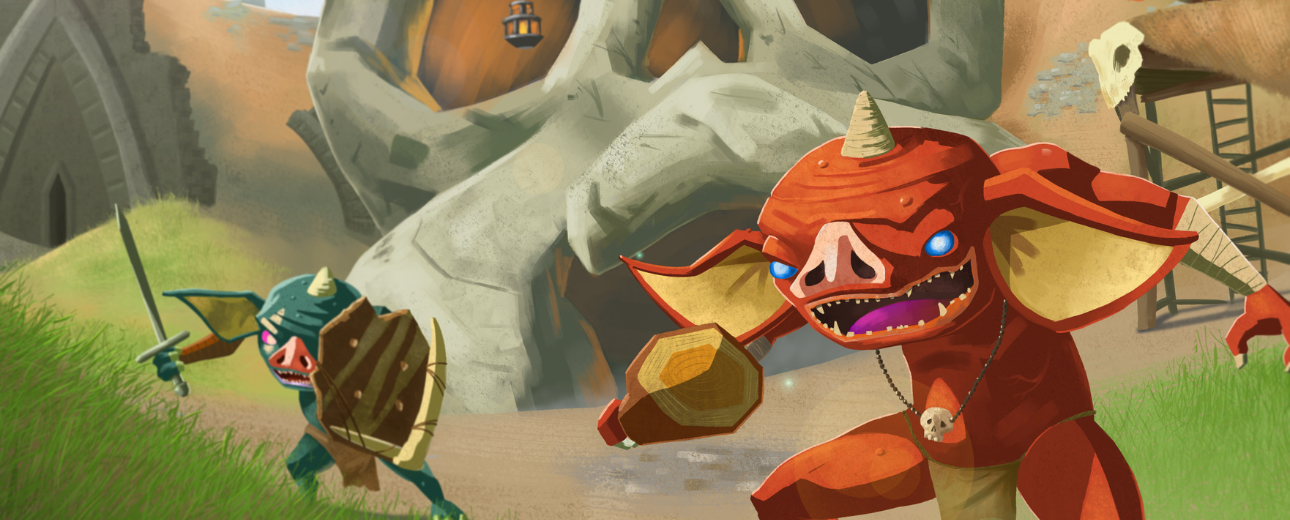
Let’s be honest about something right from the start: Bokoblins are the most underappreciated characters in the Legend of Zelda franchise. They are the enemy you fight most often, the creatures whose camps dot every corner of Hyrule’s landscape, the monsters you dispatch by the hundreds across dozens of hours of gameplay without necessarily stopping to think about who they actually are. They are, in the most literal sense, the background of the franchise — so omnipresent that they become invisible, so routine that their presence stops registering as anything except an obstacle to be overcome.
And that is a genuine shame, because when you actually stop and look at Bokoblins — when you pay attention to how they are designed, how they behave, what the games tell us about their society and their relationship to the world around them — what you find is one of the most carefully constructed and most genuinely interesting monster species in any video game franchise. The Bokoblin is not just a generic enemy placeholder. It is a specific creature with a specific biology, a specific social organization, specific behavioral patterns, and a specific relationship to the larger ecology of the Zelda universe that rewards genuine examination.
This article is that examination. We are going to look at everything: the origins of the Bokoblin as a concept and as a species in the Zelda lore, their biology and physical design, their social structure and tribal organization, their relationship to Ganon and to the forces of evil, their appearances across the franchise’s history and how their design has evolved, and what they tell us about the specific way the Zelda series thinks about the monsters that inhabit its world. By the end of this article, you are going to look at that Bokoblin camp on the hill very differently. Let’s go.
The Bokoblin in Zelda History: A Complete Origin Story
The Bokoblin as a specific enemy type has a history within the Zelda franchise that is more complex and more interesting than most players realize, because the creature we know from “Breath of the Wild” and “Tears of the Kingdom” is the product of a long evolutionary process that began with earlier enemy types and went through several significant redesigns before arriving at its current form. Understanding this history helps you understand both the specific design choices that define the modern Bokoblin and the broader evolution of how the Zelda series thinks about its monster population.
The Bokoblin name and concept first appeared in “The Wind Waker” (2002), where they were introduced as a new enemy type to replace the Moblins that had been the franchise’s primary humanoid monster in earlier games. The Wind Waker Bokoblins were pig-like creatures with a specific design that suggested a certain intelligence and social organization that earlier Zelda monsters had not always demonstrated — they communicated with each other using horns, they organized into groups with specific roles, and they behaved in ways that implied a social structure beyond simple mob behavior. These qualities established the foundational character of the Bokoblin that subsequent games would develop.
From Wind Waker to Breath of the Wild: The Design Evolution
The design evolution of the Bokoblin from “The Wind Waker” through “Twilight Princess,” “Skyward Sword,” and into the open-world era of “Breath of the Wild” and “Tears of the Kingdom” is one of the most instructive case studies in how the Zelda series develops and refines its monster concepts. Each major iteration of the franchise brought specific changes to the Bokoblin’s visual design, behavioral patterns, and narrative role, and tracking these changes reveals a consistent trajectory toward greater specificity, greater behavioral complexity, and greater integration of the Bokoblin into the world they inhabit.
The “Twilight Princess” Bokoblins — sometimes categorized separately as Bulblins in that game’s specific terminology — represented a significant evolution toward a more threatening and more militarily organized version of the concept. The Bulblin King, in particular, demonstrated that the species was capable of producing leadership figures of genuine tactical competence, and the mounted combat sequences involving Bulblins on King Bulblin’s boar were among the most dramatically impressive enemy encounters in that game. The design was darker, the armor more elaborate, and the organizational sophistication more evident than in “The Wind Waker’s” version.
The Skyward Sword Bokoblins and Their Unique Character
“Skyward Sword’s” Bokoblins represent perhaps the most distinct visual iteration of the species in the franchise’s history, with a design that emphasized their pig-like qualities in ways that made them simultaneously more comedic and more threatening than previous versions. The elongated snouts, the rounded bodies, the specific way they squeal when surprised or defeated — all of these qualities gave “Skyward Sword’s” Bokoblins a specific personality that was different from the more straightforwardly menacing designs of “Twilight Princess.”
What is particularly interesting about the “Skyward Sword” Bokoblins in the context of their overall lore is the social behavior they display. They organize into camps with specific hierarchies, they communicate vocally with each other, they respond to alarm signals and coordinate defensive responses, and they demonstrate a specific kind of territorial awareness that suggests a genuine relationship to the spaces they inhabit. These behavioral qualities were not new — the “Wind Waker” Bokoblins had similar characteristics — but “Skyward Sword’s” more detailed rendering made them more visible and more convincing as the behaviors of a genuinely social species rather than simply as enemy AI patterns.

Bokoblin Biology: Understanding Their Physical Design
The physical design of the Bokoblin in its most developed form — the version that appears in “Breath of the Wild” and “Tears of the Kingdom” — is one of the most carefully considered monster designs in the franchise, and it rewards close examination because almost every element of it communicates something specific about what kind of creature a Bokoblin is and how it exists in its environment. This is character design as biology: a visual system that tells you, without any accompanying text, what ecological niche this creature occupies and what adaptive pressures have shaped its form.
The basic body plan is humanoid but distinctly not human: bipedal, roughly human-scaled, with forward-facing eyes that suggest a predatory species or at least one that evolved in an environment where threat assessment was important, but with proportions and features — the protruding ears, the wide mouth with its distinctive teeth, the overall squat and sturdy build — that mark them clearly as something other than a human variant. This humanoid-but-not-human quality is significant because it places Bokoblins in a specific conceptual space: intelligent enough to use tools and to organize socially, different enough from humans that their relationship to the human world of Hyrule is one of fundamental otherness.
The Color Variants and What They Mean
One of the most interesting aspects of Bokoblin biology as depicted in “Breath of the Wild” and “Tears of the Kingdom” is the color variant system that differentiates Bokoblins of different power levels. Red Bokoblins are the weakest and most common, the basic variant that constitutes the majority of any given Bokoblin camp. Blue Bokoblins are stronger, faster, and more aggressive. Black Bokoblins represent a further step up in capability. Silver Bokoblins — which appear in “Breath of the Wild” under specific conditions — are the most dangerous individual Bokoblins that Link can encounter in normal gameplay, significantly more capable than their red counterparts and requiring meaningfully different combat approaches.
The biological question of what these color differences represent is one that the games leave interestingly ambiguous. The color variants could represent different subspecies within the broader Bokoblin species — distinct evolutionary lineages that have developed different physical capabilities. They could represent developmental stages — younger, less experienced Bokoblins being red, with color darkening as individuals grow more powerful through age and experience. Or they could represent something more like a caste system — a social organization in which different colors correspond to different social roles rather than to biological differences.
Physical Capabilities and Adaptations
The physical capabilities of Bokoblins as demonstrated through their combat behavior in the games reveal several interesting adaptive features that suggest a creature well-suited to its ecological niche. Their upper body strength is significant — they can wield weapons that would be awkward for a human of similar size, can throw objects with considerable force, and demonstrate the kind of robust physical capability that suggests a species that has evolved in an environment requiring significant physical effort for survival.
Their vocal communication is one of the most interesting and most underexamined aspects of their biology. Bokoblins communicate with each other through a specific system of vocalizations that serves clear social functions: alarm calls that alert other Bokoblins to the presence of an intruder, what appear to be coordinating calls during group combat, and the specific sounds they make during non-combat social interaction within their camps. This vocal system is complex enough to suggest genuine language rather than simple animal communication, which has significant implications for how we understand Bokoblin intelligence and social organization.

Bokoblin Society: Tribes, Hierarchy and Camp Organization
The social organization of Bokoblins is one of the aspects of their characterization that “Breath of the Wild” and “Tears of the Kingdom” develop most richly, and it is the dimension that most clearly establishes them as genuinely interesting creatures rather than simply enemy fodder. The Bokoblin camps that appear throughout Hyrule are not random gatherings of monsters — they are organized communities with specific structures, specific hierarchies, and specific behavioral patterns that reflect a genuine social intelligence.
The basic unit of Bokoblin social organization is the camp, which typically consists of a group of Bokoblins inhabiting a defined territory and organized around a specific location — a hilltop, a ruin, a shoreline, a forest clearing — that provides some combination of defensive advantage, resource access, and shelter. These camps vary significantly in size and sophistication: some consist of a handful of Bokoblins clustered around a fire, while others are elaborate multi-level constructions with watchtowers, storage areas, and sleeping quarters that demonstrate a genuine capacity for construction and spatial planning.
The Camp Hierarchy and Leadership Structure
Every Bokoblin camp has a recognizable internal hierarchy that is visible in the behavioral patterns of its members if you observe carefully rather than simply engaging in combat immediately. The most powerful individual in the camp — typically a Black Bokoblin or occasionally a Silver Bokoblin in “Breath of the Wild,” or a specifically marked individual in “Tears of the Kingdom” — occupies a position of clear social dominance, often positioned at the camp’s highest point or in the most central location, and receiving deferential behavior from the other camp members.
This dominant individual serves as the camp’s de facto leader, and their behavioral significance extends beyond simple combat capability. When a camp leader is defeated or driven off, the camp’s remaining members frequently show distinctly different behavioral patterns: increased alarm behavior, disorganized responses, a loss of the coordinated defensive strategies that characterized the camp’s behavior when its leader was present. This response to leadership loss suggests that the Bokoblin social hierarchy is functionally significant — that the leader is actually directing the camp’s collective behavior rather than simply occupying a dominant position that has no practical consequence.
The Boko Drum and Alarm Communication Systems
The Boko Drum — the drum that Bokoblins use to alert their camp members to danger — is one of the most functionally interesting pieces of Bokoblin material culture, because it represents a specifically technological solution to a communication problem that required genuine planning and craftsmanship to create. A Bokoblin camp’s alarm system is not simply the result of one individual shouting to others. It is a coordinated communication network that uses the drum as a signal amplifier, allowing a single alarm call to reach all members of the camp simultaneously regardless of their specific location within the camp’s territory.
The sophistication of this system — the understanding that a drum’s sound carries further than a voice, the discipline required to maintain the drum as a dedicated alarm instrument rather than using it for other purposes, the training or instinct that causes other camp members to respond appropriately to the drum signal — suggests a level of social planning and institutional knowledge that goes beyond simple stimulus-response behavior. Bokoblins are not just reacting to stimuli. They are maintaining and operating a communication infrastructure, which is a fundamentally different and fundamentally more impressive kind of behavior.
Bokoblin Construction and Material Culture
The construction capabilities that Bokoblins demonstrate in their camp architecture are one of the most underappreciated aspects of their characterization, because they reveal a species with genuine spatial reasoning, genuine planning capability, and a specific aesthetic sensibility that expresses itself in the specific way they build their camps. Bokoblin constructions are not random assemblages of found materials. They are organized structures that reflect specific design priorities: defensive advantage, shelter, storage, and the specific social needs of a hierarchically organized community.
The watchtowers that appear in more elaborate Bokoblin camps are particularly impressive as evidence of construction capability. Building a stable elevated platform requires understanding of load-bearing structures, of how materials need to be connected to support weight and resist wind, and of the relationship between the platform’s height and its stability. The fact that Bokoblins build these structures — imperfectly by engineering standards, but functionally — suggests a spatial intelligence and a capacity for planned construction that is significantly more sophisticated than you might expect from creatures routinely dismissed as simple monsters.
Bokoblins and Ganon: The Nature of Their Relationship
The relationship between Bokoblins and Ganon — specifically Calamity Ganon in “Breath of the Wild” and Ganondorf in “Tears of the Kingdom” — is one of the most philosophically interesting aspects of Bokoblin lore, because it raises fundamental questions about the nature of monster behavior in the Zelda universe and about the specific mechanisms through which evil organizes and directs the creatures associated with it. Are Bokoblins genuinely evil? Are they autonomous agents who have chosen to serve Ganon? Are they simply creatures whose natural behavior has been organized and directed by an external malevolent force?
The most careful reading of the available lore suggests that the answer is more complex than a simple yes or no to any of these questions. Bokoblins exist in the Zelda universe as a natural species — they are not created by Ganon, they are not supernatural manifestations of his malice, they are living creatures with their own biology and their own social organization. But their behavior during periods of Ganon’s active influence is clearly shaped by that influence in ways that go beyond what their natural behavior patterns would produce independently.
Natural Behavior vs Ganon’s Influence
The distinction between Bokoblin natural behavior and Ganon-influenced behavior is subtle but important, and it has implications for how morally we should relate to these creatures. A Bokoblin that is acting under Ganon’s malevolent influence — organized into aggressive camps, directed to attack travelers and to accumulate weapons and resources in service of Ganon’s military agenda — is behaviorally different from a Bokoblin that is simply living according to its own species’ natural patterns in the absence of that influence.
There are hints in both “Breath of the Wild” and “Tears of the Kingdom” that Bokoblin behavior is not uniformly aggressive across all circumstances — that their hostility toward Link and toward Hyrule’s people specifically is at least partially a product of Ganon’s organizing influence rather than an expression of inherent species-level malevolence. The specific targeting of humanoid travelers, the organization of camps at strategically significant locations, the accumulation of weapons beyond what natural resource acquisition would require — these are behaviors that serve Ganon’s agenda rather than the Bokoblins’ own survival interests, and their presence suggests external direction rather than autonomous choice.
The Stal Variants and Ganon’s Necromantic Power
The Stalbokoblins — the skeletal variants of Bokoblins that appear in “Breath of the Wild” — are one of the most direct expressions of Ganon’s specific relationship to the Bokoblin species, because they represent Bokoblins who have been reanimated after death by the malevolent power that permeates the world during Ganon’s dominance. Stalbokoblins are not alive in any meaningful biological sense. They are the remains of Bokoblins, animated by malice and directed by the same force that corrupted the Sheikah technology and organized the living Bokoblin camps.
The existence of Stalbokoblins raises interesting questions about the nature of Bokoblin identity and what it means for a creature’s remains to be used in this way. The living Bokoblin and the Stalbokoblin that rises from its bones after death share a physical form but presumably nothing else: the personality, the social relationships, the specific individual experience that made the living Bokoblin what it was are gone, replaced by the animating malice that drives the skeleton. This is one of the more disturbing aspects of Ganon’s power when you think about it carefully — not just the organization of living creatures but the desecration of the dead, the refusal to allow even death to be an escape from his service.

Bokoblin Intelligence: How Smart Are They Really?
The question of Bokoblin intelligence is one of the most interesting in the franchise’s lore, because the evidence that the games provide is genuinely complex and genuinely difficult to resolve into a simple answer. Bokoblins demonstrate behaviors that suggest significant cognitive capability — tool use, social organization, construction, communication — while also demonstrating behaviors that suggest significant cognitive limitations, particularly in their combat responses, which are often predictable and relatively easy to exploit once you understand their patterns.
The most honest assessment of Bokoblin intelligence is that they are genuinely intelligent in the domains that their ecology has shaped them to be intelligent in, and less capable in domains that have not been relevant to their evolutionary development. Their social intelligence — their ability to navigate group dynamics, to maintain hierarchies, to coordinate collective action — appears to be genuinely sophisticated. Their spatial intelligence — their ability to build structures, to position themselves advantageously in terrain, to use elevation and cover — is demonstrably functional. But their problem-solving intelligence — their ability to adapt to genuinely novel situations, to develop new strategies when familiar ones fail — appears more limited.
Tool Use and Weapon Adoption
The tool use and weapon adoption behavior that Bokoblins demonstrate is one of the clearest pieces of evidence for their cognitive sophistication, because it requires a specific form of abstract reasoning that simple instinctual behavior cannot produce. A Bokoblin that picks up a fallen Guardian weapon or that adapts its fighting style to use a newly acquired piece of equipment is demonstrating that it understands the concept of a tool as a means to an end — that it can represent the relationship between an object and an action and use that representation to guide behavior.
In “Breath of the Wild” and “Tears of the Kingdom,” Bokoblins demonstrate a remarkable breadth of tool use, wielding everything from crude wooden clubs to sophisticated Guardian weapons, from cooking basic food over a fire to using environmental features like explosive barrels as tactical assets. This breadth of tool use, combined with the evident understanding of which tools are appropriate in which contexts, suggests a general-purpose intelligence rather than a narrow, domain-specific capability. Bokoblins are not simply using instinctual weapon-grasping behavior. They are making judgments about the relative utility of different tools in different situations.
The Evidence for Bokoblin Language
The evidence for Bokoblin language — genuine symbolic communication rather than simple emotional vocalization — is one of the most fascinating and most contested aspects of their characterization, and it is worth examining in detail because the answer has significant implications for how we understand their cognitive and social life. The vocalizations that Bokoblins produce in the games are clearly not random: they occur in specific social contexts, they produce specific behavioral responses in other Bokoblins, and they seem to carry information beyond simple emotional states.
The alarm call system is the clearest evidence for something language-like: the specific drum-and-vocalization combination that alerts a camp to danger is not simply a reflex response to threat. It is a communication act that conveys specific information — the presence of danger — to specific recipients — the other camp members — in a form that produces specific coordinated responses — defensive positioning, weapon readying, group mobilization. This is functionally language even if we cannot access its specific semantic content, because it involves the intentional transmission of specific information through a conventional signal system.
Bokoblins in Breath of the Wild: Their Role in the Open World
“Breath of the Wild” represents the most complete and most carefully realized vision of Bokoblins as a species, and it is the game that most fully demonstrates the potential of treating them as genuine creatures rather than simply as enemy units. The open world design of the game, combined with the environmental storytelling that permeates every aspect of its world design, creates a context in which Bokoblin camps are not just combat encounters but genuine glimpses into the lives of a species going about its business in a specific landscape.
The distribution of Bokoblin camps across “Breath of the Wild’s” Hyrule is itself a piece of ecological storytelling. They tend to cluster in specific kinds of locations — hilltops with good visibility, shorelines with access to water and fishing, ruins that provide ready-made shelter and structural material — that reflect genuine ecological sense rather than random placement for gameplay variety. A Bokoblin camp on a hill is not there because the game designers needed an enemy encounter in that location. It is there because a Bokoblin tribe looking for a defensible position with good visibility would rationally choose a hilltop.
Camp Life: What Bokoblins Do When Not Fighting
One of the most rewarding aspects of observing Bokoblin camps before engaging with them in “Breath of the Wild” is watching what Bokoblins do when they are not fighting — their behavior in what we might call their natural state, going about the business of camp life without the disruption of Link’s presence. This behavior is remarkably varied and remarkably revealing about Bokoblin social life.
Bokoblins in their camps can be observed sleeping, which is immediately interesting because it establishes them as creatures with genuine biological needs rather than simply enemy units that deactivate when not in combat. They can be observed cooking over fires, which suggests not just the discovery of fire but the cultural transmission of cooking knowledge — someone had to teach the camp’s members how to use fire for food preparation, which implies a tradition of knowledge transfer that is one of the hallmarks of genuine culture. They can be observed interacting socially with each other in ways that appear to go beyond purely functional communication — grooming behaviors, what appear to be play behaviors, the specific social interactions of a species that maintains social bonds beyond the purely practical.
The Bokoblin Economy: Resources, Storage and Trade
The resource management behavior that Bokoblin camps demonstrate in “Breath of the Wild” is one of the most interesting pieces of evidence for their social sophistication, because it reveals a species that thinks about resources not just in terms of immediate consumption but in terms of storage, preservation, and collective ownership. Bokoblin camps consistently maintain stockpiles of weapons, food, and materials that exceed the immediate needs of the camp’s current members — they are accumulating resources against future need, which requires a specific kind of temporal reasoning and a specific kind of collective social organization.
The weapon stockpiles in particular are fascinating, because the variety of weapons maintained in a typical Bokoblin camp — different sizes, different materials, different degrees of damage — suggests a deliberate curation rather than random accumulation. Someone is making decisions about which weapons are worth keeping and which are not, which requires an understanding of weapon quality and utility that goes beyond simple hoarding behavior. This curatorial behavior is further evidence of the cognitive sophistication that makes Bokoblins more interesting than their reputation as simple fodder enemies would suggest.

The Bokoblin in Tears of the Kingdom: Evolution and New Behaviors
“Tears of the Kingdom” takes the Bokoblin characterization established in “Breath of the Wild” and develops it further in several genuinely interesting directions, most notably through the introduction of new behavioral patterns and new material culture elements that expand the picture of Bokoblin capability and creativity. The Bokoblins of “Tears of the Kingdom” are, in several measurable ways, more technologically sophisticated than those of the previous game, and the specific nature of that sophistication is worth examining.
The most significant new behavioral element in “Tears of the Kingdom’s” Bokoblins is their use of the Zonai devices and the broader materials that the game’s building systems make available. Bokoblins in “Tears of the Kingdom” demonstrate the ability to incorporate new technological elements into their camps and their combat strategies — using Zonai fans for propulsion, constructing new kinds of vehicles and weapons from available materials, and generally demonstrating an adaptive creativity in their use of novel materials that suggests a genuine problem-solving intelligence rather than simple mimicry of observed behaviors.
Bokoblin Forts and Advanced Construction
The Bokoblin forts that appear in “Tears of the Kingdom” represent the most elaborate examples of Bokoblin construction in the franchise’s history, with multi-level structures, defensive perimeters, and organized internal layouts that demonstrate a spatial planning capability considerably beyond what the simpler camps of “Breath of the Wild” showed. These forts are genuine engineering achievements by Bokoblin standards: stable, defensible, organized for the specific needs of a social group that needs to sleep, store resources, maintain a watch, and defend against threats.
The construction of these forts raises interesting questions about how Bokoblin knowledge is transmitted. Building a multi-level structure requires understanding principles of structural stability that are not obvious from simple observation — you need to know, at some level, how weight distributes and how connections need to be made to prevent collapse. The fact that Bokoblin forts do not routinely collapse suggests either that individual Bokoblins have figured these principles out through experimentation, or — more interestingly — that knowledge of construction is transmitted within Bokoblin social groups, that more experienced builders teach less experienced ones, which would be a direct parallel to human cultural knowledge transmission.
New Weapon Integration and Combat Evolution
The combat behavior evolution of Bokoblins in “Tears of the Kingdom” is another dimension of their development that demonstrates genuine adaptive intelligence. The availability of Zonai devices and the Ultrahand-enabled construction systems in the game world have created new tactical possibilities, and Bokoblins have been designed to take advantage of some of these possibilities in ways that make encounters with them meaningfully different from the “Breath of the Wild” version.
Bokoblins in “Tears of the Kingdom” can be found operating constructed vehicles, using Zonai-powered weapons, and incorporating the game’s new building materials into their defensive structures in ways that require the player to think about encounters differently than in the previous game. This behavioral evolution is significant from a lore perspective because it suggests that Bokoblins are genuinely responsive to changes in their technological environment — that they observe, experiment, and adopt new tools when those tools offer advantages, which is exactly the kind of adaptive behavior that characterizes genuine intelligence.

Why Bokoblins Matter: The Philosophy Behind the Design
Having examined the specific details of Bokoblin biology, social organization, intelligence, and cultural evolution, it is worth stepping back and asking the larger question: why does any of this matter? Why invest this much creative attention in the design of what is, in gameplay terms, the most basic enemy type in the franchise? What does the care and specificity of Bokoblin characterization tell us about the Zelda series’ broader approach to world-building and to the ethical dimensions of its gameplay?
The answer, I think, has several layers. At the most practical level, the richness of Bokoblin characterization serves the specific design philosophy of “Breath of the Wild” and “Tears of the Kingdom” — games that are built around the idea of a living world that the player explores rather than a series of designed spaces that the player passes through. A living world needs inhabitants that feel like genuine creatures going about their own lives rather than enemy units placed for the player’s convenience, and the specificity of Bokoblin characterization is what makes them feel like the former rather than the latter.
The Ethics of Monster Combat in Zelda
The ethical dimension of what it means to fight Bokoblins — given everything we have established about their social organization, their intelligence, their cultural life — is one that the Zelda series deliberately leaves in a productive ambiguity. The games do not ask you to feel bad about fighting Bokoblins, but the richness of their characterization creates a context in which the question of their moral status is not entirely trivial. They are not mindless automatons. They are creatures with social relationships, with communities, with the specific kind of vulnerability that comes from having something worth losing.
This deliberate ambiguity is, I think, one of the more philosophically sophisticated things the Zelda series does. By creating enemies that are rich enough to be interesting as creatures rather than simply as obstacles, the series creates a space for genuine ethical reflection without forcing a specific conclusion. You can choose to think of Bokoblins purely as gameplay challenges, and the game fully supports that. Or you can choose to engage with the question of what it means to be a species that lives in the shadow of Ganon’s influence — that is organized and directed by a malevolent force into patterns of behavior that serve his agenda rather than their own interests — and the game’s detailed characterization supports that engagement too.
What Bokoblins Tell Us About Hyrule’s Ecology
The final reason that Bokoblins matter — and the final piece of what makes their characterization so rich and so rewarding — is what they tell us about Hyrule as a living ecological system rather than simply as a designed game environment. A world that contains a species as socially and cognitively sophisticated as the Bokoblin is a world with a genuine ecology — with creatures that occupy specific niches, that have specific relationships to other species and to their physical environment, and that contribute to the world’s overall character in ways that go beyond their immediate gameplay function.
Hyrule is more interesting, more convincing, and more worth exploring because it contains Bokoblins who build camps and cook food and maintain watch systems and transmit knowledge to younger members of their group. The world feels inhabited in a genuine sense rather than designed in a functional sense, and that sense of genuine inhabitation is one of the primary reasons that “Breath of the Wild” and “Tears of the Kingdom” feel so extraordinary as explorable spaces. The Bokoblin, the most common and most overlooked creature in Hyrule, is one of the primary contributors to that achievement.
Next time you approach a Bokoblin camp, take a moment before you engage. Watch the camp leader survey his territory from the watchtower. Watch the smaller Bokoblins tending the fire or napping in the afternoon sun. Listen to the specific quality of the alarm call when one of them spots you. You are looking at a community — imperfect, directed by forces that are not its own, caught in the orbit of an evil that organizes its behavior in ways that serve someone else’s agenda. But a community nonetheless. And that, in the end, is what makes the Bokoblin one of the most remarkable creatures in the history of video game world-building.
For readers who want to explore Bokoblin lore further, the Zelda Wiki at zeldawiki.wiki maintains comprehensive documentation of every Bokoblin variant across all games in the franchise, with detailed information about their stats, behaviors, and appearances. The Zelda Dungeon at zeldadungeon.net provides excellent enemy guides for “Breath of the Wild” and “Tears of the Kingdom” that cover Bokoblin camp locations, combat strategies, and material drops. The “Creating a Champion” art book published by Dark Horse Books at darkhorse.com contains extraordinary concept art and design notes for the Bokoblins of “Breath of the Wild” that reveal the specific creative thinking behind their visual design. The “Tears of the Kingdom” art book — also available through Dark Horse — covers the design evolution that produced the new Bokoblin behaviors and constructions in the sequel. And of course “Breath of the Wild” and “Tears of the Kingdom” themselves, available on Nintendo Switch through the Nintendo eShop at nintendo.com, are the essential primary sources — the only way to truly appreciate how remarkable the Bokoblin is as a creature is to spend time in their world, watching them live it.
They are more than monsters. They always were.