
 Canada
 USA
USA Japan
Japan



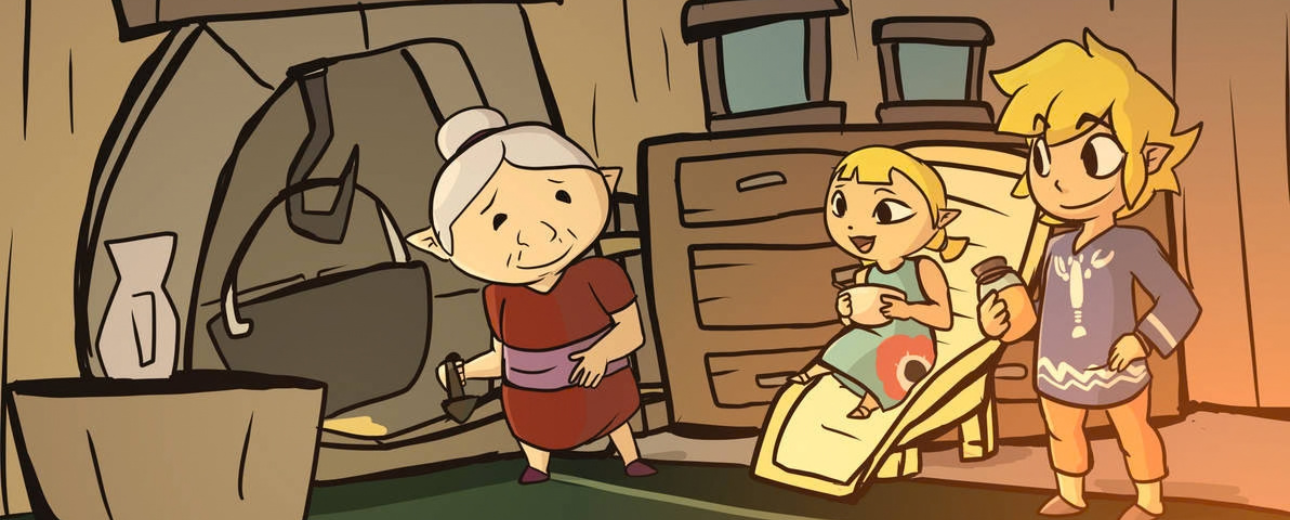
Let’s establish something immediately: “The Legend of Zelda: The Wind Waker” was already one of the most beautiful games ever made when it released on GameCube in 2002. We have already made that case — the cell-shading, the color palette, the expressiveness of the characters, the extraordinary ocean, the courageous artistic vision that chose beauty over realism and proved, definitively and permanently, that this was the right choice. If you have read our previous article on Wind Waker’s beauty, you know exactly why we feel so strongly about this game’s artistic achievement.
But this article is about something different and something more specific. This article is about “The Wind Waker HD”— the remaster released for Wii U in 2013 and subsequently made available on Nintendo Switch — and about the argument that this version is not simply the same game with better graphics, but the definitive version of an already extraordinary game. A version that not only preserves everything that made the original beautiful but actively enhances it in ways that are significant, thoughtful, and genuinely transformative. A version that, in several important respects, improves on the original in ways that the original’s creators themselves could not fully achieve within the technical constraints of 2002.
The distinction between a good remaster and a definitive version matters. A good remaster increases resolution, improves frame rate, and delivers the same experience with less technical friction. A definitive version does all of that and also makes choices — design choices, creative choices, balance choices — that make the game more completely itself, that bring it closer to the ideal version that always existed in the imagination of its creators and its fans. Wind Waker HD is a definitive version in this complete sense, and this article is the full explanation of why.
What Wind Waker HD Actually Changed: The Complete Picture
Before making the case for why Wind Waker HD is definitive, it is worth establishing precisely and completely what it actually changed from the original — because the changes are both more numerous and more significant than casual discussion of the remaster typically suggests. Many people are aware of the obvious visual upgrade, but the full scope of what Nintendo changed in the remaster goes well beyond resolution and lighting, and understanding all of it is essential to understanding why the result is not simply a prettier version of the original but a genuinely improved one.
The changes to Wind Waker HD fall into several categories: the visual enhancements that are the most immediately visible, the gameplay improvements that address the original’s most significant design weaknesses, the quality of life changes that reduce friction without reducing depth, and the new content and features that expand the original experience in meaningful ways. Each of these categories contains changes that are individually significant and that collectively add up to a transformation that goes deeper than any straightforward comparison of the two versions’ screenshots would suggest.
The Visual Transformation and Its Specific Achievements
The visual transformation of Wind Waker HD is the most immediately striking aspect of the remaster and the one that most directly demonstrates what was always latent in the original’s art direction. The move to 1080p resolution — from the GameCube’s sub-HD output — does not simply make the original sharper. It reveals details and subtleties in the original’s art that were always there but that the technical limitations of the GameCube could not fully express.
The cel-shading in HD is one of the most spectacular visual upgrades in remaster history, and it is worth understanding why the upgrade works so well specifically for this game. Cel-shading, as a visual technique, is based on the precision of outlines and the cleanness of color fills — qualities that benefit enormously from higher resolution because they require sharp edges and clean boundaries to read correctly. The GameCube version’s cel-shading was limited by the resolution at which those edges and boundaries could be rendered, and the HD version removes those limitations completely. The outlines are sharper, the color fills are cleaner, and the overall impression is of a visual style that has been allowed to fully express itself for the first time.
The new bloom lighting system introduced in the HD version is the most controversial visual change and the one that requires the most nuanced discussion. The bloom — the soft glow that emanates from light sources and bright surfaces — was not present in the original and is genuinely divisive among fans of the game. Some find it excessive, arguing that it softens edges and reduces the graphic clarity that is one of the original’s most distinctive qualities. Others find it a natural enhancement that gives the world a warmer, more luminous quality that suits the game’s ocean-and-sunshine aesthetic.
The Tingle Tuner Replacement and Miiverse Integration
The replacement of the Tingle Tuner — the original’s GameBoy Advance connectivity feature, which allowed a second player to assist the main player through a connected GBA — with the Tingle Bottle system using Miiverse (subsequently modified for the Switch version) is one of the less-discussed changes in Wind Waker HD but one that represents a thoughtful approach to the problem of features that depend on hardware that is no longer widely available.
The Tingle Tuner in the original was a charming feature whose practical value was limited by the requirement for a GBA and a link cable — hardware that many players did not own or could not easily access. The Tingle Bottle system replaced this hardware-dependent feature with a messaging system that allowed players to send messages and items to other players’ game worlds — a social feature that reflected the online connectivity of the Wii U era.
For the Switch version, the Miiverse integration was removed following the shutdown of Nintendo’s Miiverse service, and the Tingle Bottle feature was adjusted accordingly. This is the one area where the evolution of the HD version has left a small gap — the social connectivity features that were part of the Wii U version’s design are no longer fully present — but it is a minor loss in a remaster whose gains are so substantial.
The Swift Sail and What It Represents
The Swift Sail — a new item added in Wind Waker HD that doubles the speed of the King of Red Lions and allows sailing in any direction without waiting for favorable winds — is the single most significant gameplay change in the remaster and the one that most directly addresses the original’s most frequently cited design weakness. It is also the change that most clearly demonstrates the difference between a remaster that simply preserves and a remaster that thoughtfully improves.
The sailing in the original Wind Waker was one of the most divisive design elements in the game — and in the franchise’s history. Defenders of the original sailing system argued, correctly, that its slowness was part of the game’s meditative quality — that the time spent sailing was time for the world’s atmosphere to work on you, time for the music to create its mood, time for the ocean’s beauty to be felt rather than simply passed through. Critics of the original sailing system argued, equally correctly, that it was too slow for practical navigation, that backtracking across the ocean became genuinely tedious in the game’s late stages, and that the requirement to wait for favorable winds before changing direction was a friction point that served no clear design purpose.
The Swift Sail Debate: Solving Wind Waker’s Most Controversial Design
The Swift Sail debate deserves its own extended section because it is the most substantive design conversation that Wind Waker HD generates, and because the way Nintendo resolved it — by making the Swift Sail an optional item rather than a mandatory upgrade — is itself a lesson in thoughtful remaster design. The Swift Sail does not replace the original sailing experience. It provides an alternative to it for players who want one, while leaving the original experience completely intact for players who prefer it.
This optionality is the design solution’s most important quality. A remaster that forcibly accelerated all sailing would have resolved the pacing criticism at the cost of the atmospheric quality that the original’s defenders rightly valued. A remaster that left the sailing entirely unchanged would have failed to address a genuine design weakness that affects a significant portion of players’ enjoyment of the game. The Swift Sail as an optional item found by exploration — present in the game for players who want it, absent from the sailing experience for players who do not seek it — is a solution that respects both perspectives and serves both player types.
The Original Sailing and Its Atmospheric Value
The atmospheric value of the original Wind Waker sailing is real and worth defending before explaining why the Swift Sail improves the game overall. The experience of sailing in the original — the slowness, the wind management, the sense of being genuinely at sea in a vast and slightly unpredictable ocean — created a specific quality of immersion that faster sailing cannot fully replicate. The ocean felt genuinely large because it took genuinely long to cross. The islands felt genuinely distant because reaching them required genuine patience. The atmospheric achievement of Wind Waker’s ocean — its ability to make the player feel the specific emotions of seafaring — was partly a product of the sailing system’s slowness.
This atmospheric quality is not lost in Wind Waker HD for players who choose not to use the Swift Sail — and the fact that it is preserved as a choice rather than eliminated as an obstacle is one of the HD version’s most important design decisions. Players who want the original atmospheric experience can have it exactly as it was. Players who want to explore the ocean more efficiently — who have completed the game before, who are focused on specific quests, who find the waiting genuinely frustrating rather than atmospherically productive — can have the Swift Sail instead.
How the Swift Sail Improves the Late Game Specifically
The specific improvement that the Swift Sail provides in the late game of Wind Waker is the strongest practical argument for its addition to the HD version, because the late game is where the original’s sailing pacing is most problematic. The Triforce Chart quest — the sequence in the original game’s final act where Link must collect eight Triforce Charts, pay Tingle to decipher each one, and then sail to eight specific ocean squares to retrieve the Triforce shards — is one of the most tedious sequences in the franchise and one of the most common reasons cited by players who love Wind Waker but acknowledge its pacing problems.
The Triforce Chart quest in Wind Waker HD was significantly streamlined — the number of charts requiring Tingle’s deciphering was reduced, and several of the shards were made directly accessible without the chart-deciphering step. This change, combined with the Swift Sail, transforms the late game pacing from the original’s most significant weakness into a sequence that, while still demanding, no longer feels like an imposition on the player’s patience. The HD version’s late game is more focused, more purposeful, and more consistent with the quality of the game’s earlier sections.
The Visual Philosophy: Why HD Honors Rather Than Betrays the Original
The most important question about any remaster of a visually distinctive game is whether the visual changes honor the original’s artistic vision or betray it — whether they enhance what the original was trying to achieve or impose a different aesthetic sensibility that conflicts with the original’s choices. For Wind Waker HD, this question is particularly pointed because the original’s visual choices were so deliberate and so philosophically grounded, and because the risk of a remaster imposing inappropriate visual conventions on a cel-shaded art style was genuine.
The answer — and this is the central claim of this article’s visual argument — is that Wind Waker HD overwhelmingly honors the original’s artistic vision rather than betraying it. The changes it makes are changes that enhance the original’s aesthetic goals rather than redirecting them, and the result is a version of the game that looks more completely like what the original was always trying to look like — a version in which the technical limitations that prevented the original from fully expressing its visual ambition have been removed.
The Higher Resolution as Liberation Rather Than Replacement
The higher resolution of Wind Waker HD functions as liberation rather than replacement — it liberates the original’s art direction from the technical constraints that prevented its full expression rather than replacing it with a different visual approach. This distinction is crucial for understanding why the HD upgrade works so well for this specific game, when it might work less well for games whose visual identity was more directly determined by their technical constraints.
Wind Waker’s visual identity was never fundamentally about technical limitation — it was about a specific artistic philosophy that would have been even more fully expressed at higher resolution if higher resolution had been available in 2002. The cel-shading, the color palette, the character expressiveness, the lighting philosophy — all of these were chosen for artistic reasons that are independent of technical constraints, and all of them benefit from the technical upgrade in ways that bring the game closer to its own artistic ideal.
The Lighting Changes: Enhancement or Compromise?
The new lighting in Wind Waker HD — particularly the bloom system and the revised ambient lighting that affects how colors look across different environments — is the area where the visual philosophy question is most genuinely contested, and where honest discussion requires acknowledging that reasonable people disagree. The lighting changes are not uniformly beneficial — they create some environments that look more beautiful than the original and some that look different in ways that can feel like a departure rather than an enhancement.
The daytime ocean lighting in Wind Waker HD is, by almost universal agreement, more beautiful than the original — the way the HD lighting system handles the reflections of sunlight on water, the way it creates the sense of genuine luminosity on bright ocean days, is one of the remaster’s most spectacular achievements. The indoor and dungeon lighting, by somewhat less universal agreement, is also generally improved — the revised ambient lighting gives interior spaces a depth and warmth that the original’s flatter lighting could not quite achieve.
The areas of genuine disagreement center on specific moments where the bloom is heaviest — moments where some players feel that the glow obscures the clean graphical clarity that is one of the original’s most distinctive qualities. These moments are real, and the criticism of them is fair. But they are also relatively rare in the overall experience, and the total balance of the lighting changes tilts clearly toward enhancement rather than compromise for the vast majority of the game.
The Quality of Life Improvements: Every Change That Matters
Beyond the Swift Sail and the visual enhancements, Wind Waker HD includes a substantial range of quality of life improvements that individually seem minor but that collectively create a significantly more fluid and more comfortable gameplay experience. These improvements are the least discussed aspect of the HD version but arguably the most practically impactful for players who spend significant time with the game.
The Hero Mode addition — a harder difficulty option that doubles incoming damage and removes heart drops from enemies and grass — is one of the most welcome quality of life additions for experienced players and returning fans. Wind Waker’s original difficulty was, by Zelda standards, relatively gentle — a quality that suits first-time players and younger audiences but that can feel under-challenging for veterans. Hero Mode provides a genuine challenge option that rewards skill and preparation without requiring a separate game design effort, and its addition significantly extends the game’s replayability for experienced builders.
The Inventory and Interface Improvements
The inventory and interface improvements in Wind Waker HD address several friction points in the original’s item management system that accumulated across a full playthrough into genuine sources of inconvenience. The touch-screen item management on the Wii U GamePad — allowing items to be assigned to buttons by touching them on the second screen — eliminated the need to pause the game to switch items, creating a more fluid combat and exploration experience that significantly reduces the interruption to gameplay flow.
For the Switch version, the touch-screen functionality was adapted for the platform, with the item management system revised to work with the Switch’s control scheme. The result is not identical to the Wii U’s two-screen solution — the specific elegance of managing items on a second screen while the game continues running on the main screen is genuinely lost — but the Switch version’s item management is still significantly more fluid than the original GameCube version’s pause-based system.
The camera system improvements — revisions to how the camera behaves in specific combat and exploration contexts — are among the less-discussed quality of life changes but among the most practically beneficial. Several camera behaviors in the original that could cause disorientation or obscure important visual information during combat were revised in the HD version to be more consistently helpful and less occasionally problematic.
The Pictograph and Collection Improvements
The Pictograph quest improvements — changes to how the Nintendo Gallery collection quest works, reducing the number of photographs required for complete gallery completion — are particularly welcome for completionist players who found the original’s collection requirements excessive. The Nintendo Gallery, which required photographing nearly every character in the game for the figurine collection, was one of the original’s most demanding optional quests — genuinely rewarding for dedicated collectors but exhausting in its scope.
The HD version’s revised requirements reduce the total scope of the collection quest to a more manageable level while preserving the core activity — the exploration and photography that give the quest its specific pleasure. This balance between reduction and preservation is characteristic of the HD version’s overall approach to its changes: identifying where the original’s design created more friction than value, and making the minimum necessary adjustment to address that friction without disrupting the design elements that worked.

Wind Waker HD on Switch: The Most Accessible Version
The Nintendo Switch version of Wind Waker HD — available as part of the Nintendo Switch Online Expansion Pack and as a standalone purchase — is the most accessible version of the game in the franchise’s history and the version that most players encountering it for the first time will experience. Understanding what the Switch version offers and how it compares to the Wii U original is essential for anyone deciding how to approach this extraordinary game.
The Switch version preserves all the fundamental improvements of the Wii U HD remaster — the visual enhancements, the Swift Sail, the streamlined Triforce quest, Hero Mode, and the quality of life improvements — while adapting the control and interface elements for Nintendo’s hybrid console. The result is a version that is extremely close to the Wii U version in most respects and that makes the HD experience available in the portable format that the Switch’s versatility enables.
The Portable Experience and Wind Waker’s Specific Suitability
The portable experience of Wind Waker HD on Switch is one of its most genuinely new qualities — a version of this specific game has never been playable in portable form before, and the experience of playing Wind Waker in handheld mode is surprisingly and delightfully suited to the game’s specific character. Wind Waker’s ocean world, its atmosphere of gentle exploration and discovery, its meditative sailing — all of these qualities translate remarkably well to the portable format, creating an experience that is genuinely different from television play and genuinely enjoyable in its own right.
The ocean traversal — which benefits from the Swift Sail in extended sessions but which retains its atmospheric quality in shorter portable sessions — is particularly well-suited to the portable format’s typical session lengths. A twenty-minute portable session of Wind Waker sailing between islands, discovering new locations, and completing small quests is a complete and satisfying experience in a way that some games’ portable sessions are not. The game’s structure of small-scale discoveries distributed across a large world suits the portable format’s session-length flexibility beautifully.
The Nintendo Switch Online Context and Its Value
The Nintendo Switch Online Expansion Pack context in which Wind Waker HD is available — as part of the premium tier of Nintendo’s online subscription service — makes the game accessible to subscribers without an additional purchase, and this accessibility represents one of the best value propositions in the current Nintendo ecosystem for anyone who has not yet played Wind Waker.
For subscribers to the Expansion Pack, Wind Waker HD is available alongside a remarkable range of other Nintendo titles — including other Zelda games — in a collection whose total value significantly exceeds the subscription cost for players who engage with multiple titles. The ability to access Wind Waker HD as part of an existing subscription, without a separate purchasing decision, removes one of the most common barriers to trying a new game and makes the case for the Expansion Pack subscription meaningfully stronger for Zelda fans.
The Definitive Version Argument: Why HD Wins Completely
Having examined every significant dimension of the comparison between the original GameCube Wind Waker and the HD remaster, the definitive version argument can now be made completely and clearly. Wind Waker HD is the definitive version of the game — the version that should be played by first-time players, revisited by returning fans, and considered the canonical form of this extraordinary game — for reasons that are specific, defensible, and collectively overwhelming.
The visual argument is the most straightforward: Wind Waker HD looks more like what Wind Waker was always trying to look like. The original’s art direction was not fully expressible within the technical constraints of 2002, and the HD version removes those constraints without imposing new aesthetic choices that conflict with the original vision. The game is more beautiful in HD — not differently beautiful, but more completely and more fully beautiful in exactly the way it was always trying to be.
The Gameplay Argument for HD’s Definitiveness
The gameplay argument for HD’s definitiveness is the most practically important for most players, and it centers on the Swift Sail and the Triforce quest streamlining. These changes do not make the game easier in the ways that matter — the dungeon challenges, the boss fights, the combat system are all unchanged — but they remove the specific pacing problems that prevented many players from experiencing the original’s full emotional arc without frustration.
A game is most fully itself when players can engage with its best qualities without being significantly impeded by its weakest ones. Wind Waker HD achieves this balance more completely than the original — it preserves every quality that makes the game extraordinary while providing options that address the qualities that prevented some players from fully accessing that extraordinariness. The result is a version of the game that a higher proportion of players can experience fully and on its own terms, which is the definition of a definitive version.
Why There Is No Reason to Play the Original Over HD
The final argument for Wind Waker HD’s definitiveness is the simplest and most direct: there is no meaningful reason to play the GameCube original over the HD version for any player who has access to both. Everything the original offers, the HD version offers better or equally. Nothing the original offers is superior to the HD version’s equivalent. The original has historical interest and the specific emotional resonance of a first encounter, but as a gaming experience rather than a historical artifact, it is in every relevant dimension surpassed by the HD version.
This is not true of all remasters — some change enough that the original retains genuine advantages for specific players with specific preferences. Wind Waker HD is one of the rare remasters that achieves complete definitiveness — the version that the original always wanted to be, finally realized.
For readers ready to experience or revisit Wind Waker HD, the game is available on Nintendo Switch through the Nintendo eShop at nintendo.com as both a standalone purchase and through the Nintendo Switch Online Expansion Pack subscription. The Zelda Wiki at zeldawiki.wiki provides comprehensive documentation of every change between the original and the HD version for players interested in the complete comparison. Zelda Dungeon at zeldadungeon.net maintains detailed guides for Wind Waker HD including Swift Sail location and Triforce quest walkthroughs. The “Hyrule Historia” at darkhorse.com documents the original Wind Waker’s development philosophy in ways that illuminate what the HD version was trying to honor. For community discussion of the original versus HD debate, the Zelda subreddit at reddit.com hosts ongoing passionate conversations that are genuinely worth reading. And for video analysis of the specific visual differences between versions, Digital Foundry at eurogamer.net produces the most technically rigorous visual comparisons available.
The ocean is bluer. The flowers are more vibrant. Link’s eyes are more expressive than they have ever been. The Swift Sail catches the wind and the King of Red Lions moves with a purpose that matches your own. Wind Waker HD is not just the best version of a beautiful game. It is the version that allows the game to finally, completely, be itself. And that is the most any remaster can ever achieve.