
 Canada
 USA
USA Japan
Japan



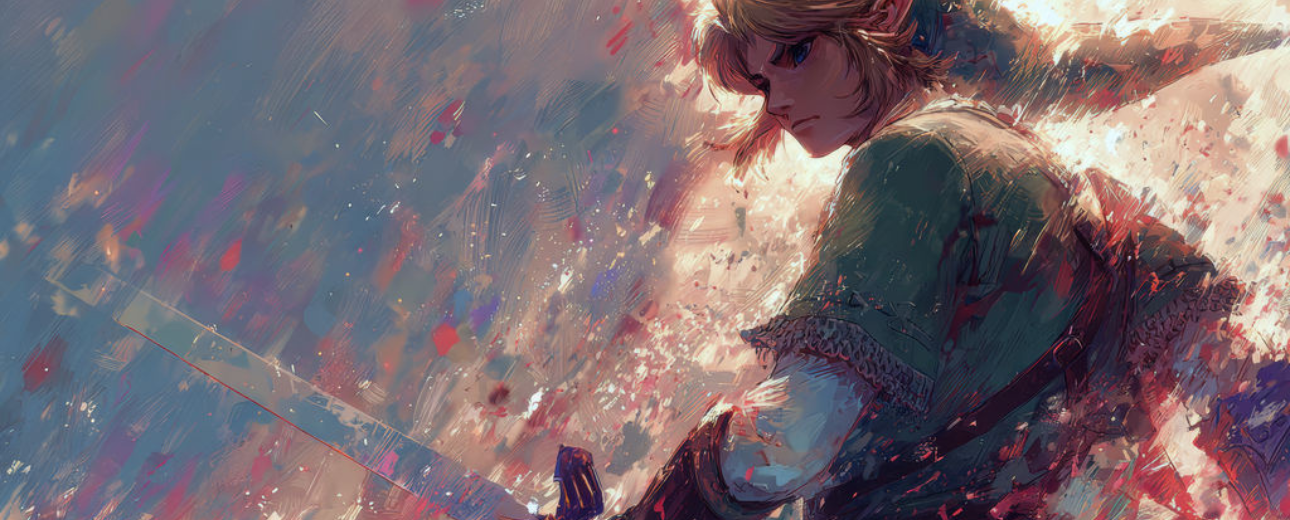
Let’s be honest with each other right from the start: Navi is probably the most complained-about character in the history of video games. “Hey! Listen!” has achieved a kind of cultural immortality as the shorthand for annoying game companions, the punchline of thousands of jokes, the symbol of everything that can go wrong when a developer decides their player needs constant guidance delivered by an enthusiastic fairy. And yet — and this is where it gets interesting — Navi is also genuinely important to the Zelda franchise’s mythology, genuinely effective at certain things, and genuinely misunderstood by the meme culture that has reduced her to a single repeated phrase.
This article is not a simple companion ranking. It is not a definitive declaration that Fi is better than Navi or that Tatl is the secret queen of Zelda companions or any other simple hierarchy that internet debates tend to produce. It is something more interesting and more honest: a complete, passionate, genuinely analytical examination of all of Link’s significant companions across the Zelda franchise, what they were trying to accomplish, how well they accomplished it, what they represent within the games they inhabit, and what their evolution tells us about how Nintendo thinks about the relationship between player and game.
We are going to cover Navi, Tatl, Midna, Fi, and several other significant companions across the series, examining each with the depth and the fairness they deserve. We are going to talk about game design, about narrative function, about emotional resonance, about the specific ways that each companion succeeds and fails at the job they were given. And we are going to treat this as the genuinely interesting design and storytelling question it is, rather than as an opportunity to repeat jokes that were already old in 2008.
Ready? Let’s go. Hey. Listen.
What Is a Zelda Companion and Why Do They Matter?
Before we examine specific companions, it’s worth spending time with the foundational question of what a Zelda companion actually is and what role it is designed to play, because understanding the design brief helps you evaluate how well each companion executes it. The companion in a Zelda game is not simply a narrative device or a character who happens to travel with Link. It is a sophisticated solution to a specific design problem that the franchise has been wrestling with since “Ocarina of Time” introduced the companion concept in 1998.
The design problem is this: how do you provide necessary gameplay guidance to a player without breaking immersion or making the protagonist seem incompetent? Link is supposed to be a hero — capable, brave, skilled. Having him constantly consult a manual or receive popup instructions from an omniscient interface undermines his heroic status and disconnects the player from the experience. But leaving players completely without guidance in increasingly complex three-dimensional environments creates frustration and abandonment. The companion is Nintendo’s answer: a character whose narrative existence justifies their guidance function, whose presence as a person within the world makes the information they provide feel diegetically appropriate rather than mechanically intrusive.
The Design Brief: What Every Companion Is Trying to Do
Every Zelda companion is simultaneously trying to accomplish several things that are in varying degrees of tension with each other. They need to provide navigational and contextual guidance — telling the player where to go and what to do — without being so helpful that the player never has to think for themselves. They need to have narrative presence — a personality, a relationship with Link, a reason for being — without being so narratively prominent that they overshadow the hero. They need to be responsive to player needs — present when needed, quiet when not — without being so passive that they disappear from the player’s consciousness entirely.
The tension between these requirements explains most of the specific complaints that players have about individual companions. Navi’s most notorious quality — her constant interruptions to say things the player already knows — is the result of erring too far on the side of responsiveness at the expense of reader awareness. Fi’s most notorious quality — her tendency to state the obvious with great precision and apparent sincerity — is the result of erring too far on the side of narrative clarity at the expense of player intelligence. Understanding these as design trade-offs rather than as simple failures makes the companion conversation significantly more interesting.
The Evolution of the Companion Concept Across the Series
The evolution of the companion concept across the Zelda series is one of the most instructive case studies in how Nintendo learns from player feedback and iterates on its designs. From Navi’s relatively simple guidance function in “Ocarina of Time” through the narrative complexity of Midna in “Twilight Princess” to the deliberate absence of a traditional companion in “Breath of the Wild,” the franchise has consistently experimented with what the companion role can be and should be, and the results of those experiments are worth tracing carefully.
Each major companion iteration represents a response to the perceived limitations of the previous design: Tatl is Navi with more personality and less interruption, Fi is a design that prioritizes narrative over guidance in a way that creates its own problems, Midna is a complete reimagining of what the companion relationship can be emotionally, and the companions of “Breath of the Wild” and “Tears of the Kingdom” represent yet another approach that integrates guidance into the world rather than concentrating it in a single character. Tracing this evolution is tracing the franchise’s ongoing negotiation with one of its most persistent design challenges.
Navi: The Original and the Most Misunderstood
Navi arrived in 1998 with “Ocarina of Time” as the first significant Zelda companion, and she has been living with the consequences of that timing ever since. Being the first means being the one against whom all subsequent companions are implicitly measured. It means being the one whose innovations are taken for granted by players who have grown up with more sophisticated versions of the same ideas. And it means being the one whose limitations are most visible because there was no prior version to compare her against — no established standard of what a Zelda companion should be, which meant that every choice her designers made was potentially the wrong choice with no precedent to guide them.
The most important context for understanding Navi is that “Ocarina of Time” was a genuinely revolutionary game that was doing things no three-dimensional action-adventure game had done before. The designers were navigating unprecedented territory: how do you convey spatial information, directional guidance, and combat targeting in a three-dimensional world to players who had no framework for understanding these conventions? Navi’s Z-targeting function — the ability to lock onto enemies and receive information about them — was a solution to a real and significant design problem, and it worked. The combat system it enabled is one of “Ocarina of Time’s” most celebrated achievements, and Navi is inseparable from it.
What Navi Actually Does Well: A Fair Assessment
The fairness argument for Navi begins with acknowledging what she was actually designed to do and how well she does it. Her primary design function is to enable the Z-targeting system and to provide context-specific guidance during the game’s early hours. In both of these functions, she is genuinely effective: Z-targeting transformed three-dimensional combat in a way that influenced the entire action-adventure genre for the next two decades, and her early-game guidance genuinely does help players navigate a world type they had no prior experience with.
Her “Hey! Listen!” interruptions, the source of most of the comedy at her expense, were designed to draw player attention to low health — a genuinely important piece of information that players, absorbed in exploration, might otherwise miss until it was too late. The intent was sound. The implementation, which underestimated how often players would be at low health and overestimated how interesting repeated reminders about it would be, created the experience of being constantly nagged rather than helpfully reminded. This is a calibration problem rather than a design philosophy problem, and the distinction matters for fairness.
Her Navi’s advice system, accessible through the C buttons, provided contextual information about enemies and about the current objective that was genuinely useful to players who were lost or confused. The system’s limitation — that Navi’s advice was sometimes vague or unhelpful even when consulted — reflects the difficulty of anticipating every situation a player might be confused by, which is a universal challenge in game design rather than a specific failure of Navi’s design.
Navi’s Narrative Role and Her Underappreciated Ending
The most underappreciated dimension of Navi as a character is her narrative arc and its conclusion, which is one of the most quietly moving endings in the franchise’s history and one that completely transforms the meaning of the companion relationship if you pay attention to it. When Link completes his quest and returns to the Temple of Time, Navi flies away. She simply leaves. She flies into a shaft of light and disappears, and the game never explains where she went or why, and Link is left alone at the moment of his triumph.
This ending is extraordinary because it treats the companion relationship with a seriousness that the rest of the game’s handling of Navi does not fully prepare you for. Navi was not just a guidance system. She was a relationship, and relationships end, and the ending of this one — without warning, without explanation, without closure — is designed to create in the player a specific feeling that has no word in English but has the Japanese concept of mono no aware: the bittersweet awareness of impermanence, the beauty that comes precisely from knowing that things do not last.
The fact that this ending lands for players who paid attention to it — who found themselves genuinely moved by the departure of a character they had been complaining about for forty hours — says something important about Navi that the “Hey! Listen!” jokes obscure: she was, despite her limitations, a real presence, and her absence is felt.
Tatl: The Companion Who Improved Everything
Tatl from “Majora’s Mask” is the result of Nintendo listening carefully to player feedback about Navi and making intelligent, targeted improvements to the companion formula while retaining what worked. She is, by most objective measures, a superior companion to Navi in almost every functional dimension, and the specific ways in which she is superior illuminate both what was limiting about Navi and what the companion design was always trying to achieve.
The most immediately apparent improvement is personality. Where Navi is relentlessly positive, enthusiastically helpful, and emotionally undifferentiated, Tatl is prickly, self-interested, reluctant, and occasionally frankly rude. She does not want to help Link. She is helping him because their circumstances have made her temporarily dependent on his goodwill, and she makes absolutely no effort to disguise this. The result is a companion who feels like a real character rather than a help system dressed in fairy clothing: someone with her own agenda, her own emotional reactions, and her own complicated feelings about the person she is nominally assisting.
Tatl’s Character Design: Conflict as Authenticity
The conflict at the heart of Tatl’s characterization is what makes her so much more interesting than her predecessor. She begins the game as an obstacle: she and her brother Skull Kid ambush Link and steal the Ocarina of Time, setting the game’s tragedy in motion. When she gets separated from Skull Kid and finds herself dependent on Link for protection, she is forced into a partnership she did not choose and does not want, and this involuntary nature of their collaboration creates immediate dramatic tension that Navi’s voluntary, enthusiastic assistance never generates.
What the game then does with this conflict is one of “Majora’s Mask’s” quieter triumphs: it develops Tatl from reluctant partner to genuine friend through the specific mechanism of shared experience and revealed vulnerability. As the game progresses and Tatl’s backstory is gradually illuminated — her relationship with Skull Kid, the loneliness that drove both of them toward each other, the specific quality of their friendship and how it was damaged — she becomes a person whose arc matters in its own right, not just as support for Link’s quest.
Tatl vs Navi: A Direct Comparison
The direct comparison between Tatl and Navi is instructive because it shows exactly which lessons Nintendo had learned from the first companion’s reception. Tatl is less intrusive: she does not interrupt gameplay to remind Link of his current health status or to point out things he can already see. Her guidance function is more restrained, triggered by player consultation rather than by automatic detection of player confusion. This represents a significant calibration improvement based on the feedback that Navi’s interruptions had generated.
Her information delivery is also more efficient and more contextually intelligent. When Tatl provides information about enemies through her scanning function, the information is more specific and more immediately useful than Navi’s equivalent guidance. This improvement reflects the specific feedback that Navi’s advice was sometimes vague and unhelpful, and the result is a guidance system that players are more likely to consult voluntarily because past experience suggests it will actually help.
The one area where Tatl is arguably inferior to Navi is in emotional warmth: Navi, for all her intrusiveness, genuinely cares about Link in a way that is evident throughout “Ocarina of Time,” while Tatl’s affection for Link develops slowly and never quite reaches the uncomplicated warmth of her predecessor. But this is a feature as much as a limitation: Tatl’s complicated feelings make her more interesting as a character even if they make her less immediately appealing as a companion.
Fi: The Most Divisive Companion in Zelda History
Fi from “Skyward Sword” is the Zelda companion that generates the most genuinely divided critical opinion, and the division is interesting because it reflects a real tension at the heart of her design rather than simply a disagreement about taste. Fi is simultaneously the most narratively significant companion in the franchise’s history — she has a genuine arc, a genuine emotional journey, and a farewell that is one of the most affecting moments in any Zelda game — and the most frustratingly over-talkative in terms of her guidance function. She is the companion that best demonstrates why the design brief for a Zelda companion is so inherently difficult.
Fi’s guidance function is calibrated so far toward helpfulness that it crosses the line into condescension. She tells the player things they already know with a frequency and a precision that suggests she has been programmed to assume the player is experiencing “Skyward Sword” for the first time and is currently confused about everything. She informs Link of his low battery when the controller is nearly dead. She explains game mechanics that the player has been using for hours. She states obvious environmental features as though they were discoveries. The cumulative effect is a companion that the player eventually stops listening to, which defeats the purpose of her guidance function entirely.
Fi’s Logic and the Problem With Perfect Information
The specific character of Fi’s failures reveals something interesting about the design philosophy behind her. She is designed to be a precise, analytical intelligence: everything she does is calibrated, logical, probability-based. When she tells you there is an 85% chance that the next step in your quest involves entering the nearby temple, she is not being random. She is operating exactly as her character concept intends: as an artificial intelligence that processes available data and delivers probabilistic assessments.
The problem is that this character concept is fundamentally at odds with the player’s experience. Players do not experience themselves as the subjects of Fi’s analytical assessment. They experience themselves as adventurers being told what they are about to do by a helper who should be helping rather than leading. The precision of Fi’s probability statements, which might have been intended to create a sense of scientific wonder at her intelligence, instead creates a sense of being managed, of having a very sophisticated system tell you things with very confident numbers that you already knew or could easily have figured out yourself.
Fi’s Farewell: The Redemption That Makes Everything Worthwhile
And then there is Fi’s farewell, and everything changes. The moment at the end of “Skyward Sword” when Fi thanks Link for their journey, acknowledges that she has not anticipated the value of their partnership, and prepares to sleep within the Master Sword for eternity is one of the most emotionally resonant moments in the entire franchise, and its power comes precisely from the contrast with everything that came before.
Fi has spent the entire game being logical, analytical, and emotionally restricted — operating exactly as her design parameters intend. And in her farewell, for the first time, she steps outside those parameters and acknowledges something that her logic had not accounted for: that the relationship she formed with Link in the course of their shared quest meant something to her. That meaning had not been part of her programming. It happened anyway. And her acknowledgment of it, delivered in a moment of genuine vulnerability that the rest of her characterization makes all the more striking by contrast, is the moment when Fi becomes a person rather than a system.
This redemptive ending does not retroactively make Fi’s guidance function less annoying. Her interruptions are still too frequent and her information delivery is still calibrated incorrectly for most players. But it does mean that Fi is a character of genuine depth, whose journey from pure function to genuine feeling is one of the most interesting arcs any Zelda companion has ever been given. The design miscalculated the guidance balance, but the character concept is genuinely beautiful.
Midna: The Companion Who Transcended the Role
We discussed Midna in some detail in the article on the feminism of Zelda, but she deserves extended treatment here in the specific context of companion design because she represents the single most significant evolution in how the Zelda series conceptualizes what a companion can be. If Tatl was a refinement of Navi and Fi was an experiment in character depth at the expense of guidance restraint, Midna is something else entirely: a complete reimagining of the companion role that starts from the question of what a companion would be like if their story mattered as much as the hero’s.
The revolutionary thing about Midna is not her personality — though her personality is extraordinary — but her narrative independence. She has her own story, her own objectives, her own reasons for doing what she is doing, and those reasons are not initially aligned with Link’s. She uses Link as a tool. She manipulates his actions for her own purposes. She is, by any conventional measure of what a companion should be, a bad companion: she does not have the player’s best interests at heart, she does not provide guidance because she wants to help, and she does not treat Link with the respect that a hero-companion relationship conventionally requires.
Why Midna’s Flaws Make Her Perfect
Midna’s moral ambiguity is precisely what makes her the most compelling companion in the franchise’s history, because it forces the companion relationship to earn its warmth rather than assuming it. When Navi cares about Link, we believe it because we’re told to believe it and because it fits the narrative role she occupies. When Tatl comes to care about Link, it is more convincing because she starts from not caring and changes. When Midna comes to care about Link — genuinely, deeply, in a way that eventually leads her to sacrifice herself for him and ultimately to the most heartbreaking farewell in the franchise’s history — it is the most convincing of all because we have watched every step of the transformation, because we understand exactly what she is overcoming to get there.
Her guidance function is handled with more sophistication than any previous companion’s, integrated into her personality in a way that makes the guidance feel like an expression of character rather than a system feature. When Midna tells Link where to go or what to do, she does so with the impatient authority of someone who is annoyed at having to explain obvious things, which is both consistent with her character and significantly less irritating than companions who deliver the same information with boundless enthusiasm. The guidance function and the character design are unified in a way that previous companions had never achieved.
The Mirror Shattering: A Farewell That Earns Its Tears
Midna’s farewell — the moment when she shatters the Mirror of Twilight and permanently separates the Light World from the Twilight Realm — is the most emotionally powerful companion farewell in the franchise’s history, and it has been for nearly two decades since “Twilight Princess” was released. The reason it works so completely is that it combines genuine narrative sacrifice with genuine emotional loss that the player has been building toward for the entire game.
By the time Midna shatters the mirror, the player knows her completely: her history, her real identity as the Twilight Princess, her complicated feelings about Link and about her duty to her people. The shattering is not a sacrifice made by a character you know partially or have been told to care about. It is a sacrifice made by someone you understand fully, someone whose choice is comprehensible and heartbreaking precisely because you can see exactly what she is giving up and why she has decided it is worth it. The tear that rolls down her cheek before she goes — the only explicitly emotional gesture from a character who has maintained ironic distance throughout most of the game — is one of the most devastating single images in the franchise.
The Modern Companions: Zelda, Sidon, and the BotW/TotK Approach
“Breath of the Wild” made a revolutionary choice regarding the companion design: it effectively abolished the traditional companion system. There is no Navi, no Tatl, no Fi traveling alongside Link providing guidance and commentary. Instead, the game distributes the companion function across the environment itself — the Sheikah Slate’s map function, the tutorial structure of the Great Plateau, the gradual accumulation of player knowledge — and reserves human companionship for specific, narratively significant moments rather than making it a constant presence.
This choice reflects the specific vision of “Breath of the Wild” as a game about exploration and discovery, about the pleasure of figuring things out rather than being told what to do. A traditional companion in “Breath of the Wild” would be fundamentally at odds with this vision: any character who told Link where to go would be directly undermining the game’s central pleasure, which is the freedom to go anywhere and figure out why you want to be there. The absence of a traditional companion is itself a design statement: you are trusted, as a player, to find your own way.
Zelda as Companion in BotW: The Voice in the Memories
The closest thing to a traditional companion in “Breath of the Wild” is Princess Zelda herself, whose voice guides Link through the recovered memories and whose recorded messages in the Sheikah Slate provide the closest equivalent to companion guidance that the game offers. This is an elegant solution to the companion problem: by positioning Zelda as a presence from the past rather than a presence in the present, the game gives Link human connection and narrative context without compromising the exploration freedom that is the game’s core appeal.
Zelda’s recorded messages are also significantly better calibrated than previous companions’ guidance functions, for a specific reason: they were created by a character within the game world, for a specific purpose that the narrative justifies, rather than by a design system trying to anticipate every possible player confusion. The directness of “Follow the road to the north” delivered in Zelda’s voice has a different quality from Fi’s “There is a 95% chance that the path to the north leads to your destination” — the former is a human speaking to a person she trusts, the latter is a system performing an analysis, and the difference in emotional register is significant.
Sidon and Tulin: The Champion Companions of TotK
“Tears of the Kingdom” introduces a new companion approach that represents perhaps the most sophisticated iteration yet: the Champion companions who travel with Link for specific sections of the game, providing both narrative companionship and unique abilities that directly enhance gameplay. Sidon, Tulin, Yunobo, and Riju each accompany Link through their respective regional questlines, and their integration with both the narrative and the gameplay mechanics is handled with a care that makes them feel genuinely essential rather than artificially grafted on.
The key to what makes this approach work is the ability integration: each companion’s presence is justified not just narratively but mechanically, because each one provides a unique ability that Link cannot replicate independently. Tulin’s Gust, Sidon’s water shield, Yunobo’s rolling attack, Riju’s lightning — these are not optional supplements to Link’s capability but genuine additions that open up specific gameplay possibilities. The companion is not just present. The companion is necessary, which creates a different kind of investment in the relationship than the purely narrative companion design allows.
Skull Kid: The Companion-Adjacent Figure Who Changes Everything
No complete guide to Link’s companions would be complete without discussing Skull Kid, who is not technically a companion but who occupies a companion-adjacent space in “Majora’s Mask” that fundamentally shapes how the game’s companion dynamic works. Understanding Skull Kid’s role — his relationship with Tatl and Tael, his own backstory of loneliness and abandonment, the way his villainy is ultimately understood as an expression of grief rather than genuine malice — is essential to understanding why “Majora’s Mask’s” companion dynamic is so emotionally effective.
Skull Kid is what Tatl is trying to return to: the relationship that was disrupted by the game’s inciting incident, the person whose absence structures Tatl’s emotional arc across the entire game. When Tatl chooses at the end to stay with Skull Kid rather than continue with Link, the choice is the resolution of her arc: she goes back to what she valued most, the friendship that was the most important thing in her life before the events of the game separated them. Her choice makes sense because Skull Kid has been present throughout the game as an absence — as the person Tatl is always implicitly missing, always implicitly trying to return to.
The Skull Kid-Tatl relationship is one of the most carefully constructed emotional architectures in the franchise, and it works because both characters are given enough specific backstory to make their bond comprehensible and their separation genuinely painful. Skull Kid is lonely. The Four Giants abandoned him. The friends he made in Hyrule moved on. He found Tatl and Tael, and they made him feel less alone, and the mask’s corruption of him is ultimately an amplification of the loneliness that was always his defining characteristic rather than an external imposition of evil.
Understanding Skull Kid through this lens — as a person defined by loneliness and the desperate acts it produces — transforms “Majora’s Mask” from a game about a threat to be defeated into a game about the damage that isolation causes and the way that damage can ripple outward to harm everyone around the isolated person. This transformation is achieved in part through Tatl’s arc: her eventual understanding of Skull Kid’s pain, her forgiveness of what his pain caused him to do, and her choice to return to him are the emotional resolution of the game’s central theme rather than simply the conclusion of a side plot.
Comparing the Companions: An Honest Assessment
Having examined each major companion in detail, it is worth attempting an honest comparative assessment that goes beyond simple ranking to identify what each companion does best and what each fails at, because the most useful framework for thinking about the companions is not “which is best” but “what design choices succeed and which fail.”
Navi succeeds at enabling an innovative combat targeting system that influenced the entire genre. She fails at calibrating her interruptions to actual player need. Her emotional resonance is modest but genuine, and her farewell is more affecting than most players give her credit for. She is the prototype from which everything else developed, and prototypes are never the most polished version of the idea.
Tatl succeeds at personality, at making the companion feel like a real character rather than a guidance system. She succeeds at restraint, at trusting the player more than Navi did. She fails at warmth — her arc is convincing but her starting point is intentionally difficult, and some players never fully invest in her because they never quite forgive her initial antagonism.
Fi succeeds at narrative and character design — her arc from pure function to genuine feeling is one of the most interesting companion journeys in the series. She fails catastrophically at guidance calibration, telling players things they already know with a frequency and a certainty that eventually trains them to ignore her entirely. Her farewell is extraordinary. Her interruptions are not.
The Midna Standard and Why It’s Hard to Surpass
Midna succeeds at everything a companion can succeed at: narrative depth, personality, guidance integration, emotional arc, and a farewell that genuinely earns its emotional weight. She is the standard against which all subsequent companions are measured, and she sets that standard so high that it is genuinely difficult to surpass. The reason no subsequent companion has quite matched her is not a failure of effort but a reflection of how rarely all the variables align: the right character concept, the right narrative context, the right emotional arc, and the right calibration of guidance and personality working together.
The TotK Champions — Sidon, Tulin, Yunobo, Riju — represent the most successful companion design since Midna, largely because they solve the guidance problem by making the companion mechanically necessary rather than by calibrating information delivery. They are not trying to be Midna: they are not given the same narrative depth or the same arc. But they solve the design problem in a different way, and their solution works well enough that the games that feature them are among the franchise’s most satisfying companion experiences.
What the Perfect Zelda Companion Would Look Like
The ideal Zelda companion, extrapolating from everything the franchise has learned across its various experiments, would combine Midna’s narrative depth and personality with the TotK Champions’ mechanical integration, Tatl’s guidance restraint, and Fi’s emotional arc without Fi’s tendency to state the obvious. It would be a character whose presence is mechanically necessary rather than artificially imposed, whose guidance function is triggered by player request rather than automatic detection of confusion, and whose emotional journey is given enough time and specificity to make its conclusion genuinely moving.
This ideal companion does not yet exist in the franchise, but the trajectory of the series’ companion design suggests that it is the direction the franchise is moving. Each iteration has learned from the previous ones, has identified specific failure modes and addressed them, has found new ways to solve the fundamental tension between guidance function and narrative presence. The companion who fully resolves that tension has not yet appeared, but the series has never been closer.
Why the Companion Debate Matters Beyond Rankings
The companion debate in Zelda fandom is not really about whether Navi is more annoying than Fi or whether Midna is better than Tatl, though those questions are fun to argue about. It is about something more fundamental: what do we want from our relationship with a game, and what role should a character play in mediating that relationship?
Every companion represents a different answer to that question. Navi says: the player needs guidance, and guidance is the most important thing the companion can provide. Tatl says: the player needs a character to care about, and caring about a character is worth some sacrifice of guidance efficiency. Fi says: the player needs both guidance and emotional depth, and if forced to choose, emotional depth is more lasting. Midna says: the player needs a relationship of genuine mutuality, a companion who is not simply in service of the player’s agenda but who has their own, and whose arc toward genuine partnership is the game’s emotional center.
The future of Zelda companions is genuinely exciting to speculate about because the franchise has never been more sophisticated in its thinking about this design challenge and never more willing to experiment with its solutions. “Tears of the Kingdom’s” approach — multiple companions for specific questline sections rather than a single companion for the whole game — solves several problems simultaneously: it prevents companion fatigue, it allows each companion’s personality to be specific to their regional questline, and it integrates the companion function with the game’s modular quest structure in a way that feels natural rather than imposed.
The next step might be a companion who has the full arc of Midna — a genuine character journey from antagonism or neutrality to genuine partnership — within the multi-companion structure of “Tears of the Kingdom.” Or it might be something entirely different, a solution to the companion problem that the franchise’s designers have not yet revealed. Whatever it is, the forty-year history of companion design in this franchise suggests that it will be thoughtful, that it will respond intelligently to what came before, and that it will generate passionate debates in fan communities for years to come.
Hey. Listen. The companion question is not settled. And that is genuinely exciting.
For readers who want to explore the companion debate further, the Zelda Wiki at zeldawiki.wiki maintains comprehensive documentation of every companion discussed in this article. The Zelda Dungeon at zeldadungeon.net has excellent game-specific analyses that cover companion mechanics in detail. The Game Maker’s Toolkit YouTube channel at youtube.com has produced multiple videos on companion design in games generally that provide excellent design context for the Zelda-specific discussion. And all the games discussed — “Ocarina of Time,” “Majora’s Mask,” “Twilight Princess,” “Skyward Sword,” “Breath of the Wild,” and “Tears of the Kingdom” — are available through Nintendo’s platforms and remain the essential primary sources for anyone who wants to form their own opinion about the companion question.
The debate continues. It probably always will.