
 Canada
 USA
USA Japan
Japan



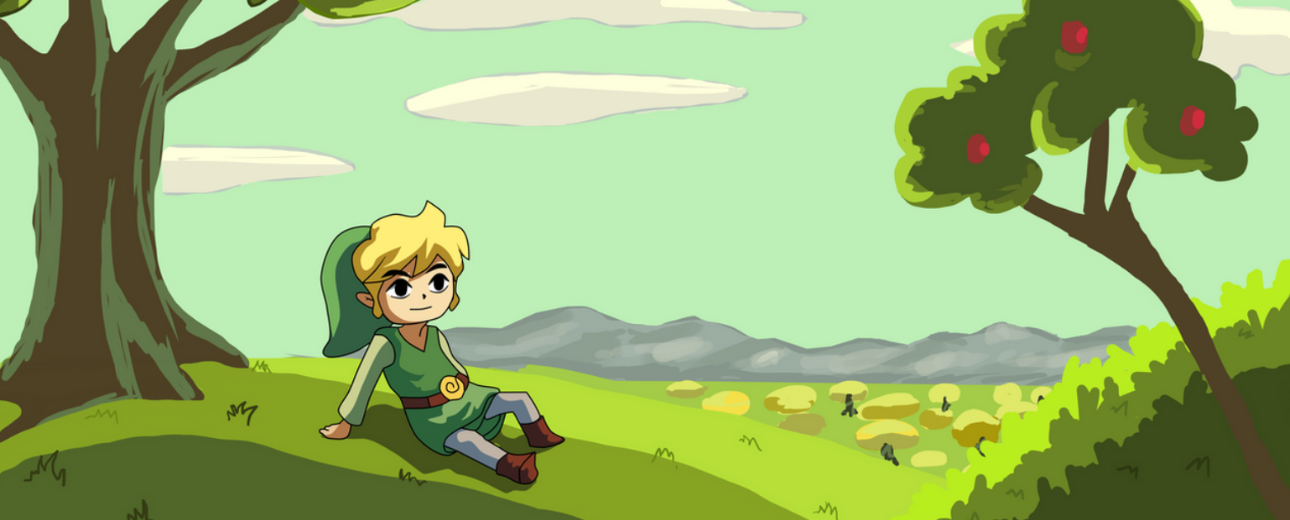
There is a moment in “Majora’s Mask” that has haunted players for twenty-five years. You are standing in the Stock Pot Inn in Clock Town, and you have just learned that Anju and Kafei — two people whose love story you have spent the entire game helping to reunite — are going to die together when the moon falls at dawn. They know it. You know it. And they have decided, consciously and freely, that dying together is better than living apart. The moon comes down. The world ends. And then you reset the three-day cycle, and everything that happened — the reunion, the choice, the love — unhappens, and you carry the memory of it alone into the next cycle.
No other game has made me feel quite what that moment makes me feel. Not the most tragic cutscene in the most ambitious AAA production, not the most carefully written narrative in the most celebrated role-playing game. Something about the specific way “Majora’s Mask” constructs that experience — the complicity it requires from the player, the way it uses game mechanics to create grief rather than simply depicting it, the specific loneliness of being the only one who remembers — cuts to something real about loss that most games, and most storytelling, never quite reach.
This article is about that something. It is about how the Legend of Zelda series handles death, loss, and grief with a sophistication and an emotional intelligence that makes it, in this specific domain, genuinely better than any other game franchise. It is about the specific techniques the series uses to create genuine emotional impact rather than simulated emotional impact, about the characters whose losses the games make you actually feel, and about why a franchise nominally aimed at young audiences has consistently produced some of the most profound meditations on mortality and impermanence in the history of interactive entertainment.
Why Most Games Fail at Grief: The Context for Zelda’s Achievement
Before we examine what Zelda does right, it’s worth spending time with what most games do wrong, because the contrast is instructive and because understanding the typical failure modes helps you see more clearly what makes the Zelda series’ approach so distinctive and so effective. Most games that attempt to engage with death and grief do so in ways that are, at best, emotionally limited and, at worst, actively counterproductive to genuine emotional engagement.
The most common failure is what we might call the cutscene problem: the tendency to deploy death as a narrative event that happens in a non-interactive sequence, divorced from the player’s agency, designed to signal that the story is serious rather than to create genuine emotional investment. A character dies in a cutscene. Dramatic music plays. Other characters react with appropriate expressions. The player watches, processes the information that a significant character has died, and is then returned to gameplay with perhaps a mission objective to avenge the death. The emotional response this generates is real but thin — more like reading about a death than experiencing one, more like being told to feel something than actually feeling it.
The Agency Problem and Why It Matters for Grief
The second major failure mode is the agency problem: the tendency to use player agency in ways that undercut rather than enhance the emotional weight of loss. Many games give players the ability to prevent deaths through correct choices, which creates a situation where a character’s death feels like a gameplay failure rather than a narrative inevitability. When death can be avoided by making the right decision or being skilled enough at the game’s mechanics, it loses the quality of genuine tragedy — the sense of something real and irreversible being taken away — and becomes instead a problem to be solved or a consequence to be avoided.
The Zelda series navigates both of these failure modes with a sophistication that reflects genuine creative intelligence about the relationship between interactivity and emotional experience. It rarely uses death as a simple cutscene event divorced from player experience. And it rarely presents death as something the player could have prevented with better play, which preserves the irreversibility that genuine grief requires. Understanding how it accomplishes this requires looking at specific examples across the series, and those examples are remarkable.
What Genuine Grief Requires in Storytelling
The third context piece worth establishing is what genuine grief actually requires in any storytelling medium, because the Zelda series seems to understand this in a way that many game developers, despite years of increasing narrative sophistication, still struggle with. Genuine grief in storytelling requires several conditions that are harder to create than they might appear.
First, it requires that you actually knew and cared about the person who is lost, not just that you were told to care about them. Second, it requires that the loss be genuinely irreversible — that there be no rescue, no resurrection, no reset that undoes what was done. Third, it requires that the loss have ongoing presence in the narrative rather than being resolved and forgotten after its initial impact. And fourth, it requires that the mechanism of loss connect to something true about how loss actually works in human experience. The Zelda series, at its best, satisfies all four of these conditions in ways that most games never attempt.

“Majora’s Mask” and the Mechanics of Grief
“Majora’s Mask” is the most sustained and most sophisticated meditation on death, loss, and grief in the entire Zelda franchise, and it is arguably the most sustained meditation on these themes in the history of video games. The game’s entire design is organized around the experience of loss: loss of time, loss of connection, loss of the people you have come to care about, and the specific loss of any certainty that what you do in this doomed world actually matters. To play “Majora’s Mask” is to be immersed in grief in a way that no other game has replicated.
The three-day cycle that drives the game’s mechanics is the foundation of this achievement. Every seventy-two hours of in-game time, the moon falls and destroys everything. The world ends. Everyone in it dies. And then Link plays the Song of Time and goes back to the beginning, and the world is restored — but only the world, not the relationships and the connections and the small human stories that Link participated in during those seventy-two hours. The people don’t remember. Only Link does. This creates a specific and devastating emotional situation: Link is perpetually surrounded by people whose lives he cannot ultimately save, whose endings he will watch over and over, whose final moments he will experience again and again with the full knowledge of what is coming.
The Architecture of Doomed Connections
The genius of “Majora’s Mask” is that it does not let you maintain emotional distance from the doom. It forces you to invest in the people of Termina — to learn their names, their stories, their small human concerns — before taking everything away. The Bomber’s Notebook mechanic, which tracks the schedules and stories of Termina’s residents, is not just a gameplay system. It is a device for making you care about people who are going to die, for ensuring that when the moon falls, you have genuine stakes in the loss rather than merely witnessing it from a safe narrative distance.
The Anju and Kafei questline is the most fully developed example of this architecture, but it is not alone. The four giantsstoryline connects the game’s mythology to themes of departure, absence, and the grief of those left behind. The various characters in Ikana Canyon — the dead king, the departed soldiers, the girl who sings to her father’s grave — create a landscape of grief that is literal rather than metaphorical, a place where the dead are literally present and where their inability to move on reflects something true about how grief works in real human experience.
The Moon, Time, and the Impossible Choice
The moon in “Majora’s Mask” is one of the most powerful symbols in the franchise’s history, and its power comes from what it represents rather than what it is. It is not simply a threat to be defeated. It is the representation of inevitable loss: of the fact that time passes, that things end, that no amount of effort or skill or love can permanently prevent the ending of things. The game’s emotional impact comes from the combination of this inevitable end with the player’s awareness of it — you know the moon is coming, you know you cannot permanently stop it, and you keep going anyway, keep investing in the people and the stories of Termina anyway, because the alternative is to stop caring entirely.
This is a genuinely profound engagement with one of the hardest truths about grief: that knowing loss is coming does not protect you from it. That love and investment are not logical responses to impermanence but are perhaps the only meaningful responses to it. “Majora’s Mask” puts this insight into interactive form with a skill and an ambition that is genuinely extraordinary, and it does so in a game marketed primarily to children, which makes the achievement even more remarkable.
Mipha’s Grace and the Weight of What Was Lost
Moving from “Majora’s Mask” to “Breath of the Wild” is, in some ways, a move from the philosophical to the personal. Where “Majora’s Mask” creates grief through systemic, mechanic-level design, “Breath of the Wild” creates it through character: through the specific, irreplaceable loss of Mipha, whose story the game tells in fragments that accumulate, over the course of the player’s experience, into one of the most moving portraits of loss in the franchise’s history.
What makes Mipha’s loss work so well is the way the game sequences the revelation. You meet Mipha’s presence before you meet her person: you see her statue in Zora’s Domain, you hear the Zora speak of her with a grief that is clearly long-established and deeply felt, you begin to understand the shape of what is missing before you understand who was there. By the time you access the memories that show you who Mipha actually was — the warmth, the gentleness, the specific quality of her care for Link and for others — you have already been primed to experience her absence as a loss rather than simply an absence.
The Memory System as a Grief Mechanism
The memory system in “Breath of the Wild” is one of the most sophisticated grief-delivery mechanisms in the history of video games, and it works in ways that are worth examining in detail because the specific choices in its design are what make it emotionally effective rather than simply narratively informative. The game gives Link amnesia — he cannot remember what was lost because the trauma of losing it has taken those memories with it — and then tasks the player with recovering those memories, with actively seeking out the fragments of what was before.
This mechanic creates a specific emotional experience that mirrors real grief in ways that are rarely achieved in fiction. In real grief, the lost person is present primarily in memory: in fragments, in partial recollections, in the sudden overwhelming return of a specific moment of connection. The memory system in “Breath of the Wild” puts the player in exactly this relationship with the Champions: they are gone, their absence is the present reality, and all that remains of them is the fragmented, non-linear, actively-sought-after memory of who they were. Playing the game feels, in this dimension, like genuinely grieving.
The Champions’ Deaths and Hyrule’s Ongoing Wound
The deaths of all four Champions — Mipha, Revali, Daruk, and Urbosa — constitute collectively one of the most significant acts of loss in the franchise’s history, and the game’s treatment of their ongoing absence is one of its finest narrative achievements. One hundred years after their deaths, the world of “Breath of the Wild” is still shaped by them: their Divine Beasts still stand as testament and obstacle, their people still grieve them, and the specific character of each people’s ongoing grief reflects something true about the specific person they lost.
The Zora’s grief for Mipha is presented with particular depth and specificity. The statue in Zora’s Domain, Prince Sidon’s complicated relationship with his sister’s memory, King Dorephan’s barely-concealed sorrow — these details accumulate into a portrait of a community still living in the shadow of a loss that happened a century ago but that has never been resolved because the cause of the loss — Vah Naboris in Mipha’s case, the Divine Beasts generally — is still present, undressed, unhealed. Mipha’s death created a wound in Zora society that one hundred years has not closed, and the game shows this with the kind of honest attention to how grief actually persists that most storytelling is too impatient to maintain.

“Ocarina of Time” and the Loss of a Childhood World
“Ocarina of Time” engages with loss in a way that is different from either “Majora’s Mask” or “Breath of the Wild” but equally profound: it uses the game’s own progression structure to create an experience of irreversible change that functions, emotionally, as grief. When Link pulls the Master Sword from the Pedestal of Time and is sealed away for seven years, the Hyrule he wakes up into is not the Hyrule he left. It has been transformed by Ganondorf’s rule into something darker, more dangerous, and more damaged, and the specific losses of the time-skip — the Kokiri Forest under threat, Castle Town transformed into a ghost town, Death Mountain smoking under Ganondorf’s influence — are experienced by the player as genuine losses precisely because they remember what was there before.
This is an extraordinarily sophisticated use of game structure to create emotional experience. The player is not told that things have gotten worse. They are shown the before and the after, and the gap between them is felt rather than described. The happy, sunlit Hyrule of Link’s childhood becomes the damaged, shadow-haunted Hyrule of his young adulthood, and the transition is experienced as a fall from innocence that no amount of eventual victory can fully reverse.
The Kokiri and the Loss of Innocent Belonging
The Kokiri Forest is the most emotionally charged site of this childhood loss, because it is where Link began and because the Kokiri — the eternal children who never grow up — represent something specific about what cannot be recovered. Link leaves the forest a child and returns an adult, and the Kokiri, who cannot age, cannot join him in what he has become. Saria, who loves him and whom he loves, has become a Sage and is no longer present in the form he knew.
This particular dimension of “Ocarina of Time’s” emotional landscape — the loss of a childhood world that one can visit but not return to — is one of the most universally resonant experiences the game creates, because it mirrors something real about human development. You cannot go back to being ten years old. You can visit the places of your childhood, but you experience them differently, and the people you were then are gone in a way that is genuinely a form of loss. “Ocarina of Time” puts this experience into interactive form with a precision that makes it more emotionally powerful than most explicit depictions of grief.
Zelda’s Specific Loss and the Price of Wisdom
Princess Zelda’s particular loss in “Ocarina of Time” is one of the game’s most underexamined emotional dimensions: she is the person whose decision set the game’s tragedy in motion, who sent Link away with the Ocarina of Time and then watched Ganondorf use the opening she created to seize the Sacred Realm. She carries the knowledge of what her choice cost — seven years of Hyrule’s suffering, the corruption of the Sacred Realm, the deaths of unnamed thousands — and the game never quite lets her or the player off the hook for it.
The specific quality of Zelda’s grief in “Ocarina of Time” is the grief of consequential error: the particular pain of knowing that your good intentions caused harm, that your best judgment was wrong, and that the consequences of that wrongness extend far beyond your ability to correct. This is not a grief that the game resolves cleanly. Ganondorf is defeated, the Sacred Realm is restored, but the seven years of darkness happened, and the people who suffered during them cannot simply be un-suffered. Zelda’s wisdom includes the wisdom of knowing this, and carrying it, and acting anyway.

The Death of the Great Deku Tree and What It Teaches About Mortality
The Great Deku Tree’s death in “Ocarina of Time” is, for many players, their first significant experience of loss in a Zelda game, and possibly their first significant experience of loss in any game. It is worth examining in detail because the care with which it is handled — the honesty, the specific quality of the dying itself — set a standard for how the series would approach death and loss in subsequent games.
The Great Deku Tree is dying when we meet him. He has been cursed, and the curse is progressing, and even if Link succeeds in defeating Queen Gohma inside him, the damage is done. The game is honest about this from early on: the Deku Tree is not saved by Link’s success. He is given enough time to deliver his message and send Link on his way. And then he dies, surrounded by the Kokiri children he has been guardian and parent to, and the forest darkens around him.
What makes this death work is its honesty about the limits of heroism. Link does everything right. He enters the Deku Tree’s body, he fights the boss, he wins. And it is not enough. The loss happens anyway, because the curse had already done its damage before Link arrived, because some things cannot be fixed by doing the right thing in time. This is a truth about grief — that effort and love and doing everything right are not guarantees against loss — that “Ocarina of Time” delivers to its young players with a directness that is brave and that plants seeds of emotional understanding that last long after the specific memory of the game has faded.
The Aftermath and the Landscape of Loss
What “Ocarina of Time” does with the aftermath of the Deku Tree’s death is as significant as the death itself, because it refuses to let the loss be quickly forgotten. The dead Deku Tree remains in the game’s world as a physical presence — a massive, browning tree in the center of a darkening forest — and its presence continues to shape the emotional landscape of the Kokiri region throughout the rest of the game. The forest feels different after he is gone. The light is different. The children’s relationship to their home is different. The loss changes the world, as losses do, and the changed world persists as testimony to what was lost.
This commitment to the ongoing presence of loss — to the way that death reshapes the landscape rather than simply creating a gap where something was — is one of the Zelda series’ most consistent and most sophisticated narrative practices. Death in this franchise is not a discrete event that happens and is then resolved. It is a transformation of the world, a permanent alteration of what was there, and the altered world carries the fact of the loss forward into everything that comes after.
Children and Death: The Franchise’s Bravery
It is worth pausing to acknowledge the specific bravery of the Zelda franchise in consistently delivering genuine experiences of loss and grief to audiences that include a significant proportion of children. The Great Deku Tree’s death in “Ocarina of Time,” the moon falling in “Majora’s Mask,” Mipha’s fate in “Breath of the Wild” — these are not softened or hedged experiences of loss. They are honest engagements with mortality that treat their young audience with respect, delivering real emotional content rather than sanitized versions of reality.
This respect for the emotional capacity of young audiences is itself a form of sophisticated storytelling philosophy, one that recognizes that children are more capable of processing genuine grief than adult gatekeepers often assume, and that giving them honest emotional experiences in the safe context of fiction is more valuable than protecting them from the reality of loss. The Zelda series has consistently made this bet, and it has consistently paid off in players who grew up with those experiences and who carry them as genuine emotional memories decades later.

Link’s Silence and the Loneliness of Grief
One of the Zelda series’ most interesting decisions — one that has been the subject of debate among fans for years — is the choice to make Link a silent protagonist, a character who does not speak and whose inner emotional life is never verbalized. This choice has been discussed primarily in terms of player identification, as a device that allows players to project themselves onto the hero. But it also has a specific and often overlooked function in the franchise’s engagement with grief: it creates a character who carries loss in silence, whose grief is expressed through continued action rather than articulated emotion.
This is, as it turns out, one of the most emotionally true representations of grief in all of storytelling. The experience of profound loss is frequently characterized by exactly this combination: the inability or unwillingness to articulate the loss in words, combined with the continued performance of the actions that give life structure. You keep going. You do the next thing. The grief is present in everything you do but expressed in none of it explicitly. Link’s silence, experienced through the lens of the losses the games put him through, becomes a portrait of this specific quality of grieving.
The Weight Link Carries Through Each Game
Consider what Link carries through “Breath of the Wild”: amnesia that conceals the memory of watching everyone he was close to die, of failing to prevent the Calamity despite his best efforts, of a hundred years of unconscious sleep while the world he was supposed to protect burned. He wakes up and immediately begins the work of addressing what was lost, with no explicit processing of the grief, no acknowledgment of the scale of what he has been through. He simply continues. He acts.
The game never asks us to read this as heroic stoicism or emotional limitation. It asks us to read it as the specific way that Link’s grief functions: not through words or acknowledged emotion but through the relentless continuation of effort, through the refusal to stop trying. When he eventually frees the Divine Beasts and hears each Champion’s final message — Mipha’s love, Urbosa’s pride, Daruk’s brotherhood, Revali’s grudging respect — the emotional weight of those moments is so great precisely because they are the only moments where the grief breaks through the surface of continued action. The silence before them makes them more rather than less powerful.
The Player as Griever: First-Person Loss
The silent protagonist device also creates something else that is crucial to the franchise’s emotional power: it makes the player the griever rather than simply a witness to another character’s grief. When Link loses something, the player loses something. When Link’s world is diminished by loss, the player’s world is diminished. There is no mediating character between the loss and the person experiencing it: you are Link, and what happens to him happens to you.
This first-person quality of the grief experience is what distinguishes interactive storytelling at its best from other narrative forms, and the Zelda series exploits it more effectively than almost any other game franchise. The moment when you find the Great Deku Tree is dead is not a cutscene you watch. It is something you arrive at, something you discover. The moment when you realize that Mipha is gone and that the Zora have been grieving her for a hundred years is not reported to you. You piece it together from evidence, from conversations, from the shape of the absence. You do the work of understanding the loss, which makes it more rather than less real.
“Skyward Sword” and Separation as Loss
“Skyward Sword” engages with loss through a theme that is somewhat different from death but equally profound in its emotional impact: the theme of separation, of the specific grief of being kept apart from someone you love by circumstances beyond your control. The relationship between Link and Zelda in “Skyward Sword” is the most romantically explicit in the franchise’s history, and the specific loss that structures the game’s emotional arc is not death but distance — the distance that Zelda’s destiny creates between her and the person she loves.
When Zelda seals herself in the Sealed Temple to maintain the seal on Demise across the centuries until Link is ready to make his final confrontation, she is choosing separation as a form of sacrifice. She is giving up the present-tense life she could have had with Link — and by extension, potentially any life at all, since maintaining the seal means existing in a kind of suspended stasis rather than fully living — in order to ensure that the future she and Link are trying to create becomes possible.
Fi’s Farewell and the Grief of Completion
Fi’s farewell at the end of “Skyward Sword” is one of the most emotionally affecting moments in the franchise’s history, and it is significant precisely because it handles a form of loss that is distinct from death: the loss that comes with completion. Fi, Link’s companion throughout the game, was created for the specific purpose of guiding the chosen hero in his quest. When that quest is complete, her purpose is fulfilled, and she returns to sleep within the Master Sword, no longer able to communicate with Link.
This is not death. It is completion, which in some ways is harder to grieve because it carries no injustice. Fi is not being taken unfairly. She is doing exactly what she was made to do. But the relationship that formed over the course of the game — the strange, gradually warming dynamic between the precise, emotionally limited spirit and the expressive hero — has become real enough that its ending feels like loss regardless of its necessity. The game handles this beautifully by having Fi express, in her farewell, the only moment of genuine emotion she has allowed herself across the entire game: the acknowledgment that serving Link has been meaningful to her in a way that her original purpose did not anticipate.
The Recurring Theme of Cyclical Separation
“Skyward Sword’s” broader engagement with loss is also informed by its position at the beginning of the Zelda timeline: this is the game where we see the curse of cyclical separation being established. Link and Zelda will be separated, will find each other, will be separated again — not because of personal failing but because of the nature of the destiny that Demise’s curse has established. They are condemned to keep losing each other across eras and timelines, the same love repeatedly interrupted by the same cosmic conflict.
This cyclical dimension of loss is one of the Zelda franchise’s most philosophically interesting engagements with grief, because it raises questions about meaning and persistence in the face of repeated loss. Does it matter that Link and Zelda find each other if they know the finding is temporary, if the separation is guaranteed to come again? The franchise’s implicit answer is yes — it matters because the finding is real even if temporary, because the love is real even if repeatedly interrupted, because meaning is not destroyed by impermanence but is perhaps even intensified by it.
The Champions’ Memories in “Breath of the Wild”: Grief as Discovery
The memory sequences of “Breath of the Wild” represent the franchise’s most mature and most complete engagement with grief as an ongoing process rather than a discrete event, and they deserve extended examination because the specific choices in their design are what make them so emotionally powerful. The memories are not just backstory delivery. They are a grief mechanism, a way of making the player experience loss in the specific register of gradually recovering understanding rather than in the clean register of being present for an event.
You begin “Breath of the Wild” knowing only that something terrible happened. You are surrounded by evidence of loss — the ruined castle, the silent Divine Beasts, the absence of people and places that clearly once existed — but you do not yet understand the specific shape of what was lost. As you recover memories, the understanding builds: you learn who the Champions were, what they were like as people, what they meant to each other and to the world, and then you learn how they died and what their deaths cost. This sequence — knowing absence before knowing presence — creates a specific emotional experience that mirrors the way grief actually operates in retrospect, the way we come to understand losses more deeply over time rather than grasping them fully in the moment.
The Specific Grief of Each Champion’s Memory Arc
Each Champion has a distinct memory arc that reflects the specific quality of their character and the specific quality of their loss. Mipha’s memories are about tenderness and the specific grief of love interrupted — the armor she made with her hands, the future she imagined that was taken away. Urbosa’s memories are about protective love and the grief of failing to protect — the woman who was Zelda’s surrogate mother, who cannot protect her in the end from what is coming. Daruk’s memories are about uncomplicated friendship and the grief of that simplicity’s end — the easy warmth of someone who made everything feel manageable, whose absence makes everything harder. And Revali’s memories are about pride and the grief that pride cannot acknowledge — the competitor who couldn’t admit how much he wanted to be part of something larger than himself.
These distinct emotional registers are not accidental. They reflect a careful understanding of how different relationships create different griefs, how the specific quality of what is lost shapes the specific quality of the loss. The game is not simply presenting four dead heroes. It is presenting four different ways of loving and being loved, and four different ways of losing what you loved, and trusting the player to feel the distinction between them.
Memory 12 and the Weight of Failure
Memory 12 — the memory in which we see the moment of the Calamity itself, when everything went wrong at once — is one of the most devastating narrative moments in “Breath of the Wild,” and possibly in the franchise’s entire history. The player has spent the entire game building up to this understanding, accumulating the pieces of what was lost, and this memory delivers the full shape of the loss in a single concentrated sequence: the Divine Beasts falling, the Guardians turning, the Champions dying, Link falling, Zelda alone with her screaming grief and her suddenly accessed power.
The emotional impact of this memory depends entirely on everything that came before it. If you watched this sequence without knowing the Champions, it would be a significant narrative revelation. Having spent the game recovering memories of who they were, it is genuinely heartbreaking in a way that no amount of technical storytelling could manufacture without the preparation. The grief works because the love was real first, and the love was real because the game made it real through the patient, careful accumulation of specific, individual, particular knowledge of four specific people.

What Zelda Understands About Grief That Other Games Miss
Having examined specific examples across the franchise, it’s worth stepping back and articulating explicitly what the Zelda series understands about grief that most other games miss — the specific insights that inform the franchise’s consistently superior handling of these themes and that explain why these games, unlike most, create emotional experiences that persist for years in the memories of the people who play them.
The first insight is that grief requires prior love, and prior love requires time and specificity. You cannot grieve someone you don’t know, and you cannot know someone who has not been given enough reality — enough specific, individual, particular detail — to feel like a real person rather than a narrative function. The Zelda series consistently gives its most important characters this kind of reality before taking them away, which is why their loss lands with genuine weight rather than narrative weight.
The Mechanics of Emotional Investment
The second insight is that interactive investment creates emotional investment in ways that passive narrative cannot replicate. When you do things alongside a character — when you solve puzzles together, fight enemies together, travel through the world together — you develop a relationship with that character that is qualitatively different from the relationship you develop by reading about them or watching them in a film. The Champions of “Breath of the Wild” matter to the player partly because the memory sequences are well-written and well-performed, but also because the player has spent hours operating Vah Naboris, wielding Urbosa’s Fury, seeing evidence of Mipha’s presence in Zora’s Domain. These characters are woven into the fabric of the gameplay experience in a way that makes their loss felt at a physical as well as an emotional level.
The third insight, and perhaps the most important, is that grief is not an event but a landscape — something that persists and shapes everything within it rather than something that happens and is then resolved. The Zelda series depicts grief as environment: the changed forest after the Deku Tree’s death, the damaged Hyrule after the Calamity, the moon’s permanent presence over Termina. Loss does not go away after it happens. It becomes the context within which everything else happens, and the franchise’s willingness to maintain that context — to let the world stay changed rather than reverting to its pre-loss state — is what gives its grief its lasting resonance.
Why We Keep Coming Back to These Games
There is one final thing worth saying about why the Zelda series handles death, loss, and grief better than any other game franchise, and it is this: the series treats these experiences as meaningful rather than merely painful. The grief in these games is not gratuitous. It is not deployed for shock value or for the dramatic currency of tragedy. It is always in service of something: of understanding, of love, of the specific human capacity to keep caring and keep acting in full knowledge that loss is part of what caring costs.
“Majora’s Mask” says: love is worth it even though everything ends. “Ocarina of Time” says: some losses cannot be prevented by doing everything right, and that truth does not make the effort meaningless. “Breath of the Wild” says: grief is not a problem to be solved but a presence to be carried, and the carrying of it is itself a form of honoring what was lost. These are not simple or comfortable messages. They are true ones. And they are delivered through a medium — interactive storytelling — that makes them felt rather than merely understood, that puts the player inside the experience rather than in front of it.
That is why the Zelda series handles death, loss, and grief better than any other game. Not because it is the saddest or the most tragic or the most technically accomplished in its narrative construction, but because it consistently makes grief real— real in the specific sense of being experienced rather than observed, felt rather than processed, carried rather than witnessed. And that realness is the only kind that matters.
For readers who want to explore these themes further, the Zelda Dungeon at zeldadungeon.net has extensive lore analyses of all the games discussed in this article. The Zelda Wiki at zeldawiki.wiki provides detailed documentation of every character and event referenced. For broader reading on grief in storytelling, C.S. Lewis’s “A Grief Observed” — available through most booksellers — remains the most honest written account of grief that I know, and reading it alongside these games creates interesting resonances. And “Majora’s Mask,” “Ocarina of Time,” and “Breath of the Wild” — all available through Nintendo’s platforms — remain the essential experiences that no secondary discussion can substitute for.
The moon is falling. Time to play the Song of Time.