
 Canada
 USA
USA Japan
Japan



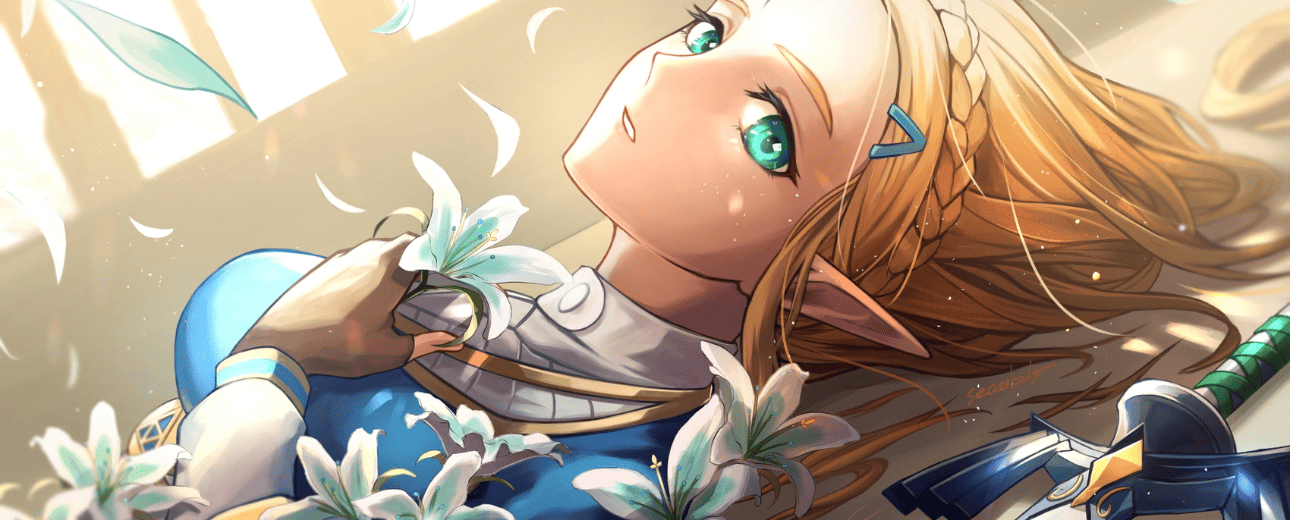
There are fan theories, and then there are theories that fundamentally reframe how you understand an entire franchise. The Legend of Zelda has inspired thousands of theories over its forty-year history — theories about the timeline, about the nature of the Triforce, about the identities of unnamed characters, about the connections between games. Most of them are entertaining. Some of them are genuinely clever. But every once in a while, a theory emerges that is not just interesting as a thought experiment but that actually makes the games richer, deeper, and more emotionally resonant when you play them with the theory in mind. A theory that retroactively improves your relationship with the entire series.
This article is about that kind of theory. Specifically, it is about the argument that the Legend of Zelda is not primarily a story about the hero defeating evil — it is a story about the nature of the divine, told from the perspective of beings who were created to serve a purpose they never fully consented to. It is about the possibility that Link, Zelda, and even Ganondorf are not free agents making meaningful choices but are instead instruments of a cosmic design that was set in motion long before any of them were born — and that the series’ greatest tragedy is not the fall of Hyrule but the impossibility of any of its central characters ever truly escaping the roles that were written for them. When you look at the Zelda series through this lens, everything changes. The victories feel different. The losses feel different. The characters feel different. And the questions the series has been quietly asking for forty years suddenly become impossible to ignore.
The Theory: The Golden Goddesses Never Really Left
The foundational premise of this theory is simple but radical: the three Golden Goddesses — Din, Nayru, and Farore — did not leave Hyrule when they ascended after its creation. The official lore of the series tells us that the goddesses created the world, left the Triforce behind as a crystallization of their power, and departed. This departure is presented as a given — a cosmological fact that explains why mortals must manage the balance of the Triforce themselves, without divine intervention. But the theory argues that this narrative of divine departure is not what actually happened. Instead, the goddesses transformed themselves — embedding their essential natures into the world and into specific bloodlines — so that they could continue to influence events without appearing to do so directly. They did not leave. They became the cycle itself.
The evidence for this reading is scattered across the series in ways that become impossible to ignore once you start looking. The reincarnation of Zelda as a vessel of divine wisdom is not just a metaphor — it is a literal continuation of the goddess Hylia’s presence in the mortal world. The Triforce of Courage that manifests in Link is not just a spiritual inheritance — it is an expression of Farore’s essential nature, constantly renewed in each new hero. And Ganondorf — the vessel of power, the embodiment of Demise’s curse — is not just an evil man who keeps getting reincarnated. He is the mortal expression of Din’s domain of power operating without the tempering influence of wisdom and courage. The three characters of the eternal triangle are not just representatives of the Triforce pieces. They are the goddesses themselves, playing out their essential natures through mortal bodies, generation after generation, in a drama that was designed before the first mortal ever drew breath.
The Evidence in Skyward Sword: Hylia’s Confession
Skyward Sword provides the most direct evidence for the theory, in the revelation that the goddess Hylia chose to reincarnate herself as a mortal — as the first Zelda — in order to create the conditions for Demise’s defeat. This is not presented in the game as a unique, one-time event. It is presented as the origin of a cycle — the moment when divine intention first embedded itself in mortal form and began the pattern of reincarnation that continues through every subsequent game. What the theory argues is that this embedding was not just a clever tactical decision by Hylia. It was a fundamental transformation of the relationship between the divine and the mortal in the Zelda universe — a decision that made the goddesses inseparable from the ongoing story of their creation.
Consider what the theory implies about Hylia specifically. She gave up her immortality and her divine nature to become mortal. But she did not give up her essential character — her wisdom, her love for the world, her determination to protect it. Those qualities persisted through the reincarnation cycle, expressing themselves in every Zelda who came after. In other words, Hylia is not a goddess who became mortal and disappeared. She is a goddess who became mortal and multiplied — her essential nature expressed in every princess who ever bore her name, her love for the world renewed in every generation, her divine wisdom filtered through the specific circumstances of each new life. The theory argues that this is not a tragic limitation of the divine but a deliberate design choice — a goddess who loved her creation enough to become part of it permanently, to experience it from the inside rather than observing it from above.
The Triforce as Divine Nervous System
If the goddesses embedded themselves in the cycle of reincarnation, then the Triforce is not just a powerful artifact left behind when they departed. It is the connective tissue of their continued presence — the system through which their essential natures flow into the world, seek out appropriate vessels, and manifest as mortal experience. The theory reconceives the Triforce not as an object but as a living divine system — something more like a nervous system than a relic, constantly sensing the state of the world, constantly seeking the balance that its creators intended, constantly drawing the right souls into the right bodies at the right moments.
This reconception of the Triforce explains several things about the series that the standard reading leaves awkward. It explains why the Triforce of Courage always finds its way to a specific kind of person — not just anyone brave, but someone with a specific soul-signature that resonates with Farore’s essential nature. It explains why Ganondorf is always Ganondorf — not just a man who happens to be greedy and power-hungry, but a specific soul that carries the resonance of Din’s domain operating in isolation. And it explains why the cycle cannot be broken by simply defeating Ganon one more time — because you cannot break a divine system by winning a battle within it. The system will always regenerate, because the system is not Ganon. The system is the goddesses themselves, endlessly seeking balance through the drama of the eternal triangle.
What This Means for Link: The Hero Who Was Never Free
If the theory is correct — if the cycle of reincarnation is the goddesses’ ongoing expression of their essential natures through mortal vessels — then the implications for Link specifically are the most disturbing and the most interesting. Because Link, in this reading, is not a free agent who happens to be chosen by destiny. He is a purpose-built instrument of divine will, a vessel that Farore has been manufacturing and filling and deploying for thousands of years, each time the balance tilts far enough to require heroic intervention. Every Link who has ever lived — every incarnation of the hero soul, from the Skyward Sword Link to the Breath of the Wild Link — has been, on some level, a tool. A beloved tool, perhaps. A tool given genuine emotions and genuine relationships and genuine experiences. But a tool nonetheless.
This reading does not diminish Link’s courage or his love or the meaningfulness of his actions. Those things are real within the framework of each individual life. But it does transform the emotional register of the series in a specific and important way. When you understand Link as a vessel of divine will rather than a free person making genuinely autonomous choices, the loneliness of his situation becomes almost unbearable. He does not choose his destiny. He does not choose the people he will lose along the way. He does not choose to keep coming back, life after life, to fight the same battle. He is called, and he answers — because answering is what he was made to do, because the courage that defines him is not separable from the purpose it was designed to serve.
The Silence of the Hero as Divine Speechlessness
The theory offers a new and genuinely compelling reading of Link’s famous silence across the series. We discussed in earlier articles the various interpretations of Link’s wordlessness — as blank-slate design, as narrative convenience, as the silence of a soul that has seen too much to reduce any of it to language. The theory adds another layer to this interpretation: Link is silent because what he carries cannot be expressed in mortal language. He is the vessel of a goddess’s essential nature. The courage of Farore — ancient, cosmic, impersonal in its origins even as it expresses itself through the most personal of human experiences — flows through him in ways that no human vocabulary was designed to describe. His silence is not emptiness. It is the inexpressibility of the divine, filtered through a mortal throat that was never built to speak it.
This reading transforms every moment in the series where Link’s silence feels frustrating or limiting into something genuinely moving. When Zelda speaks to him and he does not answer in words — when the game gives you a dialogue choice that Link will apparently say but that the camera never shows him delivering — what you are witnessing is not a design limitation. You are witnessing a mortal body struggling to contain and express something that was never meant to be contained in mortal form. Link’s silence is the sound of the divine trying to speak through a human being, and finding that human language is not adequate to the task.
Every Goodbye Link Experiences Is a Goddess Grieving Her Own Design
Perhaps the most emotionally devastating implication of the theory for Link’s character is what it means for the losses he experiences across every incarnation. Navi leaving at the end of Ocarina of Time. Midna shattering the Mirror of Twilight. Fi going dormant in the Master Sword. The dissolution of Koholint Island. Each of these is a genuine loss — a relationship ended, a connection severed, a companion gone. And within the framework of the theory, each of these losses is not just a mortal experience of grief. It is Farore — expressed through Link — experiencing the cost of her own design. The goddess who created all living things and gave them the spirit to uphold the laws of the world is also the goddess who keeps building a hero who must keep losing the things he loves. The grief that flows through every Link is not just his grief. It is the grief of a creator who knows exactly what her creation will cost and creates it anyway, because the alternative is a world without the courage to face its darkness.
What This Means for Zelda: Wisdom as a Prison
If the theory transforms Link’s story into one of divine instrumentalization, it does something equally profound and equally uncomfortable to Zelda’s story. In the standard reading of the series, Zelda is the bearer of wisdom — a princess who carries the Triforce of Wisdom and the legacy of the goddess Hylia, who uses her insight and her power to support the hero and oppose the darkness. She is, in most readings, a figure of genuine agency — someone who makes meaningful choices, who sacrifices meaningfully, who grows and changes across her many incarnations. The theory does not deny any of this. But it adds a dimension that the standard reading obscures: Zelda’s wisdom is not hers. It is Nayru’s. It is Hylia’s. It flows through her because she was built to carry it, and the specific tragedy of her situation is that she is wise enough to understand this about herself and powerless to change it.
Think about what it means to be the vessel of divine wisdom. You see clearly. You understand the patterns. You know, often before anyone else does, what is coming and what it will cost. Zelda, in almost every incarnation, knows more than she can act on — she sees the danger before Link does, before the kingdom does, before anyone in a position to do something about it is ready to listen. The wisdom she carries is not a gift that makes her life easier. It is a burden that makes her life lonelier — the specific loneliness of someone who understands more than they can share, who carries knowledge that others are not yet ready to receive, who must watch the consequences of ignored warnings unfold with the particular helplessness of someone who saw it coming and could not stop it.
The Sleeping Princess as Symbol of Trapped Wisdom
The recurring image of Zelda in an enchanted sleep — appearing in multiple games across the series — takes on a new and darker meaning within the framework of the theory. In the standard reading, the sleeping princess is a narrative device — a MacGuffin to be rescued, a problem to be solved by the hero’s courage. In the theory’s reading, the sleeping princess is a cosmic image of what happens to divine wisdom when the world is not ready to receive it. Zelda sleeps because awakening her would require a world capable of acting on what she knows — and the world, in its fallen state, is not that world. Her sleep is not a punishment or a defeat. It is a holding pattern, a divine intelligence waiting in suspension for the moment when the conditions for its use are finally met. This transforms the rescue of Zelda from a heroic achievement into a collaborative act — not the hero saving the princess but the hero creating the conditions under which wisdom can finally speak.
Zelda’s Sacrifices as the Cost of Carrying the Divine
The theory reframes every sacrifice Zelda makes across the series as something more than personal courage or selfless love. When Zelda in Breath of the Wild spends a century holding Calamity Ganon at bay, she is not just an extraordinary individual making an extraordinary choice. She is divine wisdom doing what it always does — sustaining the world, maintaining the conditions for life and hope, bearing the cost of existence so that others do not have to bear it alone. When Zelda in Skyward Sword gives up her mortal freedom to serve as the prison of Demise’s sealed form, she is not just a brave young woman making an impossible choice. She is a goddess’s love for creation, expressed through a mortal body, paying the price that love always eventually demands. The theory does not make these sacrifices less moving. It makes them more moving — because it reveals that the capacity for this level of sacrifice is not just Zelda’s personal virtue. It is the nature of the divine intelligence she carries, expressing itself through her human heart.

What This Means for Ganondorf: The Villain Who Had No Choice
Of all the implications of the theory, the most philosophically challenging and the most emotionally complex concerns Ganondorf. In the standard reading, Ganondorf is a villain — a man of extraordinary power and ambition who chose to pursue conquest and domination, whose evil is real and whose suffering is largely deserved. Even the more sympathetic readings of Ganondorf — which acknowledge his difficult origins, his position as a Gerudo king born into a culture that had legitimate grievances against Hyrule — stop short of suggesting that his evil was not his own choice. The theory goes further. It argues that Ganondorf, of all the members of the eternal triangle, has the least freedom of any of them.
Ganondorf is the vessel of Demise’s curse — the mortal form of a hatred so ancient and so cosmically embedded that it preceded his birth by thousands of years. He did not choose to carry that curse. He did not choose to be born into a body that resonated with Din’s domain of power in isolation from wisdom and courage. He did not choose to be the person that the Triforce of Power would seek out when it fragmented, or to be the one whose ambitions would be amplified by a divine artifact specifically designed to find the person most aligned with untempered power. Ganondorf was not born evil. He was born as the designated vessel of an evil that predates him by millennia. And the theory argues that the most tragic figure in the Zelda series is not Link, who loses the people he loves, or Zelda, who carries the burden of divine wisdom. It is Ganondorf — the man who may have been capable of something else entirely, in a life where the curse of Demise had not been waiting for him before he drew his first breath.
Ganondorf in Wind Waker: The Clearest Window Into the Man Behind the Curse
Wind Waker’s Ganondorf is the version of the character that the theory finds most compelling, and for good reason. In the final confrontation of Wind Waker, Ganondorf says something that almost no other version of the character says: he explains himself. He speaks of the winds of Hyrule — of standing on Death Mountain and feeling the winds of the desert that were all the Gerudo ever knew, while the people of Hyrule were blessed with cool, life-giving breezes. He describes his ambition not as a desire for domination but as a desperate hunger for the things that were withheld from his people — a hunger that became the Triforce of Power’s entry point, that became Demise’s curse’s vehicle, that became the engine of every catastrophe he has ever caused. He is not justifying himself. He seems almost surprised to be speaking these words, as though the explanation has been waiting inside him for a long time and the proximity of death has finally freed it.
The theory argues that this moment in Wind Waker is not an exception to Ganondorf’s character — a brief humanizing scene before the real villain reasserts himself. It is the truest moment in Ganondorf’s entire history across the series— the moment when the man underneath the curse briefly surfaces and speaks. Every other version of Ganondorf is the curse speaking. Wind Waker’s Ganondorf, in those few lines on the roof of Hyrule Castle, is the man the curse has been using. And what that man says is heartbreaking: he wanted what everyone wants. He wanted his people to have what other people had. He wanted a world that was fair. The curse of Demise took that entirely human desire and amplified it into something monstrous — and the man himself, buried under millennia of divine design, never had a real chance to be anything else.
The Tragedy of Ganondorf’s Self-Awareness
What makes the theory’s reading of Ganondorf most devastating is the implication of self-awareness — the possibility that some versions of Ganondorf know, on some level, what they are and what they cannot escape. In Twilight Princess, Ganondorf’s final moments are extraordinary — he dies standing, upright, refusing to fall, with an expression that reads not as defeat but as something closer to recognition. He has done this before. He will do it again. The cycle is what it is, and he is the instrument of one of its phases, and the instrument’s destruction is just another turning of the wheel. There is no triumph in his expression, but there is also no despair. There is just a kind of ancient, terrible understanding — the understanding of someone who has been the villain of this story so many times that the story itself has become familiar, and the familiarity has become its own form of imprisonment.

How the Theory Changes the Way You Play the Games
The most practical and most exciting dimension of this theory is what it does to your experience of playing the games. A great theory is not just intellectually satisfying — it is experientially transformative. It changes what you notice, what you feel, what you take away from the experience of moving through the world and its story. And this theory, when you carry it into a playthrough of any Zelda game, does exactly that.
The most immediate change is in how you relate to the central characters. Link’s courage takes on a different quality — still admirable, still moving, but now also tinged with the specific pathos of someone whose defining virtue was installed in them by forces outside their control, who is brave not entirely because they chose to be but because they were built to be. Zelda’s wisdom becomes simultaneously more impressive and more heartbreaking — she carries divine intelligence in a mortal body, she sees what needs to be done and often cannot do it, and she has been paying this price in every life she has ever lived. And Ganondorf — especially in Wind Waker, especially in his final moments in Twilight Princess — becomes a figure of genuine tragedy rather than simple villainy, a man whose worst qualities were amplified by forces he did not invite and cannot expel.
The Shrines and Temples as Expressions of Divine Architecture
The theory also changes how you see the physical world of the Zelda games — specifically the temples, shrines, and sacred spaces that populate every entry in the series. In the standard reading, these are dungeons — spaces designed to test the hero, to provide puzzles and enemies and ultimately a boss to defeat. In the theory’s reading, these spaces are expressions of divine architecture — places where the goddesses’ design for the world is most directly expressed in physical form. The Fire Temple is not just a dungeon built by ancient people. It is a place where Din’s domain of power is concentrated and made navigable — where the hero of Farore must literally walk through the domain of a sister goddess to claim the tools he needs. The Water Temple is Nayru’s wisdom expressed as labyrinth — a space that can only be navigated by someone who thinks carefully, who plans ahead, who is willing to revisit and reconsider. Every temple in the series is a lesson in the nature of the goddess whose domain it represents, and the hero’s completion of each temple is the mortal expression of the divine balance the goddesses are always seeking to restore.
The Ending of Every Zelda Game as a Temporary Armistice
Finally, the theory transforms the endings of the Zelda games in a way that is simultaneously more satisfying and more melancholy than the standard reading. In the standard reading, the ending of a Zelda game is a victory — evil defeated, balance restored, the kingdom saved. And within the framework of each individual game, this is true. But the theory reveals that these endings are not conclusions. They are temporary armistices — moments when the divine system has achieved the balance it was seeking, when all three pieces of the Triforce are in alignment, when the drama of the eternal triangle reaches its resolution for this particular iteration. The peace that follows is real. The victory is real. But the system that produced the conflict is still running. Demise’s curse is still embedded in the world. Din’s domain of power will seek a new vessel. The cycle will turn again. The ending of every Zelda game is not a happily ever after. It is a breath between movements — the pause before the music starts again, the moment of stillness before the next turning of the wheel.
Conclusion: A Theory That Makes You Love the Series More
The most important thing that can be said about this theory is that it makes the Legend of Zelda more beautiful, not less. It might seem, at first glance, like a reading that diminishes the characters — that by framing them as instruments of divine will, it strips them of the agency and autonomy that make them meaningful. But the opposite is true. What the theory reveals is that the characters’ choices matter more, not less, when understood against the backdrop of the forces that shaped them. Link’s courage is more moving when you understand that he could theoretically resist the call of his destiny and chooses not to. Zelda’s sacrifices are more extraordinary when you understand that she could theoretically withdraw the divine wisdom she carries and chooses instead to give it completely. And Ganondorf’s tragedy is more genuine when you understand that the evil he embodies was waiting for him before he was born — and that somewhere underneath it, there was a man who might have been different.
The Legend of Zelda has always been a series about the relationship between the divine and the mortal — about what it means to live in a world that was designed by intelligences greater than your own, to carry a destiny you did not choose, and to find meaning and love and courage within those constraints. The theory simply makes that subtext explicit, pulls it to the surface, and invites you to experience the series in the full light of what it has been quietly saying all along. The goddesses never left. They became the cycle. They became Link and Zelda and even Ganondorf. And the story they are telling, through these mortal vessels, across these forty years of games, is the most human story there is: the story of beings who love their creation enough to become part of it, and who keep coming back, life after life, because the world is worth the cost of saving it.
Want to explore this theory and the deep lore of the Zelda universe further? Here are some essential resources:
- Zelda Wiki — Triforce lore and cosmology for the full canonical account of the Triforce’s origins and the goddesses who created it
- Hyrule Historia on Amazon — the official Nintendo book containing the timeline, developer notes, and the definitive account of the series’ cosmology
- Zeltik on YouTube — the best Zelda lore channel on the internet, with videos that dive deep into exactly the kind of theoretical territory this article explores
- Game Theorists — Zelda theory videos — entertaining and well-researched takes on the biggest Zelda theories, including several that intersect with the ideas explored here
- The official Legend of Zelda site — for official lore, game histories, and developer commentary that provides the canonical foundation for theories like this one