
 Canada
 USA
USA Japan
Japan



Every great fantasy universe has a civilization that captures the imagination more than any other — the one whose history you want to know completely, whose ruins you want to explore endlessly, whose culture and philosophy and technology feel like they contain more secrets than any amount of lore can fully exhaust. In the Legend of Zelda universe, that civilization is the Sheikah. Not the Gerudo, with their warrior culture and their desert kingdom. Not the Zora, with their ancient aquatic history and their deep connection to the water temples. Not even the Hylians themselves, the ostensible protagonists of Hyrule’s story. The Sheikah — the shadow people, the ancient eye tribe, the civilization that built the Guardians and the Divine Beasts and the Shrines and the Slate and the entire technological infrastructure of Breath of the Wild — are the most fascinating, the most mysterious, and the most narratively rich civilization in the entire Zelda universe. And the more you dig into what the games actually tell us about them, the more that fascination deepens into something close to obsession.
This article is a deep dive into everything that makes the Sheikah extraordinary — their history, their technology, their philosophy, their tragedy, their survivors, and the questions about them that the games raise without fully answering. Whether you know them primarily from their role as Zelda’s protectors in Ocarina of Time, or from the extraordinary ruins of their ancient civilization scattered across the landscape of Breath of the Wild, or from the living Sheikah communities depicted in later games — this is the article that brings all of those threads together and makes the case for why the Sheikah deserve to be at the center of Zelda’s most important conversations.
The Origins of the Sheikah: Ancient Guardians of an Ancient Kingdom
The history of the Sheikah is one of the oldest and most layered in all of Hyrule’s lore, stretching back to the earliest days of the kingdom’s formation and carrying forward through every major era of the series. They are not simply a culture that happened to develop alongside Hyrule. They are a civilization that was purposefully created and positioned as the shadow infrastructure of the entire kingdom — the hidden architecture of protection, intelligence, and divine service that made Hyrule’s survival possible across thousands of years of conflict and catastrophe. Understanding the origins of the Sheikah means understanding something fundamental about how Hyrule works — not just politically or militarily, but cosmologically, at the level of divine intention and ancient design.
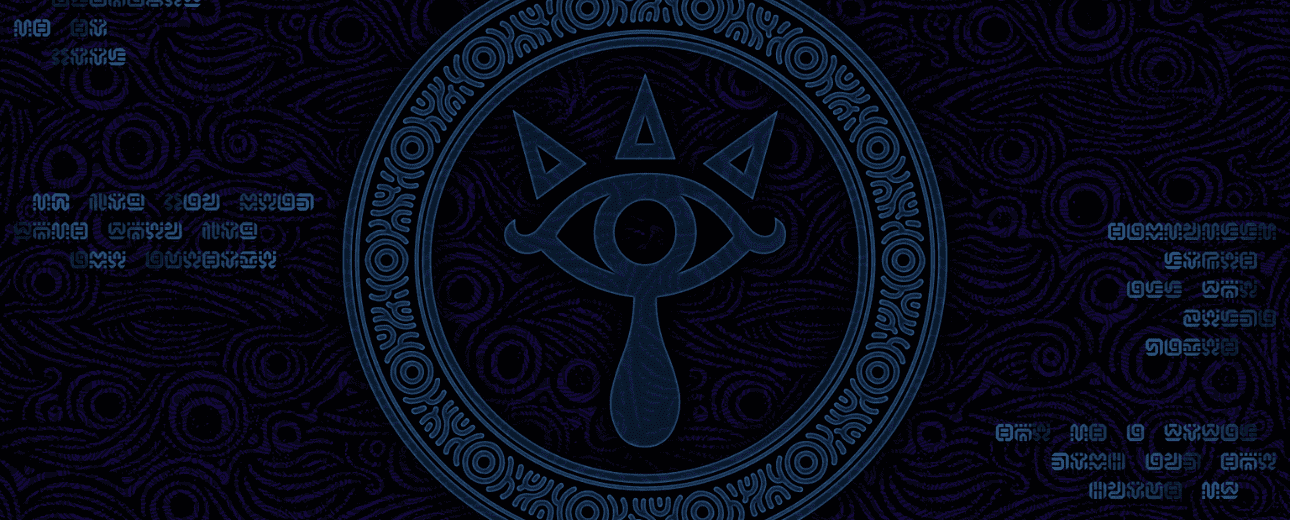
The Sheikah are described across multiple games as the shadow tribe or the eye tribe — names that reflect both their role as hidden watchers and the distinctive eye symbol that appears everywhere in their culture, from their clothing and their architecture to their ancient technology. The eye of the Sheikah is one of the most recognizable symbols in the Zelda series, and it carries layers of meaning that are worth unpacking. It represents watchfulness — the eternal vigilance of a people who have made it their purpose to observe, to guard, and to act in the shadows so that others can live in the light. It represents the third eye of wisdom and insight — the ability to see what ordinary people cannot see, to perceive the patterns of the divine plan operating beneath the surface of events. And it represents the cost of that perception — the tear that runs beneath the eye in the Sheikah symbol is not decoration. It is the acknowledgment that seeing clearly is not always a gift. Sometimes it is a burden.
The Sheikah as the Royal Family’s Shadow
The relationship between the Sheikah and the Royal Family of Hyrule is one of the most important and most complex dynamics in the series’ lore, and it is a relationship that contains within it the seeds of everything that eventually goes wrong for the Sheikah as a civilization. The Sheikah are, in the most literal sense, the Royal Family’s shadow — a people who pledged their lives, their skills, and the entire orientation of their civilization to the protection and service of the Hylian crown. This is not servitude in the degrading sense. It is a covenant — a mutual obligation between the wisdom of the crown and the power and skill of the shadow tribe, each dependent on the other in ways that are meant to produce a stable, balanced, protected kingdom.
In Ocarina of Time, this relationship is embodied most clearly in Impa — the Sheikah sage who serves as Zelda’s guardian, nursemaid, and protector, who carries the weight of her people’s covenant with the Royal Family in every decision she makes. Impa is the Sheikah at their best: deeply loyal, extraordinarily capable, willing to sacrifice everything in service of the people she has been pledged to protect. Her presence in the game is relatively brief but her cultural significance is enormous — she is proof that the Sheikah’s commitment to their role is genuine, that the covenant between the shadow tribe and the Royal Family is not just political but deeply personal, a relationship between specific people who have chosen each other across generations. The tragedy that eventually befalls the Sheikah civilization — their banishment, their fracturing, their transformation into the ghost of what they once were — becomes far more devastating when you understand the depth of the loyalty that preceded it.
The Eye Symbol and Its Hidden Meanings
The Sheikah eye symbol deserves more careful attention than it usually receives, because it is one of the most semantically dense symbols in the Zelda series and its meanings have evolved significantly across different games. In Ocarina of Time, the symbol appears primarily in sacred contexts — on the Temple of Time, on the Sheikah’s clothing, on the stones that bear their language. In these contexts, it represents divine watchfulness, the presence of a people who have dedicated themselves to the sacred duty of protection. The tear beneath the eye in this context reads as the acknowledgment of suffering — the recognition that protection always costs something, that the guardian’s life is defined by sacrifice.
In Breath of the Wild, the eye symbol appears everywhere — on Sheikah Shrines, on Guardians, on the Divine Beasts, on the Sheikah Slate — and its meaning has become something richer and stranger. These technologies were created by Sheikah researchers who poured their civilization’s entire intellectual and spiritual capacity into building tools for the Chosen Hero to use against Calamity Ganon. The eye on these structures is not just a cultural marker. It is a declaration of purpose — these machines were built to watch, to evaluate, to test, to ultimately recognize the hero they were designed to serve. Every Shrine in Breath of the Wild that watches Link approach and evaluates his worthiness is, in the most direct possible sense, the Sheikah still watching — their consciousness embedded in stone and energy, their protective mission continuing millennia after the people who built these structures are gone.
The Sheikah Technology: A Civilization Ahead of Its Time
Nothing about the Sheikah captures the imagination quite like their technology — the extraordinary, quasi-magical scientific achievements that fill the landscape of Breath of the Wild and that represent the single most ambitious piece of world-building Nintendo has ever embedded in a Zelda game. The Divine Beasts, the Guardians, the Shrines, the Sheikah Towers, the Sheikah Slate — together, these technologies represent a level of scientific and engineering achievement that is completely without parallel in Hyrule’s history, a civilization that managed to blend ancient mystical wisdom with practical engineering genius to produce tools of protection and combat that remain functional and formidable ten thousand years after their creation. This is not just impressive within the internal logic of the Zelda universe. It is extraordinary by any standard, and the questions it raises about the Sheikah — about who they were, how they achieved what they achieved, what their civilization actually looked like at its peak — are among the most compelling unanswered questions in all of Zelda lore.
The Divine Beasts and the Scale of Sheikah Ambition
The Divine Beasts are the most visible and most spectacular expression of Sheikah technological achievement, and their scale alone is a statement about the civilization that created them. These are not machines in the conventional sense. They are mechanical titans — constructs the size of mountains, built in the forms of animals sacred to the cultures of different Hyrulean peoples, capable of independent movement and combat, designed to focus their combined power on a single target of world-ending threat. The engineering required to build something like Vah Medoh — a mechanical bird large enough to control weather patterns from its position in the sky — is so far beyond anything else Hyrule has ever produced that it makes the Sheikah feel less like a historical civilization and more like something mythological, a people operating at a level of capability that the world they lived in could barely contain.
What makes the Divine Beasts even more extraordinary is the intentionality of their design. They were not built for general use or general defense. They were built for one specific purpose — to oppose Calamity Ganon when it returned — and every aspect of their construction reflects that purpose. The mechanisms inside each Divine Beast that Link must reactivate are not just puzzles for the player. They are the Sheikah’s prediction of what Calamity Ganon would do to these machines — the countermeasures they built into the system, the redundancies and failsafes and override mechanisms that they left for a future hero to use because they knew their machines would eventually be compromised. The Sheikah built not just for their own time but for a future they could foresee but could not control, and the sophistication of that foresight is one of the things that makes them genuinely awe-inspiring.
The Guardians and the Ethics of Autonomous Weapons
The Guardians — the spider-like mechanical warriors that populate the overworld of Breath of the Wild, many of them corrupted by Malice and turned against the people they were built to protect — are the most morally complex element of the Sheikah technological legacy. On one level, they are simply dangerous enemies, obstacles that Link must avoid or destroy on his journey across Hyrule. On another level, they are a philosophical problem that the game never explicitly addresses but that becomes impossible to ignore once you think about it carefully. The Sheikah built autonomous weapons of extraordinary destructive capability and distributed them across Hyrule on the assumption that they would always be used for good — that the control mechanisms they built would be sufficient to prevent misuse, that the scenario in which these weapons would be turned against the people they were meant to protect was one they had adequately guarded against.
They were wrong. Calamity Ganon corrupted the Guardians with relative ease, turning the Sheikah’s greatest protective achievement into the most devastating weapon ever deployed against Hyrule. The fallen kingdom of Breath of the Wild — the ruined towns, the scorched fields, the survivors living in makeshift shelters away from the corrupted machines — is the direct consequence of the Sheikah’s technological optimism. They built something extraordinary and they did not fully reckon with what would happen if it was turned against its intended purpose. This is not a critique of the Sheikah — it is a recognition of the genuine moral and practical difficulty of building powerful protective systems in a world that contains a force capable of corrupting them. But it is a dimension of the Sheikah legacy that deserves honest engagement, because the consequences of it define the entire world of Breath of the Wild.
The Sheikah’s Fracture: When Loyalty Becomes Exile
The most tragic chapter in the Sheikah’s history is the one that is least discussed in the games themselves — the fracturing of the Sheikah civilization that occurred sometime between the ancient era depicted in Breath of the Wild’s memories and the more recent history of the same game’s present day. This fracture is the event that transformed the Sheikah from the most powerful and technologically advanced civilization in Hyrule into a scattered, diminished people — some living in the village of Kakariko, maintaining the old traditions in reduced circumstances, others having abandoned the Sheikah identity entirely and retreating to the Akkala region as the Yiga Clan, a mirror image of everything the Sheikah once stood for.
The cause of this fracture, as revealed in Breath of the Wild’s lore, is both understandable and heartbreaking. After the initial failure of the Divine Beasts and the Guardians — after Calamity Ganon’s corruption of these technologies and the catastrophic fall of Hyrule that followed — the Royal Family of Hyrule turned against the Sheikah. The people who had dedicated their civilization to the protection of the Royal Family, who had poured thousands of years of knowledge and effort into building the tools that were supposed to save the kingdom, were blamed for the catastrophe their tools had enabled. The king feared their power. The kingdom feared their technology. And so the Sheikah were exiled — pushed to the margins of the society they had built their entire identity around protecting, punished for a failure that was as much the kingdom’s failure as theirs.
The Yiga Clan and the Transformation of Betrayal Into Fanaticism
The Yiga Clan is the most direct and most disturbing expression of what the exile did to the Sheikah who could not forgive it. Where the Sheikah of Kakariko responded to their exile with a kind of dignified withdrawal — maintaining their traditions, honoring their oaths, waiting with characteristic patience for the moment when they would be needed again — the Yiga responded with rage and inversion. They took everything that defined the Sheikah identity — the loyalty, the dedication to service, the willingness to operate in the shadows — and redirected it toward Ganon, toward the explicit destruction of everything the Sheikah had once been pledged to protect. The Yiga are not just villains. They are a mirror held up to the Sheikah’s best qualities, showing what those qualities look like when they curdle into hatred.
The Yiga’s dedication to Ganon is as absolute as the Sheikah’s dedication to the Royal Family once was. Their willingness to sacrifice themselves, to operate in disguise, to pursue their enemies with relentless patience — these are all Sheikah virtues expressed in the service of destruction rather than protection. Understanding the Yiga in these terms makes them genuinely tragic rather than merely antagonistic. They are what happens when a people’s sense of identity and purpose is destroyed by betrayal — when the covenant that gave a civilization its meaning is broken by the very people it was meant to serve, and there is no graceful way to absorb that betrayal without becoming something different, something darker, than what you were before.
The Sheikah of Kakariko: Dignity in Diminishment
The Sheikah who chose not to follow the Yiga’s path of rage settled in Kakariko Village — a community that represents the Sheikah civilization in its reduced but still dignified form. What is remarkable about the Kakariko Sheikah is how much of their essential identity they managed to preserve through the exile and the centuries that followed. They maintained their traditions. They kept their distinctive cultural markers — the eye symbol, the distinctive clothing, the emphasis on secrecy and watchfulness. They continued to serve the Royal Family’s interests, even after the Royal Family had exiled them, because their identity as guardians was more fundamental to them than the specific grievance of their treatment. The Sheikah of Kakariko are the civilization’s survivors in the deepest sense — not just people who endured, but people who chose to remain essentially themselves in the face of enormous pressure to become something else.
Impa, in her various incarnations across the series, is the perfect representative of this quality. Whether she appears as the young warrior of Skyward Sword, the ancient sage of Ocarina of Time, or the village elder of Breath of the Wild, Impa is always recognizably the same essential person — deeply loyal, quietly powerful, possessed of a wisdom that she deploys with economy and precision. She never asks for recognition. She never demands that the injustice done to her people be acknowledged before she continues to serve. She simply does what she has always done, with the specific grace of someone who has made peace with a complicated legacy. The Sheikah of Kakariko, embodied in Impa, represent one of the most quietly heroic postures in the entire Zelda series — a people who kept faith with a covenant even after the other party to that covenant had broken it.

The Sheikah in Ocarina of Time: Shadow Sages and Hidden Wisdom
Ocarina of Time presents the Sheikah at a specific moment in their history — after their numbers have been dramatically reduced, after the events that wiped out most of the tribe, but before the full extent of their diminishment has become apparent. The Sheikah of Ocarina of Time exist primarily as a haunting presence — their symbols everywhere in the sacred spaces of Hyrule, their language inscribed on the walls of ancient temples, their most prominent surviving member serving as Zelda’s protector. But the game also gives us our first real window into what the Sheikah were at their most powerful, and that window is Impa’s characterization and the role the Sheikah played in the construction and maintenance of the Shadow Temple.
The Shadow Temple — one of the game’s most atmospheric and most disturbing dungeons — is explicitly described in Ocarina of Time as a place where the Sheikah gathered and practiced their knowledge of death. This is a striking detail that is easy to walk past but that reveals something important about the full scope of Sheikah culture. They were not simply protectors and sages. They were a people who engaged seriously and unflinchingly with the darkest dimensions of existence — with death, with shadow, with the things that other cultures preferred not to look at directly. The Shadow Temple is not a dungeon that some evil force constructed and the Sheikah happened to be associated with. It is a temple the Sheikah built themselves, for their own purposes, as part of a complete cultural engagement with the full spectrum of mortal experience.
Sheik as the Perfect Expression of Sheikah Identity
Sheik — Zelda’s disguise in Ocarina of Time, her assumption of a Sheikah identity to operate in the fallen Hyrule without being immediately recognized and captured — is one of the most fascinating characters in the series, and not just for the reasons that are most commonly discussed. Yes, the reveal of Sheik’s true identity is one of gaming’s great dramatic moments. Yes, the design of the character is extraordinary — the wrapped face, the red eyes, the economy of movement that communicates competence and danger with every gesture. But what is most interesting about Sheik in the context of the Sheikah as a civilization is what it says about Sheikah identity that Zelda chooses it as her cover. She does not disguise herself as a merchant or a soldier or an ordinary Hylian. She disguises herself as a Sheikah — as a member of the shadow tribe — because the Sheikah identity is, in the fallen Hyrule of Ocarina of Time, the perfect cover. Nobody questions a Sheikah. Nobody asks too many questions of someone from the shadow tribe. Their role as hidden watchers has made them, paradoxically, invisible precisely because everyone knows they exist.
The Shadow Sage and the Cost of Wisdom
The Shadow Sage of Ocarina of Time — Impa herself, revealed as the sage of the Shadow Temple after Link awakens her — is the game’s most direct statement about what it costs to carry the Sheikah’s particular form of wisdom. Impa is not a warrior sage or a nature sage. She is the sage of shadow, the sage of the dimension of existence that most people prefer not to acknowledge, the sage of the knowledge that protects precisely because it is uncomfortable. Her temple is built on the accumulation of Hyrule’s secrets and crimes — the things the kingdom did in its own defense that it could not afford to acknowledge publicly, the darkness that had to be contained and managed so that the light could continue. Impa has been managing that darkness her entire life, and the Ocarina of Time version of her carries the weight of it in every line of her characterization — dignified, restrained, possessed of a quality that reads as sorrow contained within absolute composure. She is the Sheikah civilization in miniature: everything difficult absorbed, everything painful managed, the covenant maintained at whatever personal cost.
The Sheikah in Breath of the Wild: A Civilization Remembered Through Its Ruins
Breath of the Wild is the Zelda game that does the most with the Sheikah as a civilization, and it does it primarily through absence — through the experience of walking through a world that was built by an extraordinary people who are mostly gone, whose greatest achievements have been corrupted or abandoned, whose remaining survivors live quietly in a village that is a shadow of what their civilization once was. The Sheikah of Breath of the Wild are present everywhere and almost nowhere — their eye symbols on every Shrine, their language inscribed on every piece of ancient technology, their blood running in the veins of Impa and Purah and Robbie — but the civilization that produced all of this has been reduced to a handful of elderly survivors and a community maintaining traditions whose full meaning has been partially lost.
Walking through the landscape of Breath of the Wild with full awareness of the Sheikah’s history transforms the experience of the game entirely. Every Shrine is a monument to a civilization’s final act of hope — a researcher who poured their knowledge into a structure designed to test and strengthen a hero who had not yet been born, who would not arrive for ten thousand years. Every Guardian ruin is a tragedy — the remains of a protective system corrupted beyond its creators’ worst fears. Every Sheikah Tower is a message in a bottle, a piece of information preserved against the possibility that someone would eventually need it. The entire landscape of Breath of the Wild is, in this reading, a love letter written by a civilization to a future it knew would be difficult — an act of collective care that spans millennia.
Purah and Robbie: The Last Sheikah Researchers
Purah and Robbie — the two surviving Sheikah researchers who appear in Breath of the Wild — are among the most charming characters in the series, and their presence in the game serves an important narrative function beyond their obvious practical utility. They are the last living connection to the Sheikah’s scientific tradition — the only people left who fully understand the ancient technology, who can read the old language fluently, who carry in their heads the accumulated knowledge of a civilization that is otherwise available only in ruins and inscriptions. Their eccentricity — Purah’s obsession with her age-reversal rune, Robbie’s theatrical enthusiasm for his work — is the eccentricity of people who have been keeping a flame alive for a very long time, in conditions that were never designed to be permanent. They are custodians of a legacy that was always meant to be shared more widely, and the isolation of being the last people who fully understand something is written into the particular energy they bring to their interactions with Link.
The Ancient Sheikah Researchers and Their Final Message
The most moving dimension of the Sheikah presence in Breath of the Wild is the messages left by the ancient researchers — the fragments of diary and research notes scattered across the Shrines and ancient laboratories that give individual human faces to the civilization that built all of this. These are not grand historical pronouncements. They are the ordinary observations of scientists at work — notes about successful experiments and failed ones, about the challenges of building something that will function without maintenance for ten thousand years, about the personal relationships between colleagues, about the hope and the uncertainty of people who know they are building for a future they will not live to see. Reading these notes across the course of a full Breath of the Wild playthrough is one of the most quietly affecting experiences in the series — the gradual accumulation of a portrait of a civilization in its final productive years, working with everything it has to give the world the best possible chance at survival. They knew Calamity Ganon was coming. They knew their machines might fail. They built anyway, with everything they had, because building was the only form of hope available to them.

The Sheikah Legacy Across the Full Zelda Series
The extraordinary thing about the Sheikah as a civilization is how consistently and how meaningfully they appear across the full span of the Zelda series — not just in the games where they are central, but as a thread of continuity that runs through the entire lore, connecting moments separated by thousands of years of in-universe history and decades of real-world development. Every time a Sheikah character appears in a Zelda game, they carry with them the full weight of their civilization’s history — the ancient covenant, the technological legacy, the tragedy of the exile, the dignity of the survivors — and the games are richer for it.
In Skyward Sword, Impa appears as a young warrior serving the goddess’s purpose — a Sheikah at the very beginning of the covenant, before the great civilizational achievements and before the great tragedy. Her presence in the game establishes that the Sheikah’s role as protectors is not just a cultural tradition but a divine appointment — they were serving the goddess before they were serving the Royal Family, and their loyalty runs deeper than any political relationship. In A Link to the Past, the Sheikah are present primarily through their symbols and their ruins — their direct presence has faded by this point in the timeline, but their mark on the sacred spaces of Hyrule is everywhere. And in Breath of the Wild and Tears of the Kingdom, they receive the fullest and richest treatment in the series — a civilization whose past is everywhere in the landscape and whose present is represented by a small, dignified community maintaining a tradition that the world around them has largely forgotten.
What the Sheikah Teach Us About Service and Sacrifice
The Sheikah are, at their core, a civilization built around a philosophy of service — around the idea that the highest expression of a people’s capabilities is the willing deployment of those capabilities in service of something larger than themselves. This is a philosophy that contains within it both the greatest virtue and the greatest vulnerability of the Sheikah civilization. The virtue is obvious: a people this capable, this intelligent, this technologically sophisticated, choosing to use all of that capability in service of Hyrule’s protection rather than their own advancement, represents one of the most genuinely noble postures in the series. The vulnerability is equally obvious: a civilization that has oriented its entire identity around service to another is profoundly dependent on that relationship being maintained with integrity by both parties, and when the other party fails — when the Royal Family turns against the Sheikah in fear rather than gratitude — the Sheikah have no fallback, no alternative identity to draw on.
The Sheikah as the Series’ Most Consistent Symbol of Hidden Depth
Perhaps the most important thing about the Sheikah as a civilization is what they represent thematically across the full series — the idea that the most important things are often the least visible, that the systems and the people that make civilization possible are frequently the ones who operate in the background, unacknowledged and underappreciated, bearing costs that the people they protect never fully see. The Sheikah are the shadow that makes the light possible. They are the hidden architecture of every Hyrulean triumph, the unseen labor that underlies every moment of peace. Every Zelda game that features the Sheikah is, on some level, a meditation on this theme — on the people who make the hero’s journey possible and who receive none of the songs or the legends that follow from it. The Sheikah built the Shrines. They built the Divine Beasts. They gave their lives and their civilization to the project of saving a world that eventually turned on them. And they did it anyway — because that is what they were, and because being what you are, at full capacity, in service of something that matters, is its own reward. That philosophy, expressed through the extraordinary civilization of the Sheikah, is one of the most quietly profound things the Legend of Zelda has ever offered its players.

Conclusion: The Sheikah Deserve a Game of Their Own
After everything we have explored in this article — the ancient covenant, the technological genius, the fracture and the exile, the dignity of the survivors, the love letters left in stone across the landscape of Breath of the Wild — the conclusion is both obvious and long overdue: the Sheikah deserve a game of their own. Not a game where they are the background, the lore, the context for Link’s adventure. A game where they are the protagonists — where we experience the height of their civilization’s achievement, the construction of the Divine Beasts and the Shrines, the relationships between the researchers who poured their lives into these structures, and ultimately the tragedy of the exile and the fracture that produced the Yiga Clan. A game that gives full expression to the richness of a civilization that the series has been teasing for decades without ever fully delivering.
The Sheikah are the most fascinating civilization in Zelda lore because they are the civilization that the series has given us the most reason to want to know more about — and has consistently, tantalizingly, given us just enough to make that wanting acute without fully satisfying it. Their ruins are everywhere. Their symbols are everywhere. Their legacy is everywhere. And the people themselves — the living, breathing civilization at the height of its powers — remain just out of reach, a glimpse in ancient memories and a feeling in the bones of the landscape. That is the mark of great world-building: not the world that tells you everything, but the world that makes you desperate to know more. The Sheikah are the Zelda universe’s greatest ongoing promise — and the day Nintendo finally makes good on that promise will be one of the best days in the history of the series.
Want to explore the full depth of Sheikah lore and the Zelda universe? Here are some essential resources:
- Zelda Wiki — Sheikah full lore and history for every canonical detail about the tribe across all games
- Hyrule Historia on Amazon — the official Nintendo book containing developer notes and the definitive account of Hyrulean civilizations including the Sheikah
- Zeltik on YouTube — the best Zelda lore channel on the internet, with dedicated videos on Sheikah history and technology
- Breath of the Wild on Nintendo Switch — the game that brings the Sheikah legacy to life most fully, essential playing for anyone fascinated by this civilization
- Zelda Dungeon’s lore articles — deep fan-written analysis of the Sheikah’s role across the full timeline