
 Canada
 USA
USA Japan
Japan



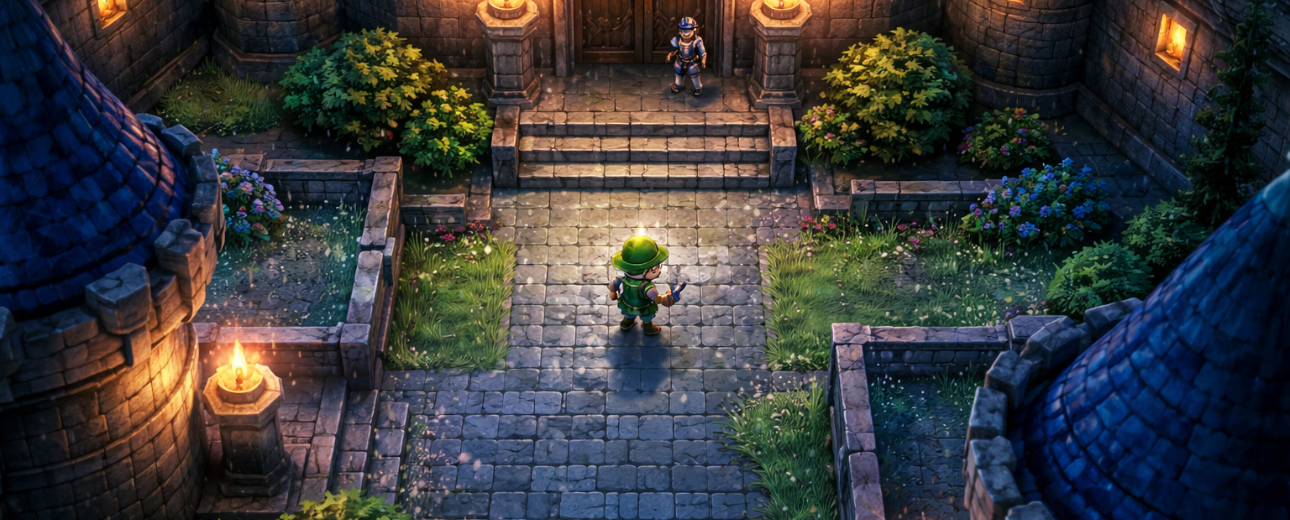
If you have played more than one Legend of Zelda game in your life, you have probably noticed something that the series almost never addresses directly but that is impossible to ignore once you see it: Hyrule is always in some state of catastrophe. Every single time we visit this kingdom, it is either currently being destroyed, recently destroyed, on the verge of destruction, or in the process of rebuilding from the last time it was destroyed. There is no stable, thriving Hyrule. There is no entry in the series where Link shows up, takes a look around, and says “wow, things are going pretty well here, I might just take the day off.” The kingdom is perpetually dying, perpetually being saved, and perpetually dying again — and the more you think about this pattern, the more profound and deliberate it becomes.
This is not a design flaw. This is not Nintendo being creatively lazy or simply recycling the same conflict across forty years of games. The endless cycle of collapse and renewal in Hyrule is the central philosophical and narrative engine of the entire Zelda series — a meditation on impermanence, resilience, the nature of evil, and what it means to fight for something that will always need fighting for. This article is going to dig deep into that cycle: where it comes from, what it means, how different games express it, and why it continues to resonate so powerfully with fans generation after generation. Whether you’re a longtime Zelda scholar or someone who just finished Tears of the Kingdom and started asking questions, buckle up — because Hyrule’s story is far richer and far stranger than it first appears.
The Triforce and the Structural Origins of the Cycle
Before we can understand why Hyrule is always dying, we need to understand the metaphysical architecture of the Zelda universe — specifically the Triforce, which is not just a symbol or a MacGuffin but the actual structural foundation of why the cycle exists at all. The Triforce was created by the three Golden Goddesses — Din, Nayru, and Farore — when they departed the world after its creation. Each goddess contributed one piece representing her domain: Power, Wisdom, and Courage. Together, the three pieces form a perfect, complete whole. Separated, each piece gravitates toward the person whose nature most closely resonates with it — and this is where the trouble begins.
The structural problem of the Triforce is not that it is evil or corrupting. The structural problem is that it represents a perfect balance that the world of mortals is constitutionally incapable of maintaining. Power without wisdom becomes tyranny. Wisdom without courage becomes paralysis. Courage without wisdom becomes recklessness. The moment the Triforce enters the world of mortals, it is almost guaranteed to be fragmented — because the kind of perfect, integrated balance it represents is almost never embodied by a single person. And once it fragments, the piece of Power inevitably gravitates toward Ganondorf, the piece of Wisdom toward Zelda, and the piece of Courage toward Link — creating the eternal triangle that drives the series. This is not coincidence or fate in a simple sense. It is the inevitable expression of cosmic imbalance made physical. Hyrule is always dying because the universe it exists in is structurally prone to imbalance, and the Triforce is both the prize everyone fights over and the proof that perfect harmony is always just out of reach.
The Three Goddesses and the World They Left Behind
Understanding Din, Nayru, and Farore is essential to understanding the cycle. Din, the Goddess of Power, shaped the land itself — she is the raw creative force, the one who made the physical world exist. Nayru, the Goddess of Wisdom, gave the world law and order — the structures and rules that allow civilization to function. Farore, the Goddess of Courage, created all living things and gave them the spirit to uphold those laws. The balance of these three principles — power, wisdom, courage — is what makes a healthy world possible. And crucially, the three goddesses departed once their work was done. They left behind the Triforce as the crystallization of their power, but they did not stay to maintain the balance themselves. The world they created was always going to have to find its own equilibrium — and the history of Hyrule is, in large part, the history of that struggle. Every time the cycle resets, every time Hyrule is destroyed and rebuilt, it is an attempt by the world to restore the balance the goddesses embodied and left behind. The fact that it keeps needing to be restored is the most honest thing the series says about the nature of balance: it is not a destination, it is a practice, and it requires constant renewal.
Ganondorf as the Physical Manifestation of Imbalance
Ganondorf — or Ganon in his more bestial forms — is the most important figure in understanding the cycle, and he is much more interesting than a simple “dark lord” reading would suggest. Yes, he is a villain. Yes, he causes immeasurable suffering. But his role in the cycle is not simply to be evil — it is to embody the inevitable tendency of power to exceed its proper limits when separated from wisdom and courage. Ganondorf does not destroy Hyrule because he is randomly malicious. He destroys it because he is the mortal vessel of an imbalanced Triforce — the piece of Power untethered from the other two pieces. His ambition, his hunger, his refusal to accept limitation — these are not just personality traits. They are the cosmic expression of what power does when it operates without constraint. In Tears of the Kingdom, this is taken to its most literal extreme, where Ganondorf’s possession of the Triforce of Power literally transforms him into a world-ending force of darkness. Every version of Hyrule’s destruction is, at its root, the same thing: power running beyond the boundaries wisdom and courage are meant to impose on it. Understanding this makes the cycle not just narratively interesting but philosophically profound — it is a story that has been telling us, for forty years, that the problem is never just one villain. The problem is structural.

The Timeline and What It Reveals About the Cycle
The official Zelda timeline, published by Nintendo in Hyrule Historia in 2011, is one of the most fascinating and divisive documents in gaming history. It organizes the twenty-plus mainline Zelda games into a three-branch chronology stemming from a branching point at Ocarina of Time — one branch where Link succeeds in defeating Ganon, one where he succeeds but is sent back in time, and one where he fails entirely. Fans have argued about its accuracy, its coherence, and its implications ever since. But regardless of where you stand on the specific timeline debates, what the timeline reveals about the cycle of collapse and renewal is extraordinary. Across all three branches, Hyrule falls. Multiple times. In multiple ways. The branches diverge at the point of Link’s victory or defeat, but they converge on the same ultimate truth: no version of Hyrule escapes the cycle. No branch of the timeline leads to a stable, peaceful kingdom that simply continues indefinitely. Every branch ends — at least until the most recent games — with another cataclysm, another hero, another battle for the fate of the world.
The Downfall Timeline: When the Hero Fails
The most haunting branch of the official timeline is what fans call the Downfall Timeline — the branch where Link fails to defeat Ganon at the end of Ocarina of Time. This is the branch that contains A Link to the Past, the original Legend of Zelda, and Zelda II, among others. It is a timeline defined by the worst-case scenario: Ganon wins. Hyrule falls into darkness. The sages seal Ganon in the Sacred Realm, which becomes the corrupted Dark World. Generations pass. New heroes arise. Ganon is defeated, imprisoned, reincarnated, defeated again. The cycle in the Downfall Timeline is grimmer and more grinding than in the other branches — it is a world that has experienced the absolute worst and has had to rebuild from the absolute bottom, multiple times. And yet it does rebuild. New Links arise. New Zeldas carry the wisdom of their lineage. Hyrule endures, battered and scarred, because the cycle is not just one of destruction — it is one of resilience.
The Child and Adult Timelines: Different Paths, Same Destination
The other two branches of the timeline — the Adult Timeline, which leads to Wind Waker and its sequels, and the Child Timeline, which leads to Twilight Princess and Majora’s Mask — are superficially more hopeful but ultimately reach the same conclusion. In the Adult Timeline, Ganondorf is sealed away after his defeat in Ocarina of Time, but the world he left behind is too damaged to fully recover. Eventually, the gods flood all of Hyrule — literally submerge the entire kingdom beneath the ocean — to prevent Ganon from ever reclaiming it. The world of Wind Waker is built on the ruins of the old Hyrule, its people living on islands above the drowned kingdom, its history half-forgotten. This is not a triumphant continuation. It is a civilization rebuilding itself above the waterline of catastrophe, carrying fragments of the old world into something new. The Child Timeline, meanwhile, sees the immediate aftermath of Ocarina of Time’s events play out differently, but Twilight Princess — set generations later in this branch — features yet another catastrophic threat in the form of Zant and the Twilight Realm’s invasion. Different crisis, different villain, same essential pattern: Hyrule threatened, hero rises, world saved, cycle continues.
Ocarina of Time: The Game That Defined the Cycle
If there is one game in the series that most clearly articulates the cycle of collapse and renewal, it is Ocarina of Time — not just because it sits at the chronological origin of the official timeline, but because its structure, its story, and its emotional arc are built entirely around the experience of loss, destruction, and the hope of restoration. Ocarina of Time is not a story about preventing catastrophe. It is a story about experiencing catastrophe and finding the courage to face it anyway. The seven years Link spends asleep in the Sacred Realm are not a gap in the narrative — they are the narrative. You wake up into a fallen world and have to figure out how to rebuild it from within.
The Hyrule of the game’s second half is one of the most affecting depictions of a fallen civilization in gaming history. The marketplace is abandoned and populated by the undead. Death Mountain is wreathed in fire. Zora’s Domain is frozen. Lake Hylia is draining. The Shadow Temple is overflowing with the evidence of ancient atrocities. Each dungeon is a wound in the body of Hyrule, a place where the world’s sickness has concentrated and crystallized — and Link’s job is not just to defeat an enemy but to heal that wound, to restore what was lost, to bring the light back to a place that has forgotten what light feels like. This is the Zelda cycle at its most pure and most powerful: a world that has fallen, a hero that must rise, and the profound emotional experience of rebuilding something worth saving.
The Temple of Time as Metaphor
The Temple of Time is one of the most symbolically loaded locations in the Zelda series — a place that exists specifically as the boundary between the mortal world and the Sacred Realm, between the present and the eternal, between action and consequence. It is where Link pulls the Master Sword and triggers the seven-year sleep. It is where he returns, again and again, to move between the two halves of the game’s timeline. And it is, in the most direct possible sense, a temple to the concept of time itself — to the idea that the world moves forward whether we are ready or not, that choices made in innocence have consequences we cannot foresee, that growing up means inheriting a world shaped by decisions we did not make. The Temple of Time is beautiful and it is sad, and it is both of those things because the cycle of Hyrule’s collapse and renewal is beautiful and sad — a story about the weight of history and the courage required to face it.
Ganondorf’s Victory and What It Reveals
The fact that Ganondorf succeeds — at least temporarily, at least in the gap of Link’s seven-year absence — is one of the bravest narrative choices the series has ever made. Most fantasy stories about chosen heroes are structured so that the hero arrives just in time. Ocarina of Time is structured so that the hero arrives too late. The damage is already done. Hyrule is already fallen. And yet the game insists that this is not the end — that a fallen world is not the same as a lost world, that there is still something worth fighting for in the ruins, and that the act of fighting for it is itself meaningful regardless of what came before. This is the emotional core of the cycle: the refusal to accept that destruction is the final word. Hyrule falls. But Hyrule always gets back up. And the getting back up is what the series is really about.
Majora’s Mask: The Cycle in Its Most Existential Form
No game in the Zelda series engages with the cycle of collapse and renewal more directly, more daringly, or more philosophically than Majora’s Mask. Where most Zelda games are about saving a world that has been damaged, Majora’s Mask is about saving a world that is about to be destroyed entirely and irreversibly — by the moon falling from the sky in exactly seventy-two hours. And then, when the seventy-two hours expire and the moon falls, the cycle resets. Link plays the Song of Time, returns to the beginning, and does it again. And again. And again.
This structure is the cycle of Hyrule’s collapse and renewal made literal and mechanical. Termina — the parallel world of Majora’s Mask — exists in a state of perpetual apocalypse that only Link can interrupt, and he can only interrupt it temporarily. Each three-day cycle, the world ends. Each time Link plays the Song of Time, it un-ends. The world’s salvation is not permanent — it is endlessly renewed through the hero’s willingness to keep going back. This is simultaneously the most hopeful and the most existentially unsettling thing the series has ever said: that saving the world is not a one-time achievement but an ongoing commitment, that the cycle never truly ends, and that the value of the act lies in the doing of it rather than in any permanent resolution.
The People of Termina and the Weight of Impermanence
What makes Majora’s Mask so emotionally devastating is its focus on the ordinary people of Termina — not the grand cosmic battle between good and evil, but the individual humans and non-humans who are living their final days without knowing that Link can save them. The postman who cannot abandon his route even as the moon falls. The couple separated by misunderstanding who may never reconcile. The astronomer watching the sky with scientific detachment even as it prepares to kill him. Each of these characters is carrying the weight of the cycle in miniature — their personal collapses and renewals, their grief and their hope, their inability to escape the patterns they are trapped in. Majora’s Mask is the game that most clearly articulates why the cycle matters at a human level: not because Hyrule as a kingdom is important, but because the people in it are. Every time the cycle resets, every time Link pulls them back from the edge of annihilation, it is an act of love for specific, irreplaceable individuals. That is what renewal really means.
Skull Kid and the Face of Cyclical Trauma
Skull Kid — the primary antagonist of Majora’s Mask, or rather the primary victim of Majora’s Mask, since the mask is the true villain — is one of the most heartbreaking characters in the series precisely because he embodies the cycle at a personal level. He was abandoned. He acted out from loneliness and pain. He was used by a malevolent force and amplified into something destructive beyond his own nature. And when the mask is removed and the damage is undone, he is revealed as exactly what he always was: a lonely, wounded person who wanted to be loved. Skull Kid’s arc in Majora’s Mask is a microcosm of the entire series — a being of potential goodness pushed into darkness by neglect, redeemed by compassion, given the chance to start again. His story is the cycle rendered human. And it is one of the most quietly profound things any Zelda game has ever done.

Breath of the Wild: The Cycle After the Fall
Breath of the Wild is the most radical expression of the cycle in the modern Zelda series — a game that begins not at the moment of crisis or during the fight against it, but one hundred years after Hyrule has already fallen. When Link wakes up on the Great Plateau at the beginning of Breath of the Wild, the cycle has already completed its destructive phase. Ganon — in the form of the Calamity — won. Hyrule fell. The champions died. Zelda has spent a century holding Calamity Ganon at bay through sheer willpower while Link recovered in the Shrine of Resurrection. The world Link wakes up into is not a world in danger of falling. It is a world that has already fallen and is slowly, haltingly, beautifully beginning to grow back.
This is the renewal phase of the cycle made into an entire game world. Hyrule in Breath of the Wild is overgrown, wild, scarred — ancient ruins half-reclaimed by nature, villages rebuilt from nothing by stubborn survivors, the old kingdom’s monuments crumbling into the landscape. And it is gorgeous. One of the game’s most powerful emotional statements is that a fallen Hyrule is still worth exploring, still beautiful, still full of wonder and life and people worth caring about. The destruction is real and present in every corner of the map — you cannot forget what was lost. But the renewal is equally real, equally present, equally beautiful. Nintendo is telling us, through the design of the world itself, that the fall is not the end of the story.
The Champions and the Cost of the Last Cycle
The four Divine Beasts and the champions who piloted them — Mipha, Daruk, Revali, Urbosa — represent one of the most emotionally resonant expressions of the cycle’s cost in the entire series. These were extraordinary individuals, each the finest warrior of their people, who gave their lives in a battle they ultimately lost. Their spirits remain trapped in the Divine Beasts for a century, aware of their failure, unable to move on. When Link frees them, each champion’s moment of release is a miniature version of the cycle completing itself — the unresolved grief of the previous destruction finally given the resolution it needs so that renewal can truly begin. Mipha’s spirit giving Link her healing grace is not just a gameplay mechanic. It is the completion of an emotional arc a century in the making, a moment of forgiveness and release that the world needed before it could fully heal.
Zelda’s Sacrifice and the Nature of Wisdom in the Cycle
Princess Zelda in Breath of the Wild makes perhaps the most extraordinary sacrifice of any incarnation of the character in the series — spending a hundred years in direct contact with Calamity Ganon, using every ounce of her awakened divine power to prevent his complete release, while the man she loves sleeps in a resurrection chamber and the kingdom she failed to protect crumbles around her. This is wisdom in its most active, most costly form: not the wisdom of making the right decision in a moment of crisis, but the wisdom of enduring, maintaining, and holding on when there is nothing left to hold on with. Zelda’s sacrifice in Breath of the Wild reframes the role of wisdom in the cycle. She is not the piece of the Triforce waiting to be rescued. She is the piece of the Triforce that keeps the world from being completely destroyed while everything else falls apart. Her wisdom is the thread that connects the old cycle to the new one — and without it, there would be no renewal to speak of.
Tears of the Kingdom: The Cycle Transcended
Tears of the Kingdom is the most ambitious and the most philosophically complex Zelda game ever made, and it engages with the cycle of collapse and renewal in ways that go deeper than any previous entry. Where Breath of the Wild showed us the aftermath of a completed cycle, Tears of the Kingdom dares to ask a more difficult question: what happens when the cycle itself is challenged at its roots? The discovery of Ganondorf’s ancient body beneath Hyrule Castle, the release of the Gloom, the collapse of the castle into the sky — these events are not just another iteration of the familiar pattern. They are a confrontation with the origin of the cycle itself, a journey back to the first time Hyrule fell and an attempt to understand whether the cycle can ever truly be broken.
The game’s answer to that question is complex and deeply satisfying. The cycle cannot be broken by force. It cannot be broken by simply defeating Ganondorf one more time in one more final battle. It can only be transcended — moved beyond, transformed into something new — through understanding, compassion, and the willingness to look at the origin of evil without flinching. Rauru’s sacrifice, Sonia’s death, Mineru’s millennia of waiting — these are all expressions of the same truth: that the cycle is not ended by fighting harder. It is transformed by loving deeper.
The Secret Stones and the Depth of Hyrule’s History
One of Tears of the Kingdom’s greatest achievements is the way it uses its memories system — this time in the form of Dragon’s Tears scattered across the landscape — to give the cycle a genuine historical depth that the series had previously only gestured toward. Witnessing the construction of the original Hyrule Kingdom, watching Rauru and Sonia build something worth protecting, seeing Ganondorf’s corruption and the first catastrophe that set the entire cycle in motion — these memories transform the cycle from an abstract pattern into a specific history with specific human beings at its heart. The cycle is not just a cosmological inevitability. It is a series of choices made by real people, with real consequences that echo across millennia. Understanding the origin of the cycle — and understanding that even its first iteration involved both extraordinary courage and devastating failure — makes every subsequent iteration richer and sadder and more meaningful.
Zelda’s Dragon Transformation: Sacrifice, Renewal, and the Price of Hope
The revelation that Zelda herself became the Light Dragon — consuming a Secret Stone to transform into an immortal dragon carrying the repaired Master Sword across thousands of years — is one of the most emotionally devastating and thematically perfect moments in the entire Zelda series. Zelda sacrificed her humanity, her identity, and her future to ensure that the cycle could be broken — not by preventing destruction, but by guaranteeing that the tool of renewal would be available when it was needed. She became a permanent, living expression of the cycle’s renewal phase, a dragon carrying hope across millennia. And the final act of the game — Link using that hope to defeat Ganondorf, and then Zelda’s restoration from her dragon form — is the most complete expression of the cycle the series has ever offered: destruction fully faced, sacrifice fully made, renewal genuinely earned, and the people who made it possible given the grace of being able to rest at last.

What the Cycle Means for Us as Players
There is a reason the Zelda series has endured for forty years and shows no signs of slowing down. There is a reason that each new game — even when it arrives in a fallen, ruined Hyrule — feels not depressing but profoundly hopeful. And that reason is the cycle itself. Because the cycle of collapse and renewal is not just a narrative pattern. It is a reflection of something true about human experience — about the way civilizations rise and fall, the way grief and hope coexist, the way the things worth loving are always the things most vulnerable to being lost. Every time we play a Zelda game, we are participating in a ritual of renewal. We are the hero. We wake up in a fallen world. We choose to fight for it anyway. And we win — not because victory is guaranteed, but because the choice to fight is itself the point.
The Emotional Truth of Rebuilding
One of the things that makes the Zelda cycle so resonant is how honest it is about the emotional experience of rebuilding. The games never pretend that saving the world is easy or that it comes without cost. They never pretend that renewal means returning to exactly what was there before. The Hyrule at the end of each game is not the same Hyrule that existed at the beginning. It has been changed — scarred, in some ways diminished, but also deepened. The people who survived are different from who they were. The hero is different. Even the land itself is different. Renewal is not restoration. It is transformation — the making of something new from the wreckage of something lost. And there is real wisdom in that distinction, wisdom that the Zelda series has been quietly offering players for four decades.
Why We Keep Coming Back to a Dying Kingdom
Perhaps the most interesting question the cycle raises is: why do we keep coming back? Why does a series built around a kingdom that is always falling, always in crisis, always on the edge of annihilation continue to inspire such deep love and loyalty in its fans? The answer, I think, is that we recognize something in Hyrule’s situation that we recognize in our own lives — the way the things we love most are always fragile, always under threat, always requiring active effort to maintain. Hyrule is always dying because everything worth having is always dying — always in need of renewal, always requiring someone to show up and do the work of caring for it. The Zelda series is not a fantasy of escape. It is a fantasy of engagement — a story about what it means to keep showing up for something you love, even knowing that it will need saving again. That is not a depressing message. It is one of the most honest and most hopeful things any story can say.

Conclusion: The Cycle Is the Point
Hyrule is always dying. And that is exactly why it matters. The cycle of collapse and renewal is not a flaw in the Legend of Zelda’s DNA — it is the series’ most essential truth, the philosophical heart that beats beneath every dungeon, every boss fight, every moment of wonder in the games we love. It is a cycle that tells us that the world is fragile, that evil is a structural tendency rather than a random occurrence, that heroes are necessary but not sufficient, and that renewal — real renewal — requires courage, wisdom, and power in balance. It tells us that every generation must do the work of saving the world for itself, that the victories of the past do not exempt us from the responsibilities of the present, and that there is no final, permanent version of safety — only the ongoing practice of caring enough to fight for what matters.
The next time you boot up a Zelda game and find Link waking up in yet another version of a fallen Hyrule, I hope you feel it differently. Not as a repetitive trope, but as an invitation — to pick up the sword again, to wake up in the ruins, and to choose, as every Link before you has chosen, to believe that renewal is possible. Because in the world of Zelda, it always is. And that belief — stubborn, costly, beautiful — is the greatest gift the series has ever given us.
Want to go deeper into Hyrule’s lore and the Zelda universe? Here are some essential resources:
- Zelda Wiki — the most comprehensive Zelda encyclopedia available, covering every game, character, and piece of lore in detail
- The official Legend of Zelda site — for news, game guides, and official timelines
- Hyrule Historia on Amazon — the essential official book that contains the official timeline, concept art, and developer commentary
- Zelda Dungeon — one of the best fan sites for walkthroughs, lore discussions, and deep-dive analysis
- Game Theorists — Zelda Timeline videos on YouTube — entertaining and genuinely insightful analysis of the Zelda timeline and its implications