
 Canada
 USA
USA Japan
Japan



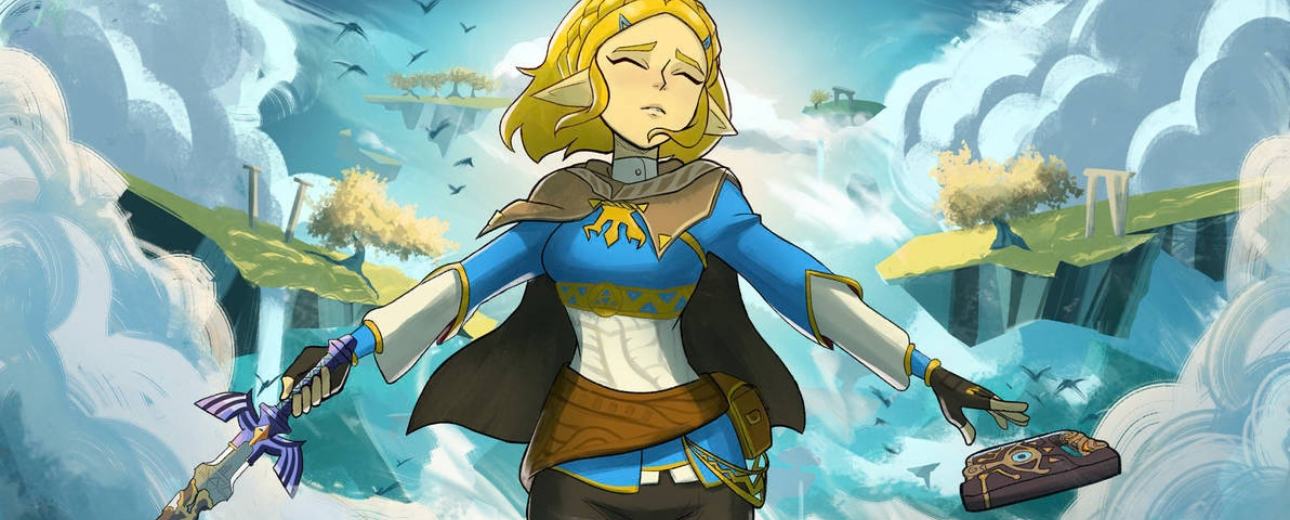
There is a moment in “Ocarina of Time” that players who experienced it as children remember with a specific and visceral clarity that decades have not dimmed. You are young Link, you pull the Master Sword from the Pedestal of Time, and the screen fades to white. When it comes back, everything has changed. Seven years have passed. The Temple of Time is the same, the sword is the same, your hands hold the same controller — but Link is an adult now, and Hyrule is a ruin, and the friends you knew as a child are gone or changed or dead. You did not choose this. You did not consent to this passage of time. It simply happened, while you were somewhere else, and now you have to live in the world it produced.
If you played “Ocarina of Time” as a child — if you were seven or eight or ten years old when that moment happened — you probably did not have the vocabulary to articulate what it made you feel. But you felt something. Something that was not quite sadness and not quite fear and not quite wonder, but some combination of all three that lodged itself somewhere in your memory and stayed there, years later, waiting for the moments in your own adult life when time passed in ways you did not consent to and left you standing in a world that had changed while you were busy with something else.
“The Legend of Zelda” has been meditating on the passage of time for forty years, and it has done so with a consistency, a depth, and an emotional honesty that no other video game franchise has matched. From the three-day cycle of “Majora’s Mask” to the hundred-year sleep of “Breath of the Wild”, from the seven lost years of “Ocarina” to the dream that ends with everything disappearing in “Link’s Awakening”, the franchise has returned again and again to the same fundamental question: what does it cost to have time pass, and what do we do with the loss it leaves behind? This article is the complete exploration of how Zelda answers that question, why those answers resonate so deeply, and what the franchise understands about time that most fiction — in any medium — fails to grasp.
The Zelda Timeline Is Itself a Meditation on Time’s Irreversibility
Before examining individual games, it is worth noting that the structure of the Zelda franchise itself — the way its games relate to each other across the official timeline — is a meditation on the passage of time and its irreversibility that operates at the meta level, above and beyond any individual game’s themes. The Zelda timeline is not simply a continuity document or a lore management tool. It is a philosophical statement about what time means — about the relationship between past, present, and possible futures — that reflects the franchise’s deepest preoccupations.
The official Zelda timeline, documented in “Hyrule Historia”, splits into three branches at the point of “Ocarina of Time” — one branch for the future where adult Link defeats Ganon, one for the future where child Link was sent back to relive his childhood, and one for the alternate timeline where Link fails and Ganon wins. This three-branch structure is, if you think about it carefully, one of the most sophisticated statements about time in all of video game narrative: it says that every choice creates a divergence, that every past leads to multiple futures, and that the past of one world is not the past of another — that time is not a single river but a delta of possibilities, each equally real, each carrying its own losses and its own costs.
The Three-Branch Timeline as Philosophy
The philosophical implications of the three-branch timeline are rarely discussed in the context of what the franchise says about time, and they deserve more attention than they typically receive. The timeline is often discussed as a continuity tool — as a way of reconciling games whose details do not perfectly align — but its deeper function is to establish the franchise’s fundamental position on the nature of time and choice.
By including a branch in which Link fails — in which the hero of the story loses and the world suffers the consequences of that loss — the timeline makes a statement that no other major franchise has been willing to make with this level of commitment: that heroism does not guarantee victory, that the past cannot be undone, and that the world must live with the consequences of what actually happened rather than what should have happened. This is a profoundly adult understanding of time — the understanding that the past is fixed and final, that its consequences persist regardless of what we wish had been different, and that the only productive response to the irreversibility of the past is to work honestly with its actual consequences rather than its hypothetical alternatives.
How the Timeline Makes Every Game Feel Heavier
The emotional weight that the timeline adds to individual games is one of the most underappreciated aspects of the franchise’s treatment of time, and it operates even for players who do not consciously engage with the timeline as a lore document. Knowing — even vaguely, even without the specific details — that the games take place across a vast expanse of time, that the Hyrule of one game is the distant past of another, that the cycles of heroism and catastrophe have repeated across millennia, gives every individual game a weight of historical depth that most games cannot achieve.
When you play “A Link to the Past” knowing that the events of “Ocarina of Time” are centuries in its past, the ruined Dark World carries the emotional weight of a civilization that has been struggling against the same darkness for longer than written history records. When you play “Twilight Princess” knowing that its Hyrule is the direct descendant of the Hyrule that “Ocarina’s” adult Link saved, the familiar geography feels haunted — inhabited by the ghosts of people and events that are now part of the deep past. The timeline makes time itself visible in the landscape, and that visibility is one of the franchise’s most powerful emotional tools.
Ocarina of Time: The Game That Made Time Loss Personal
“Ocarina of Time” is the game in the franchise that most directly and most personally communicates the experience of time lost — of having years pass while you were absent, of returning to find the world changed in ways you did not witness and cannot undo. It is the game that planted, in the memories of an entire generation of players, a specific emotional understanding of what the passage of time actually costs — an understanding that has only deepened as those players have aged and experienced in their own lives the specific losses that the game was describing.
The structure of “Ocarina of Time” is built around a temporal rupture — the moment when young Link enters the Temple of Time, pulls the Master Sword, and loses seven years. This rupture is the central event of the game not simply as a plot mechanism but as an emotional experience — as a moment that communicates something true and something difficult about what it means to have time taken from you. The transition from child Link to adult Link is one of the most emotionally effective moments in the franchise not because of its technical execution but because of what it asks the player to feel: the specific helplessness of someone who has missed something that cannot be recovered.
The Lost Childhood and Its Universal Resonance
The lost childhood of Link in “Ocarina of Time” resonates with such universal depth because it speaks to an experience that every adult has, in some form, had: the experience of looking back at a period of their life that is now inaccessible, that cannot be recovered, and that they somehow did not appreciate or attend to with sufficient care while it was happening. The specific form of Link’s loss — he was physically absent for seven years, sealed in the Sacred Realm — is fantastical. But the emotional quality of that loss is completely real and completely recognizable.
The specific details that communicate this loss are what make “Ocarina of Time” so emotionally effective on this theme. Saria’s fate — she became a Sage and can never leave the Sacred Realm, the forest friendship that was the warmth of Link’s childhood now permanently transformed into something more distant and more formal. The Kokiri village — unchanged, frozen in the eternal childhood that the forest spirits maintain, a place that Link once belonged to and that is now somehow not his place in the same way. Malon at the ranch — a child when Link left, now a young woman, the most ordinary and most quietly devastating evidence of the years that passed without him. These details are not dramatic. They are the texture of ordinary loss, rendered in a fantasy context that gives them the distance necessary to be examined without being overwhelming.
Adult Link and the Impossible Return
Adult Link’s position in the second half of “Ocarina of Time” — the emotional center of the game’s meditation on time — is one of the most psychologically precise portrayals of temporal displacement in fiction. He is an adult who did not have an adolescence — who went from child to adult without the gradual process of growth and change that adolescence provides — existing in a world that has aged without him and that carries, in its ruins and its sadnesses, the evidence of everything he missed.
The specific psychological texture of adult Link’s situation — the combination of capability without history, of physical maturity without the emotional formation that normally accompanies it — is something that “Ocarina of Time” communicates not through explicit narration but through the experience of playing as him. He can do everything an adult can do — he can wield the Master Sword, fight Ganon’s armies, navigate the adult world with competence — but he carries none of the relational history that makes adult existence meaningful. He is a person who has capability without continuity, power without belonging, and this specific combination is one of the most accurate emotional portraits of what it feels like to have missed time.

Majora’s Mask: When Time Becomes a Prison
“Majora’s Mask” approaches the passage of time from the opposite direction of “Ocarina of Time” — not as something that passes too quickly and leaves loss behind, but as something that refuses to pass, that cycles endlessly, that traps its inhabitants in a repetition from which no accumulation, no learning, no permanent change seems possible. It is the franchise’s exploration of time as imprisonment, and it is the darkest and the most psychologically complex treatment of temporality in the series.
The three-day cycle of “Majora’s Mask” is one of the most brilliant mechanical expressions of a thematic concern in all of video game design. The game’s central mechanic — the cycle that resets the world every seventy-two hours, that forces Link to relive the same three days repeatedly, that returns every consequence and every loss to its starting point — is not just a gameplay structure. It is an existential condition that the player inhabits alongside Link, and the experience of inhabiting it produces genuine psychological responses that illuminate the theme in ways that no amount of narrative description could achieve.
The Repetition and Its Psychological Weight
The psychological weight of the repetition in “Majora’s Mask” is something that players experience gradually and cumulatively rather than all at once, and its cumulative effect is one of the most remarkable emotional experiences that the franchise offers. The first time you play through the three days, the cycle is an interesting mechanic. The fifth time, it is beginning to feel weighty. The twentieth time, having helped Anju and Kafei, watched the Deku butler mourn his son, heard the astronomer talk about what he hoped to see before the end — the repetition has become something close to grief.
This cumulative grief of repetition is the game’s most profound psychological achievement. “Majora’s Mask” makes the player understand, through direct experiential engagement rather than through narrative instruction, what it would feel like to be trapped in time — to watch the same events unfold, to see the same people in the same crises, to know that the connections you form and the help you provide will be reset at midnight of the third day. It is an experience of time as burden rather than as opportunity, and it communicates something about the psychological experience of certain kinds of depression, certain kinds of trapped feeling, that very few works of fiction in any medium have managed to render so precisely.
The Termina Clock and the Terror of the Finite
The clock tower at the center of Clock Town — the most visible symbol in “Majora’s Mask”, the countdown that marks the approach of the moon and the end of everything — is one of the most effective uses of a visual symbol in the franchise and one of the most direct expressions of what the game says about the passage of time. The countdown is not simply a gameplay timer. It is an existential fact made visible in the architecture of the world — the constant, unavoidable reminder that time is finite, that the end is approaching whether or not you feel ready for it.
The terror that the Termina clock produces is not the terror of a game-over timer — not the mechanical anxiety of running out of time before completing a task. It is the existential terror of genuine finitude — the recognition that everything ends, that the time available is limited and non-renewable, and that the only productive response to this fact is to use the time that exists rather than pretending it is infinite. This is, in the most direct possible form, what the passage of time means as an existential reality — and “Majora’s Mask” puts it on the screen, ticking, impossible to ignore, and asks the player to sit with that knowledge and still choose to act.
Breath of the Wild: Time as Devastation and Recovery
“Breath of the Wild” approaches the passage of time differently from any previous game in the franchise — not as something that happens to Link personally, in the form of lost years or temporal loops, but as something that has happened to Hyrule itself, in the form of a catastrophe that occurred a century before the game begins and whose consequences define the world that Link wakes up into. It is the franchise’s exploration of post-temporal devastation — of what remains after a long time has passed since something terrible happened — and it is one of the most atmospherically powerful expressions of the passage of time in the series.
The world of “Breath of the Wild” is a world defined by what it was before the Calamity and what the Calamity took from it. Every ruin tells a story of a civilization that existed, that built and created and lived, and that was destroyed before most of its members had time to understand what was happening. The villages that persist are survivors, carrying the weight of a loss that is now a hundred years old but that feels, in the specific way that community grief works, like something much more recent. And Link himself — amnesiac, stripped of every memory of the person he was before — is the most complete expression of the loss that the passage of time produces: a person who has been through a century of absence and who must rebuild his understanding of who he is from the fragments that remain.
The Memory Fragments and the Archaeology of the Self
The eighteen memory fragments scattered across Hyrule in “Breath of the Wild” — the pieces of Link’s personal history that he must seek out and recover in order to reconstruct his understanding of who he was before the Calamity — are one of the most elegant mechanical expressions of the franchise’s temporal themes and one of the most psychologically resonant features of the game. The mechanic of seeking out memories in specific locations, of finding the places where significant things happened a hundred years ago and standing in those places to recover the emotional content of what occurred there, is a perfect mechanical metaphor for the way that all of us relate to our own pasts.
The emotional content of the memories — Zelda’s frustration with her inability to awaken her powers, her complex relationship with Link, the specific relationship between them that was cut short by the Calamity — arrives in fragments, out of chronological order, building a picture of a past that is both richer and more painful than Link knew when he first woke up. This fragmented reconstruction of a relationship and a history is one of the most accurate representations of how memory and loss actually work — how the past is never recovered whole but always in pieces, how each piece changes the meaning of the pieces you already had, how the reconstruction is never quite complete.
The Hundred-Year Gap and What It Means
The hundred years of absence that separate the events of the Calamity from Link’s awakening are the most extreme temporal rupture in the franchise — more complete than the seven lost years of “Ocarina of Time”, more structural than the three-day cycles of “Majora’s Mask” — and the world they have produced is the franchise’s most complete portrait of what the passage of a long time actually does to people, places, and relationships.
A hundred years is long enough that everyone who knew Link before is either dead or so changed that the relationship must be entirely rebuilt. It is long enough that Hyrule itself has changed — the cities have moved, the populations have shifted, the very geography has been altered by the presence of the Calamity. It is long enough that the trauma of the original catastrophe has been processed and integrated into the culture of the survivors in ways that are both visible and invisible — that show up in how they talk about the past, how they relate to the ruins, how they feel about the distant figure of the hero who is supposed to return and who has, for all this time, not yet appeared.

Link’s Awakening: The Time That Never Existed
“Link’s Awakening” approaches the passage of time from the most philosophically radical angle in the franchise — through the concept of time that never existed at all, of a world and its inhabitants whose entire history is a dream that will cease to exist when the dream ends. It is the game that asks the hardest question about time: what does the passage of time mean when the time in question was never real?
The revelation that Koholint Island is a dream — that every person Link has met, every adventure he has had, every connection he has formed over the course of the game exists only within the Windfish’s sleeping consciousness — retroactively transforms the game’s entire temporal experience. Every moment that seemed to accumulate into a history, every relationship that seemed to develop over time, every change in the world that seemed to mark the passage of time and the progress of Link’s adventure — all of it is recontextualized as the content of a dream, real in experience but not in the world outside the dream.
The Dream Time and Its Philosophical Challenge
The philosophical challenge that “Link’s Awakening” poses about time and reality is one of the deepest in the franchise and one that rewards serious engagement. If time passed within the dream — if relationships developed, if events unfolded, if Link changed through his experiences on the island — does the fact that the dream was not real make the passage of that time meaningless? Were the connections Link formed with the island’s inhabitants less real because the inhabitants themselves were not real in the conventional sense?
The franchise’s implicit answer to this question — embedded in the specific emotional weight of the ending and in the specific care with which the game treats its dream-world characters — seems to be a qualified no. The time spent in Koholint was real as experience, real as emotional content, real as the relationship between Link and a world that needed him. The ending’s sadness — the dissolution of everything into the Windfish’s waking — is genuine sadness rather than a reveal that nothing mattered, because the game has spent its entire length insisting that the experiences within the dream had genuine emotional weight.
The End of Koholint and the Grief of Waking
The ending of “Link’s Awakening” — the dissolution of Koholint Island and all its inhabitants as the Windfish wakes, the return of Link to the open ocean with no island behind him and nothing to show for his time on Koholint except the memories he carries — is the most quietly devastating ending in the franchise and one of the most emotionally honest endings in video game history. It does not resolve the grief of the ending. It does not provide consolation or explain that everything will be fine. It simply shows the dissolution happening and lets the player sit with what has been lost.
This refusal of consolation is one of the franchise’s most important contributions to the representation of time and loss in fiction. The ending of “Link’s Awakening” says something true and difficult: that some losses are final, that some times cannot be returned to, that the passage of time through certain experiences leaves permanent gaps that no subsequent experience can fill. It says this without melodrama, without explicit statement, simply through the image of the ocean where an island used to be — and that simplicity is what makes it hit so hard.

Why Zelda’s Treatment of Time Resonates Across Generations
The reason that Zelda’s treatment of time hits so hard — the reason that players return to these themes across multiple games, across multiple decades, and across multiple stages of their own lives and find them consistently resonant and consistently moving — is rooted in something deeper than the craft of the games themselves, though the craft is extraordinary. It is rooted in the fact that the franchise has identified and consistently returned to the specific emotional experiences of temporal loss that are universal to human consciousness and that most fiction, most of the time, either ignores or handles with less honesty than Zelda consistently brings to them.
The fear of time passing without consent — of waking up to find that years have passed and the world has changed and the connections you had are gone — is one of the most universal and least discussed anxieties of human life. It is the anxiety behind the strange feeling of attending a reunion and finding that people you were close to have become strangers. It is the anxiety behind the specific sadness of returning to a childhood home and finding it changed. It is the anxiety behind the recognition that your own past self is someone you can remember but no longer be — that time has made you someone different from the person who lived through the experiences you remember.
One of the most remarkable things about the Zelda franchise’s treatment of time is that the games age with their players in ways that deepen rather than diminish their emotional impact. “Ocarina of Time” hits differently at thirty-five than it hit at ten — not because the game has changed but because the player has accumulated the specific losses and the specific temporal experiences that the game was describing. The seven lost years mean something different to someone who has experienced the specific helplessness of having years pass in directions they did not choose — through illness, through grief, through the ordinary relentlessness of adult obligation — than they mean to a child who has not yet had that experience.
This aging with the player is one of the franchise’s most extraordinary achievements and one that is almost impossible to engineer deliberately — it emerges from the depth and honesty of the franchise’s engagement with universal human experiences rather than from any specific design decision. The games are not getting more meaningful as their players age. They were always this meaningful — it just takes the right life experience to fully access the meaning that was always there.
For readers who want to explore these themes further, the games themselves are the essential starting point — “Ocarina of Time”, “Majora’s Mask”, “Link’s Awakening”, and “Breath of the Wild” are all available on Nintendo Switchvia the Nintendo eShop at nintendo.com. “Hyrule Historia” published by Dark Horse Books at darkhorse.com provides the official timeline documentation and development context that enriches the understanding of the franchise’s temporal themes. For academic analysis of time in video games, several essays available through JSTOR at jstor.org examine the franchise’s treatment of temporality with scholarly rigor. The Zelda Wiki at zeldawiki.wiki maintains comprehensive documentation of every game’s lore and narrative. For community discussion of these themes — some of the most thoughtful fan analysis anywhere on the internet — the Zelda subreddit at reddit.com is the best starting point. And for video analysis of the franchise’s themes, Game Maker’s Toolkit at youtube.com has produced some of the best design analysis of Zelda available in any format.
The clock ticks in Clock Town. The Temple of Time holds a sword that will take seven years. The ocean covers a kingdom that used to exist. And somewhere, an island is dissolving into the waking world, taking everyone on it with it into the kind of gone that has no return. Zelda has been telling us, for forty years, what time costs — what it takes, what it leaves behind, what we do with the gap. And it hits so hard because it is telling the truth.